Photo: Wikipedia
Demographics of Pinal County
Affluence Level in Pinal County
A middle-class area roughly in line with national averages across income, home values, education, and employment.
People of Pinal County
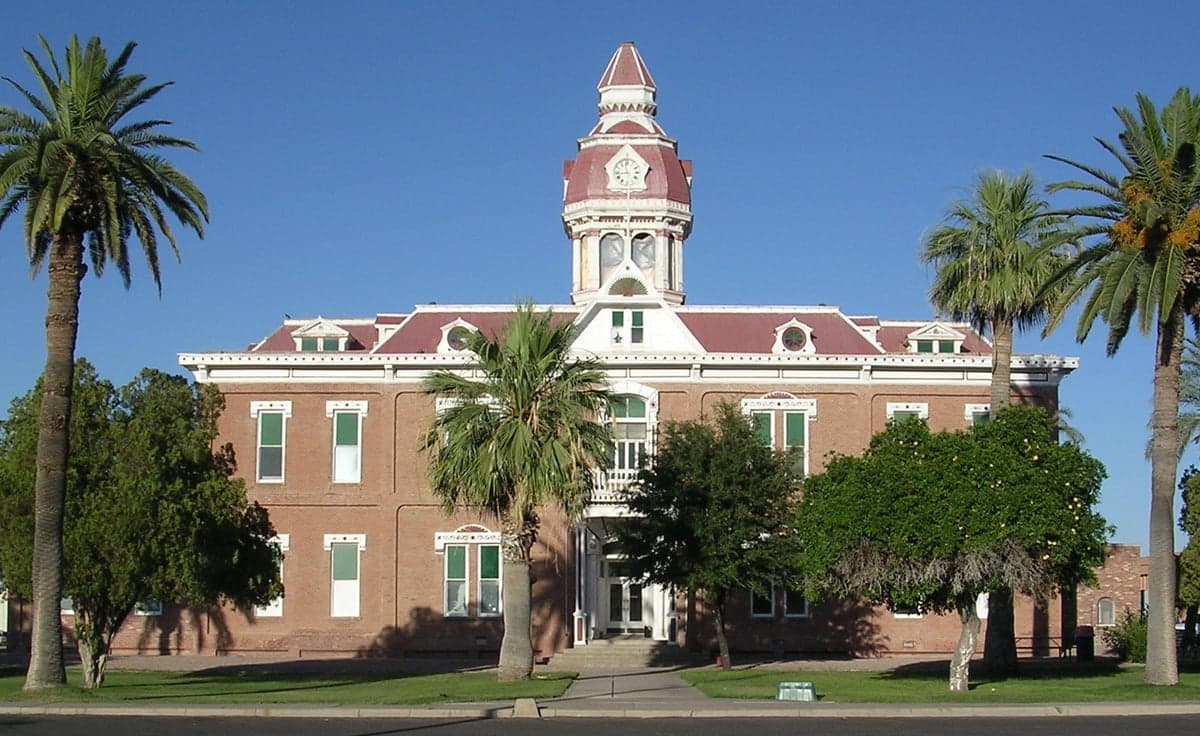
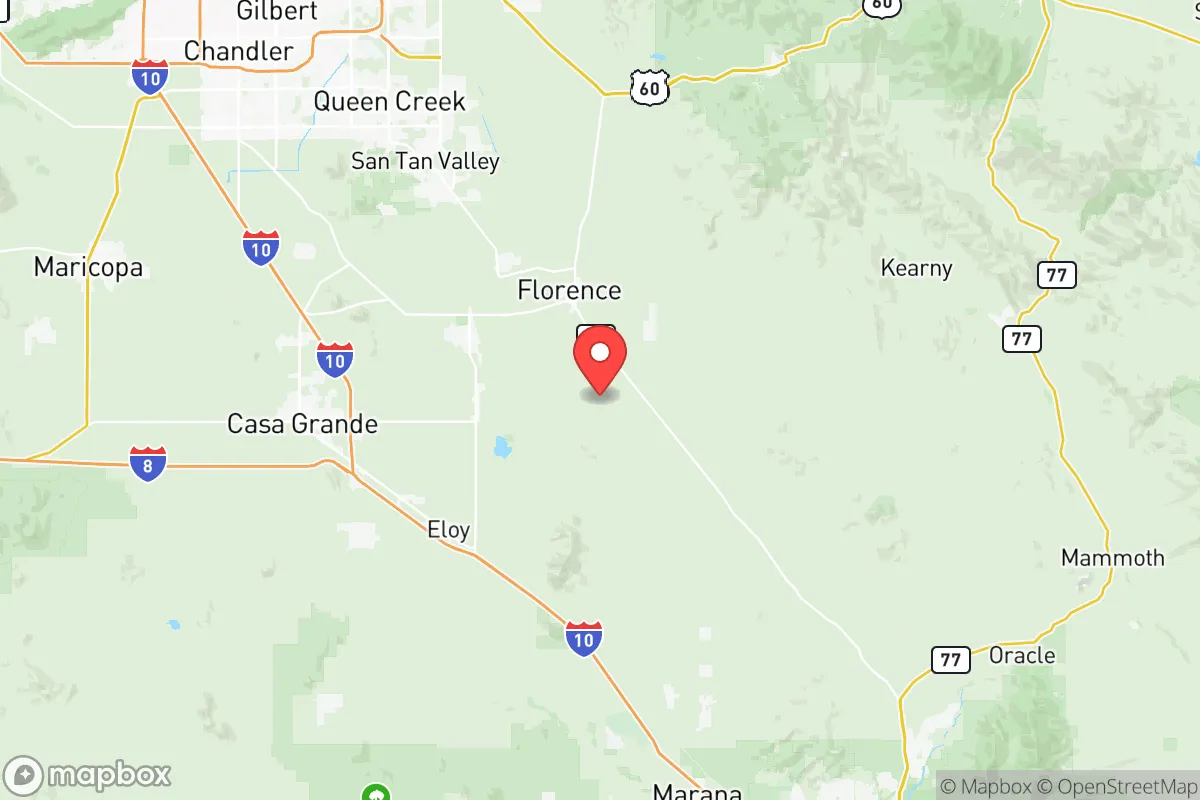
Pinal County, Arizona, is home to 449,219 residents, a population defined by its blend of agricultural roots, rapid suburban expansion, and a demographic profile that leans older and more family-oriented than the state average. With a population that is 55.9% White and 29.3% Hispanic, the county sits at a cultural crossroads between the historic ranching and mining towns of the Old West and the sprawling master-planned communities drawing Phoenix exurbanites. The county’s identity is shaped by a relatively low foreign-born share of 4.7% and a college attainment rate of 22.2%, reflecting a workforce heavily tied to logistics, healthcare, and public administration rather than high-tech or knowledge industries.
Settlement & growth (pre-1960)
Long before European contact, the Hohokam people inhabited the river valleys of what is now Pinal County, building extensive irrigation canals along the Gila and Salt Rivers. Their descendants, the Akimel O’odham (Pima) and Tohono O’odham, along with the Yavapai and Apache, occupied the region when Spanish explorers arrived in the 16th century. Spanish colonization was light, leaving little permanent settlement, but the legacy of Mexican land grants shaped early ranching communities like Casa Grande and Florence, which became the county seat after Arizona Territory was organized in 1864.
The first major American wave came with the discovery of silver and copper in the 1870s and 1880s. Mining camps like Superior, Kearny, and Ray drew a mix of Anglo-American prospectors, Mexican laborers, and Cornish miners, creating a rough, transient population. The completion of the Southern Pacific Railroad through the county in the 1880s spurred agricultural settlement, particularly cotton farming in the Casa Grande Valley. By the early 20th century, the federal government’s Newlands Reclamation Act brought irrigation projects that transformed the desert around Coolidge and Eloy into productive farmland, attracting Dust Bowl migrants from Oklahoma, Texas, and Arkansas during the 1930s and 1940s. These "Okie" families, predominantly White and Protestant, settled in small farming communities and established a conservative, self-reliant culture that persists in parts of the county today.
World War II brought a second economic shift: the establishment of military training fields near Casa Grande and the prisoner-of-war camp at Florence. After the war, returning veterans and their families began trickling into the area, but Pinal County remained overwhelmingly rural and agricultural through the 1950s. The 1960 census counted fewer than 50,000 residents, with the population concentrated in a handful of small towns and unincorporated farming settlements.
Modern era (post-1965)
The 1965 Hart-Cellar Act had a modest direct impact on Pinal County compared to coastal urban centers, as the county’s foreign-born population remains just 4.7%. However, the act’s broader effect on U.S. immigration patterns reshaped the county indirectly. The most significant demographic shift since the 1970s has been domestic: the Sun Belt migration of White and Hispanic families from California, the Midwest, and the Rust Belt, drawn by lower housing costs, warmer winters, and employment in logistics and distribution centers along the Interstate 10 corridor. Casa Grande emerged as the primary growth hub, its population surging from roughly 14,000 in 1980 to over 50,000 by 2020, fueled by warehouse and manufacturing jobs tied to the Phoenix-Tucson supply chain.
Hispanic population growth accelerated in the 1990s and 2000s, driven by both immigration from Mexico and higher birth rates among established Mexican-American families. Today, Hispanic residents make up 29.3% of the county, with concentrations in Eloy, Florence, and the agricultural areas around Maricopa. These communities retain strong ties to Mexican cultural traditions, including Spanish-language media and Catholic parish life, while younger generations increasingly integrate into the broader English-speaking workforce. The Black population, at 4.9%, is modest but growing, largely through domestic migration from California and the Southwest, with clusters in Casa Grande and Maricopa. East and Southeast Asian communities, comprising 1.4% of the population, are small but visible in the healthcare and retail sectors, particularly around the Banner Health facilities in Casa Grande. The Indian subcontinent population (0.2%) remains minimal, concentrated among professionals in the medical and tech fields.
Suburbanization reshaped the county’s geography dramatically after 2000. The master-planned community of Maricopa, incorporated in 2003, grew from a few hundred residents to over 40,000 within two decades, attracting young families and retirees priced out of Phoenix’s East Valley. This new wave of residents is predominantly White and politically conservative, with a median age in the mid-30s, contrasting with the older, more Hispanic populations of the historic towns. The county’s college attainment rate of 22.2% reflects this divide: newer suburbs have higher education levels than the agricultural towns, but the county as a whole trails the state average of roughly 30%.
The future
Pinal County is projected to continue growing at a rapid pace, with the Arizona Office of Economic Opportunity estimating the population could exceed 600,000 by 2040. The county is becoming slightly more diverse, driven by Hispanic natural increase and continued domestic migration of Black and Asian families from California and the Southwest. However, the foreign-born share is expected to remain low relative to Phoenix and Tucson, as the county’s economy—anchored by logistics, manufacturing, and corrections (the state prison complex in Florence)—does not attract the high-skilled immigration seen in tech hubs. The new communities of Maricopa and the expanding suburbs of Casa Grande will likely absorb most of the growth, while the older mining towns like Superior and Kearny may see population stagnation or decline. Culturally, the county is evolving from a rural, agricultural identity toward a suburban exurban one, with the political and social values of its newer residents—conservative, family-focused, and skeptical of government overreach—increasingly shaping local governance. The Hispanic population’s growing share will continue to influence the region’s character, but the county is unlikely to become majority-minority within the next two decades, given the steady influx of White domestic migrants.
For someone moving to Pinal County today, the region offers a lower-cost, slower-paced alternative to Phoenix, with a population that values self-reliance, family, and community ties. The county is becoming more suburban and diverse, but its core identity remains rooted in the conservative, agricultural, and working-class traditions of its 20th-century settlers. New arrivals should expect a place where growth is reshaping the landscape but where the cultural and political character is still being negotiated between the old farming towns and the new master-planned suburbs.

* Values derived from national, state, county, city and local statistics and may differ in a specific area. Last updated: 2026-07-17T22:43:09.000Z
Narrative content on this page is AI-generated and may contain mistakes. Verify any details that matter before acting on them.
ReloMaps may earn a commission from affiliate links at no extra cost to you.

