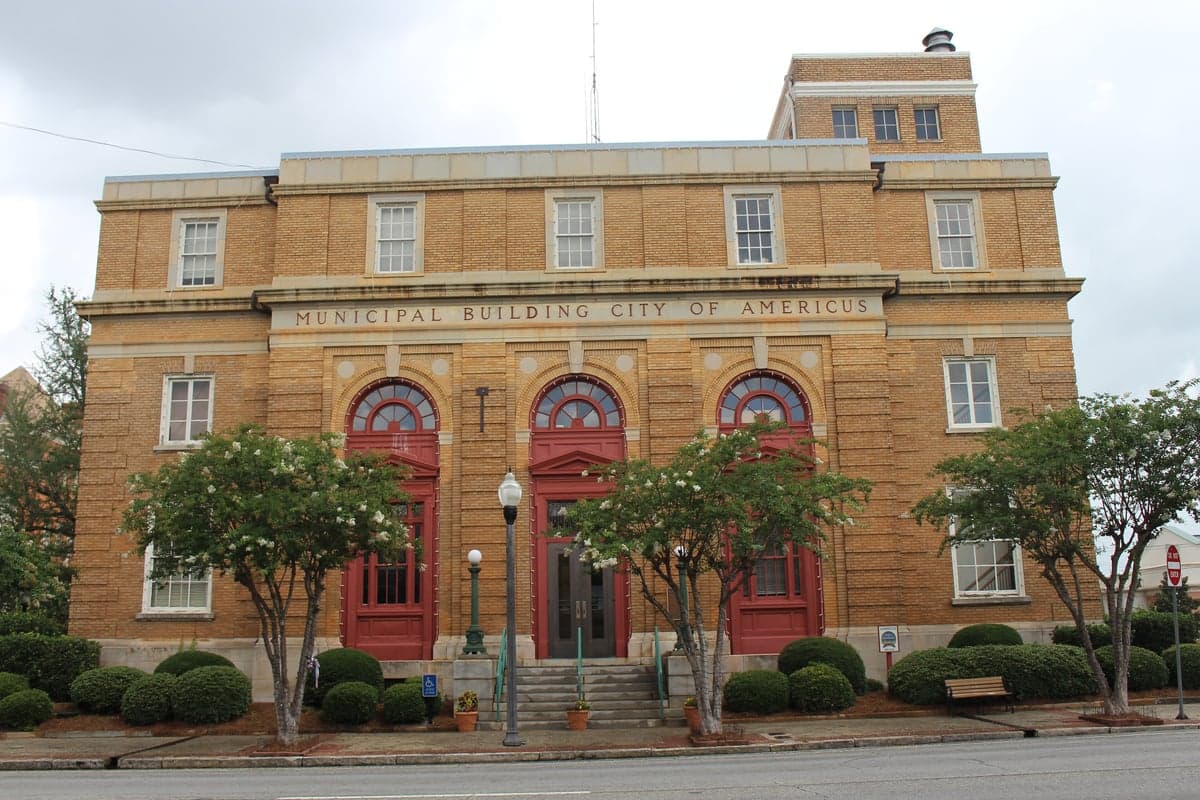
Photo: Wikipedia
Quality of Life in Americus, GA
A high quality of life with strong walkability, manageable living costs, healthy neighborhood signals, and solid amenity access.
What does Quality of Life tell us?
Quality of Life blends cost of living, nearby amenities, socioeconomic signals, and neighborhood character. City-level scores represent the whole municipality; individual neighborhoods can differ.
What does this tell us?
Quality of Life blends cost of living, nearby amenities, socioeconomic signals, and neighborhood character. City-level scores represent the whole municipality; individual neighborhoods can differ.
Cost of Living
41% below national average
The Real Cost of Living in Americus, GA for 2026
| Tier | Individual | Family (4) |
|---|---|---|
| Survival | $13k | $25k |
| Comfortable | $22k | $32k |
| Luxury | $64k+ | $99k+ |
| Elite (Top 5%) | $75k+ | $117k+ |
122%
The Area Signal
A metric tracking the socioeconomic signals of the area.
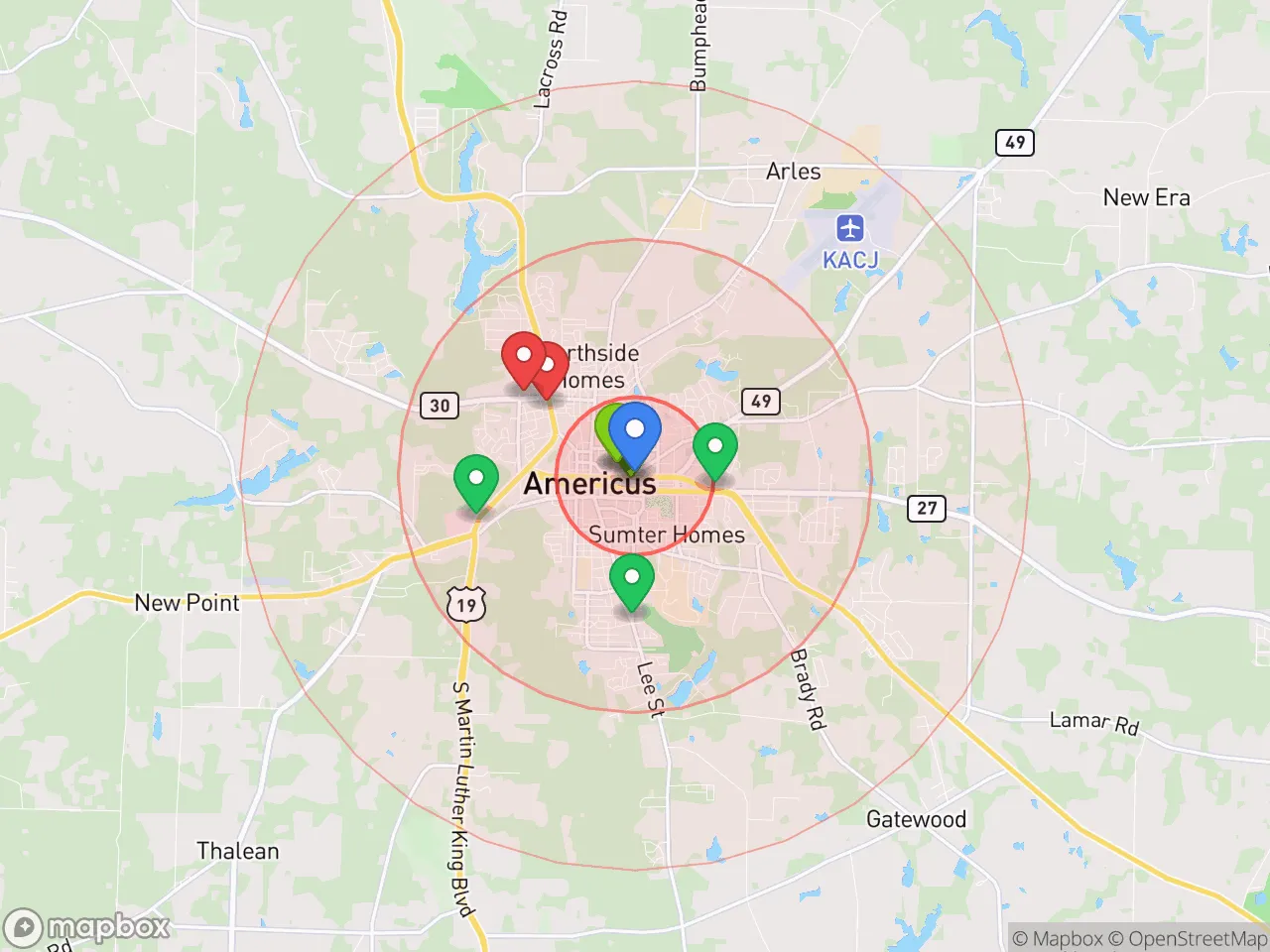
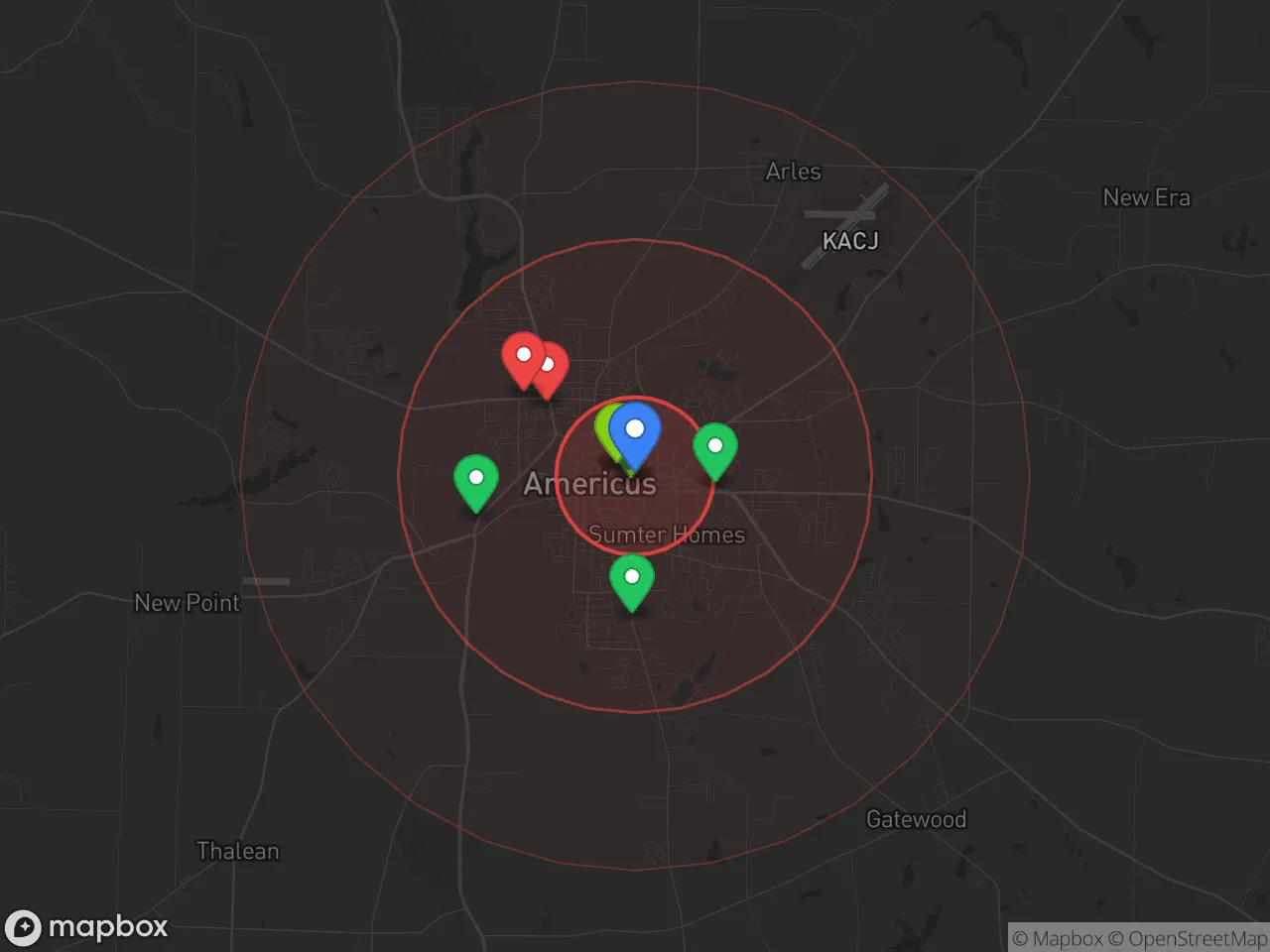
Hobbies
Explore the areaGroceries
0 within 10 miles
Gas
0 within 10 miles
Hospital
0 within 20 miles
Airport
ATL — Hartsfield–Jackson Atlanta International
Post Office
Critical Amenities
Quality-of-Life Analysis
Americus, Georgia, presents a notably affordable quality of life that stands in sharp contrast to national averages, with a cost of living index of 59 (100 = US average) making it one of the most budget-friendly small cities in the state. The population is predominantly composed of long-term residents, families, and retirees drawn by the area’s low housing costs and slower pace, alongside a smaller contingent of students and faculty connected to Georgia Southwestern State University. While the city does not rank among affluent communities—median household income trails state and national figures—the low cost of living allows many households to maintain a stable, debt-free lifestyle that would be difficult to replicate in pricier metros like Atlanta or Savannah.
Cost of living, housing, and how Americus compares to nearby cities
Housing is the primary driver of Americus’s affordability. The median home value sits at $113,500, roughly one-third of the national median and significantly below the Georgia state median of around $310,000. Median rent is $825, well under the state average of $1,200, making the city accessible for renters on fixed incomes or entry-level wages. Compared to nearby Albany (median home value ~$130,000) and Columbus (~$200,000), Americus offers the lowest entry point for homeownership in the region. The average commute of 18.8 minutes is short by any standard, reflecting the city’s compact layout and limited traffic congestion—a practical advantage for workers employed locally at Magnolia Manor, Phoebe Sumter Medical Center, or the Sumter County school system. However, property taxes in Sumter County are slightly above the state average (about 1.1% of assessed value), and the limited housing inventory means buyers may face competition for well-maintained homes under $150,000.
Amenities, schools, and what daily life is like for families
Daily life in Americus revolves around a historic downtown anchored by the Windsor Hotel and the Rylander Theatre, which hosts live performances and film screenings. The city’s school system, Sumter County Schools, includes Americus-Sumter High School and several elementary and middle schools, though graduation rates hover around 80%—below the state average of 84%. For higher education, Georgia Southwestern State University provides cultural events, continuing education, and a public library. Outdoor amenities include the 115-acre Lake Blackshear Resort and the nearby Jimmy Carter National Historical Park in Plains (10 miles west), which draws history tourists. Grocery access is adequate, with a Walmart Supercenter and Piggly Wiggly, but residents often drive to Albany (40 minutes) for major shopping or specialized healthcare. The city’s crime rate is higher than the national average, particularly for property crime, which is a consideration for families choosing neighborhoods—areas near the university and the historic district tend to be safer.
Americus is best suited for retirees, remote workers, and budget-conscious families who prioritize low housing costs and a quiet, small-town environment over urban amenities or high-end schools. The short commute and low cost of living allow for a slower, less financially strained lifestyle, but the limited job market (concentrated in healthcare, education, and manufacturing) and above-average crime rates mean newcomers should visit and research specific neighborhoods—such as the historic district or areas near GSW—before committing. For those who value affordability and community history over career opportunity or nightlife, Americus offers a viable, low-stress base in southwest Georgia.

Crime in Americus, GA
Significantly higher crime rates than 78% of comparable U.S. locations.
Violent CrimeViolent Crime Analysis
Property CrimeProperty Crime Analysis
Crime Analysis
Amercus, Georgia, reports a violent crime rate of 902 incidents per 100,000 residents and a property crime rate of 3,070.6 per 100,000, placing it among the higher-risk small cities in the state. These figures, drawn from the most recent FBI Uniform Crime Reporting data, indicate that residents face a significantly elevated likelihood of experiencing both violent and property offenses compared to national averages. The city’s safety profile is shaped by its status as a small, non-metro community in Sumter County, where economic challenges and limited law enforcement resources contribute to persistent crime pressures.
Crime in context
Amercus’s violent crime rate is more than 2.3 times the national average of roughly 380 per 100,000, while its property crime rate exceeds the U.S. average by about 60%. Compared to Georgia’s statewide violent crime rate of approximately 400 per 100,000, Americus is notably higher. The city’s property crime rate also outpaces the state average of around 2,400 per 100,000. These disparities are not unusual for a small city in the rural South, but they place Americus in a higher-risk tier. The local justice system, operating under a traditional prosecutorial framework rather than a progressive model, does not appear to be a primary driver of these figures; instead, socioeconomic factors such as a poverty rate near 30% and limited employment opportunities are more directly correlated with the crime levels.
What residents experience
For those living in Americus, the high violent crime rate translates into a tangible risk of aggravated assault, robbery, and, less frequently, homicide. Property crime is the more common concern, with theft, burglary, and motor vehicle theft affecting many households annually. Residents often report that crimes are concentrated in specific areas, particularly around the downtown core and lower-income neighborhoods near the Georgia Southwestern State University campus. Day-to-day precautions include avoiding certain streets after dark, securing homes with alarm systems, and relying on neighborhood watch programs. The Americus Police Department maintains a visible presence but faces staffing constraints that limit proactive patrols. Community feedback on local safety forums frequently cites a need for more youth programs and economic development as long-term solutions to reduce crime.
Neighborhood-level variation is significant. The historic districts and areas west of U.S. Highway 19 tend to have lower crime rates, while the eastern and southern sections of the city, including the vicinity of the Martin Luther King Jr. Drive corridor, report higher incident densities. Gated communities and newer subdivisions near the Americus Country Club experience property crime but at rates closer to the national average. Prospective residents should consult block-level crime maps and speak with local real estate agents to identify safer pockets within the city. Overall, Americus requires a cautious approach to personal safety, with awareness that crime is not uniformly distributed across the community.
* Values derived from national, state, county, city and local statistics and may differ in a specific area. Last updated: 2026-10-29T21:15:33.000Z
Narrative content on this page is AI-generated and may contain mistakes. Verify any details that matter before acting on them.
ReloMaps may earn a commission from affiliate links at no extra cost to you.

