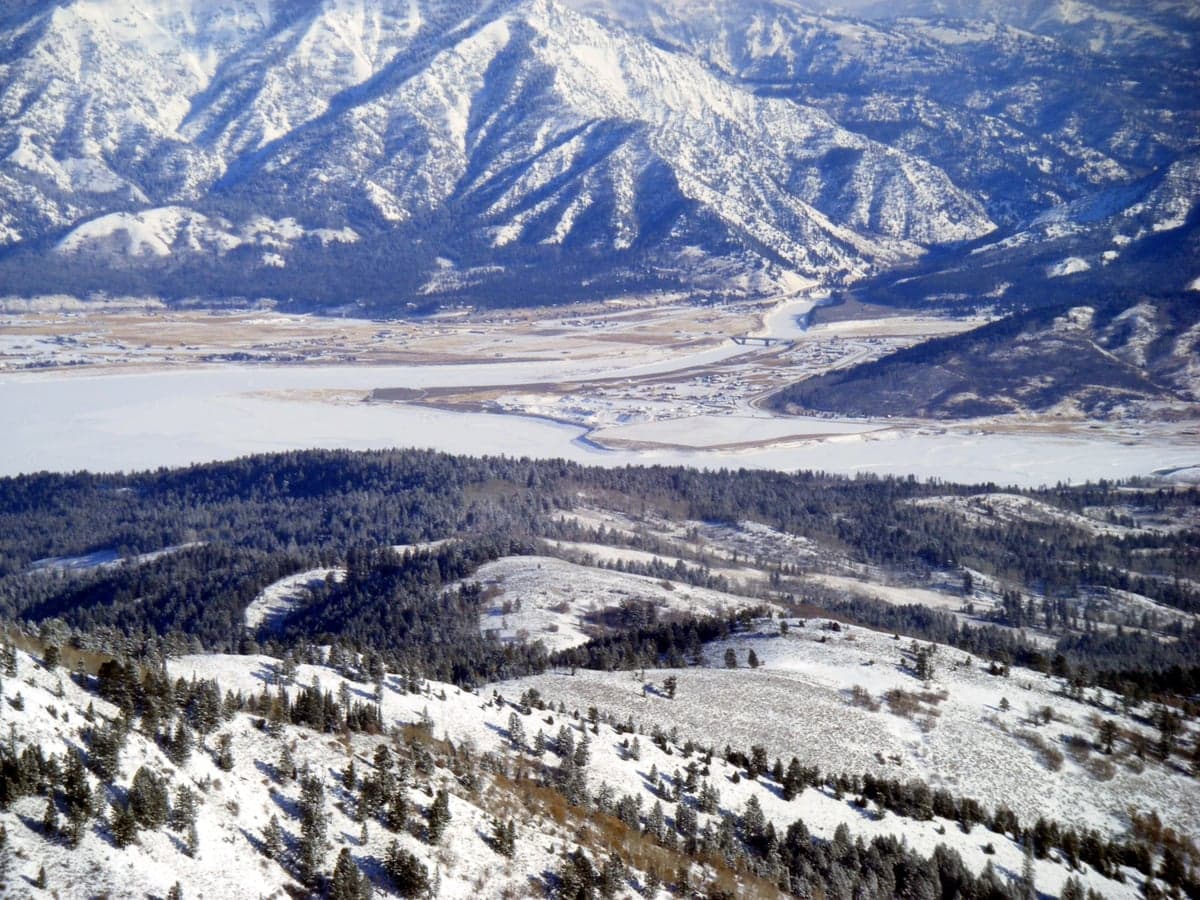
Photo: Wikipedia
Political ClimatePolitical Climate in Alpine, WY
District shown is the primary district for this city’s centroid. Cities may span multiple districts.
Inherited from parent state — no local data available.
Local Political AnalysisPolitical Analysis of Alpine, WY
Alpine, Wyoming, sits deep in the Cowboy State’s Republican stronghold, mirroring the state’s Cook PVI of R+23 almost exactly. This isn’t a purple patch; it’s a deeply red county in a deeply red state, where conservative values aren’t just a political stance but a way of life tied to land use, resource extraction, and personal liberty. If you’re comparing it to the town of Wyoming, Wyoming — a tiny, unincorporated community near Jackson — the political landscape is nearly identical, but Alpine’s proximity to the more liberal Teton County (home to Jackson Hole) gives it a distinct, small-town tension that the more isolated Wyoming, WY simply lacks.
How it compares
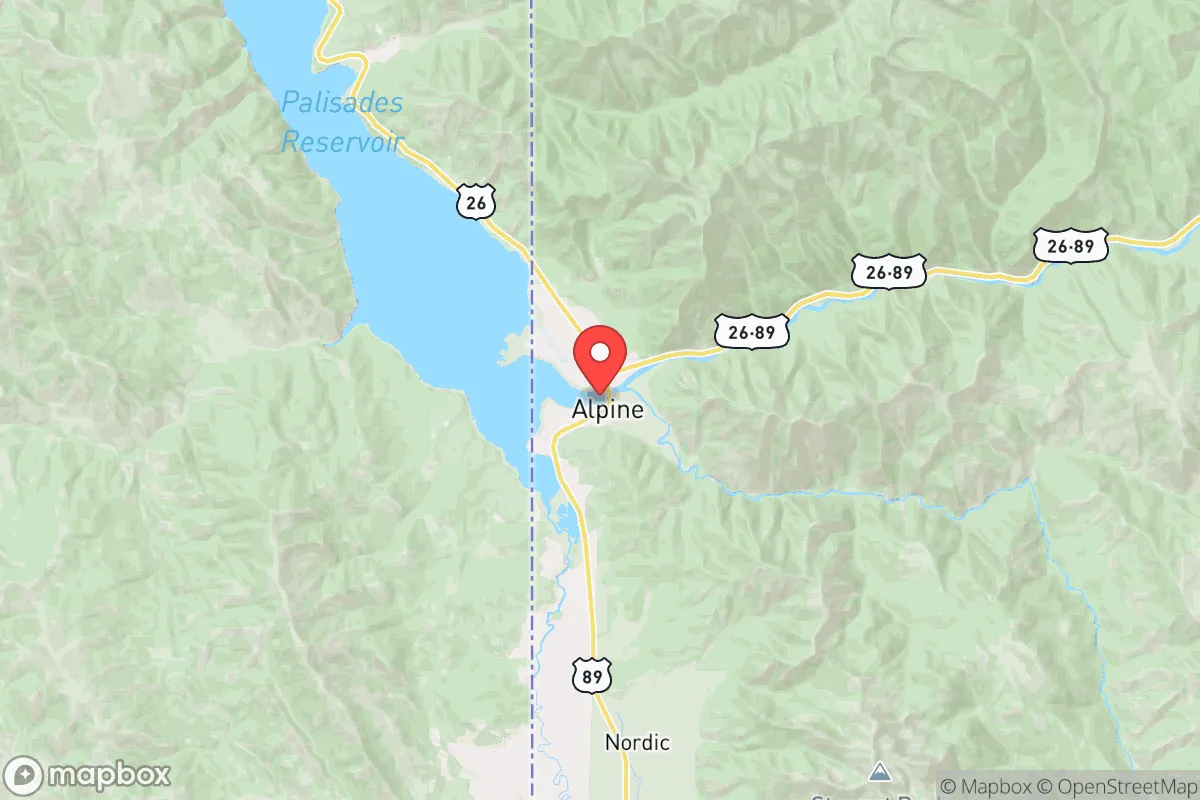
The big difference isn’t the PVI number — both Alpine and the state as a whole vote roughly 70-75% Republican in presidential races — but the cultural and economic microclimate. Alpine sits just south of the Snake River Canyon, a stone’s throw from the Idaho border and a 45-minute drive from Jackson. That proximity matters. In Jackson (Teton County, R+12), you get a mix of ultra-wealthy transplants, environmentalists, and tourist workers pushing left. In Alpine, you get the opposite: a working-class mountain town built on ranching, guiding, and highway services. The contrast is stark. Drive ten miles north into Teton County, and you’ll see Harris-Walz yard signs outside million-dollar cabins; back in Alpine, it’s all Trump flags and “Keep Wyoming Wyoming” bumper stickers. The neighboring town of Afton (Lincoln County) is similarly conservative, but Thayne and Bedford lean even more insular, while Star Valley Ranch draws some moderate retirees. Bottom line: Alpine’s politics are solidly mainstream Wyoming Republicanism — think gun rights, limited government, and skepticism of federal land management — with a slight edge of resistance to the “Jacksonization” creeping up the valley.
What this means for residents
For conservative residents, Alpine feels like a sanctuary. Local governance is in lockstep with their views; the county commission and school board are reliably Republican. Hunting, snowmobiling, and off-roading face few restrictions on the vast Bridger-Teton National Forest, and property taxes are low by national standards. There’s no income tax, and the vibe is very much “leave us alone.” For liberal or moderate residents, the reality is more of a social bubble. You won’t find a Democratic club in town, and openly progressive views can be a social liability, especially in the schools or local businesses. That said, because tourism and second-home ownership are growing, a quiet tolerance exists — most folks just don’t talk politics at the grocery store. The real tension isn’t left vs. right; it’s locals vs. transplants. Newcomers from California or Colorado, regardless of their party, face a longer trust-building curve than any philosophical differences about taxes.
Culturally, Alpine remains a place where the county fair, high school rodeo, and church spaghetti dinners matter more than political rallies. The shift over the last 20 years has been subtle: more “Keep It Wild” stickers alongside the “Don’t Tread on Me” ones, more remote workers in the café, and a growing strain of libertarian-leaning independents who dislike both parties equally but still vote R out of habit. Looking forward, Alpine’s politics will likely stay deeply red, but don’t be surprised if the margins narrow slightly as more amenity migrants arrive from bluer states. For now, though, if you lean right, you’re home; if you lean left, you’ll find your people in Jackson or Driggs, Idaho, and enjoy Alpine for the river and the silence.

State Political ClimatePolitical Climate in Wyoming
State Political AnalysisPolitical Environment in the State
Wyoming is about as reliably Republican as a state gets, with a Cook PVI of R+23 and a legacy of small-government conservatism that runs through every level of governance. The state hasn't voted for a Democratic presidential candidate since 1964, and in 2024, while the national margin was close, Wyoming delivered over 70% of its vote to the Republican ticket. But there's a meaningful split you need to understand: this isn't just "red versus blue." It's a place where the old-school, live-and-let-live Western libertarian streak wars with a newer, more culturally aggressive strain of Republicanism, and the urban-rural divide within the state is actually quite stark. If you're relocating here, the practical reality is that local politics in Cheyenne feels very different from Jackson, and both are a world apart from the small ranch town of Pinedale.
Urban vs. rural divide
The political geography of Wyoming breaks down into three distinct zones. The state's two population centers — Cheyenne (Laramie County) and Casper (Natrona County) — act as the engine room of the state's Republican majority. Laramie County has voted Republican in every presidential election since 1988, but the margins have tightened over the last decade as the state capital has seen an influx of government workers and a modest diversification of the economy. Natrona County is rock-ribbed Republican, but even there, the 2024 margin was "only" around 30 points — a landslide elsewhere, but a quiet sign of tempering in a place that used to be a 50-point Republican stronghold. The third major population node is Teton County, anchored by Jackson Hole, which is the one reliably blue pocket in the state. Teton County voted for Hillary Clinton by 43 points in 2016 and for Joe Biden by 39 points in 2020. It's a wealthy, amenity-driven economy of ski tourism, conservation, and second-home owners, and its politics are essentially progressive on environmental, social, and fiscal issues — a complete outlier. Outside those three counties, the rest of the state — the ranching and energy towns like Gillette (Campbell County), Rock Springs (Sweetwater County), Rawlins (Carbon County), and the entire northern and eastern high plains — is deeply, often overwhelmingly, Republican. In Campbell County, the 2024 Republican vote share was over 88%. The divide isn't just about density; it's about economy. The energy counties (coal, oil, gas, uranium) are resistant to any political shift that threatens extraction jobs, while Teton County's economy is built entirely on the opposite premise.
Policy environment
Wyoming's state-level policy is a reflection of its voter base: low taxes, minimal regulation, and a fierce resistance to federal land management. There is no state income tax; the sales tax is a low 4% statewide, with local options pushing it to about 6% in places like Cheyenne and Jackson. Property taxes are among the lowest in the nation, and there's no inheritance or estate tax. The regulatory posture is pro-energy extraction above all else, and the state's economy is still heavily tied to the boom-and-bust cycles of coal, trona, and natural gas. On education, Wyoming has a per-pupil spending level that is actually above the national average, thanks to a state school funding model built on mineral severance taxes. However, this is a source of constant tension — when energy prices drop, school budgets get slashed. The state's higher education anchor, the University of Wyoming in Laramie, is a center of moderate to liberal politics in a sea of conservative counties. Healthcare policy is shaped by the state's sprawling rural geography; there are many healthcare "deserts," and the legislature has declined to expand Medicaid under the Affordable Care Act, a decision that leaves about 20,000 low-income residents in a coverage gap. On election law, Wyoming has voter ID requirements, no-excuse absentee voting, and same-day voter registration — a relatively moderate set of rules for a deep-red state.
Recent policy direction
Over the last five to ten years, Wyoming's legislature has moved aggressively on a few specific fronts that matter to relocators weighing personal liberties. On gun policy, the state passed constitutional carry in 2011 (one of the early adopters) and in 2021 enacted a "Second Amendment Protection Act" that purports to nullify federal firearms laws — a largely symbolic but popular move. In 2023, the legislature banned gender-affirming care for minors and restricted transgender athletes' participation in school sports, both passed with supermajority support. On property rights, the state has a strong tradition of "right-to-farm" laws that protect agricultural operations from nuisance lawsuits, and it has aggressively challenged federal land management through lawsuits and the creation of a state-funded "Federal Land Management Advisory Council." On privacy and surveillance, Wyoming was one of the first states to pass a law restricting the use of vaccine passports (2021) and has a law on the books penalizing drone surveillance of private property. Medical and bodily autonomy: abortion is now banned at all stages of pregnancy with very narrow exceptions (life of the mother, rape, incest), following a trigger law that went into effect in July 2022. There is no ballot initiative process in Wyoming, which means voters cannot directly overrule the legislature on these issues. On voting access, the state has maintained relatively open same-day registration, though in 2023 a bill to ban ballot drop boxes failed.
Civil unrest & political movements
Wyoming doesn't see the kind of street-level polarization that defines states like Oregon or Pennsylvania, but there is a potent strain of anti-federal sentiment that occasionally boils over. The most visible flashpoint in recent years was the 2014 and 2015 occupation of the Malheur National Wildlife Refuge (just across the border in Oregon, but heavily involving Wyoming activists) and the broader "Sagebrush Rebellion" movement, which has deep roots here. In 2020, the "Cowboys for Trump" convoy rolled through Cheyenne and Casper, drawing both support and counter-protests, but overall the state saw very little property damage or civil unrest compared to larger states. Immigration politics are relatively quiet because Wyoming has one of the smallest foreign-born populations in the nation (under 4%), but the state has passed resolutions in support of federal immigration enforcement and prohibited sanctuary city policies. There are no organized, large-scale left-wing activist movements with meaningful political power outside of Teton County and occasional university-centered protests in Laramie. The most recent visible political friction came in 2023 when the state's new abortion ban led to a small but persistent protest presence outside the Wyoming State Capitol in Cheyenne. Secession and nullification rhetoric is common in local political discourse, particularly around federal land ownership (about 48% of Wyoming is owned by the federal government), but it remains rhetorical — there is no serious secession movement.
Projection
Looking five to ten years ahead, Wyoming's political climate is likely to remain deeply Republican, but the character of that Republicanism is shifting. The old energy-based economy is in structural decline — coal production has fallen by over 40% in a decade — and the state is trying to attract remote workers, data centers, and light industry, particularly around Cheyenne and Laramie. This in-migration is slow but real, and it tends to bring people who are culturally conservative but less tied to the extractive industries. The result is a slow, quiet tension between the old-guard resource-extraction conservatives and a newer, more tech-oriented or lifestyle-driven conservative population. Teton County will remain a blue island, but its political impact on the state as a whole is limited by its small population (about 23,000) and the fact that many of its residents are wealthy transplants who vote in other states. The more consequential trend is the gradual aging and depopulation of the rural counties; as young people leave the oil patch and ranch towns, the political center of gravity shifts slightly toward the Front Range corridor (Cheyenne-Laramie) and I-25. That doesn't mean Wyoming becomes purple — the margins just contract from 60 points to 40 points in some areas. Someone moving in now should expect to live in a state where the dominant political culture is a blend of fierce individualism and traditional social conservatism, with a growing but still marginal libertarian streak that values property rights and gun rights above almost everything else.
Bottom line for a new resident: If you're conservative, you'll find the state's politics comfortable and its policies aligned with your values — low taxes, light regulation, strong gun rights, and a school system that respects parental choice. If you're liberal, you'll need to be comfortable being in a clear and persistent political minority at the state level, though you'll find a like-minded community in Jackson and, to a lesser extent, in Laramie and parts of Cheyenne. The most important practical takeaway is that Wyoming's politics are deeply shaped by its economy and geography: the state is rural, resource-dependent, and increasingly resentful of federal control. That resentment creates a lawmaking environment that prizes local control and personal liberty in specific areas (guns, property, taxes) while being more restrictive on social issues (abortion, LGBTQ+ rights). For a family or individual looking to relocate, the key question is whether that specific blend of liberties matches your own priorities.
* Values derived from national, state, county, city and local statistics and may differ in a specific area. Last updated: 2026-06-25T05:18:39.000Z
Narrative content on this page is AI-generated and may contain mistakes. Verify any details that matter before acting on them.
ReloMaps may earn a commission from affiliate links at no extra cost to you.

