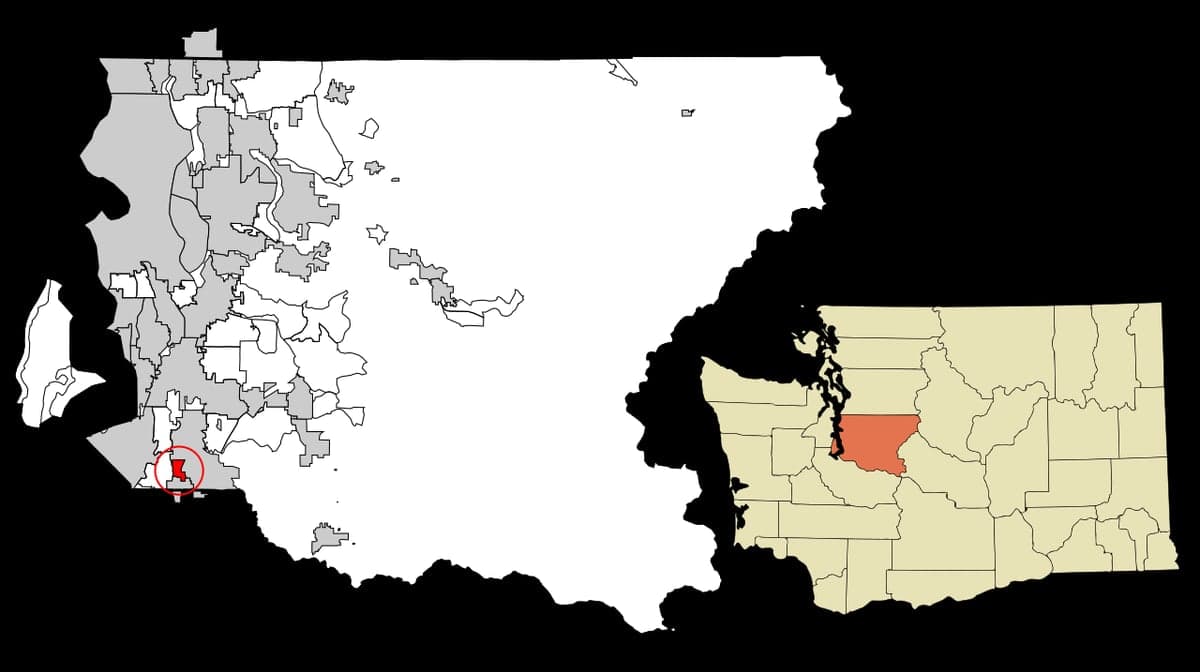
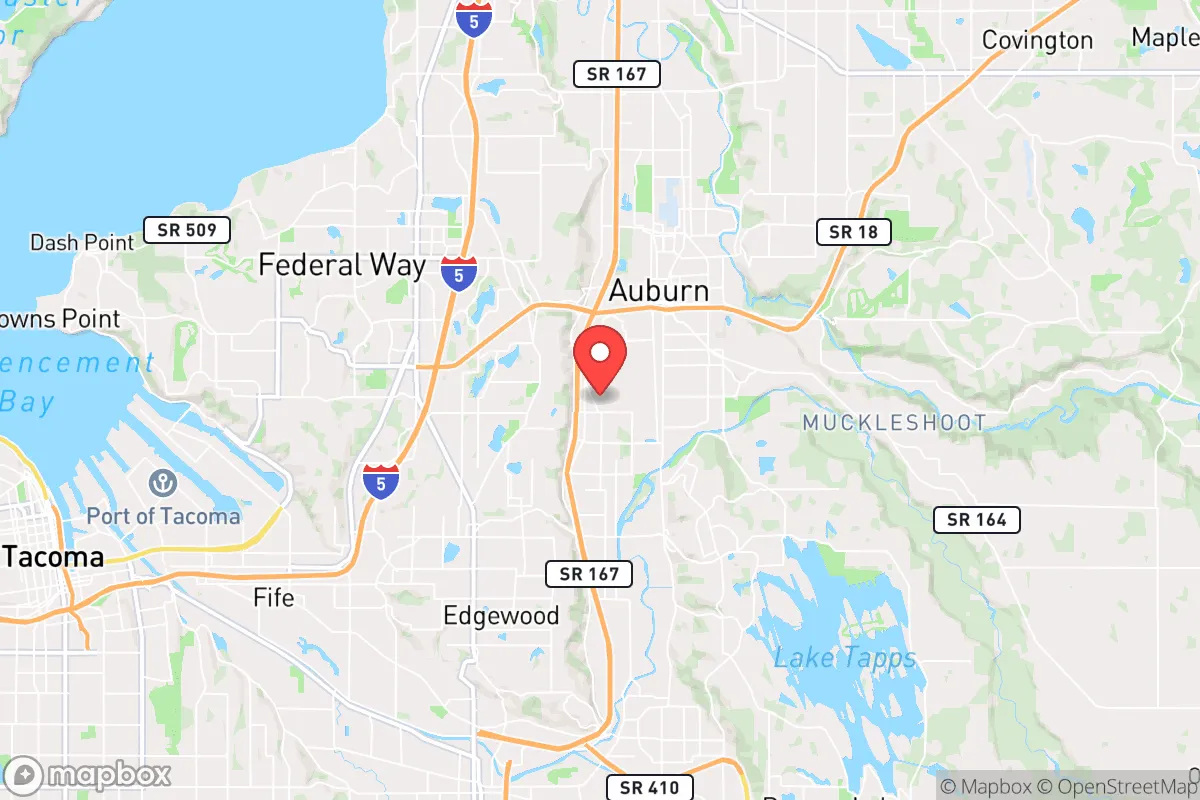
Photo: Wikipedia
Personal Sovereignty in Algona, WA
Viable for self-reliance. Generally workable, though some barriers may limit total independence.
What does Personal Sovereignty tell us?
Personal Sovereignty measures your capacity for self-reliance and independence with minimal government friction. Higher scores mean fewer barriers between you and the way you want to live... but it assumes you have the space you need and good neighbors.
What does this tell us?
Personal Sovereignty measures your capacity for self-reliance and independence with minimal government friction. Higher scores mean fewer barriers between you and the way you want to live... but it assumes you have the space you need and good neighbors.
State Policy
Energy independence: Importer (55% of energy produced in-state)
Personal Liberty
Homesteading

Personal Liberty Analysis
Algona, Washington, offers a personal sovereignty environment that is shaped more by its small-town character and King County’s regulatory framework than by any local push for radical autonomy. For the conservative-leaning individual or family, the city provides a moderate baseline of personal freedoms, but the surrounding county and state laws impose significant constraints on tax burden, self-defense, and property use. The trade-off is a quieter, more community-oriented setting within commuting distance of Seattle, where personal liberties are exercised within a relatively dense legal structure rather than a frontier-style free-for-all.
Tax burden and regulatory posture in King County
Washington State has no personal income tax, which is a major draw for those prioritizing financial sovereignty. However, King County’s property taxes are among the highest in the state, with Algona’s effective rate hovering around 1.1% to 1.3% of assessed home value annually, depending on the specific parcel and local levies. Sales tax in Algona is 10.1% (2026), which includes state, county, and local transit surcharges — a notable bite on everyday purchases. The regulatory posture in King County is generally heavy-touch: building permits, land-use changes, and business licenses require multiple approvals, and the county’s Growth Management Act restricts rural development. For a family looking to start a home-based business or add a workshop, expect a permitting process that can take months. The city itself is small (population roughly 3,200), so local officials are accessible, but they operate under county and state mandates that limit flexibility. Overall, the tax burden is moderate for high earners (no income tax) but regressive for middle-income households due to high sales and property taxes.
Self-defense and gun law specifics in Washington State
Washington is a “shall-issue” state for concealed pistol licenses, but the legal landscape has tightened significantly since 2020. Algona residents must comply with statewide restrictions on magazine capacity (10 rounds maximum) and the ban on certain semi-automatic firearms defined as “assault weapons” under state law (HB 1240, effective 2023). Open carry is legal without a permit for those 18 and older, but local ordinances in King County can restrict firearms in county-owned buildings and parks. The city itself does not have additional gun laws beyond state statutes, but the practical effect is that self-defense options are more limited than in states with constitutional carry or fewer restrictions. Background checks are required for all firearm sales, including private transfers, and the waiting period for handgun purchases is 10 business days. For a reader prioritizing self-defense sovereignty, Algona offers a lawful path to armed protection, but the process is bureaucratic and the legal environment is actively restrictive compared to states like Idaho or Montana. The nearest gun ranges and training facilities are in Auburn or Kent, about 15 minutes away.
Self-reliance and homesteading viability: lot sizes, zoning, and off-grid feasibility
Algona’s residential zoning is predominantly single-family, with minimum lot sizes typically 7,000 to 10,000 square feet in older neighborhoods, though newer subdivisions may have smaller lots. This allows for modest vegetable gardens, small chicken coops (up to 4 hens, no roosters, per city code), and limited backyard structures. However, King County’s health and building codes make off-grid living nearly impossible: rainwater catchment is restricted for potable use, composting toilets require expensive engineered systems, and solar panels must be grid-tied with utility approval. Raising livestock beyond poultry is prohibited within city limits, and beekeeping requires a permit. For serious homesteading — think goats, large gardens, or a wood-fired boiler — you would need to look at unincorporated King County or neighboring Pierce County, where lot sizes of 1-5 acres are more common and zoning is less restrictive. Algona’s water and sewer are municipal, so there is no option for a private well or septic within city limits. The regulatory environment is decidedly anti-off-grid; the city and county prioritize centralized infrastructure and environmental compliance over individual self-reliance.
Personal liberties: parental rights, medical autonomy, speech, and property
Washington State law grants parents broad authority over their children’s education, including the right to homeschool without a teaching certificate (file a declaration of intent and provide annual assessments). Algona has no local restrictions on homeschooling, and the nearby communities of Auburn and Kent offer numerous co-ops and extracurricular options. Medical autonomy is more constrained: the state mandates childhood vaccinations for school attendance (with medical and personal belief exemptions available, though the latter is under political pressure), and Washington has a “death with dignity” act but also a strong public health apparatus that can impose mandates during emergencies. Free speech is protected under the First Amendment, and Algona has no local ordinances restricting political signs or public assembly beyond standard time/place/manner rules. Property rights are limited by King County’s critical areas ordinances, which restrict development near wetlands, streams, and steep slopes — a factor for any buyer considering a lot with natural features. The city’s small size means that local government is relatively responsive, but the legal framework is set by Olympia and Seattle, which lean progressive on public health, education, and environmental regulation. For a conservative-leaning family, the trade-off is clear: you have significant freedom in how you raise your children and express your views, but less control over medical choices and property use.
Compared to other areas in the Pacific Northwest, Algona offers a moderate level of personal sovereignty — better than Seattle proper or King County’s urban core, but far less than rural counties like Ferry or Stevens. The absence of a state income tax is a genuine advantage, and the ability to homeschool and own firearms (within state limits) provides a baseline of autonomy. However, the high sales tax, restrictive gun laws, and near-impossibility of off-grid living mean that a reader seeking maximum self-reliance should look east of the Cascades or into Idaho. For a family that values community, proximity to employment, and a quieter lifestyle within a regulated but not oppressive system, Algona is a reasonable choice — just know that personal sovereignty here is exercised within a framework of state and county oversight, not in spite of it.

* Values derived from national, state, county, city and local statistics and may differ in a specific area. Last updated: 2026-09-03T05:10:55.000Z
Narrative content on this page is AI-generated and may contain mistakes. Verify any details that matter before acting on them.
ReloMaps may earn a commission from affiliate links at no extra cost to you.

