Photo: Wikipedia
Strategic Assessment of North Slope County
Deep buffer from population centers and strategic targets. Low natural disaster risk and minimal exposure to border or coastal threats.
What does the Strategic Assessment tell us?
Our Strategic Assessment grades tactical survivability of an area. Major population centers, military targets, fallout zones, natural disasters, and border exposure all drive risk — lower exposure means a more defensible position in a crisis.
This is heavily inspired by Joel Skousen's Strategic Relocation book. Highly recommended you checkout the book ($)What does this tell us?
Our Strategic Assessment grades tactical survivability of an area. Major population centers, military targets, fallout zones, natural disasters, and border exposure all drive risk — lower exposure means a more defensible position in a crisis.
This is heavily inspired by Joel Skousen's Strategic Relocation book. Highly recommended you checkout the book ($)Strategic Pillars

Key Distances
Strategic Assessment Analysis
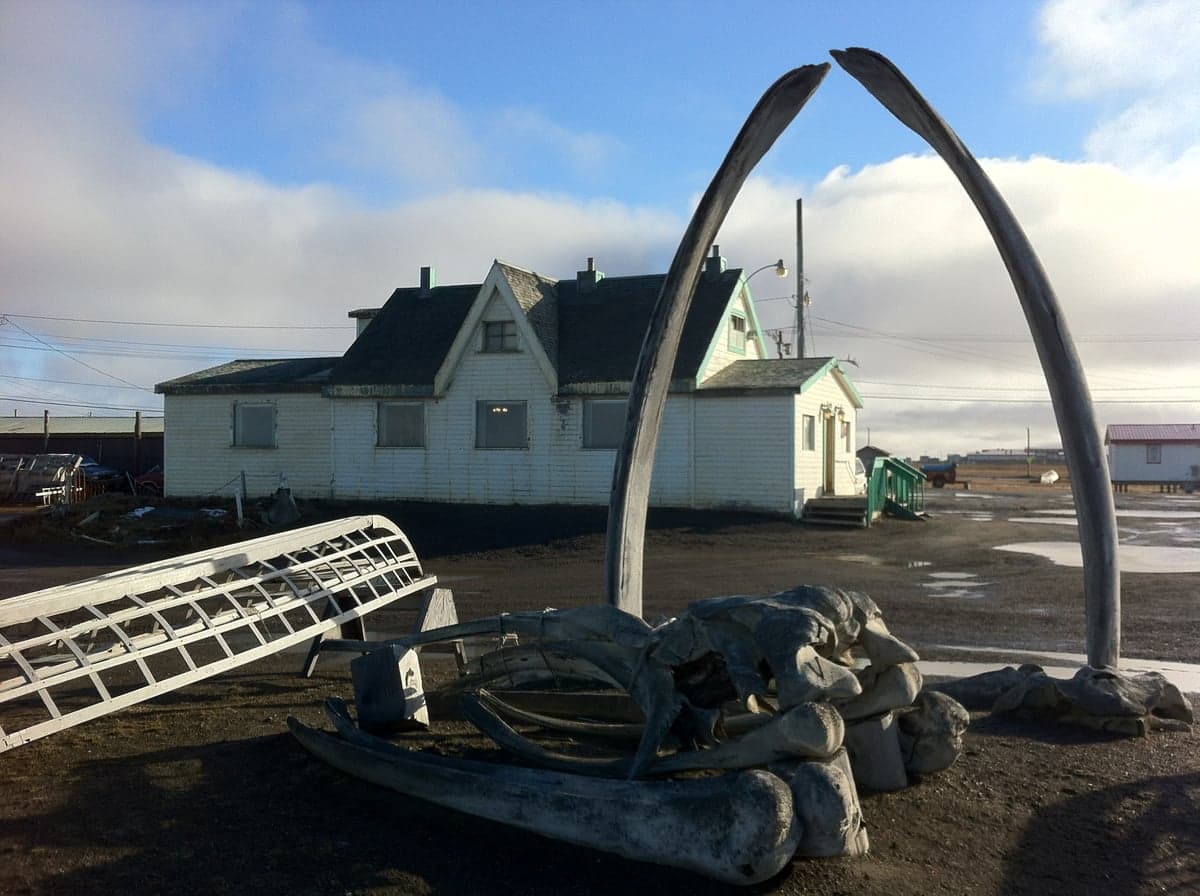
The North Slope Borough presents a uniquely challenging proposition for the relocation-minded individual focused on self-sufficiency and strategic resilience. Stretching across Alaska’s northernmost tier, this vast region—encompassing the major industrial hub of Prudhoe Bay, the administrative center of Utqiaġvik (formerly Barrow), and the satellite communities of Nuiqsut, Kaktovik, and Point Hope—offers perhaps the most extreme form of geographic isolation available within the United States. Its primary advantage, and the single strongest argument for considering it, is its location over 800 miles north of Anchorage and even farther from the Lower 48’s population centers, placing it well outside the fallout zones and supply-chain disruption radius of any plausible domestic conflict or infrastructure collapse.
Geographic isolation and natural strategic buffer
The North Slope’s location is its defining strategic asset. The borough’s western edge faces the Chukchi Sea, while its northern coast runs along the Beaufort Sea, creating a natural barrier of hundreds of miles of open water and Arctic tundra. This means the nearest significant military installation is Fort Wainwright near Fairbanks, over 400 miles southeast, and the closest refinery corridor—the Kenai Peninsula’s complex or the Anchorage-area terminals—is separated by the Brooks Range and the vast interior. For a relocator worried about proximity to potential targets, the North Slope is as close to a blank spot on the map as exists in the country. The only notable critical infrastructure within the borough itself is the Trans-Alaska Pipeline System’s origin point at Prudhoe Bay, a collection of oil-field operations that, while industrially active, is not a population-dense target. The communities themselves are small—Utqiaġvik’s population hovers around 4,000, and Prudhoe Bay’s camp population is transient—so the risk of secondary effects from a strike on nearby infrastructure is negligible. The sheer scale of the empty tundra also means that any theoretical fallout pattern would have to travel over hundreds of miles of uninhabited ground before reaching a settlement, giving residents a decisive temporal buffer for sheltering in place.
Natural and man-made exposure risks to consider
While the North Slope offers unmatched man-made threat isolation, it imposes severe natural hazards. The region is subject to Arctic winter temperatures that routinely drop below -40°F, with wind chills that can make exposed skin dangerous in minutes. Permafrost underlies nearly all of the borough, making traditional underground shelter construction difficult and requiring specialized building techniques like pilings or insulated pads to prevent ground thaw from destabilizing structures. Storm surges along the Chukchi and Beaufort coasts are a genuine threat, particularly in fall when open water collides with early sea-ice formation; Utqiaġvik has experienced significant coastal erosion and flooding events. Additionally, the area sits within a zone of sporadic permafrost degradation, which can cause sudden ground subsidence or “thermokarst” features that disrupt roads, airstrips, and water lines. From a man-made risk perspective, the only plausible local danger is a catastrophic oil-spill or gas-release event from the Prudhoe Bay complex, though the dispersed layout of the field and the rigorous safety protocols reduce that probability dramatically. For a relocator, the trade-off is clear: near-total safety from ballistic or industrial fallout in the Lower 48, but exposure to some of the most unforgiving weather and terrain on the continent.
Everyday resilience: food, water, energy, and defensibility in the Arctic
Practical self-sufficiency on the North Slope is not a weekend project; it is a permanent, all-in commitment. Food security is the primary challenge. There are no commercial farms within the borough, and the growing season is measured in weeks. All fresh produce, grains, and processed foods are flown in from Fairbanks or Anchorage, or barged up during the short summer shipping window. A household intending to be resilient must plan for months of stored provisions, with a freezer stocked with subsistence-harvested caribou, seal, fish, or whale meat—subsistence hunting is not a hobby here but a survival tradition. Water is sourced from deep groundwater wells or from meltwater in spring, but surface water is scarce and treatment is required; most residents rely on delivered water or hauled water from community water plants. Energy is the area’s one relative strength. The North Slope is sitting on some of the largest oil and gas reserves in North America, and while most of that is exported, local utilities (such as the Barrow Utilities and Electric Cooperative) use natural gas for power and heating, which is the most cost-effective and reliable fuel source in the region. A backup generator with a sizable fuel cache is a sound investment. As for defensibility, the terrain itself is the best defense: the flat, open tundra offers no cover for an approaching group, and any movement is visible from miles away. Communities are compact and tight-knit, but the extreme cold makes prolonged outdoor exposure a lethal threat—meaning an intruder would need both preparation and luck. The real defensive challenge is the psychological and logistical burden of long-distance travel; a vehicle breakdown on a winter road between Utqiaġvik and Nuiqsut is a mortal emergency.
The overall strategic picture for the North Slope Borough is that of an extreme hedge against worst-case scenarios that comes with an equally extreme baseline cost. For a single individual or family willing to adapt to a subsistence-oriented lifestyle, with significant up-front investment in a robust dwelling (ideally a home built on pilings with a backup heating system), a year’s supply of stored food, and the skills to hunt and navigate the Arctic, this is arguably the most secure location in the United States from large-scale man-made threats. The isolation guarantees that no fallout from a distant strike will meaningfully affect your situation, and the small, tight communities offer a level of mutual support that larger cities cannot match. However, the daily resilience burden—securing water, maintaining heat in -50°F weather, avoiding medical emergencies that require days of travel—means that this is a relocation option only for those who treat preparedness as a vocation rather than a checklist. If your priority is to be off the board entirely, and you accept that the cost of that is a life of constant physical labor and constrained freedom of movement, the North Slope delivers. For anyone else, the numbers simply do not pencil out.

* Values derived from national, state, county, city and local statistics and may differ in a specific area. Last updated: 2026-06-30T04:01:11.000Z
Narrative content on this page is AI-generated and may contain mistakes. Verify any details that matter before acting on them.
ReloMaps may earn a commission from affiliate links at no extra cost to you.

