Photo: Wikipedia
Demographics of North Slope County
Affluence Level in North Slope County
A middle-class area roughly in line with national averages across income, home values, education, and employment.
People of North Slope County
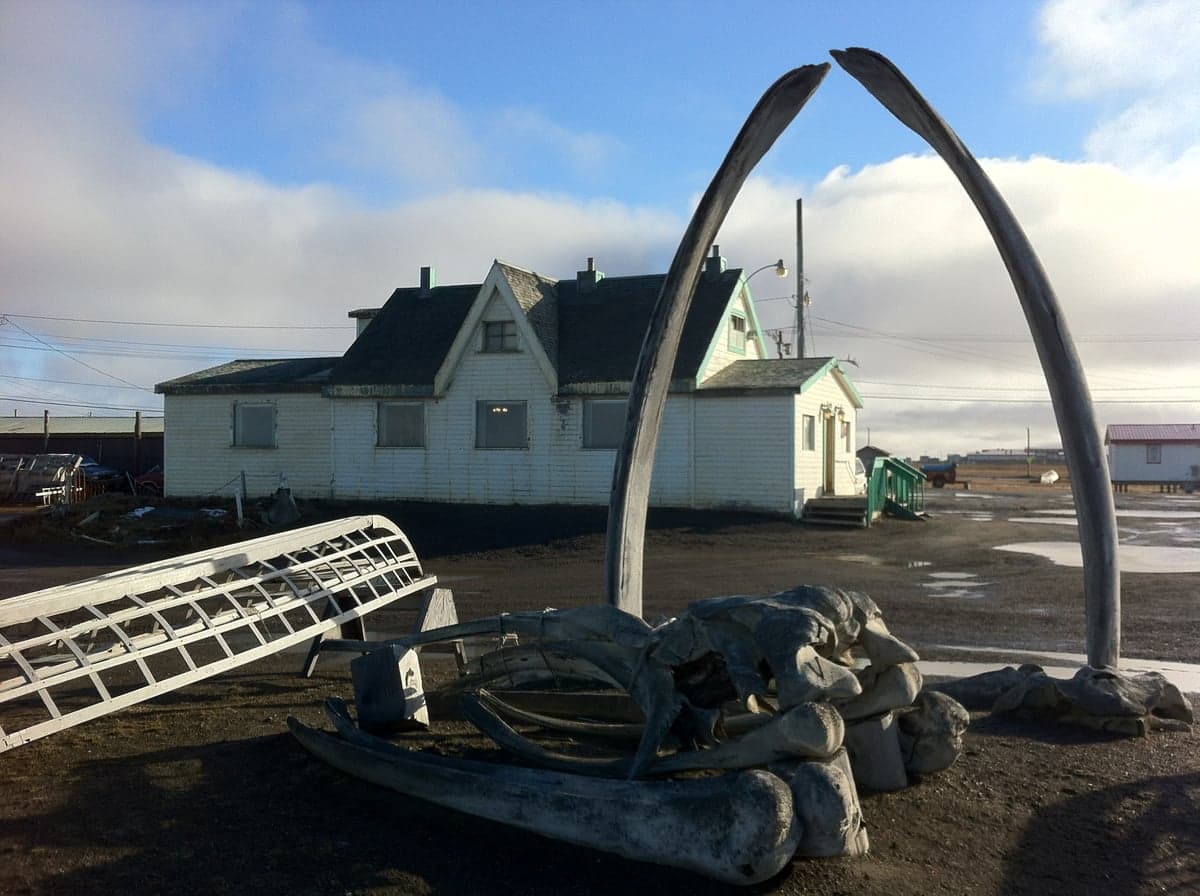
The people of North Slope County, Alaska, are a sparse and resilient population of roughly 10,891 residents, defined by their extreme Arctic environment and a demographic profile that is overwhelmingly Indigenous. With a population density of less than one person per square mile, the county is one of the most remote and least populated in the United States, where Iñupiat heritage and subsistence traditions remain central to daily life. The county’s distinctive identity is shaped by a majority Alaska Native population, a very low foreign-born share of 3.0%, and a unique economy tied to oil extraction at Prudhoe Bay and the regional hub of Utqiaġvik (formerly Barrow).
Settlement & growth (pre-1960)
The human history of North Slope County begins with the Iñupiat people, who have inhabited the Arctic coast for at least 1,500 years, with archaeological evidence at sites like the Birnirk and Thule cultures near Utqiaġvik and Point Hope. These ancestors of today’s Iñupiat lived in semi-subterranean sod houses, hunted bowhead whales, seals, and caribou, and developed a sophisticated maritime adaptation to the harsh environment. Russian explorers and traders made brief contact in the 18th and early 19th centuries, but unlike southern Alaska, no permanent Russian settlements were established here due to the extreme cold and ice-bound coastline.
American whalers arrived in the mid-19th century, particularly after 1848 when commercial whaling expanded into the Beaufort Sea. Ships wintered at places like Point Barrow and Herschel Island, and crews interacted extensively with the Iñupiat, introducing new trade goods, diseases, and cultural changes. By the early 20th century, whaling declined, but the U.S. government established a reindeer herding program in the 1890s to provide an alternative economy, with herding communities forming around Wainwright and Kaktovik. Missionaries and teachers from the Presbyterian and Episcopal churches arrived in the 1890s and 1900s, founding schools and churches in Utqiaġvik and Point Hope that began a long process of cultural and linguistic change.
Alaska Native land claims and the discovery of oil at Prudhoe Bay in 1968 transformed the region. Prior to that, the population remained small and almost entirely Iñupiat, with only a handful of non-Native traders, missionaries, and government employees. The 1950 U.S. Census recorded just 3,000 residents in the entire North Slope region, living in scattered villages like Anaktuvuk Pass, Atqasuk, and Nuiqsut, with no road connections and only seasonal air and sea access.
Modern era (post-1965)
The 1971 Alaska Native Claims Settlement Act (ANCSA) was the single most transformative event for North Slope County’s population. It created the Arctic Slope Regional Corporation (ASRC) and village corporations, giving the Iñupiat ownership of vast lands and financial capital from oil revenues. This led to a dramatic increase in local government services, housing, and infrastructure, particularly in Utqiaġvik, which became the county seat and the largest community. The population grew from about 3,000 in 1970 to over 7,000 by 1990, driven by natural increase among the Iñupiat and an influx of non-Native workers for the oil industry at Prudhoe Bay and Deadhorse.
The Hart-Cellar Act of 1965 had minimal direct impact here, as the county’s foreign-born population remains just 3.0%, far below the national average. The small non-Native population is overwhelmingly domestic migrants from other parts of Alaska and the Lower 48, drawn by high-paying jobs in oil extraction, construction, and support services. These workers are predominantly White (31.2% of the county’s total population) and tend to live in company camps at Prudhoe Bay or in Utqiaġvik, often on temporary rotations rather than settling permanently. The Hispanic share is 5.3%, Black 1.6%, and East/Southeast Asian communities (including Filipino and Vietnamese workers in the seafood and oil industries) make up 5.0%. Indian-subcontinent residents are negligible at 0.1%.
Suburbanization as understood in the Lower 48 does not exist here; the county has no road network connecting its villages, and Utqiaġvik itself is a compact community of about 4,500 people. The most significant demographic shift since 1970 has been the urbanization of the Iñupiat population, with many families moving from smaller villages like Point Lay, Wainwright, and Kaktovik into Utqiaġvik for better schools, healthcare, and employment. This has created a cultural tension between traditional subsistence lifestyles and modern wage-based economy, with many residents maintaining seasonal camps for hunting and whaling while living in modern housing with internet access.
The future
The population of North Slope County is projected to remain stable or decline slightly over the next 10-20 years, as the oil industry faces long-term uncertainty from global energy transitions and declining production at Prudhoe Bay. The county’s birth rate among the Iñupiat remains above replacement level, but out-migration of young adults for education and employment in Anchorage and Fairbanks is significant. The non-Native workforce is likely to shrink as oil operations automate and consolidate, reducing the temporary worker population at Deadhorse and Prudhoe Bay.
Diversity is unlikely to increase substantially, as the county’s remote location and high cost of living deter most immigrants. The Iñupiat share of the population (roughly 60-65% when combining White and Alaska Native categories) will likely grow as a proportion, as the non-Native workforce contracts. New communities are not forming; instead, the trend is toward further concentration in Utqiaġvik, with smaller villages like Anaktuvuk Pass and Atqasuk losing population to the regional hub. The cultural identity of the county is evolving toward a blend of traditional Iñupiat values—subsistence hunting, whaling festivals, and the Iñupiaq language—with modern technology and governance, as seen in the successful management of the ASRC and the North Slope Borough.
For someone moving in now, North Slope County is a place where the Iñupiat majority defines the social and political landscape, and where the economy is almost entirely dependent on oil revenues that fund exceptional public services—including free utilities, modern schools, and a robust healthcare system—but also create vulnerability to boom-and-bust cycles. The population is stable, Indigenous, and deeply connected to the land and sea, with little room for the kind of demographic diversification seen in other parts of Alaska. New arrivals, whether temporary oil workers or permanent residents, will find a community that values self-reliance, cultural preservation, and a pace of life dictated by the Arctic seasons.

* Values derived from national, state, county, city and local statistics and may differ in a specific area. Last updated: 2026-06-30T04:01:11.000Z
Narrative content on this page is AI-generated and may contain mistakes. Verify any details that matter before acting on them.
ReloMaps may earn a commission from affiliate links at no extra cost to you.

