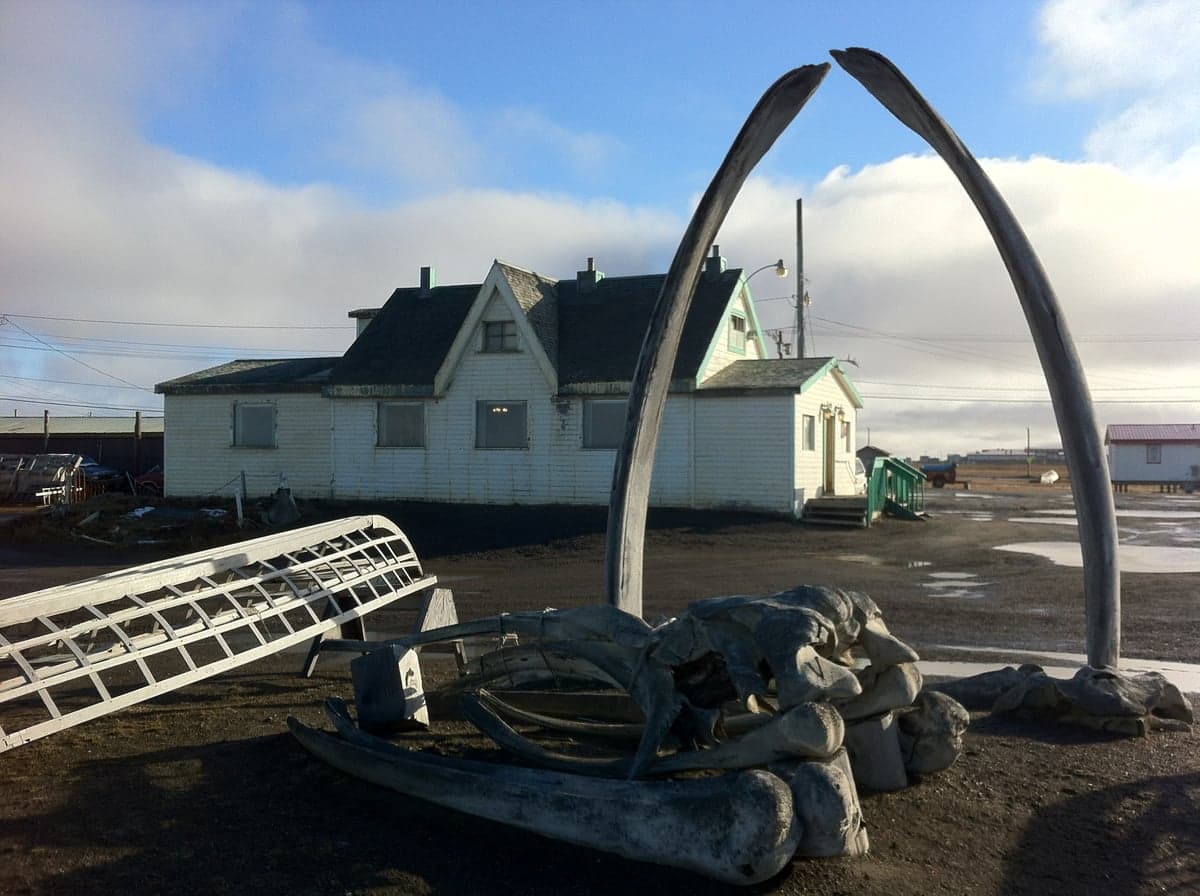
Photo: Wikipedia
Personal Sovereignty in North Slope County
Viable for self-reliance. Generally workable, though some barriers may limit total independence.
What does Personal Sovereignty tell us?
Personal Sovereignty measures your capacity for self-reliance and independence with minimal government friction. Higher scores mean fewer barriers between you and the way you want to live... but it assumes you have the space you need and good neighbors.
What does this tell us?
Personal Sovereignty measures your capacity for self-reliance and independence with minimal government friction. Higher scores mean fewer barriers between you and the way you want to live... but it assumes you have the space you need and good neighbors.
State Policy
Energy independence: Net exporter (350% of energy produced in-state)
Personal Liberty
Homesteading

Personal Liberty Analysis
North Slope County, Alaska, offers an environment of personal sovereignty that is among the most expansive in the United States, shaped by its remote Arctic geography, sparse population, and a state-level legal framework that prioritizes individual autonomy. The county’s roughly 11,000 residents, concentrated in Utqiaġvik (Barrow), Prudhoe Bay, and the smaller communities of Point Hope, Wainwright, and Kaktovik, operate under a governance model where local regulation is minimal and state preemption is strong in key areas like taxation and self-defense. For a relocation-minded individual or family valuing independence, the trade-off is clear: extraordinary freedom from government intrusion comes with the necessity of extreme self-reliance in a harsh, isolated environment.
Tax burden and regulatory posture: what residents actually pay
North Slope County imposes no local sales tax and no personal income tax, aligning with Alaska’s statewide absence of both. The county’s primary revenue source is the property tax, but the effective rate is remarkably low—approximately 0.5% to 0.8% of assessed value, depending on the specific borough service area. For a home valued at $250,000, annual property taxes run roughly $1,250 to $2,000, far below the national average. The regulatory posture is equally light: there is no county-level building code enforcement outside of Utqiaġvik’s limited zoning for commercial structures, and no county-wide planning department dictating land use. In Prudhoe Bay, industrial regulations are driven by state and federal oil and gas oversight, but for residential life in villages like Point Hope or Wainwright, the only real regulatory hurdles come from state environmental permits for large-scale projects. The Alaska Permanent Fund Dividend, which paid $1,312 in 2024, adds a direct financial benefit to residents, effectively reducing the net tax burden further. For a conservative-leaning reader, this is as close to a low-tax, low-regulation environment as exists in any U.S. county.
Self-defense and gun law specifics: what is allowed without a permit
Alaska is a constitutional carry state, and North Slope County fully reflects that. No permit is required to openly carry or conceal a firearm for any person 21 or older who can legally possess a firearm. The county has no local firearm ordinances—no waiting periods, no magazine capacity limits, and no registration requirements. In Utqiaġvik, the largest town, there is no local gun board or additional restrictions beyond state law. Stand-your-ground laws apply statewide, with no duty to retreat in any place where a person has a legal right to be. For residents of remote villages like Kaktovik or Wainwright, where wildlife encounters with polar bears and grizzlies are a daily reality, carrying a firearm is not a political statement but a practical necessity. The only notable restriction is that firearms are prohibited in certain state-owned buildings and schools, but these are few and far between. For a family prioritizing self-defense autonomy, North Slope County offers one of the most permissive legal environments in the nation, with no local government interference in the right to keep and bear arms.
Self-reliance and homesteading viability: lot sizes, zoning, and off-grid feasibility
Homesteading in North Slope County is less about tilling soil and more about constructing a self-sufficient Arctic dwelling. Lot sizes in unincorporated areas are effectively unlimited—there is no county zoning outside of Utqiaġvik’s small commercial core. In villages like Point Hope and Wainwright, land is typically held under Native allotment or village corporation ownership, but private lots can be purchased or leased, often at prices under $10,000 for a half-acre parcel. Off-grid living is not just feasible but standard: no county requirement exists for grid connection, septic permits, or building inspections in rural areas. Most homes in villages rely on diesel generators, solar panels (with battery storage), or a combination, and water is often hauled from community wells or treated rainwater. The Alaska Department of Environmental Conservation requires basic wastewater disposal compliance, but enforcement is minimal in remote areas. For a family seeking true independence, the ability to build a cabin on a large parcel without county interference is real—but the logistical challenges of Arctic construction, fuel transport, and food storage are severe. The trade-off is absolute freedom from building codes in exchange for total personal responsibility for survival.
Personal liberties: parental rights, medical autonomy, speech, and property
Alaska law strongly protects parental rights in education and healthcare. Parents have the legal right to direct their child’s education, including homeschooling without state approval, and the state does not require standardized testing for homeschooled students. In North Slope County, the North Slope Borough School District operates schools in Utqiaġvik and several villages, but many families choose remote learning or correspondence programs. Medical autonomy is similarly broad: Alaska has no state-level vaccine mandate for adults, and the state’s Health Insurance Portability and Accountability Act (HIPAA) protections are enforced. The county has no local health department imposing mandates beyond state recommendations. Free speech protections are robust, with no local hate speech ordinances or social media restrictions. Property rights are strong—eminent domain is rarely used, and the county has no rent control or landlord licensing. The only notable limitation is that much of the land is owned by Native corporations or the federal government (Arctic National Wildlife Refuge, Gates of the Arctic National Park), so private property ownership is concentrated in village lots and a few private inholdings. For a resident in Utqiaġvik or Prudhoe Bay, the day-to-day experience is one of minimal government intrusion into personal decisions.
Overall, North Slope County ranks among the top U.S. counties for personal sovereignty, comparable to remote areas of Montana or Idaho but with even lower taxes and fewer regulations. The combination of no income tax, constitutional carry, no county zoning, and strong parental rights creates an environment where individual autonomy is the default. However, this freedom is paired with extreme isolation, harsh climate, and limited access to services—a trade-off that suits a specific type of self-reliant individual or family. For those willing to accept the Arctic’s challenges, North Slope County offers a level of personal liberty that is increasingly rare in the Lower 48.

* Values derived from national, state, county, city and local statistics and may differ in a specific area. Last updated: 2026-06-30T04:01:11.000Z
Narrative content on this page is AI-generated and may contain mistakes. Verify any details that matter before acting on them.
ReloMaps may earn a commission from affiliate links at no extra cost to you.

