Photo: Wikipedia
Political ClimatePolitical Climate in North Slope County
Showing state-level results — no local-only data available.
Local Political AnalysisPolitical Analysis of North Slope County
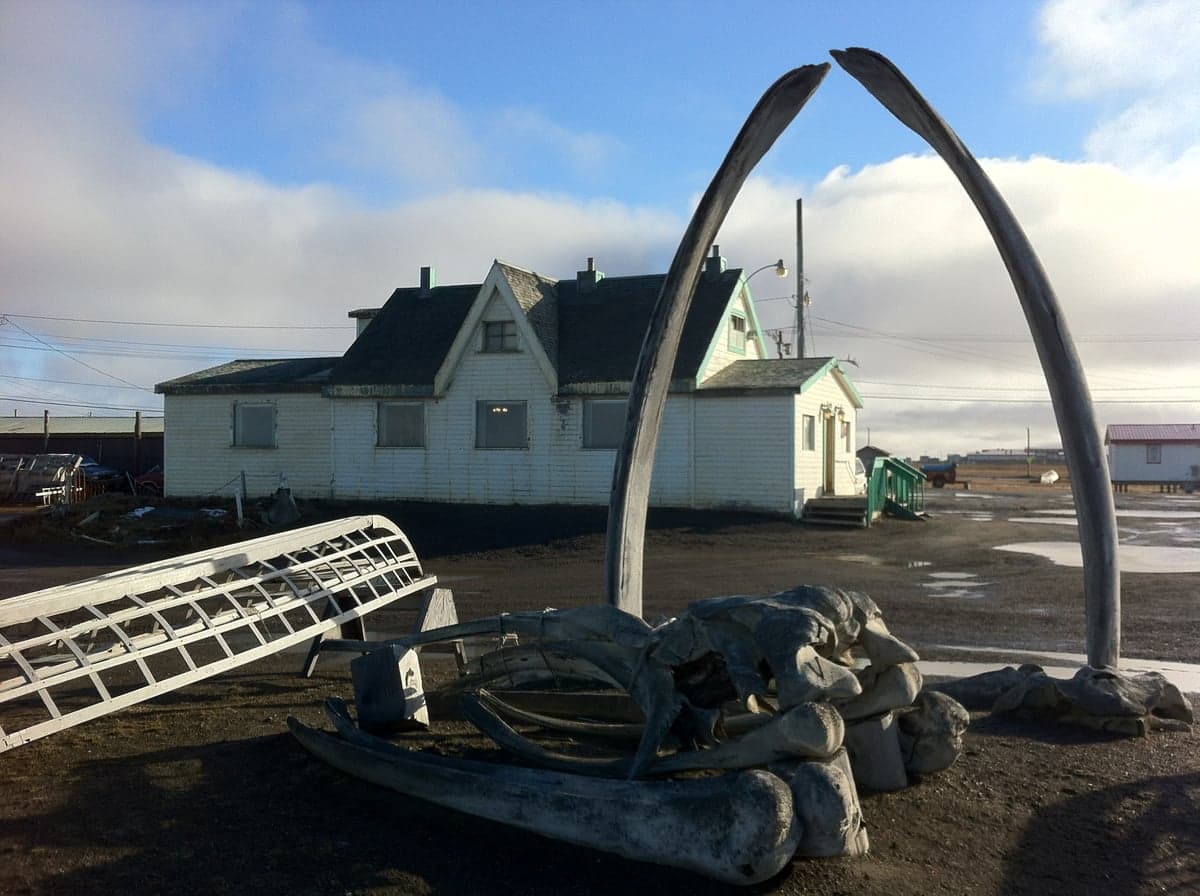
North Slope County, Alaska, is a deep-red stronghold in a state that itself leans reliably Republican, matching the state's Cook PVI of R+6. The county's politics are shaped by the dominance of the oil and gas industry, which provides the vast majority of local employment and tax revenue, creating a pro-development, pro-resource extraction consensus that cuts across party lines. While the county has voted Republican in every presidential election since statehood, the real political action happens in the primaries and local races, where the divide is less between Democrats and Republicans and more between pragmatic industry moderates and hardline libertarian-conservatives.
How it compares
North Slope County's R+6 PVI is identical to Alaska's statewide lean, but the comparison masks a much more extreme local reality. The county is far more Republican than the state as a whole: in 2024, Donald Trump won the county with 68% of the vote, compared to 55% statewide. The difference is driven by the near-total absence of the moderate, suburban, and union-heavy Democratic vote that exists in Anchorage and Fairbanks. The only real political variation within the county is between the two main population centers: Utqiaġvik (Barrow), the county seat, is slightly more moderate, with a small but vocal bloc of Iñupiat Democrats who prioritize subsistence rights and social services, while Prudhoe Bay / Deadhorse is a company town where politics are almost entirely about oil lease terms and regulatory relief. The handful of swing precincts are in Utqiaġvik's lower-income housing areas, where a candidate's stance on local infrastructure and fuel subsidies can flip a precinct by 10 points. Outside these two hubs, the vast, unpopulated tundra is politically inert—there are no rural precincts to speak of, just absentee ballots from oil field workers who vote overwhelmingly Republican.
What this means for residents
For conservative residents, the political climate is a comfortable fit: local government is focused on keeping oil taxes low, maintaining the Dalton Highway, and ensuring the state capital doesn't redirect too much oil revenue to Anchorage. The county assembly and school board are reliably Republican, and there is little pressure to compromise on social issues. For liberal residents, the reality is more isolating. There is no Democratic Party infrastructure to speak of—no local party office, no regular meetings, and no coordinated campaign efforts. Progressive candidates rarely run, and when they do, they are often dismissed as outsiders. The practical effect is that liberal residents tend to focus on single-issue advocacy (subsistence hunting rights, climate adaptation for coastal villages) rather than broader partisan politics. The county's small population—fewer than 10,000 people—means that personal relationships often override party labels in local elections, but the overall ideological ceiling is low for anyone left of center.
What this means for residents
The most distinctive cultural and policy distinction in North Slope County is the North Slope Borough's unique tax structure. Unlike most Alaska counties, the borough levies a property tax on oil and gas properties, which funds an extensive network of schools, roads, and utilities that would be unaffordable in any other rural Alaska region. This creates a political dynamic where even conservative residents support a robust local government, because it directly delivers services that the state won't provide. The other major distinction is the county's relationship with the Arctic National Wildlife Refuge (ANWR): while most of Alaska's Republicans support drilling in ANWR, North Slope residents are more ambivalent, with many Iñupiat leaders opposing it due to potential impacts on caribou herds. This makes the county's politics more complex than a simple red-blue map suggests—a place where oil money funds a surprisingly functional local government, but where the long-term future of that funding is the only issue that really matters.

State Political ClimatePolitical Climate in Alaska
State Political AnalysisPolitical Environment in the State
Alaska is a fascinating political outlier: a state with a Cook PVI of R+6 that has voted Republican in every presidential election since 1968, yet consistently elects independents and moderates to statewide office and maintains a fiercely independent, libertarian-leaning streak that defies simple red-state labels. Over the past 20 years, the state has drifted rightward on cultural issues while remaining pragmatic on resource development and government spending, creating a political environment that feels more like a Western frontier than a Southern Bible Belt stronghold. For a relocator, this means you’ll find a place where conservative values on guns and taxes are deeply embedded, but where social libertarianism and a live-and-let-live attitude often trump partisan orthodoxy.
Urban vs. rural divide
The political map of Alaska is defined by a stark urban-rural split that mirrors the Lower 48 but with its own unique twists. The Anchorage metropolitan area, home to roughly 40% of the state’s population, is the key battleground: the city itself leans slightly Democratic, with precincts in midtown and the Hillside voting blue, while the surrounding Matanuska-Susitna Borough—including fast-growing towns like Wasilla and Palmer—is deeply conservative and reliably Republican. Fairbanks, the second-largest city, is a mix of military-affiliated conservatives and university liberals, giving it a purple tint, while Juneau, the capital, is the most reliably Democratic city in the state, driven by state employees and a strong environmentalist presence. Rural Alaska, including the vast Bush regions like the Nome and Barrow (Utqiaġvik) areas, votes overwhelmingly Democratic due to Alaska Native voting blocs and reliance on federal programs, but these areas have low turnout and are often overshadowed by the Anchorage bowl. The real political action is in the suburban and exurban growth corridors—places like Eagle River and Chugiak—where conservative voters have consolidated power over the last decade, flipping the state’s lone congressional seat from a moderate Democrat to a hardline Republican in 2022.
Policy environment
Alaska’s policy environment is defined by its unique fiscal structure: no state income tax and no statewide sales tax, funded instead by oil revenue and the Alaska Permanent Fund Dividend (PFD), which gives every resident an annual check (typically $1,000–$2,000). This creates a political dynamic where debates over the size of the PFD dominate elections, often overshadowing social issues. The regulatory posture is light-touch, especially on resource extraction—oil, gas, mining, and fishing are king—and the state has a strong property rights culture, with minimal zoning in most areas outside Anchorage. Education policy is locally controlled, with no statewide school choice program, though homeschooling is popular and lightly regulated. Healthcare is a mixed bag: the state expanded Medicaid under the Affordable Care Act in 2015, a move that was controversial among conservatives, but the system remains strained by rural access issues. Election laws are relatively open: same-day voter registration is allowed, no-excuse absentee voting is available, and the state uses a top-four nonpartisan primary system (passed by ballot initiative in 2020) that has produced moderate winners like Senator Lisa Murkowski. Gun laws are among the most permissive in the nation: no permit required for concealed carry, no waiting periods, and no red flag law, though a 2024 ballot measure to raise the purchase age to 21 failed narrowly.
Recent policy direction
The last five years have seen Alaska lurch rightward on cultural and governance issues, even as its unique political system moderates outcomes. In 2022, the state passed a constitutional amendment (by voter initiative) requiring a two-thirds legislative supermajority to pass new taxes, effectively locking in the no-tax status quo. On guns, the legislature in 2023 rejected a proposed red flag law and instead passed a preemption bill barring local governments from enacting their own firearm restrictions, a direct response to Anchorage’s brief attempt to ban guns in city buildings. Education saw a major flashpoint in 2024 when Governor Mike Dunleavy signed a bill banning classroom instruction on sexual orientation and gender identity through third grade, mirroring Florida’s “Don’t Say Gay” law, while also expanding a small school voucher program for rural students. On medical freedom, Alaska has no vaccine mandate for state employees and banned COVID-19 vaccine passports in 2021, but it also maintains a robust public health system that pushed for high vaccination rates. Privacy and surveillance are lightly regulated: the state has no comprehensive data privacy law, and law enforcement use of drones and license plate readers is common but largely unregulated. Property rights remain strong, with no statewide rent control and minimal environmental review for private development outside designated areas. The 2024 election saw a push to repeal the top-four primary system, but it survived, preserving a path for independents and moderates to win office.
Civil unrest & political movements
Alaska has a history of low-grade civil unrest tied to resource conflicts and indigenous rights, but large-scale protests are rare. The most visible flashpoints in recent years have been around the PFD: in 2020, when the legislature cut the dividend to fund government services, protests erupted in Anchorage and Fairbanks, with some activists threatening secession from the U.S. (a perennial fringe movement in the state). The “Alaska Independence Party,” which advocates for a vote on secession, remains active but marginal, polling around 5%. Immigration politics are muted—Alaska has a tiny foreign-born population (about 7%)—but the state has no sanctuary city policies, and Anchorage’s 2023 attempt to declare itself a “welcoming city” for immigrants was quickly rescinded after conservative backlash. Election integrity controversies flared in 2022 when the state’s new ranked-choice voting system (used for the first time) led to a Republican losing the U.S. House seat to a Democrat, sparking calls for repeal from the GOP. Organized activist movements are small but vocal: on the left, environmental groups like the Alaska Wilderness League push for restrictions on oil drilling in the Arctic National Wildlife Refuge, while on the right, the “Second Amendment Sisters” and “Moms for Liberty” chapters are active in Anchorage and the Mat-Su Valley. A new resident would notice the strong presence of “Don’t Tread on Me” flags and libertarian bumper stickers, especially in rural areas, reflecting a deep skepticism of federal overreach.
Projection
Over the next 5–10 years, Alaska is likely to become more Republican and more culturally conservative, driven by in-migration from red states and out-migration of younger, more liberal residents to the Lower 48. The Mat-Su Borough, already the fastest-growing region, will continue to pull the state rightward, while Anchorage’s blue lean may soften as housing costs push Democrats out. The PFD will remain the central political issue, with pressure to cut it further to fund services, which could alienate libertarian-leaning voters and create space for a centrist third-party movement. The top-four primary system is likely to survive, but ranked-choice voting may be repealed if Republicans gain a supermajority. Climate change will reshape the Bush regions, potentially reducing Democratic turnout there, while oil revenue declines will force hard choices on taxes—a constitutional amendment to allow a state income tax is possible but unlikely. For a relocator, the Alaska of 2035 will feel more like Idaho or Montana: solidly red, culturally conservative, but still fiercely independent, with a strong frontier ethos that values personal freedom over party loyalty.
For a new resident, the bottom line is that Alaska offers a political environment that is broadly conservative on fiscal and gun issues, but with a libertarian twist that tolerates social diversity and resists partisan rigidity. You’ll find lower taxes and fewer regulations than almost any other state, but you’ll also need to accept a political culture where the PFD check is the dominant issue and where local control means your vote matters more in municipal elections than in national ones. If you’re a conservative who values personal freedom over party loyalty, or a liberal who can tolerate a live-and-let-live attitude, Alaska will feel like home. If you’re looking for a red-state echo chamber or a blue-state safety net, you’ll be disappointed.
* Values derived from national, state, county, city and local statistics and may differ in a specific area. Last updated: 2026-06-30T04:01:11.000Z
Narrative content on this page is AI-generated and may contain mistakes. Verify any details that matter before acting on them.
ReloMaps may earn a commission from affiliate links at no extra cost to you.

