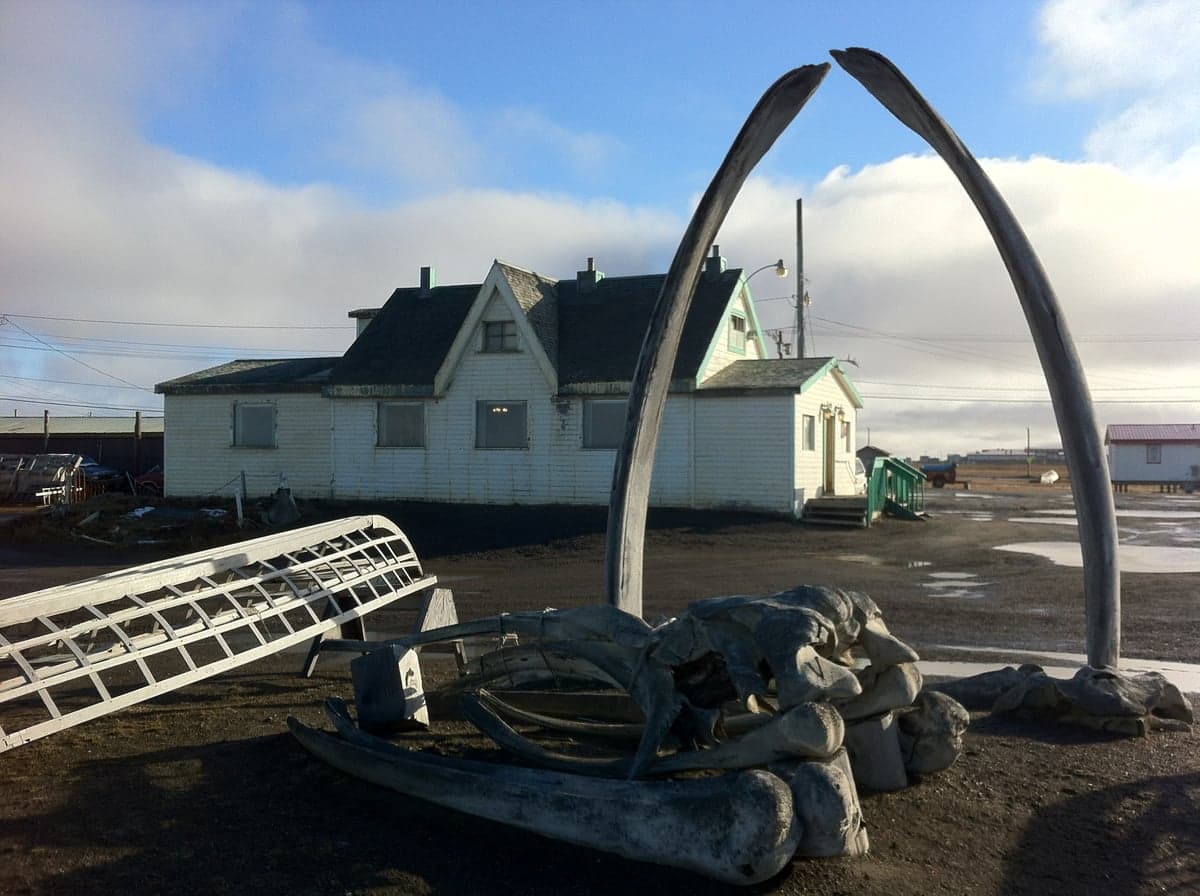
Photo: Wikipedia
Quality of Life in North Slope County
A livable area that tracks near national norms for affordability, walkability, and neighborhood health.
What does Quality of Life tell us?
Quality of Life measures an area by evaluating factors like cost of living, nearby amenities, country club access, airport proximity, socioeconomic signals and neighborhood character. For large states, this is a general average — quality of life can vary dramatically between metro areas, suburbs, and rural communities within the same state.
What does this tell us?
Quality of Life measures an area by evaluating factors like cost of living, nearby amenities, country club access, airport proximity, socioeconomic signals and neighborhood character. For large states, this is a general average — quality of life can vary dramatically between metro areas, suburbs, and rural communities within the same state.
Cost of Living
9% below national average
138%
The Real Cost of Living in North Slope County for 2026
| Tier | Individual | Family (4) |
|---|---|---|
| Survival | $19k | $35k |
| Comfortable | $43k | $63k |
| Luxury | $142k+ | $220k+ |
| Elite (Top 5%) | $167k+ | $259k+ |
Quality-of-Life Analysis
North Slope County, Alaska, presents an extreme spectrum of quality-of-life options, from the modern, oil-driven hub of Utqiaġvik to remote, subsistence-based villages accessible only by air or winter ice roads. The county’s character is defined by its dual economy: a high-wage, industrial oil sector centered in the Prudhoe Bay area and a traditional Iñupiat culture that persists in smaller communities. People drawn to the North Slope typically fall into one of two groups: transient oil workers seeking high salaries and rotational schedules, or long-term residents committed to a subsistence lifestyle and close-knit village life.
Largest town(s) & population centers
Utqiaġvik (formerly Barrow) is the county’s only true town and its economic and administrative center, with a population of roughly 4,500. Daily life here revolves around the North Slope Borough government, the Ukpeaġvik Iñupiat Corporation, and support services for the oil industry. The town has a hospital (Samuel Simmonds Memorial Hospital), a modern school system, and the only commercial airport in the county. Residents experience 24-hour darkness from mid-November to mid-January and 24-hour daylight from mid-May to mid-August. The cost of living is extremely high due to shipping costs—a gallon of milk can exceed $10—but the median home value of $219,600 is surprisingly moderate for Alaska, reflecting the lack of road access and harsh climate. The average commute of 19.5 minutes is short, as most jobs are within town. Prudhoe Bay/Deadhorse, about 200 miles southeast, is not a residential community but a temporary industrial camp housing thousands of oil workers on rotational shifts (typically 2 weeks on/2 weeks off). Life there is entirely work-focused, with dormitory-style housing, a cafeteria, and no permanent civilian population.
Smaller towns & rural pockets
Beyond Utqiaġvik, the North Slope contains eight smaller villages, each with populations under 1,000, accessible only by small plane or, in winter, by snowmachine or ice road. Point Hope (Tikiġaq), one of the oldest continuously inhabited sites in North America, is a traditional whaling community of about 700 people. Wainwright (Ulġuniq), with roughly 550 residents, sits on the Chukchi Sea coast and relies heavily on subsistence hunting of bowhead whales, seals, and caribou. Kaktovik (Qaaktuġvik), on Barter Island, is the only village within the Arctic National Wildlife Refuge and has become a destination for polar bear viewing. Nuiqsut (Nuiqsaq), population about 500, is the closest village to the oil fields and has experienced both economic benefits and cultural disruption from nearby development. Other villages include Atqasuk, Anaktuvuk Pass, and Point Lay. These communities lack paved roads, chain grocery stores, and most modern amenities; homes often lack running water, and sewage is handled by honey buckets.
Cost & lifestyle range
The cost of living across the North Slope is uniformly high, but the experience varies dramatically by location and employment. The county’s overall cost-of-living index is 91 (100 = U.S. average), but this figure is misleading because it is heavily weighted by subsidized housing and fuel for oil workers. For a family in Utqiaġvik, median rent of $1,167 is relatively affordable compared to Anchorage, but a gallon of gas can exceed $6 and a loaf of bread $5. At the high-cost extreme, Deadhorse offers no private housing; workers live in company camps with all expenses covered, effectively making their cash income nearly pure savings. At the low-amenity extreme, villages like Anaktuvuk Pass (population ~350) have no road connection to any other community, no bank, and no restaurant; residents rely on a single village store with limited, expensive goods. The lifestyle range spans from the rotational oil worker earning six figures with a 401(k) in Deadhorse to the subsistence hunter in Kaktovik who harvests a single bowhead whale to feed the village for winter.
Who thrives on the North Slope? The county is best suited for two distinct personality types: the pragmatic, high-earning oil professional who values financial security over convenience and can tolerate extreme isolation for weeks at a time, and the culturally rooted Iñupiat resident who prioritizes traditional knowledge, community bonds, and a subsistence lifestyle over material comfort. Transient outsiders who expect typical American amenities, 24-hour retail, or a temperate climate will find the North Slope deeply challenging. For those who understand and accept its realities, however, the county offers a unique combination of economic opportunity and profound connection to the Arctic environment that exists nowhere else in the United States.

Crime in North Slope County
Higher crime rates than 66% of comparable U.S. locations.
Violent CrimeViolent Crime Analysis
Property CrimeProperty Crime Analysis
Crime Analysis
North Slope County, Alaska, presents a unique public safety landscape that diverges sharply from both state and national averages. With a violent crime rate of 732.2 per 100,000 residents and a property crime rate of 1,917.5 per 100,000, the county experiences crime at levels significantly higher than the U.S. median, driven largely by the concentrated population centers of Utqiaġvik (Barrow), Prudhoe Bay, and Deadhorse. The vast, remote geography means that safety conditions vary dramatically between the industrial oil-field camps and the residential communities along the Arctic coast.
Crime in context
North Slope County’s violent crime rate is more than double the national average of roughly 380 per 100,000, while its property crime rate sits about 30% above the U.S. median. Compared to Alaska’s statewide violent crime rate of approximately 650 per 100,000, North Slope is elevated but not anomalous for the state. The county’s crime statistics are heavily influenced by the transient workforce in Prudhoe Bay and Deadhorse, where alcohol-related assaults and thefts from industrial sites are common. In contrast, the smaller community of Nuiqsut reports far fewer incidents per capita, though underreporting in remote villages is a known issue. The North Slope Borough Police Department, headquartered in Utqiaġvik, covers an area larger than many states, which stretches response times and limits proactive patrols outside the main hubs.
What residents experience
For those living in Utqiaġvik, the county seat, daily life involves navigating a high risk of property crime, particularly burglary and vehicle theft, which are often linked to substance abuse and seasonal unemployment. The violent crime rate in Utqiaġvik is driven by domestic violence and alcohol-fueled altercations, with the local district attorney’s office in the Barrow Judicial District handling a heavy caseload of such offenses. Residents in Wainwright and Point Hope report lower property crime rates but still face occasional thefts from unoccupied homes during whaling or hunting seasons. The presence of progressive judicial policies in Alaska’s state courts, including a focus on restorative justice and reduced sentencing for non-violent offenders, has been cited by local law enforcement as a factor in repeat offenses. This approach, while intended to reduce incarceration, can leave residents feeling that the justice system prioritizes offender rehabilitation over victim protection, particularly in cases of theft or minor assault where offenders are quickly released back into small communities.
Neighborhood-level variation
Safety in North Slope County is not uniform. The industrial zone around Deadhorse and Prudhoe Bay, while having a higher rate of workplace-related incidents and theft, benefits from private security and strict access controls that deter violent crime. In Utqiaġvik, the area near the hospital and school is generally safer during daylight hours, while the outskirts and areas near the beach see more late-night disturbances. The village of Anaktuvuk Pass, accessible only by air, has a notably lower crime rate due to its tight-knit population and limited outsider access, though it still struggles with occasional alcohol-related incidents. For prospective residents or workers, choosing to live in a smaller community like Kaktovik or Atqasuk can reduce exposure to the property crime that plagues Utqiaġvik, but at the cost of fewer amenities and longer emergency response times. Overall, the county’s safety profile demands vigilance, especially in the larger towns, and a realistic understanding that Alaska’s lenient judicial climate can undermine deterrence.
* Values derived from national, state, county, city and local statistics and may differ in a specific area. Last updated: 2026-06-30T04:01:11.000Z
Narrative content on this page is AI-generated and may contain mistakes. Verify any details that matter before acting on them.
ReloMaps may earn a commission from affiliate links at no extra cost to you.

