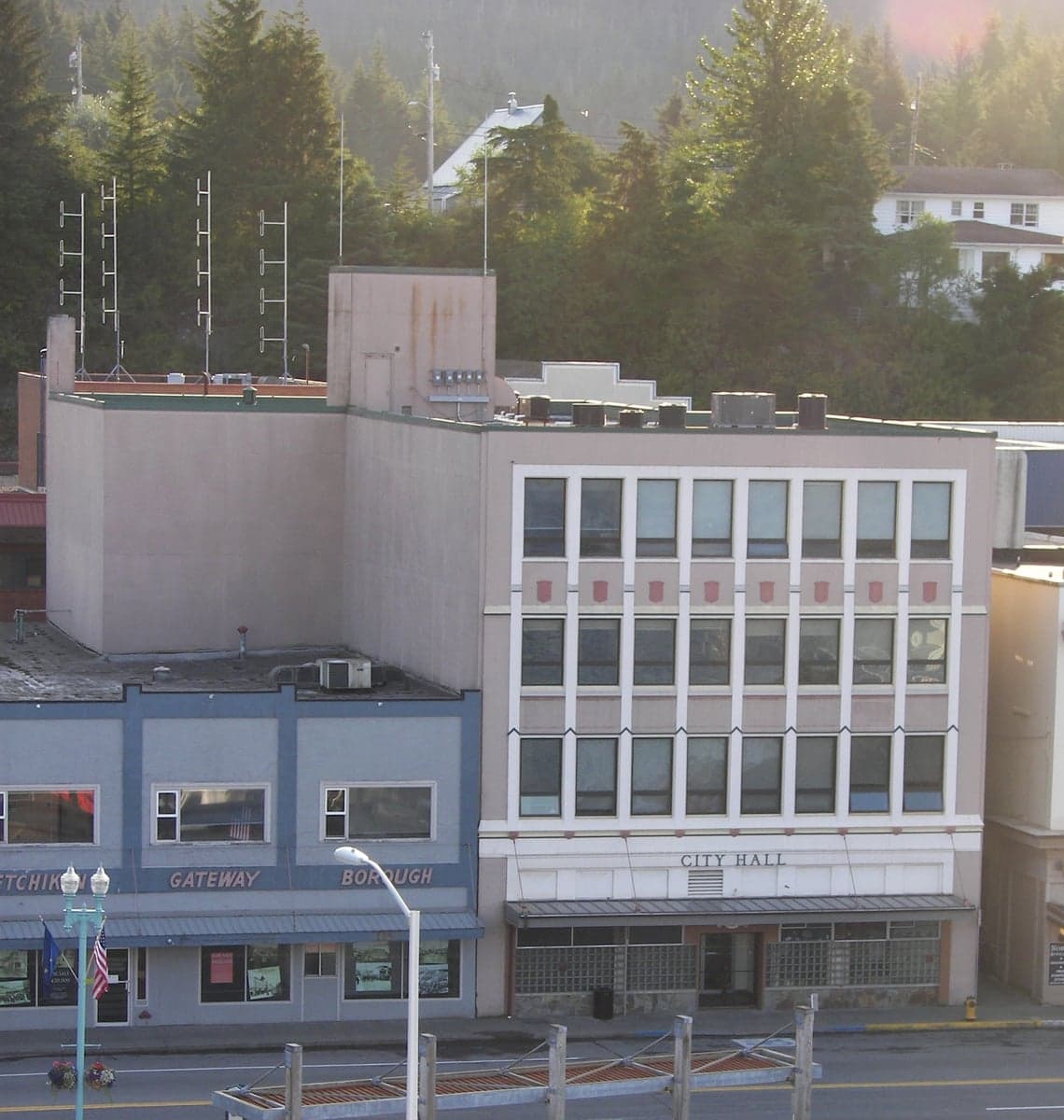
Photo: Wikipedia
Quality of Life in Ketchikan Gateway County
A livable area that tracks near national norms for affordability, walkability, and neighborhood health.
What does Quality of Life tell us?
Quality of Life measures an area by evaluating factors like cost of living, nearby amenities, country club access, airport proximity, socioeconomic signals and neighborhood character. For large states, this is a general average — quality of life can vary dramatically between metro areas, suburbs, and rural communities within the same state.
What does this tell us?
Quality of Life measures an area by evaluating factors like cost of living, nearby amenities, country club access, airport proximity, socioeconomic signals and neighborhood character. For large states, this is a general average — quality of life can vary dramatically between metro areas, suburbs, and rural communities within the same state.
Cost of Living
25% above national average
82%
The Real Cost of Living in Ketchikan Gateway County for 2026
| Tier | Individual | Family (4) |
|---|---|---|
| Survival | $22k | $42k |
| Comfortable | $74k | $108k |
| Luxury | $144k+ | $224k+ |
| Elite (Top 5%) | $170k+ | $263k+ |
Quality-of-Life Analysis
Ketchikan Gateway County, Alaska, offers a spectrum of quality-of-life options ranging from the dense, cruise-ship-oriented hub of Ketchikan itself to remote, off-grid islands and mainland pockets accessible only by boat or plane. The county's character shifts dramatically within a few miles — from a town center with big-box stores and a ferry terminal to quiet, rain-forested communities where daily life is dictated by the tides and the salmon runs. People drawn to the county typically fall into one of two camps: those seeking the amenities and job base of a regional hub, and those looking for deep seclusion where the cost of isolation is measured in logistics, not dollars.
Largest town(s) & population centers
Ketchikan is the county's sole incorporated city and undisputed population center, home to roughly 8,000 of the county's 13,500 residents. Daily life here revolves around the Tongass Narrows waterfront — the downtown tourist district, the Alaska Marine Highway ferry terminal, and the Ketchikan International Airport (which requires a short ferry ride from the main island). Residents have access to a full-service hospital (PeaceHealth Ketchikan Medical Center), a well-stocked library, a Safeway grocery store, and a range of restaurants and bars that cater to both locals and the summer cruise crowds. The average commute is a remarkably short 19.5 minutes, reflecting the fact that most housing and jobs are clustered along the narrow island road network. Ketchikan is a walkable town by Alaska standards, but steep hills and frequent rain make a reliable vehicle a practical necessity for most.
Smaller towns & rural pockets
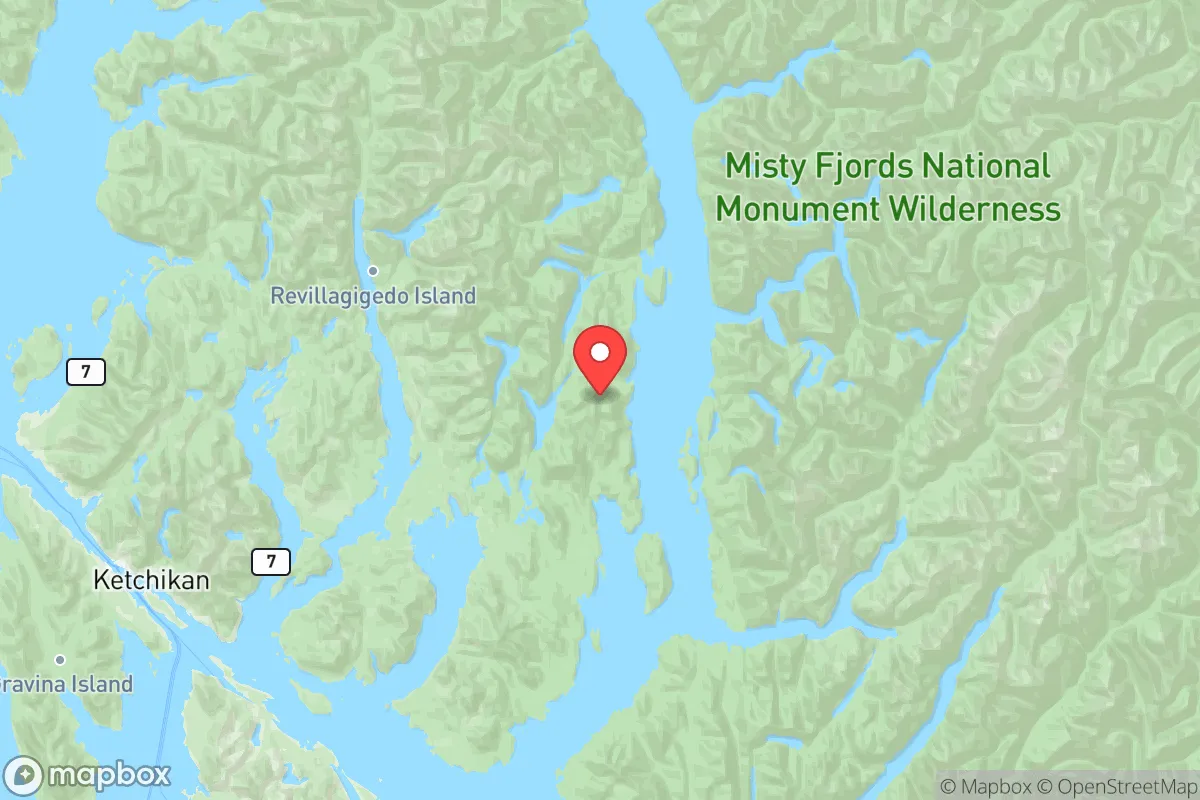
Beyond Ketchikan, the county's population disperses into distinct unincorporated communities with their own identities. Ward Cove, about 7 miles north of downtown, is a residential and industrial area once home to a major pulp mill; it now features a growing cruise ship dock and a mix of single-family homes and vacant lots. Saxman, just south of Ketchikan, is a federally recognized Alaska Native village of about 400 people, home to the Saxman Totem Park and a tight-knit community with its own tribal council and school. Further afield, Mountain Point and North Tongass Highway corridor offer rural residential subdivisions where lots are larger and services (grocery stores, gas stations) are sparse. On the mainland side of Behm Canal, the seasonal communities of Bell Island (Floatel) and Gravina Island (including the airport) have tiny year-round populations, with residents depending on boats or floatplanes for access to Ketchikan's amenities. The most remote pockets are the outer islands, such as Annette Island Reserve (a separate sovereign entity within the county) and the largely uninhabited Prince of Wales Island shoreline, where subsistence lifestyles and seasonal fishing camps prevail.
Cost & lifestyle range
The cost of living across Ketchikan Gateway County is uniformly high by national standards — the composite cost-of-living index sits at 125 (25% above the U.S. average) — but the trade-offs vary considerably by location. In Ketchikan proper, median rent is $1,388 and the median home value is $379,000; these prices buy compact lots, older homes, and proximity to jobs and services. At the upper end of the spectrum, waterfront properties on Village Street or along Point Higgins Road can exceed $700,000, offering deep-water docks and private views of the Narrows. At the lower end, rural subdivisions like Dewey Mills or Pennock Island (accessible only by boat) offer raw land and fixer-upper cabins for under $200,000, but owners must factor in barge costs, propane delivery, and boat maintenance as recurring expenses. The widest gap is not in housing cost but in convenience: residents of Ketchikan can walk to a pharmacy or get same-day Amazon delivery (via barge-to-truck), while those living off the road system may go weeks between supply runs. Internet access is another dividing line — fiber is available in town, but satellite or patchy cell service is the norm in the outer islands.
The person who thrives in Ketchikan Gateway County is likely self-reliant and comfortable with rain — the area averages 140 inches of precipitation annually — and understands that isolation is either a short commute away or a long-term lifestyle choice. For those who want a small-town job market with a walkable downtown, Ketchikan itself is the obvious fit. For those seeking a more solitary existence with a subsistence or fishing focus, the rural road-ends and island pockets offer a different kind of wealth measured in space and quiet. The county rewards those who choose their location intentionally, because the cost of getting it wrong — both financially and logistically — can be significant.

Crime in Ketchikan Gateway County
Higher crime rates than 66% of comparable U.S. locations.
Violent CrimeViolent Crime Analysis
Property CrimeProperty Crime Analysis
Crime Analysis
Ketchikan Gateway Borough, the southeasternmost organized borough in Alaska, reports a violent crime rate of 732.2 per 100,000 residents and a property crime rate of 1,917.5 per 100,000. These figures place the borough significantly above both the Alaska state average (approximately 800 violent and 2,500 property crimes per 100,000) and the national average (roughly 380 violent and 1,950 property crimes per 100,000). While Ketchikan is safer than Alaska’s larger urban centers like Anchorage or Fairbanks, the borough’s crime rates remain elevated compared to most U.S. counties, particularly for violent offenses such as aggravated assault and robbery.
Crime in context
Ketchikan Gateway Borough’s violent crime rate is roughly 1.9 times the national average, driven largely by aggravated assault, which accounts for the majority of violent incidents. Property crime, including larceny-theft and burglary, is near the national average but higher than many rural U.S. counties. The borough’s proximity to international cruise ship traffic and transient tourism populations contributes to seasonal property crime spikes in the city of Ketchikan, the borough’s commercial and governmental hub. By contrast, the unincorporated communities of Ward Cove and Saxman (an independent city within the borough) report lower overall crime volumes, though data granularity is limited. The Alaska State Troopers and the Ketchikan Police Department share jurisdiction; the borough does not have a separate county sheriff, which can complicate reporting and response times in remote areas.
What residents experience
Residents of Ketchikan itself frequently cite concerns about property theft and drug-related offenses, particularly those linked to the region’s opioid and methamphetamine trade. The borough’s isolated geography—accessible only by air or sea—means that property crimes often involve break-ins at seasonal homes or theft from unlocked vehicles and boats. Violent crime, while less common in daily life, is concentrated in specific areas, including the downtown Ketchikan corridor and the streets around the harbor, where transient populations and alcohol-related incidents are more prevalent. In contrast, the neighborhoods of Pennock Island, Mountain Point, and the residential areas north of downtown (e.g., near the Ketchikan International Airport) are generally reported as safer, with lower incident rates. The borough’s small population (roughly 13,600) means that crime statistics can fluctuate significantly year to year; a single high-profile incident can skew the annual rate.
Neighborhood-level variation in Ketchikan Gateway Borough is notable, though official statistics are often aggregated at the borough level. The city of Ketchikan, which holds over 80% of the borough’s population, experiences the majority of reported crimes, while the rural and island communities of Saxman, Thorne Bay (on Prince of Wales Island), and Metlakatla (within the Metlakatla Indian Community, though not part of the borough) report far fewer incidents. These areas are served by the Alaska State Troopers and local tribal police, respectively. For prospective residents, choosing a home outside the Ketchikan city limits—such as in the subdivisions along the North Tongass Highway or the island communities accessible only by ferry—may reduce exposure to property crime and street-level disturbances. However, the trade-off includes longer emergency response times and limited law enforcement presence in the most remote areas of the borough.
* Values derived from national, state, county, city and local statistics and may differ in a specific area. Last updated: 2026-07-01T03:07:37.000Z
Narrative content on this page is AI-generated and may contain mistakes. Verify any details that matter before acting on them.
ReloMaps may earn a commission from affiliate links at no extra cost to you.

