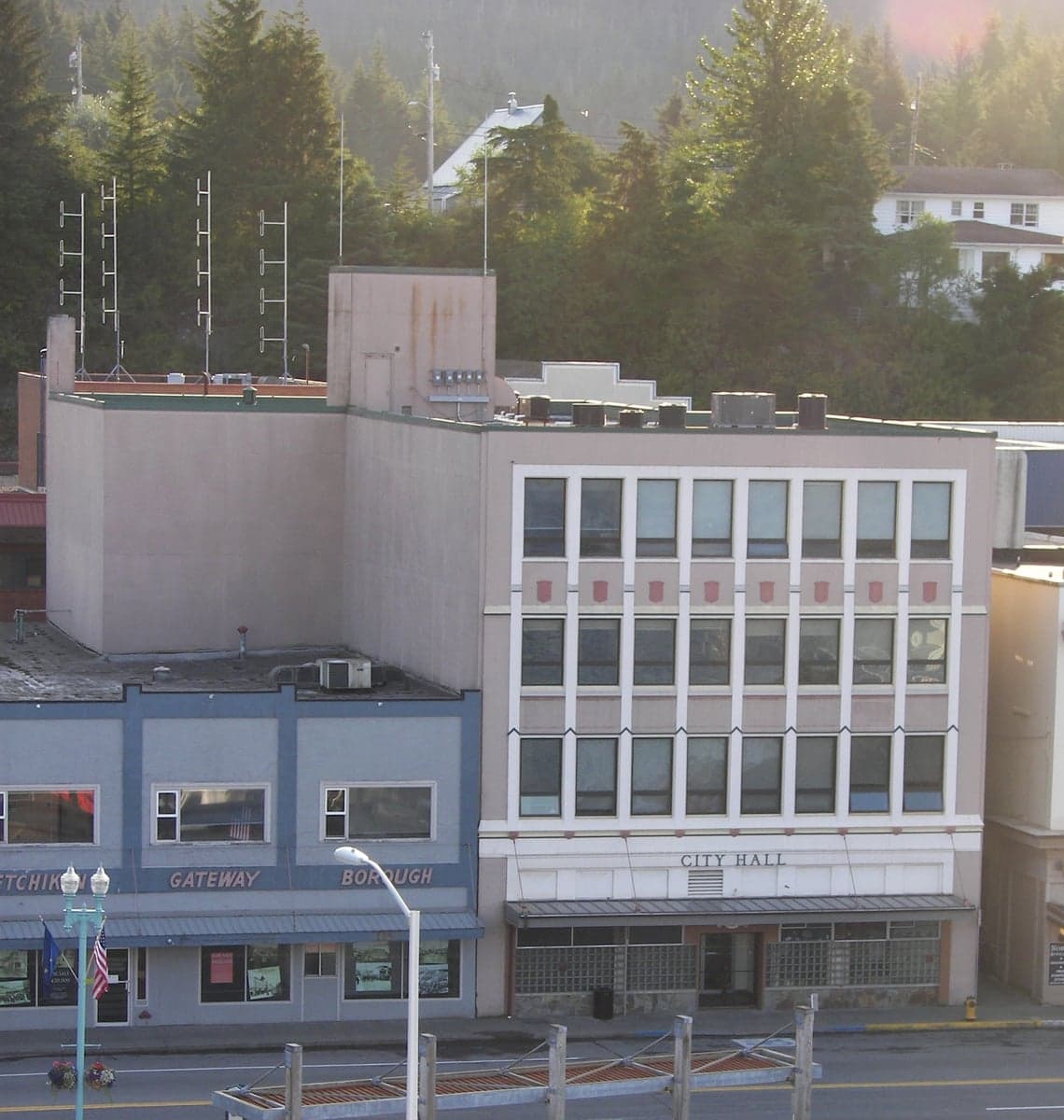
Photo: Wikipedia
Personal Sovereignty in Ketchikan Gateway County
Viable for self-reliance. Generally workable, though some barriers may limit total independence.
What does Personal Sovereignty tell us?
Personal Sovereignty measures your capacity for self-reliance and independence with minimal government friction. Higher scores mean fewer barriers between you and the way you want to live... but it assumes you have the space you need and good neighbors.
What does this tell us?
Personal Sovereignty measures your capacity for self-reliance and independence with minimal government friction. Higher scores mean fewer barriers between you and the way you want to live... but it assumes you have the space you need and good neighbors.
State Policy
Energy independence: Net exporter (350% of energy produced in-state)
Personal Liberty
Homesteading

Personal Liberty Analysis
Personal sovereignty in Ketchikan Gateway County operates within Alaska’s unique constitutional and geographic framework, where state law prioritizes individual autonomy, but the practical realities of a remote island-based economy and infrastructure constraints at the local level create a nuanced environment. Residents face fewer personal and economic restrictions than in most of the Lower 48, yet the county's limited land base, reliance on marine transportation, and concentrated municipal governance in the City of Ketchikan impose structural boundaries on unfettered self-direction. The result is a high degree of personal freedom relative to national norms, tempered by the necessity of collective resource management and local zoning that varies significantly between the urban core and outlying areas like Ward Cove, Saxman, and the more remote communities of Metlakatla (on Annette Island, part of an Indian Reservation) and Hyder (accessible only by road from Canada).
Tax burden and regulatory posture in Southeast Alaska
Ketchikan Gateway County benefits from Alaska’s famously light tax framework: no state income tax, no state sales tax, and no statewide property tax. The county itself does not levy a property tax; instead, the City of Ketchikan collects a property tax that applies within its boundaries, currently around 13.4 mills on assessed value, plus a 6% sales tax on most goods and services. Rural areas outside the Ketchikan city limits, including homestead properties near Saxman or the North Tongass Highway corridor, face no municipal property tax, though they lack access to city water, sewer, and garbage services. This creates a stark regulatory divide: residents inside city limits pay for municipal services and conform to building codes, while unincorporated areas operate under far fewer local ordinances. Alaska state law imposes minimal business licensing fees and no corporate income tax, but the Ketchikan Gateway Borough does require a simple business license for commercial activity within its jurisdiction, including home-based enterprises. The regulatory posture leans liberty-friendly by national standards, but obtaining permits for major construction or waterfront development can involve federal agencies like the U.S. Army Corps of Engineers and the Alaska Department of Fish and Game, reflecting the region's sensitive coastal ecology. For the relocation-minded reader, choosing a property outside the City of Ketchikan — on Gravina Island, near Saxman, or along the outer coast — minimizes local regulatory exposure, while living in town means accepting higher taxes and more oversight.
Self-defense protections and gun law specifics
Alaska is a constitutional carry state, meaning no permit is required to carry a concealed firearm for anyone 21 or older who is legally allowed to possess a gun. Open carry is also legal without a permit. Ketchikan Gateway County has no local ordinances restricting the purchase, sale, or storage of firearms, though federal law applies (background checks at licensed dealers). The state maintains strong castle doctrine and Stand Your Ground laws, with no duty to retreat in any place where a person is legally present. This makes the area highly gun-friendly for both residents and visitors. However, practical factors matter: Ketchikan is a town of roughly 14,000 people with a close-knit character and very low violent crime rates (typically under 5 incidents per 1,000 annually), so self-defense is more about preparedness for isolated incidents or wildlife encounters — particularly bears — than urban defense. Shooting ranges exist at the Ketchikan Gun Club (private) and the Ketchikan Sportsmen's Association, the latter offering a rifle range out to 300 yards. Residents of Metlakatla, which is a sovereign tribal community under federal law, navigate additional restrictions on firearms within that reservation, so those seeking total legal consistency should avoid living there unless they understand tribal jurisdiction. For the personal sovereignty-focused reader, Ketchikan Gateway County offers among the strongest self-defense legal protections available anywhere in the U.S., with the main practical constraint being geography — you cannot drive away from a threat; the ocean and mountains limit options, so situational awareness becomes a survival skill.
Self-reliance and homesteading viability: lot sizes, zoning, off-grid feasibility
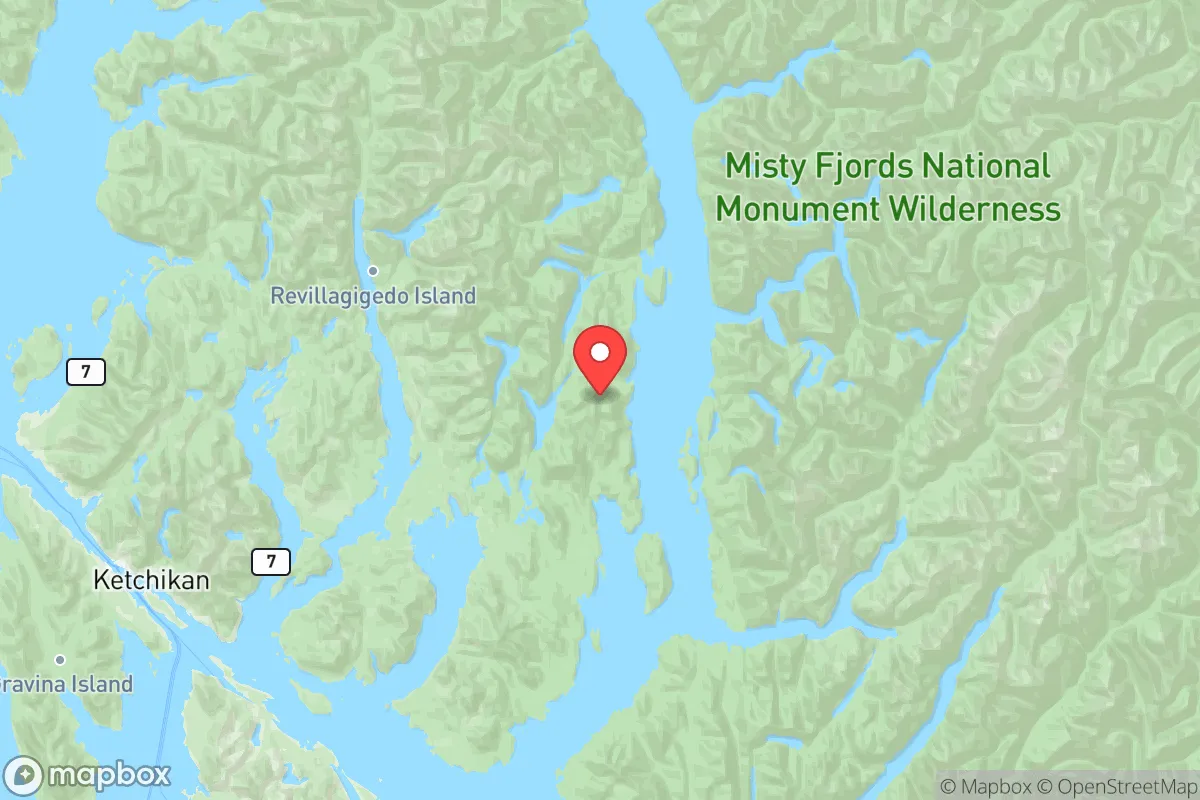
True homesteading in the 19th-century sense — acquiring free public land — is no longer available anywhere in Alaska, but Ketchikan Gateway County offers pockets of affordable rural property where self-sufficient living is feasible. The Borough zoning code designates most land outside the Ketchikan urban boundary as Rural Residential (RR) or Remote Use (RU), allowing single-family dwellings, gardens, small livestock, and home occupations without discretionary permits. Minimum lot sizes in Rural Residential zones are 2 acres in most areas, with some outlying parcels available at 5-10 acres for less than $40,000, particularly along the North Tongass Highway between Ketchikan and Saxman, or on Gravina Island (accessible only by ferry from the airport). Off-grid homes are common and perfectly legal: many properties lack access to municipal water or septic; residents rely on private wells (drilled at 100-300 feet, costing $8,000-$15,000) and septic systems (septic tanks and drain fields or composting toilets, approved by the Borough and state health department). Solar power is viable from late March through September, but winter daylight drops to 6-7 hours, making hydroelectric or diesel generator backup essential. The Borough does not require a building permit for structures under 200 square feet that are not used as primary dwellings, so small cabins and tool sheds can go up without government approval. Hyder, an isolated community off the road system and accessible only by driving through British Columbia, offers the least regulated environment within the county, with essentially no active zoning enforcement and properties available for as little as $10,000, but it is a 100-mile drive from Ketchikan proper on gravel roads, then a border crossing. For households seeking maximum independence from government oversight, purchasing a 5+ acre parcel in the Remote Use zone along the Unuk River or near Misty Fjords National Monument provides legal latitude for off-grid living, hunting, fishing, and timber harvesting, with the trade-off being extreme remoteness and the need for boat or floatplane access.
Personal liberties: parental rights, medical autonomy, speech, property
Alaska law strongly protects parental rights in education and healthcare. Parents can opt their children out of any public school curriculum or activity without penalty, and the state does not mandate student data collection on sensitive topics. Homeschooling is entirely unregulated — parents need not register with the state or meet any minimum standards — and Ketchikan has active homeschooling networks operating out of Saxman and Ward Cove. Medical autonomy is supported by Alaska’s broad statutory recognition of informed consent and the right to refuse any medical treatment, including vaccines and life-sustaining care. The state does not compel vaccination for school attendance beyond a simple opt-out (religious or philosophical), and no general vaccine mandate exists for adults. Freedom of speech is robust, with no state-level hate speech laws or content-based restrictions exceeding First Amendment protections. Property rights are constitutionally protected against uncompensated takings, and Alaska’s Right to Farm Act prevents nuisance lawsuits against agricultural operations operating under standard practices, a useful provision for those raising livestock on small acreages. The Borough’s land use code does impose setback requirements and view corridor protections in subdivisions, but these are clearly defined and minimally enforced in rural zones. For the relocation reader, Ketchikan Gateway County provides a legal environment where personal decisions about children's education, medical choices, and how to use one’s land are largely left to individuals, with few local ordinances overriding state-level protections.
Compared to the Lower 48, Ketchikan Gateway County ranks highly for personal sovereignty, roughly comparable to other rural Alaskan counties like the Kenai Peninsula Borough or Matanuska-Susitna Borough, but its island geography and maritime climate increase the cost and difficulty of true self-reliance — you cannot simply walk away from the borough and live off-grid without a boat or plane. For the freedom-oriented person who values legal autonomy over convenience, a parcel outside the City of Ketchikan, particularly in Saxman or the remote North Tongass corridor, offers a regulatory environment that rivals the most liberty-friendly jurisdictions in the nation, while the town itself provides the essential services (hospital, grocery, hardware store) that make self-sufficient living sustainable. The key strategic decision is whether to accept the infrastructure burdens of rural living to avoid taxation and zoning, or to pay the municipal premium for ready access to utilities and services — a choice that defines sovereignty here far more than any state law.

* Values derived from national, state, county, city and local statistics and may differ in a specific area. Last updated: 2026-07-01T03:07:37.000Z
Narrative content on this page is AI-generated and may contain mistakes. Verify any details that matter before acting on them.
ReloMaps may earn a commission from affiliate links at no extra cost to you.

