Political ClimatePolitical Climate in Hoonah Angoon County
Showing state-level results — no local-only data available.
Local Political AnalysisPolitical Analysis of Hoonah Angoon County
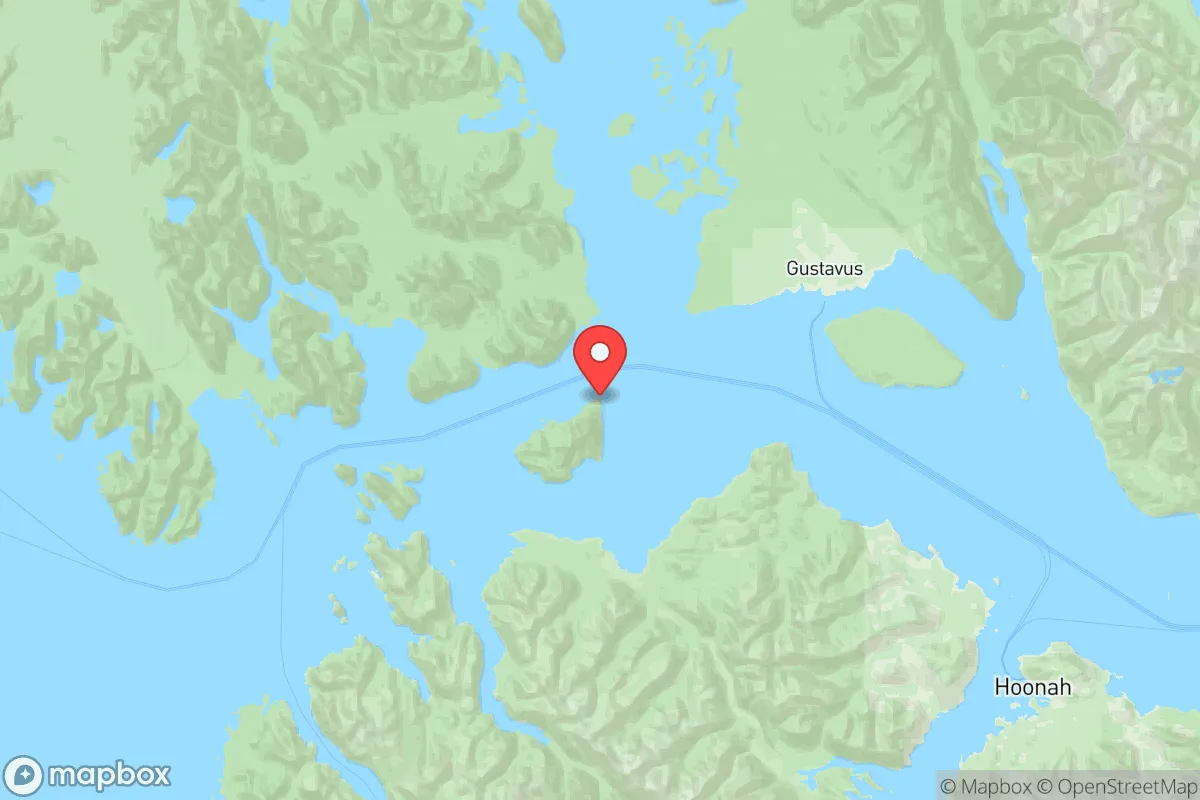
Hoonah-Angoon County, a sprawling, remote region in Southeast Alaska, leans heavily Democratic by local standards, but its politics are far more complex than a simple party label suggests. The county's largest community, Hoonah, consistently votes blue, with precincts there often delivering 60-65% of the vote to Democratic candidates in recent state and federal elections. However, this is not a uniform liberal stronghold; the smaller, more isolated communities like Angoon and the tiny outpost of Tenakee Springs show a more mixed pattern, with Angoon often splitting its vote and Tenakee Springs, a quirky, off-grid community, sometimes swinging toward libertarian-leaning independents. The overall trajectory is a slow but steady shift toward the left, driven by an influx of younger, more environmentally-conscious residents and a growing reliance on state and federal funding for infrastructure and services.
How it compares
Compared to the rest of Alaska, which has a Cook PVI of R+6, Hoonah-Angoon County is a clear outlier. While the state as a whole leans Republican, this county is one of the few in Southeast that consistently votes Democratic in presidential and gubernatorial races. In the 2020 presidential election, for example, Hoonah precincts gave Joe Biden roughly 62% of the vote, while the state overall went for Donald Trump by about 10 points. The contrast is stark: a resident of Hoonah lives in a political bubble where local conversations often center on tribal sovereignty, marine conservation, and ferry service funding, while just a few hundred miles away in Anchorage or the Mat-Su Valley, the dominant issues are resource extraction, gun rights, and reducing state spending. This disconnect means that Hoonah-Angoon County's state representative and senator—both Democrats—often find themselves in the minority in Juneau, fighting for funding for rural schools, health clinics, and the Alaska Marine Highway System that connects these isolated communities.
What this means for residents
For conservative residents in Hoonah-Angoon County, the local political climate can feel isolating. They are a distinct minority in most public forums, and their views on resource development, such as logging or mining in the Tongass National Forest, are often at odds with the majority. However, they are not without influence; in local elections for the school board or the city council, conservative candidates can win by focusing on practical issues like property taxes or road maintenance, where party affiliation matters less. For liberal residents, the county offers a rare sense of political alignment with their neighbors, but this can also create a kind of echo chamber. The real challenge for both sides is that the county's small population—around 2,000 people spread across a vast archipelago—means that local politics are intensely personal. You can't avoid your political opponents at the grocery store or the post office, which forces a level of civility and compromise that is often absent in more polarized urban areas.
Culturally, Hoonah-Angoon County is defined by its strong Tlingit and Haida heritage, which shapes policy in ways that transcend the usual left-right divide. The tribal governments in Hoonah and Angoon wield significant influence over land use, fishing rights, and cultural preservation, and their priorities—such as protecting traditional subsistence resources and promoting Native language programs—often align more with progressive environmentalism than with conservative individualism. This creates a unique political landscape where a conservative resident might support a Democratic candidate because of that candidate's commitment to tribal sovereignty, while a liberal resident might oppose a local development project not for environmental reasons, but because it threatens a sacred site. The result is a politics that is less about national party labels and more about the specific, grounded realities of life in a remote, Indigenous-majority community. Looking ahead, the county's political future will likely be shaped by the tension between preserving this distinct cultural identity and adapting to the pressures of climate change, economic diversification, and the slow creep of outside influence.

State Political ClimatePolitical Climate in Alaska
State Political AnalysisPolitical Environment in the State
Alaska has long been a politically unique state, with a libertarian-leaning conservative streak that sets it apart from the Lower 48. The state’s Cook PVI of R+6 reflects a solid Republican lean, but the reality on the ground is more nuanced: Alaska’s electorate is dominated by registered nonpartisan and undeclared voters, and the state has a history of electing independents and moderates. Over the past 10-20 years, the trend has been a slow but steady rightward shift in presidential voting, with Trump winning by 10 points in 2016 and 13 points in 2020, though local races remain fiercely competitive and often hinge on personality over party.
Urban vs. rural divide
The political map of Alaska is a study in contrasts. The Anchorage bowl, home to roughly 40% of the state’s population, is the key battleground. Anchorage itself leans slightly Democratic in local elections, but its suburbs—like Eagle River and Chugiak—are reliably Republican strongholds. The Matanuska-Susitna Borough, just north of Anchorage, is the state’s fastest-growing region and a conservative powerhouse, with towns like Wasilla and Palmer producing some of the most conservative legislators in the state. Fairbanks, the interior hub, is more mixed: the city proper has a moderate-to-liberal tilt thanks to the university population, while the surrounding North Pole and Eielson Air Force Base areas are deeply red. Juneau, the capital, is a Democratic island in a sea of red, driven by state government workers and a strong environmentalist presence. The rural Bush—villages like Bethel, Nome, and Barrow (Utqiaġvik)—votes overwhelmingly Democratic in presidential races due to strong tribal ties and reliance on federal programs, but these areas often break for moderate Republicans in state races who champion subsistence rights and local control. The oil-rich North Slope Borough, centered on Prudhoe Bay, is a unique case: heavily Native and Democratic in local politics, but deeply tied to the oil industry that funds the state budget.
Policy environment
Alaska’s policy environment is defined by its lack of a state income tax or statewide sales tax, funded almost entirely by oil revenue and the Permanent Fund dividend. This creates a low-tax paradise for residents, but also makes the state budget highly volatile—when oil prices crash, so do services. The regulatory posture is generally light, especially for resource extraction, but environmental regulations from the federal government (which owns about 60% of the land) often clash with state desires for development. Education policy is a mixed bag: Alaska has a flat per-student funding formula, but rural schools struggle with high costs and low outcomes. The state has no school choice program beyond charter schools, which are limited. Healthcare is a major issue: Alaska has the highest healthcare costs in the nation, and the state expanded Medicaid under the Affordable Care Act in 2015, a decision that remains controversial among conservatives. Election laws are relatively open: no voter ID requirement at the polls (though you must register with a state ID), and the state uses a top-four primary system with ranked-choice voting for general elections, passed by ballot initiative in 2020. This system has been a flashpoint, with conservatives arguing it dilutes party power and liberals defending it as a moderating force.
Recent policy direction
Recent legislation in Alaska has been a tug-of-war between libertarian impulses and conservative social values. On gun rights, Alaska is one of the most permissive states: no permit required for concealed carry, no waiting periods, and no red flag law. The state passed a preemption law in 2013 that blocks local gun ordinances, so Anchorage cannot enact its own restrictions. On parental rights and education, the state has seen heated debates over critical race theory and transgender policies in schools, but no major legislation has passed as of 2026—the issue remains a local school board fight. Medical and bodily autonomy is a stark divide: Alaska has no trigger law on abortion, and the state Supreme Court has interpreted the state constitution’s privacy clause to protect abortion access, making it a de facto safe haven in the region. However, parental consent for minors is required, and the state does not fund abortions through Medicaid except in limited cases. Property rights are strong, with no statewide zoning and very limited eminent domain use, but the federal land ownership creates constant tension—the state has sued the federal government multiple times over land use restrictions. Taxation remains the crown jewel: no income or sales tax, and the Permanent Fund dividend (PFD) pays residents an annual check (averaging $1,000-$2,000 in recent years). However, the state has been drawing down savings to balance the budget, and there is growing pressure to implement a state sales tax or cut the PFD. Voting and ballot access is the most contentious recent issue: the 2020 ranked-choice voting initiative passed by a narrow margin, and conservatives have repeatedly tried to repeal it through the legislature and ballot measures, so far unsuccessfully. The system has produced some moderate winners, like Senator Lisa Murkowski (who won reelection under it in 2022), but also frustrated conservatives who feel it suppresses their vote.
Civil unrest & political movements
Alaska has a long tradition of anti-government sentiment, but it rarely boils over into major unrest. The most visible political movement in recent years has been the Alaska Independence Party, which advocates for a vote on secession from the United States—a fringe but persistent presence, especially in the Mat-Su Valley. Protests have been relatively small and issue-specific: in 2020, there were modest Black Lives Matter protests in Anchorage and Fairbanks, but they were dwarfed by the pro-Trump “Stop the Steal” rallies that drew hundreds in Wasilla and Palmer. The state has no sanctuary city policies; in fact, Anchorage has a “cooperative” relationship with federal immigration enforcement, and the state has no major immigration flashpoints due to its small foreign-born population. Election integrity controversies have been centered on the ranked-choice voting system, with conservative activists alleging fraud and confusion, though no major irregularities have been proven. The most visible flashpoint for a new resident would be the annual debate over the PFD: every spring, the legislature fights over whether to cut the dividend to fund services, and it dominates local news and coffee shop talk in a way that feels uniquely Alaskan.
Projection
Over the next 5-10 years, Alaska’s political trajectory is likely to remain conservative but with a libertarian flavor, driven by demographic shifts. The state is growing slowly, with most new residents moving to the Mat-Su Borough and the Kenai Peninsula—both deeply conservative areas. Anchorage is becoming slightly more diverse and Democratic, but its suburbs are growing faster. The ranked-choice voting system is likely to survive, as repeal efforts have failed and the system has produced moderate winners who appeal to the state’s independent streak. The biggest wildcard is the state budget: if oil revenues continue to decline, the state will face a choice between a new tax (likely a sales tax) or deep cuts to services, which could shift the political calculus. A new resident moving in now should expect to find a state where the Republican Party dominates, but where individual liberty—especially on guns, taxes, and personal privacy—trumps social conservatism. The Democratic Party will remain a minority, but will hold power in Juneau and parts of Anchorage, and will continue to fight for abortion access and environmental protections.
For a new resident, the bottom line is that Alaska offers a unique blend of low taxes, high personal freedom, and a hands-off government, but with trade-offs: high costs for healthcare and education, a volatile state budget, and a political culture that can feel insular and obsessed with local issues like the PFD. Conservatives will find a welcoming environment for gun rights, property rights, and low taxes, but may chafe at the ranked-choice voting system and the lack of a social conservative agenda. Liberals will find a safe haven for abortion access and a strong environmental movement, but will be a clear minority in most of the state outside of Juneau and parts of Anchorage. The key is to understand that Alaska’s politics are driven more by geography and economics than by national party labels—and that the state’s independent streak means the political climate can shift quickly, especially when oil prices drop.
* Values derived from national, state, county, city and local statistics and may differ in a specific area. Last updated: 2026-10-21T14:08:39.000Z
Narrative content on this page is AI-generated and may contain mistakes. Verify any details that matter before acting on them.
ReloMaps may earn a commission from affiliate links at no extra cost to you.

