
Demographics of Hoonah Angoon County
Affluence Level in Hoonah Angoon County
A below-average socioeconomic profile. Incomes, home values, and educational attainment trail the U.S., with higher poverty and unemployment.
People of Hoonah Angoon County
The people of Hoonah-Angoon County, Alaska, are overwhelmingly Alaska Native, predominantly Tlingit, living in small, isolated coastal communities that remain deeply tied to subsistence traditions and a land-based identity. With a population of just 2,313 spread across a vast archipelago, the county is one of the least densely populated in the United States, and its demographic character is defined by a strong Indigenous majority, a very small foreign-born population at 1.4%, and a racial composition that is 49.2% White, 10.8% Hispanic, 1.6% East/Southeast Asian, and 0.4% Black. The county’s distinctive identity is rooted in the enduring presence of the Tlingit people, whose villages and clan houses have occupied these shores for millennia, and in the later, smaller waves of Euro-American settlers drawn by fishing, canning, and government service.
Settlement & growth (pre-1960)
The human history of Hoonah-Angoon County begins with the Tlingit people, who have inhabited the islands and mainland of Southeast Alaska for at least 10,000 years. The Tlingit established permanent winter villages along protected waterways, with key settlements including Hoonah (the largest community in the county), Angoon, Tenakee Springs, Pelican, Elfin Cove, and Gustavus. These villages were organized into matrilineal clans, with a complex social structure based on moieties (Raven and Eagle) and a rich oral tradition. The Tlingit economy relied on salmon, halibut, seals, deer, and berries, and they maintained extensive trade networks with other Indigenous groups and, later, with Russian fur traders who arrived in the late 18th century.
Russian colonization, beginning in the 1740s, brought small numbers of Russian Orthodox missionaries and fur traders to the region, but the Tlingit fiercely resisted Russian control. The 1804 Battle of Sitka, just south of the county, marked a turning point, but the Tlingit of the Hoonah-Angoon area remained largely autonomous until the United States purchased Alaska in 1867. The American period brought a new wave of settlers: Scandinavian and German fishermen and cannery workers arrived in the 1880s and 1890s, drawn by the booming salmon industry. Canneries were established in Hoonah, Angoon, and Pelican, creating seasonal wage labor that drew Tlingit families into the cash economy while also attracting a small number of Euro-American workers. The town of Pelican was founded in 1938 as a fishing and cold-storage port, and Elfin Cove grew as a seasonal fishing village. Tenakee Springs, settled by Tlingit and later by Euro-American homesteaders, became a small, remote community centered on its natural hot springs.
By the mid-20th century, the county’s population remained small and predominantly Tlingit, with a modest White minority. The U.S. government’s establishment of the Tongass National Forest in 1907 and the creation of Glacier Bay National Monument in 1925 (later Glacier Bay National Park) brought federal jobs and infrastructure to Gustavus, a small community at the entrance to Glacier Bay. World War II and the subsequent Cold War era saw little new settlement, as the region’s isolation and lack of road connections limited growth. The Alaska Native Claims Settlement Act (ANCSA) of 1971, which created village corporations, fundamentally reshaped land ownership and governance, giving Tlingit communities in Hoonah, Angoon, and other villages a formal economic and political structure that persists today.
Modern era (post-1965)
The 1965 Hart-Cellar Act had minimal direct impact on Hoonah-Angoon County, as the region’s foreign-born population remains very low at 1.4%. Unlike urban Alaska, which saw significant immigration from Asia and Latin America, the county’s remote, resource-based economy did not attract new immigrant communities. Instead, the post-1965 demographic story is one of domestic out-migration and aging in place. Young Tlingit adults, seeking education and employment opportunities, have increasingly moved to larger Alaska cities like Juneau and Anchorage, or to the Lower 48, reducing the county’s population from a peak of roughly 2,500 in the 1990s to 2,313 today.
The White population, which includes descendants of the early Scandinavian and German fishing families, has also aged and declined. Many of the small, remote communities—Tenakee Springs, Pelican, Elfin Cove—have seen their year-round populations shrink as fishing regulations, declining salmon runs, and the high cost of living make it harder to sustain a traditional lifestyle. The Hispanic population, at 10.8%, is a relatively recent addition, largely consisting of individuals who have moved from other parts of Alaska or the Lower 48 for work in fishing, tourism, or government services. The East/Southeast Asian population (1.6%) and Black population (0.4%) are very small, reflecting the county’s limited economic diversity and lack of urban amenities.
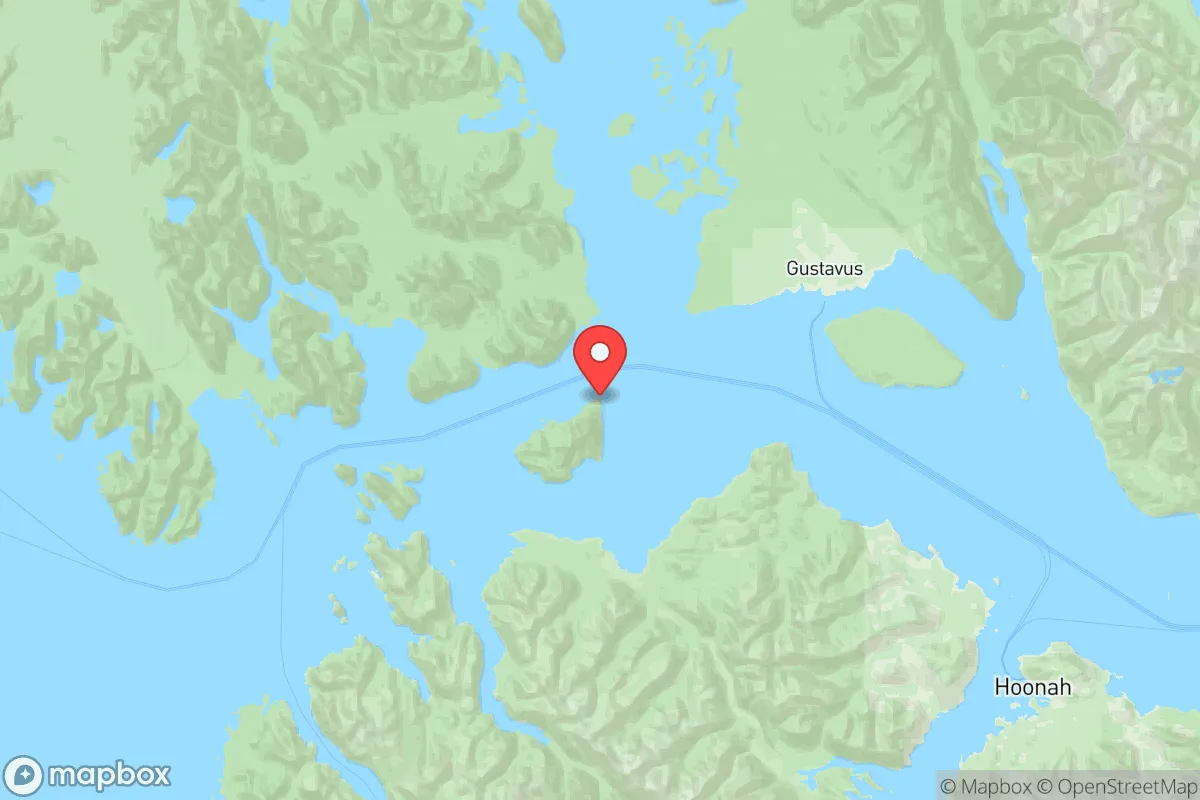
Suburbanization, as understood in the Lower 48, does not exist in Hoonah-Angoon County. The county has no incorporated cities with significant suburban development; instead, the population is concentrated in small, unincorporated villages and towns connected only by boat or small aircraft. The largest community, Hoonah, has a population of about 800, while Angoon has roughly 450. Gustavus, with about 450 residents, has grown modestly as a gateway to Glacier Bay National Park, attracting a mix of seasonal tourism workers and retirees. The county’s racial and ethnic composition has remained remarkably stable compared to the rest of Alaska, with the Tlingit population maintaining its majority status.
The future
The population of Hoonah-Angoon County is projected to continue its slow decline, driven by out-migration of young adults and an aging demographic. The county’s median age is higher than the state average, and the birth rate among Tlingit families has fallen. The region is becoming slightly more diverse in terms of Hispanic and East/Southeast Asian residents, but these groups remain small and are unlikely to significantly alter the county’s cultural identity. The Tlingit language and traditions, while under pressure, are being revitalized through tribal schools and cultural programs in Hoonah and Angoon, suggesting that the county’s Indigenous character will persist even as the population shrinks.
New communities are not forming; instead, the existing villages are likely to consolidate further. Pelican and Elfin Cove, with year-round populations under 100, face an uncertain future as their fishing economies contract. Gustavus may see modest growth as Glacier Bay tourism expands, but this growth is limited by the lack of road access and the park’s strict development controls. The county’s cultural identity will remain rooted in Tlingit heritage and subsistence living, with a small but stable White minority. For someone moving in now, the county offers a deeply traditional, land-based way of life, but with limited economic opportunities and a population that is both aging and shrinking.
In summary, Hoonah-Angoon County is becoming a quieter, older, and more culturally concentrated place—a stronghold of Tlingit identity in a rapidly changing Alaska. The population is not diversifying in the way that urban America is, and the county’s future lies in the hands of its Indigenous communities, who are working to sustain their villages, language, and traditions against the tide of out-migration. For a new resident, this is a place where community ties are deep, the pace of life is slow, and the connection to the land and sea is paramount—but where the population is heading, slowly, toward a smaller and more homogeneous future.

* Values derived from national, state, county, city and local statistics and may differ in a specific area. Last updated: 2026-10-21T14:08:39.000Z
Narrative content on this page is AI-generated and may contain mistakes. Verify any details that matter before acting on them.
ReloMaps may earn a commission from affiliate links at no extra cost to you.

