Personal Sovereignty in Hoonah Angoon County
Viable for self-reliance. Generally workable, though some barriers may limit total independence.
What does Personal Sovereignty tell us?
Personal Sovereignty measures your capacity for self-reliance and independence with minimal government friction. Higher scores mean fewer barriers between you and the way you want to live... but it assumes you have the space you need and good neighbors.
What does this tell us?
Personal Sovereignty measures your capacity for self-reliance and independence with minimal government friction. Higher scores mean fewer barriers between you and the way you want to live... but it assumes you have the space you need and good neighbors.
State Policy
Energy independence: Net exporter (350% of energy produced in-state)
Personal Liberty
Homesteading

Personal Liberty Analysis
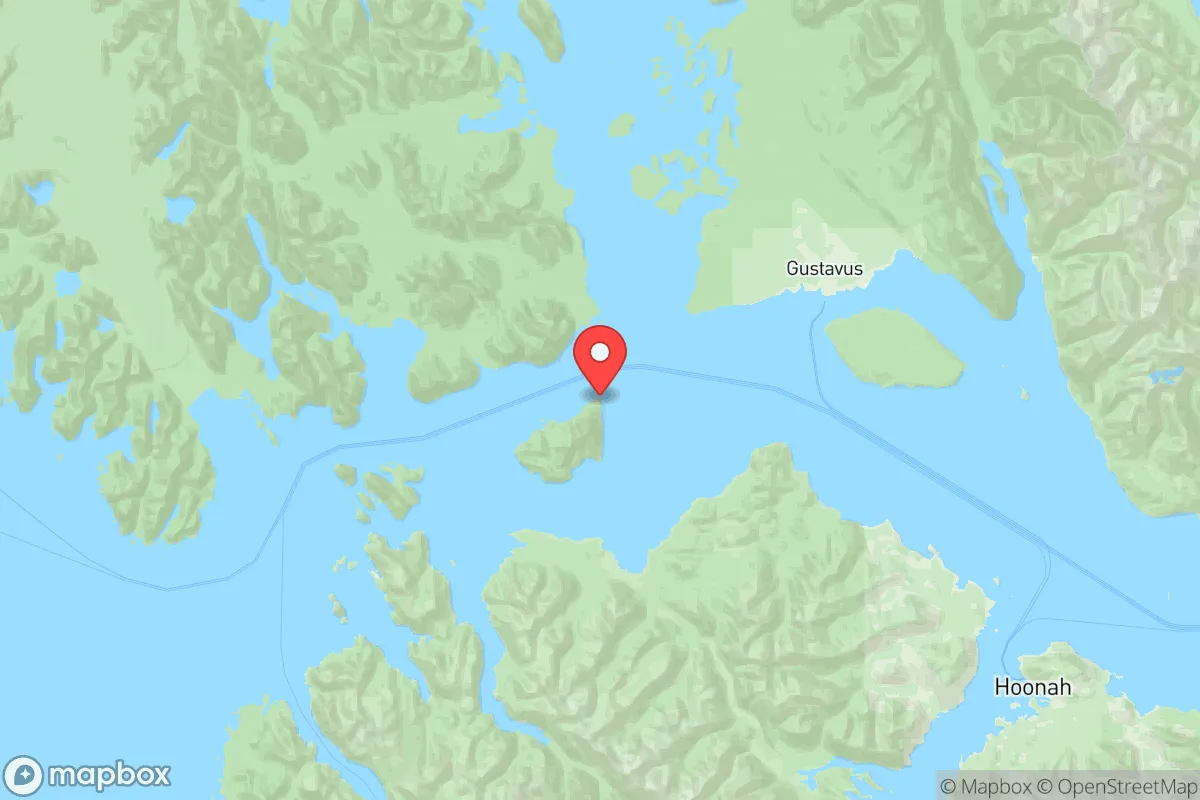
Hoonah-Angoon County, encompassing the remote Southeast Alaska panhandle from the Icy Strait to the Gulf of Alaska, offers a personal sovereignty environment that is fundamentally defined by extreme geographic isolation and a near-total absence of local government intrusion. Unlike the regulatory density of Juneau or Anchorage, this borough operates with a minimal administrative footprint, where the state of Alaska’s constitutional protections for individual liberty—including no state income or sales tax—form the baseline, and local ordinances are sparse. For a relocation reader prioritizing autonomy, this area represents one of the most hands-off jurisdictions in the United States, but that freedom comes with the trade-off of limited infrastructure, high costs for goods, and a requirement for significant self-sufficiency.
Tax burden and regulatory posture in a remote borough
Alaska’s state-level tax environment is the most favorable in the nation for personal sovereignty, and Hoonah-Angoon County adds no significant local tax burden on top of it. There is no state income tax, no state sales tax, and no statewide property tax; the borough itself does not levy a local sales tax in its unincorporated areas, though the city of Hoonah imposes a modest 5% sales tax on retail transactions. Property taxes in the county are effectively nonexistent for most residents, as the borough does not assess a mill rate on residential real estate—a stark contrast to the Lower 48 where combined state and local rates often exceed 1.5% of assessed value. The regulatory posture is equally light: there are no county-level building codes in unincorporated areas like Elfin Cove, Pelican, or Tenakee Springs, meaning residents can construct or modify structures without permits or inspections. However, state and federal regulations still apply—the Alaska Department of Environmental Conservation requires septic system permits, and the U.S. Forest Service controls land use on the vast Tongass National Forest that covers most of the county. For a family or individual, the practical effect is that you can build a cabin on private land in Gustavus or a remote homestead near Game Creek with minimal bureaucratic friction, but you must navigate federal jurisdiction for any activity on the 90% of land that is publicly owned.
Self-defense and gun law specifics in Southeast Alaska
Alaska is a constitutional carry state, and Hoonah-Angoon County reflects that ethos with no additional local restrictions on firearm ownership or carry. No permit is required to openly carry or conceal a handgun for anyone 21 or older who can legally possess a firearm, and the state preempts all local firearm ordinances, meaning the borough cannot impose its own waiting periods, magazine bans, or registration requirements. This is particularly relevant in a region where bear defense is a daily consideration—residents in Hoonah, Angoon, and Tenakee Springs routinely carry firearms for protection against brown bears, and there is no legal barrier to doing so. The state also has a strong Stand Your Ground law, with no duty to retreat in any place where a person has a legal right to be, and self-defense immunity from civil liability. For a conservative-leaning reader, the legal environment is as permissive as it gets in the U.S., though practical considerations apply: ammunition and firearm sales are limited to a few small shops in Hoonah and Gustavus, and most residents order online or stock up during trips to Juneau. The county’s remote nature means law enforcement response times can be hours or even days in villages like Pelican or Elfin Cove, making personal firearms a practical necessity rather than a political statement.
Self-reliance and homesteading viability across the county
The viability of off-grid living and homesteading varies dramatically across Hoonah-Angoon County’s distinct communities, driven by land ownership patterns and access. In the unincorporated areas of Tenakee Springs, Pelican, and Elfin Cove, there are no zoning ordinances, no building codes, and no county planning department—you can build a cabin, install solar panels, dig a well, and compost your waste with zero local oversight. Lot sizes in these areas are typically irregular and unplatted, often purchased as raw land from private sellers or through state land auctions, with parcels ranging from 1 to 40 acres. In contrast, Gustavus, located near Glacier Bay National Park, has a slightly more structured environment due to its proximity to the park and a small but active community association, though still no formal zoning. Hoonah, the largest community with about 750 residents, has a city government that enforces basic building permits for new construction within city limits, but outside those boundaries, the same hands-off rules apply. Off-grid feasibility is high: the entire county lacks a centralized power grid outside of Hoonah’s diesel plant, so residents in Tenakee Springs and Elfin Cove rely on solar, hydro, or generator power as a matter of course. Water is abundant from rainfall and streams, and septic systems are straightforward to install. The primary constraint is access—most homesteads are only reachable by boat or floatplane, and the cost of shipping building materials to Pelican or Angoon can exceed the material cost itself.
Personal liberties in a low-governance environment
Parental rights, medical autonomy, and property rights in Hoonah-Angoon County operate under Alaska’s generally libertarian state framework, with minimal local interference. Parental rights in education are strong: Alaska has no state-level mandate for school attendance in a specific format, and the borough does not have its own school district—instead, the Chatham School District serves Hoonah and Angoon, while Tenakee Springs and Gustavus have their own small schools. Homeschooling is common and unregulated beyond a simple notification requirement, and there are no local ordinances restricting alternative education. Medical autonomy is similarly broad: Alaska does not have a state vaccine mandate for adults, and the county has no local health ordinances that override personal choice. However, practical medical access is limited—the nearest hospital is in Juneau, a 45-minute flight or a multi-hour ferry ride from Hoonah, so serious medical decisions often involve evacuation. Property rights are robust: there is no county-level zoning in unincorporated areas, no rent control, and no landlord licensing, giving landowners near-total control over their property. The state’s right-to-farm law protects agricultural activities from nuisance lawsuits, which is relevant for homesteaders raising livestock or operating small gardens. Free speech is protected under the Alaska Constitution, which provides stronger protections than the First Amendment in some areas, and there are no local hate speech or public assembly ordinances.
Overall, Hoonah-Angoon County offers one of the highest levels of personal sovereignty available in the United States, rivaled only by other remote Alaska boroughs like the Yukon-Koyukuk or the North Slope. The combination of no state income tax, no local property tax, constitutional carry, no zoning in most areas, and minimal local government creates an environment where individual autonomy is the default. For a conservative-leaning family or individual, the trade-offs are clear: you gain near-total freedom from government oversight, but you must accept extreme isolation, high costs for goods and services, and the responsibility of self-reliance in everything from healthcare to home maintenance. Compared to the regulatory density of the Lower 48—where even rural counties in Texas or Montana impose building codes, property taxes, and local gun restrictions—this area stands out as a genuine outlier. It is not a place for everyone, but for those who prioritize personal sovereignty above convenience, it is arguably the most freedom-oriented jurisdiction in the country.

* Values derived from national, state, county, city and local statistics and may differ in a specific area. Last updated: 2026-10-21T14:08:39.000Z
Narrative content on this page is AI-generated and may contain mistakes. Verify any details that matter before acting on them.
ReloMaps may earn a commission from affiliate links at no extra cost to you.

