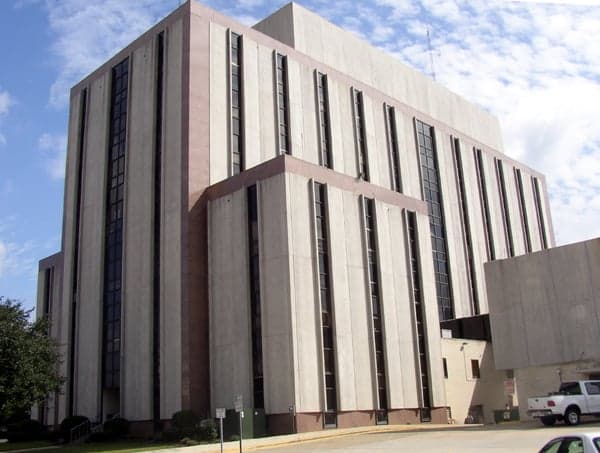
Photo: Wikipedia
Political ClimatePolitical Climate in Tuscaloosa County
Showing district-level results — no local-only data available.
Local Political AnalysisPolitical Analysis of Tuscaloosa County
Tuscaloosa County is one of the most reliably Republican strongholds in Alabama, carrying a Cook Partisan Voting Index (PVI) of R+33 — more than double the state's already solid R+14 rating. That means the county votes about 33 points more Republican than the national average in presidential elections, a margin that has held steady even as the broader state has shifted rightward. The University of Alabama's presence in the city of Tuscaloosa creates a noticeable blue island, but the county's rural precincts and suburban towns like Northport and Cottondale consistently deliver overwhelming GOP margins that drown out the campus vote.
How it compares
Alabama as a whole is a deep-red state, but Tuscaloosa County is in a league of its own. The R+33 PVI puts it among the most Republican counties in the nation, comparable to places like Texas's Collin County or Tennessee's Williamson County. By contrast, the state's R+14 rating reflects a mix of urban Democratic strongholds (Jefferson County, home to Birmingham, votes reliably blue) and rural red counties. Within Tuscaloosa County, the city of Tuscaloosa itself is the only real Democratic-leaning area — precincts near the University campus and downtown often vote 60-70% Democratic in state and local races. But those votes are swamped by the surrounding areas: Northport, a city of about 26,000 just across the Black Warrior River, votes consistently Republican, as do the smaller towns of Brookwood, Coker, and Vance. The swing precincts are few and far between; most of the county's 100+ precincts are either deep red or deep blue, with very little middle ground.
What this means for residents
For conservative residents, the political climate is comfortable and affirming. Local offices — from the county commission to the school board to the sheriff's office — are held by Republicans, and policy decisions tend to reflect conservative priorities on taxes, development, and law enforcement. The county's GOP primary is often the de facto general election, meaning the real political action happens in the spring, not November. For liberal residents, especially those in the university community, the experience is more mixed. You can live in a blue bubble within the city of Tuscaloosa — the city council has a progressive bloc, and the mayor, Walt Maddox, is a Democrat who has won multiple terms — but countywide and state-level elections are a different story. Progressive candidates rarely crack 35% outside the city limits, and ballot initiatives on social issues tend to fail by wide margins. That said, the university's presence means there's a visible, active Democratic Party infrastructure and a robust culture of political engagement that you don't see in most Alabama counties this red.
The cultural and policy distinctions within Tuscaloosa County are sharp. The city of Tuscaloosa has a more cosmopolitan, college-town feel — craft breweries, a walkable downtown, and a city government that invests in public transit and bike lanes. Northport and the rural areas are more traditional: churches, hunting clubs, and a strong preference for limited government. The county's economic development strategy, heavily focused on the Mercedes-Benz plant in Vance and the University's research parks, enjoys broad bipartisan support. But on social issues — abortion, gun rights, LGBTQ+ protections — the divide between the city and the county is as wide as the Black Warrior River that separates them. That divide isn't going anywhere; if anything, it's likely to deepen as the university grows and the rural areas hold firm. For anyone moving here, the key insight is simple: your experience of Tuscaloosa County's politics will depend almost entirely on which side of the river you live on.

State Political ClimatePolitical Climate in Alabama
State Political AnalysisPolitical Environment in the State
Alabama is one of the most reliably Republican states in the country, with a Cook Partisan Voting Index of R+14, meaning it votes about 14 points more Republican than the national average in presidential elections. The state hasn't voted for a Democratic presidential candidate since Jimmy Carter in 1976, and over the last 20 years, the GOP has solidified its dominance at every level — from the legislature and governor's office down to county commissions and school boards. That said, the state's politics aren't a monolith; there's a deep urban-rural split, a growing suburban shift in places like Madison and Auburn, and a persistent Democratic stronghold in the Black Belt counties that runs from the Mississippi line east through Montgomery and Selma.
Urban vs. rural divide
The political map of Alabama is starkly divided. The state's largest city, Birmingham (Jefferson County), is a Democratic stronghold, consistently delivering 65-70% of its vote to Democratic candidates. Montgomery and the Black Belt counties — like Lowndes, Greene, and Macon — are also heavily Democratic, driven largely by African American voters who make up a significant share of the population. On the flip side, the rural and exurban areas — places like Cullman, Blount, and DeKalb counties — vote Republican by margins of 70-80% or more. The fastest-growing parts of the state, including Madison (suburban Huntsville) and Auburn/Opelika, lean Republican but are more moderate and college-educated than the rural areas. Huntsville itself, home to the Redstone Arsenal and a booming tech sector, has become a fascinating microcosm: it's still Republican-leaning overall, but the influx of out-of-state professionals has made it more competitive, with Democrats now regularly pulling 40-45% of the vote in local races.
Policy environment
Alabama's policy environment is shaped by a conservative majority that has held the legislature since 2010 and the governor's office since 2017. The state has no income tax on Social Security benefits, a flat income tax rate of 5%, and a state sales tax of 4% (though local add-ons can push it over 10% in some cities). Property taxes are among the lowest in the nation, which is a major draw for relocators. The state is a "right-to-work" state, meaning union membership is optional, and it has some of the weakest labor protections in the country. Education policy is a hot-button issue: Alabama has a school choice program (the Alabama Accountability Act) that provides tax credits for private school tuition, and in 2024, the legislature passed a universal school choice expansion. However, public school funding remains below the national average, and the state's NAEP scores consistently rank near the bottom. Healthcare is another area of tension: Alabama did not expand Medicaid under the Affordable Care Act, leaving roughly 300,000 residents in the coverage gap. The state has some of the strictest abortion laws in the nation, with a near-total ban in effect since 2022. Election laws are also restrictive: Alabama requires a photo ID to vote, has limited early voting (no in-person early voting before Election Day), and has strict rules around absentee ballots.
Recent policy direction
Over the last five years, Alabama has moved decisively to the right on a broad set of issues. In 2022, the state passed a near-total abortion ban (the Human Life Protection Act) with no exceptions for rape or incest, only for the life of the mother. On gun rights, Alabama is a constitutional carry state — no permit is required to carry a concealed firearm — and in 2023, the legislature passed a law prohibiting local governments from enforcing federal gun laws they deem unconstitutional. On education, the 2024 school choice expansion (the CHOOSE Act) created education savings accounts for families, and the state has also passed laws restricting the teaching of "divisive concepts" related to race and gender in public schools. On voting, the legislature passed a law in 2024 that bans the use of private money for election administration (a response to the 2020 "Zuckerbucks" controversy) and requires stricter chain-of-custody procedures for absentee ballots. On property rights, Alabama has strong eminent domain protections and is a "right-to-farm" state, limiting nuisance lawsuits against agricultural operations. On privacy and surveillance, the state has no comprehensive data privacy law, but it does have a law restricting the use of facial recognition technology by law enforcement without a warrant. On medical and bodily autonomy, the state has banned gender-affirming care for minors (2022) and has some of the strictest vaccine mandate prohibitions in the country.
Civil unrest & political movements
Alabama has a long history of civil rights activism, and that legacy continues today, though the flashpoints have shifted. In 2020, the state saw significant Black Lives Matter protests in Birmingham, Montgomery, and Mobile, with some turning violent in Birmingham. More recently, the state has been a battleground over Confederate monuments: in 2020, the city of Birmingham removed a Confederate monument from Linn Park, and the state legislature responded by passing the Alabama Memorial Preservation Act (2017, updated in 2021), which prohibits the removal or alteration of "historically significant" monuments. Immigration politics are less visible here than in border states, but there have been flashpoints: in 2011, the state passed HB 56, one of the strictest anti-immigration laws in the country, which led to a significant exodus of Hispanic residents. That law has been largely gutted by court rulings, but the issue remains politically potent. Election integrity has been a recurring theme: in 2022, the state drew new congressional maps that were challenged as racial gerrymanders, and in 2024, a federal court ordered the creation of a second majority-Black district. The state has also seen organized movements on both sides: the Alabama chapter of Moms for Liberty is active in school board races, while groups like the Alabama Poor People's Campaign and the Alabama Coalition for Immigrant Justice push back on conservative policies.
Projection
Over the next 5-10 years, Alabama's political trajectory is likely to remain deeply conservative, but with some important shifts. The state's population is growing slowly (about 1% per year), and the growth is concentrated in the Huntsville and Auburn/Opelika metros, which are more moderate and college-educated. These areas are likely to become more competitive over time, potentially flipping some state legislative seats and congressional districts. The Black Belt, meanwhile, is losing population, which could reduce the Democratic base in the state. The 2024 redistricting fight is a wildcard: if the courts force a second majority-Black congressional district, that could flip a seat from red to blue. On policy, the state is likely to continue moving right on education (more school choice, more restrictions on curriculum) and on social issues (further restrictions on abortion and transgender rights). However, the state's fiscal conservatism may clash with the need for infrastructure investment, especially in water and sewer systems, which are aging across the state. The biggest wildcard is in-migration: if the Huntsville boom continues and attracts more out-of-state professionals, the state's politics could moderate slightly, but it's unlikely to become competitive at the presidential level anytime soon.
For a new resident, the bottom line is this: if you're conservative, you'll find a state that largely aligns with your values on taxes, guns, education, and social issues. If you're liberal, you'll find strong communities in Birmingham, Montgomery, and the Black Belt, but you'll be in the minority at the state level, and you'll need to accept that your vote won't carry much weight in statewide elections. The state's low taxes and low cost of living are a real draw, but they come with trade-offs in public services, especially healthcare and education. The political climate is stable and predictable — no one expects Alabama to flip blue anytime soon — but the growing suburbs and the redistricting fight could make the next decade more interesting than the last one.
* Values derived from national, state, county, city and local statistics and may differ in a specific area. Last updated: 2026-06-16T12:35:57.000Z
Narrative content on this page is AI-generated and may contain mistakes. Verify any details that matter before acting on them.
ReloMaps may earn a commission from affiliate links at no extra cost to you.

