
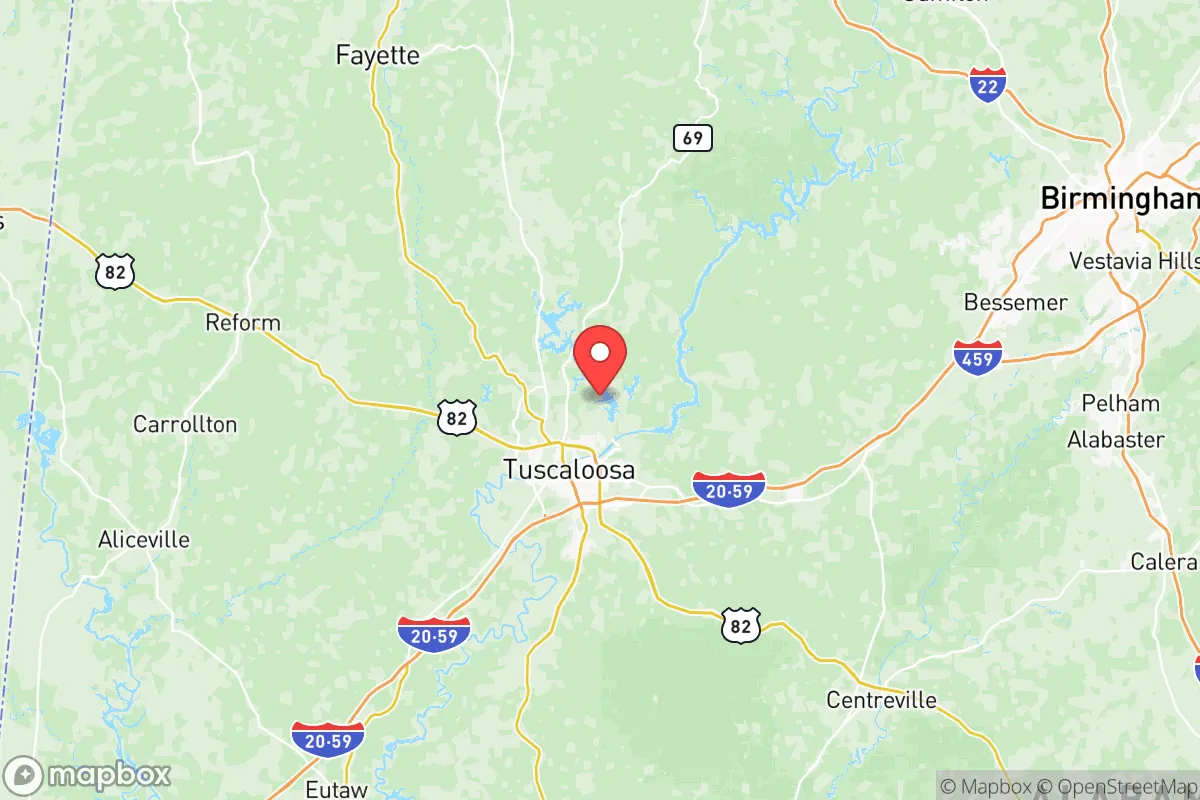
Photo: Wikipedia
Personal Sovereignty in Tuscaloosa County
Viable for self-reliance. Generally workable, though some barriers may limit total independence.
What does Personal Sovereignty tell us?
Personal Sovereignty measures your capacity for self-reliance and independence with minimal government friction. Higher scores mean fewer barriers between you and the way you want to live... but it assumes you have the space you need and good neighbors.
What does this tell us?
Personal Sovereignty measures your capacity for self-reliance and independence with minimal government friction. Higher scores mean fewer barriers between you and the way you want to live... but it assumes you have the space you need and good neighbors.
State Policy
Energy independence: Importer (45% of energy produced in-state)
Personal Liberty
Homesteading

Personal Liberty Analysis
Tuscaloosa County presents a notably high degree of personal sovereignty relative to many urbanized areas in the Southeast, driven by Alabama’s broad preemption laws and a local culture that prizes self-reliance. While the city of Tuscaloosa itself imposes more regulatory structure, the unincorporated areas and smaller towns like Northport, Coker, and Vance offer a significantly lighter touch from government, creating a bifurcated environment where an individual’s autonomy often depends on which side of the county line they choose to live. For a relocation-minded reader prioritizing personal freedom, the key takeaway is that Alabama’s state-level framework provides a strong baseline of liberty, but the specific zip code within the county determines the practical experience of that sovereignty.
Tax burden and regulatory posture in Tuscaloosa County
Alabama’s tax structure is among the most favorable in the nation for those seeking to keep more of their earnings, and Tuscaloosa County benefits directly from this. There is no state or local income tax on wages, and the combined state and local sales tax rate in unincorporated areas of the county is typically around 8-9%, though it can climb to 10% within the city limits of Tuscaloosa. Property taxes are exceptionally low, with the effective rate on residential property hovering around 0.4% of assessed value, a fraction of what one would pay in states like Texas or Illinois. The regulatory posture at the county level is generally permissive: there are no county-wide zoning laws in the unincorporated areas, meaning a landowner in places like Elrod or Buhl can typically build a workshop, park an RV, or keep livestock without navigating a thicket of permits. However, the city of Tuscaloosa and, to a lesser extent, Northport, enforce conventional municipal zoning codes, building permits, and business license requirements that add friction. For a family or individual seeking maximum autonomy, the clear strategic move is to locate outside the municipal limits, where the county's light-touch approach prevails.
Self-defense and gun law specifics in Alabama’s 7th District
Alabama is a constitutional carry state, and Tuscaloosa County fully reflects that reality. As of 2022, no permit is required to carry a concealed handgun for anyone legally allowed to possess a firearm, and the county sheriff’s office issues permits for reciprocity purposes on a shall-issue basis. The legal framework for self-defense is robust: Alabama’s "Stand Your Ground" law imposes no duty to retreat in any place where a person has a legal right to be, and the Castle Doctrine provides a presumption of reasonable fear of death or great bodily harm if an intruder unlawfully enters a residence or occupied vehicle. Local gun culture is deeply ingrained; shooting ranges like the Tuscaloosa County Shooting Sports Complex are well-utilized, and firearm ownership is common across the county. There are no county-level restrictions that exceed state law, meaning that in places like Vance or Coaling, a resident’s right to keep and bear arms is essentially unencumbered by local ordinance. The only practical limitation is that discharging a firearm within the Tuscaloosa city limits is prohibited except on designated ranges, so rural or suburban living is advisable for those who want to train on their own property.
Self-reliance and homesteading viability across the county
The viability of a self-reliant, homesteading lifestyle varies dramatically depending on location within Tuscaloosa County. In the unincorporated areas, particularly in the northern and western parts of the county around Gordo and Echola, land is affordable and zoning is virtually nonexistent. It is entirely legal to keep chickens, goats, and even cattle on parcels of just a few acres, and there are no county-level restrictions on rainwater collection, composting toilets, or off-grid solar installations. The soil in the Black Belt region that touches the southern part of the county is rich and productive for gardening. However, the city of Tuscaloosa and its extraterritorial jurisdiction impose stricter rules: livestock is generally prohibited on lots under one acre, and building codes for alternative structures like earthships or tiny homes are more difficult to navigate. Off-grid living is feasible in the rural stretches, but a buyer should verify that a property has a legal right to a well and septic system, as the county health department requires permits for both. For a family wanting to maximize self-reliance, Coker and the area around Lake Tuscaloosa offer a strong balance of proximity to town and the freedom to build a homestead without bureaucratic interference.
Personal liberties in education, medicine, and property
Parental rights in education are strongly protected under Alabama law. The state has a robust school choice framework that includes charter schools, magnet programs, and a generous Education Scholarship Account (ESA) program that allows parents to direct state education funds toward private school tuition, homeschooling materials, or tutoring. Tuscaloosa County is home to a large and active homeschooling community, and the county school system is generally accommodating to parents who choose this path. Medical autonomy is less clearly defined: Alabama has not enacted broad vaccine mandates at the state level, and there are no county-level health orders that restrict personal medical choices, but the state’s legal framework around alternative medicine is more restrictive than in states like Arizona or Colorado. Freedom of speech and assembly are robustly protected, with no notable local ordinances that chill political expression. Property rights are strong, particularly in the unincorporated areas, where there are no rent control laws, no inclusionary zoning mandates, and no county-level restrictions on short-term rentals like Airbnb, though the city of Tuscaloosa does regulate them. For a reader who values the ability to make decisions about their children’s education, their own healthcare, and their property without government second-guessing, the county’s legal environment is broadly permissive.
Overall, Tuscaloosa County offers a level of personal sovereignty that is significantly higher than what one would find in the urban centers of the Northeast or West Coast, and it compares favorably even within the Southeast. The state’s lack of income tax, constitutional carry, and strong property rights create a foundation of liberty that is difficult to find elsewhere. The primary variable is location: choosing to live in the city of Tuscaloosa means accepting more regulation and higher taxes, while settling in the rural towns like Brookwood or Moundville unlocks the full spectrum of autonomy that Alabama’s legal framework permits. For a family or individual who prioritizes self-reliance and minimal government interference, the unincorporated areas of Tuscaloosa County represent a compelling option that balances access to urban amenities with a genuinely light-touch regulatory environment.

* Values derived from national, state, county, city and local statistics and may differ in a specific area. Last updated: 2026-06-16T12:35:57.000Z
Narrative content on this page is AI-generated and may contain mistakes. Verify any details that matter before acting on them.
ReloMaps may earn a commission from affiliate links at no extra cost to you.

