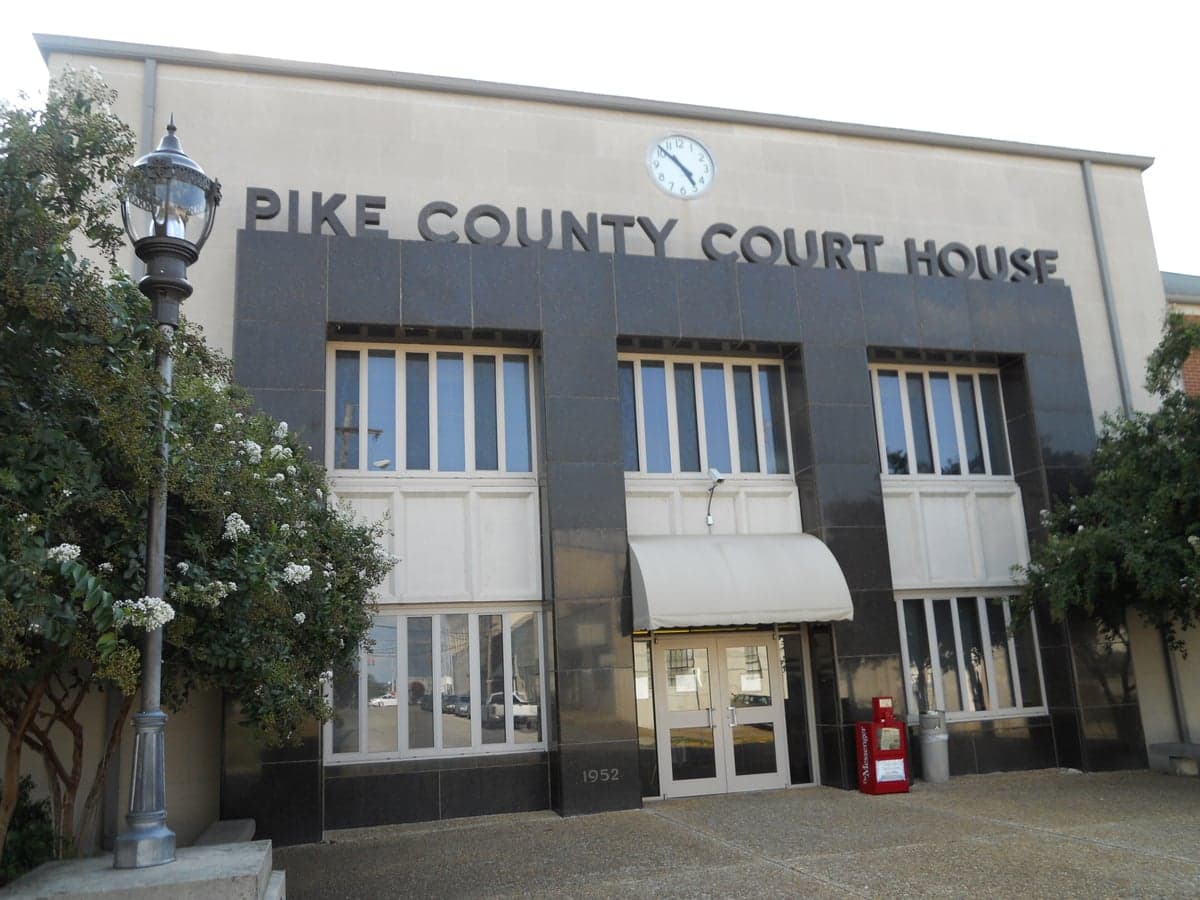
Photo: Wikipedia
Strategic Assessment of Pike County
Strong survivability profile. Good buffer from population centers, with manageable environmental and tactical risks.
What does the Strategic Assessment tell us?
Our Strategic Assessment grades tactical survivability of an area. Major population centers, military targets, fallout zones, natural disasters, and border exposure all drive risk — lower exposure means a more defensible position in a crisis.
This is heavily inspired by Joel Skousen's Strategic Relocation book. Highly recommended you checkout the book ($)What does this tell us?
Our Strategic Assessment grades tactical survivability of an area. Major population centers, military targets, fallout zones, natural disasters, and border exposure all drive risk — lower exposure means a more defensible position in a crisis.
This is heavily inspired by Joel Skousen's Strategic Relocation book. Highly recommended you checkout the book ($)Strategic Pillars

Key Distances
Strategic Assessment Analysis
Pike County, Alabama, sits at a crossroads of strategic advantage and overlooked exposure, offering relocators a mix of rural self-reliance and proximity to Gulf Coast infrastructure that demands serious consideration. With Troy as its economic anchor and Brundidge, Goshen, and Banks as smaller outposts, this southwest Alabama county of roughly 33,000 residents provides a buffer from the densest population corridors while retaining access to critical supply chains. For the conservative-leaning reader weighing disaster readiness, self-sufficiency, and long-term stability, Pike County presents a nuanced picture: low population density and a strong agricultural base offset by industrial risks and a humid subtropical climate that brings its own challenges.
Geographic advantages and strategic position for long-term resilience
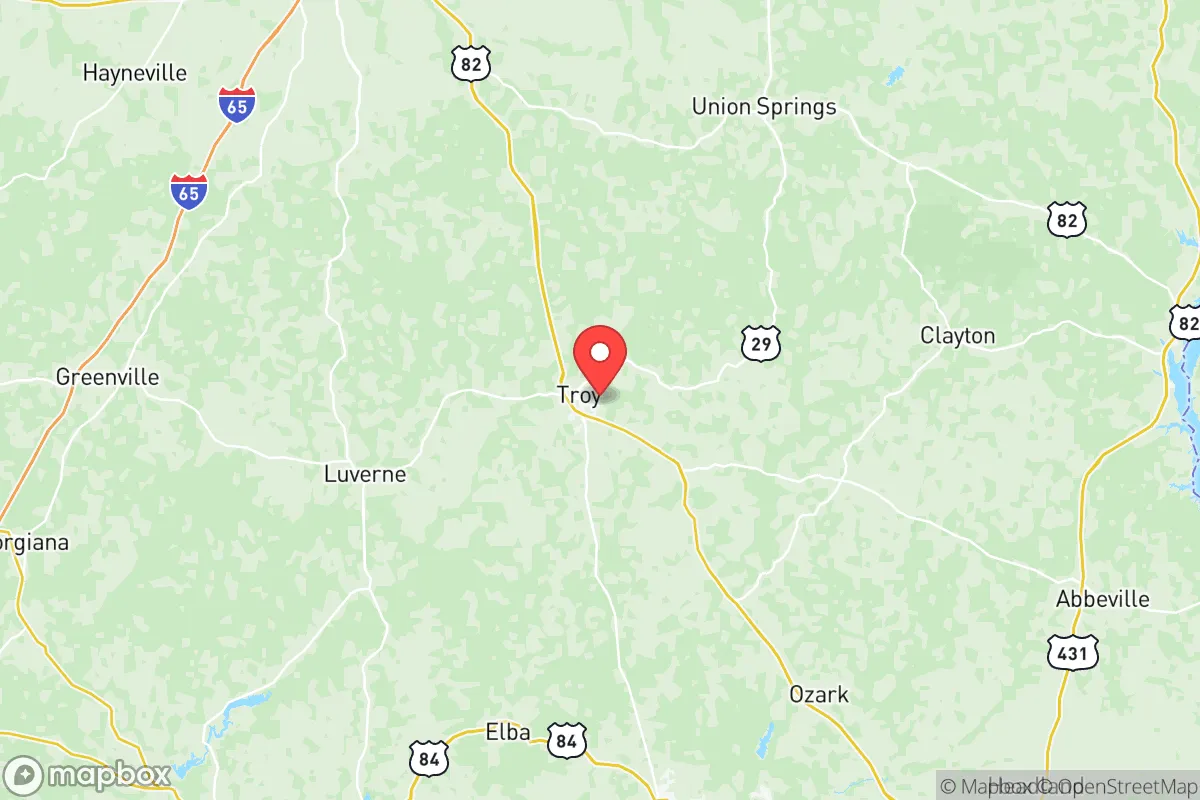
Pike County's location in the coastal plains of south-central Alabama offers a blend of insulation and connectivity that resilience-minded relocators should study closely. The county sits roughly 50 miles south of Montgomery, Alabama's capital, and about 85 miles north of the Gulf Coast at Panama City Beach, Florida — close enough for resupply runs or medical evacuation, but far enough from the hurricane storm surge zones and the densest urban targets to provide breathing room. Interstate 65 runs along the county's western edge, linking it to both Montgomery and the Florida Panhandle, while U.S. Highway 231 cuts through Troy and provides a direct route to Dothan and points south. This east-west and north-south crossroads means Pike County is not a dead end: multiple evacuation routes exist, a critical factor for any disaster scenario. The county's terrain — gently rolling hills, mixed pine and hardwood forests, and abundant creeks and rivers — supports both agriculture and natural water filtration, with the Conecuh River forming part of the southern boundary and the Pea River meandering through the northern sections. These waterways are not massive enough to be primary fallout targets, but they offer consistent surface water for small-scale irrigation, livestock, and emergency supply — a quiet advantage over more arid regions.
Risk exposure and proximity to industrial and fallout-relevant landmarks
Pike County's strategic calm is undercut by several hard risks that a relocator cannot ignore. The most immediate is proximity to the Gulf Coast's petrochemical and refining corridor. Within a 100-mile radius of the county seat of Troy, there are six major refineries and dozens of chemical plants stretching from Mobile, Alabama to Panama City, Florida — including the sprawling Mobile Refinery (roughly 120 miles southwest) and the Pascagoula, Mississippi facilities. In a major electromagnetic pulse or coordinated attack scenario, these are high-value targets. A detonation aimed at Mobile or Pascagoula could produce fallout plumes that, depending on wind direction, drift directly over Pike County. Similarly, the county is within 150 miles of Hurlburt Field and Eglin Air Force Base in Florida — both military assets that raise the county's conditional risk profile. Closer to home, the Alabama River and its industrial users (paper mills, chemical storage) lie roughly 30 miles west, and the Montgomery metropolitan area (population 400,000+), with its Maxwell Air Force Base and state government infrastructure, sits 50 miles north. For the relocator, this means Pike County is in a tertiary risk band: unlikely to be a primary target, but within the radius of secondary effects from strikes on the Gulf Coast or Montgomery. Natural hazards are more predictable but still serious: the county lies in the Deep South's tornado alley, with an average of 15-20 tornado warnings per year and the potential for EF3+ events. Hurricane-spawned tornadoes are also common in late summer, with storms like 2018's Hurricane Michael (which passed well west) demonstrating how far inland wind damage can reach. Flooding is localized along the Pea and Conecuh rivers during heavy rain events, but the county's generally sandy soils drain faster than clay-heavy regions, reducing standing-water problems.
Practical resilience for the relocator: food, water, energy, and defensibility
When it comes to day-to-day self-sufficiency, Pike County offers several built-in advantages that align with a conservative, prepare-for-anything lifestyle. The county's agricultural base is genuine and deep: 40% of the land is in farms, with top commodities being peanuts, cotton, corn, and soybeans, plus significant poultry and cattle operations. This means local food supply chains are robust, and a relocator with even a few acres can tap into a culture of small-scale farming — feed stores, equipment rental, and farmer's markets are common in Troy and Brundidge. Water availability is a strong point: groundwater is abundant in the coastal plain aquifer, and most rural properties rely on private wells that can be fitted with hand pumps. The Conecuh River and the smaller Pea River provide surface water backup, though filtration would be necessary. Energy infrastructure is more mixed. While the county is served by the Alabama Power grid (with power substations in Troy and Brundidge), these are not hardened against a major event. However, the prevalence of rural households means that solar panels, small wind turbines, and generator ownership are already common among the local population — a resilience signal for the newcomer. Defensibility is moderate. The county's low population density and mixed forest/cropland terrain mean that a prepared group could secure a perimeter more easily than in a suburban subdivision. Troy, with its ~18,000 residents, provides a critical mass of commerce and services (including Troy University, which has its own emergency operations center) but could be a concentration point in a crisis. More remote options exist in the smaller communities of Goshen (population ~250), Banks (~200), and the unincorporated areas around the Conecuh River — these offer greater isolation and lower visibility. The county has a strong volunteer fire service and a Sheriff's Department with roughly 40 sworn deputies, but in a major event, state police and National Guard assets would likely be stretched thin across a wide region. A relocator should plan for at least two weeks of complete self-sufficiency, including fuel for vehicles (preferably diesel, common among farm trucks) and secure storage for food and ammo — gun ownership is widespread and culturally accepted here, which can be either a deterrent or a mobilizing factor depending on the crisis.
The overall strategic picture for Pike County is one of cautious viability for the disaster-prepared relocator. It avoids the high-concentration drawbacks of Montgomery or Mobile while retaining the logistical links to both, and its agricultural character provides a genuine foundation for long-term food production that many suburban relocation targets lack. The risks — from Gulf Coast refinery strikes, hurricane-spawned tornadoes, and the inherent vulnerability of a small-population county's emergency services — are real but manageable with planning. For the conservative family or individual who values space, water abundance, and a culture that already prizes self-reliance, Pike County offers a better risk/reward profile than most Gulf Coast locations. The key is to buy well and know the land: avoid flood zones along the rivers, secure a reliable water source, and establish relationships with the local farming community before a crisis hits. In a world where distance from problematic targets is becoming the primary relocation metric, this Alabama county deserves a serious look — not as a fortress, but as a defensible base with room to breathe.

* Values derived from national, state, county, city and local statistics and may differ in a specific area. Last updated: 2026-07-03T08:00:46.000Z
Narrative content on this page is AI-generated and may contain mistakes. Verify any details that matter before acting on them.
ReloMaps may earn a commission from affiliate links at no extra cost to you.

