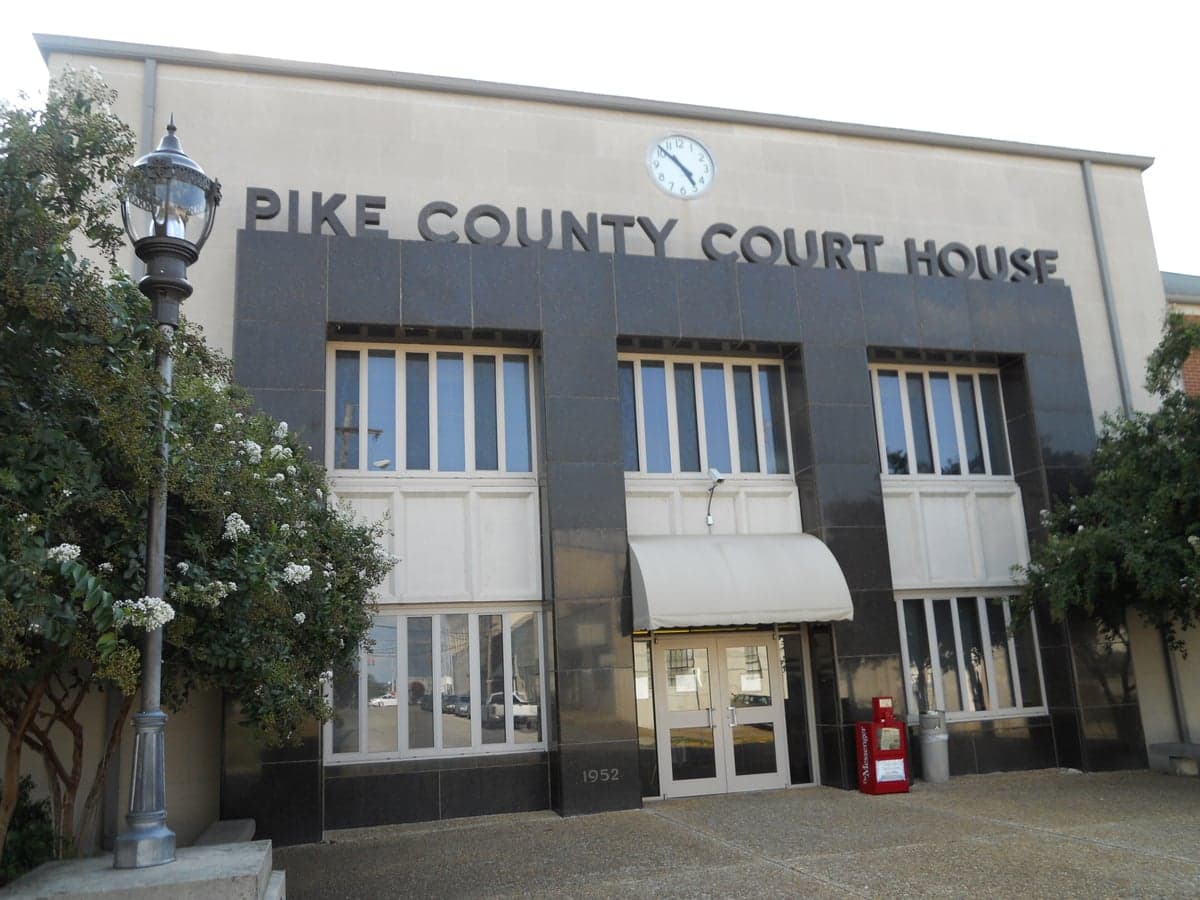
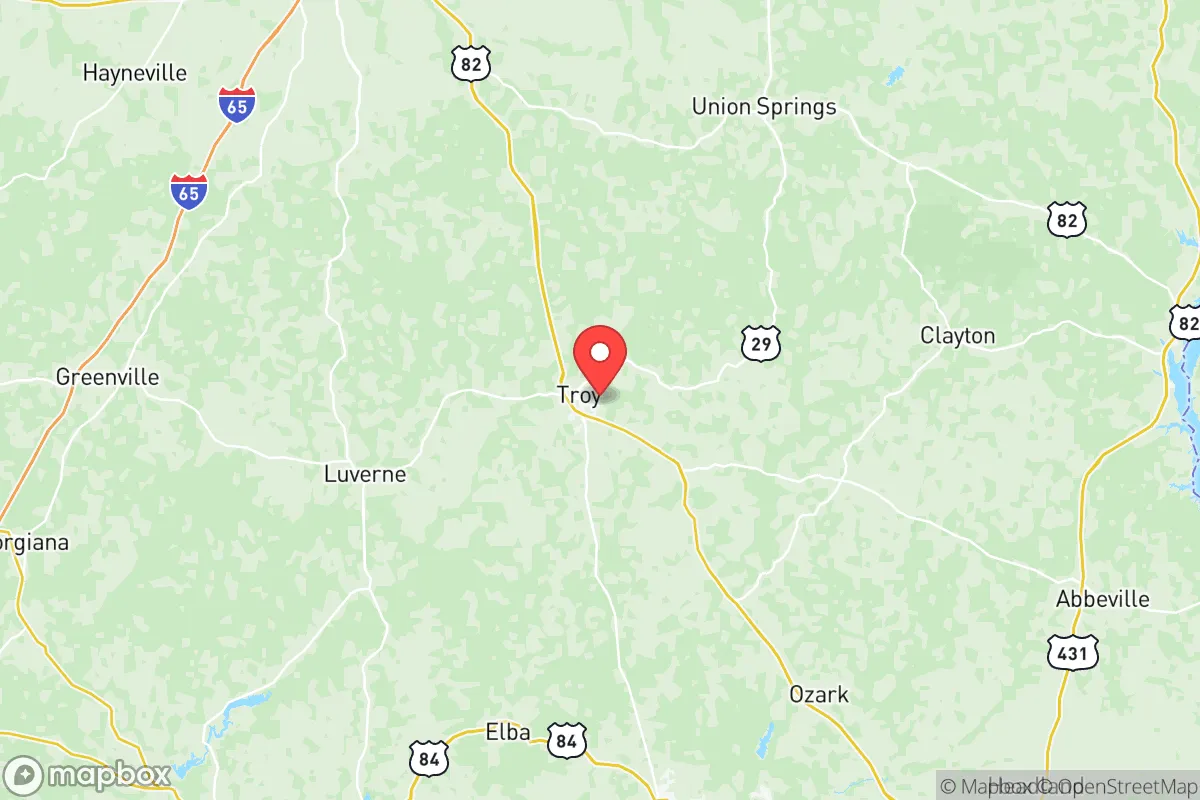
Photo: Wikipedia
Find The Best Places To Live in Pike County
PRO TIP! You can paste a Zillow or Redfin link to get info on that property.
Best Places to Live in Pike County
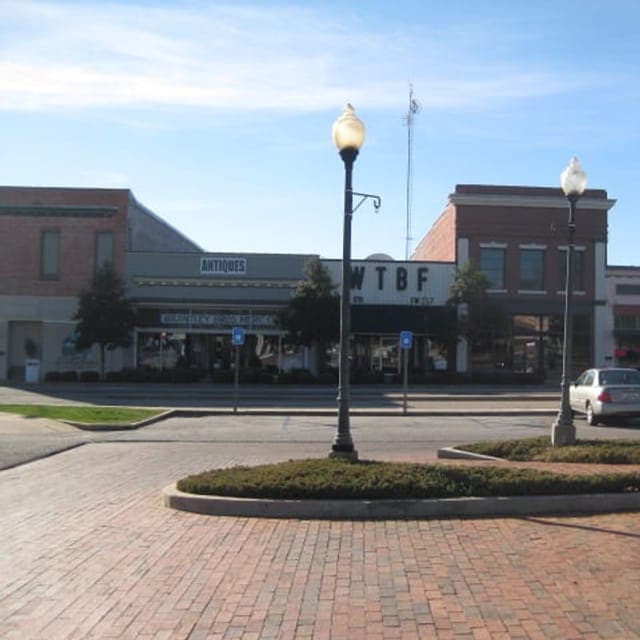
Cities & Towns in Pike County
Cities in Pike County
What It's Like Living in Pike County, AL
Pike County, Alabama, has a feel that’s a little different from the rest of the state. It’s a place where the pace slows down, folks wave from their trucks, and the biggest decision on a Friday night might be whether to catch a game at Troy University or grab a plate at a local barbecue joint. Anchored by the city of Troy, the county blends small-town college energy with the quiet rhythms of rural life in places like Brundidge, Banks, and Goshen. It’s not trying to be anything it isn’t, and for the right person—someone who values community over convenience and space over sprawl—that’s a real selling point.
The Daily Rhythm: Work, Errands, and Weekend Hangouts
A typical weekday in Pike County starts early. Many residents work in education at Troy University or in manufacturing and healthcare around the Troy area, with an average commute of just over 20 minutes. That short drive is a big deal—you’re not burning an hour each way on an interstate. Grocery runs usually mean a trip to the Piggly Wiggly in Troy or Brundidge, while bigger shopping trips often head to the Walmart in Troy. For a bite out, locals gravitate to O’Neil’s Grill in Troy for a burger and a beer, or swing by Delton’s Bar-B-Que in Brundidge for ribs that draw folks from the surrounding counties. Weekend afternoons often find families at the Troy Recreation Center or fishing on the Patsaliga River, especially when the weather cooperates—and it mostly does, with mild springs and long, hot summers. The area’s cost of living index is a low 65 (100 being the U.S. average), making it a place where a median income of $47,961 stretches further than it would in most of the country.
Who Fits In, and What’s Missing?
Pike County is a fit for people who don’t need a packed calendar to feel content. It’s a haven for young families, remote workers with a high tolerance for quiet, and retirees who want affordable space. The median age here is 31.7, younger than the state average, largely thanks to Troy University’s student population. That college presence keeps the city of Troy feeling alive, but it also means some parts of the county—like Banks or Goshen—can feel deeply slow after 6 p.m. What you won’t find: late-night nightlife, high-end dining, or any big-city cultural venues. If your idea of a good Saturday involves a craft cocktail bar and a concert hall, this county will disappoint. If you’re okay with a Saturday that involves a high school baseball game, a bonfire, and a potluck at the church, you’ll settle in just fine. The median home value is $149,000, so even a modest salary buys a decent chunk of land.
Sports, Festivals, and the Local Color
Sports in Pike County are practically a religion, but it’s church of a different kind. Troy Trojans football at Veterans Memorial Stadium is the biggest game in town—fall Saturdays turn the whole county maroon and gold, with tailgates running from early morning until kickoff. High school sports matter too, especially in places like Pike County High School in Brundidge and Charles Henderson High School in Troy. The Pike County Dogwood Festival in Troy each spring is a highlight, with a parade, arts and crafts, and enough funnel cakes to keep everyone happy. For outdoor types, the Pocosin Creek and the Conecuh National Forest are just a short drive south, offering hiking and hunting. A cultural quirk: locals take their sweet tea seriously, and most restaurants will ask “sweet or unsweet?” before they even hand you a menu. There’s also a strong sense of faith and community service—church suppers and school fundraisers are the social backbone in Goshen and Banks, where everyone knows who just had a baby or whose tractor broke down.
Pros and Cons of Calling This Home
Honestly, the upsides in Pike County are practical and real. The cost of living is genuinely low, traffic rarely means more than waiting through a single light cycle in Troy, and you can get to Montgomery in under an hour for a big-city fix. The downside: the violent crime rate is 348.1 per 100,000 people, which is higher than the national average—most incidents are concentrated in specific areas of Troy, not the rural stretches, but it’s worth being aware of. Job options outside of education and healthcare are limited, and the college-educated rate of 27.3% means some professional services (like specialized medical care or niche retail) require a drive. Weather-wise, summers are sweltering and humid, and spring brings the threat of tornadoes—most homes have a storm shelter or a plan. What longtime residents love: knowing their neighbors, the safety of small-town schools, and the fact that a dollar goes a long way. What frustrates them: the lack of variety in restaurants and the drive it takes to get to a movie theater or a mall. If you’re looking for a place where your kids can ride bikes, your commute is short, and your mortgage won’t eat your paycheck, Pike County delivers. Just don’t expect a 24-hour city—this is a place that goes to bed early and gets up with the sun.

* Values derived from national, state, county, city and local statistics and may differ in a specific area. Last updated: 2026-07-03T08:00:46.000Z
Narrative content on this page is AI-generated and may contain mistakes. Verify any details that matter before acting on them.
ReloMaps may earn a commission from affiliate links at no extra cost to you.

