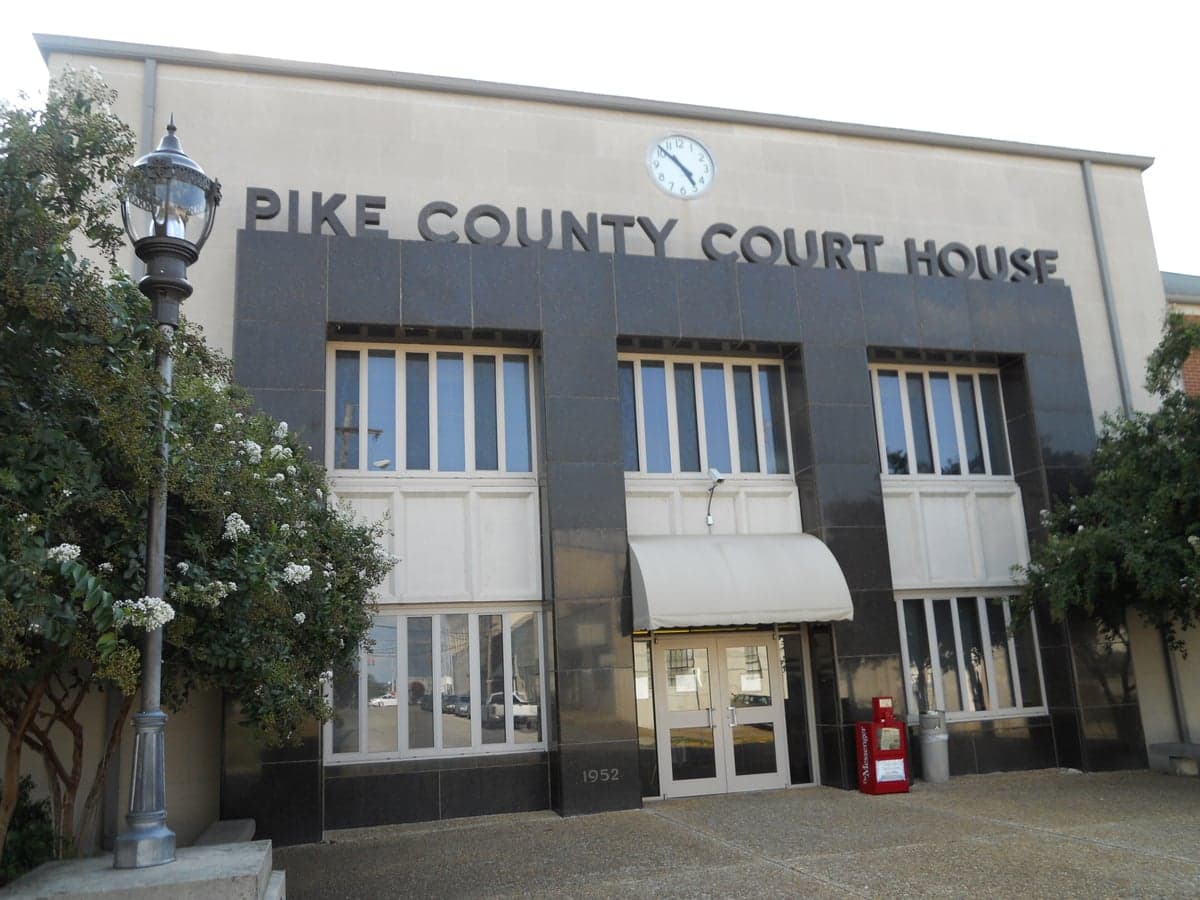
Photo: Wikipedia
Quality of Life in Pike County
A livable area that tracks near national norms for affordability, walkability, and neighborhood health.
What does Quality of Life tell us?
Quality of Life measures an area by evaluating factors like cost of living, nearby amenities, country club access, airport proximity, socioeconomic signals and neighborhood character. For large states, this is a general average — quality of life can vary dramatically between metro areas, suburbs, and rural communities within the same state.
What does this tell us?
Quality of Life measures an area by evaluating factors like cost of living, nearby amenities, country club access, airport proximity, socioeconomic signals and neighborhood character. For large states, this is a general average — quality of life can vary dramatically between metro areas, suburbs, and rural communities within the same state.
Cost of Living
35% below national average
113%
The Real Cost of Living in Pike County for 2026
| Tier | Individual | Family (4) |
|---|---|---|
| Survival | $14k | $26k |
| Comfortable | $29k | $43k |
| Luxury | $87k+ | $134k+ |
| Elite (Top 5%) | $116k+ | $180k+ |
Quality-of-Life Analysis
Pike County, Alabama, offers a distinct quality-of-life spectrum that ranges from the college-town energy of Troy to the quiet, deeply rural character of communities like Goshen and Brundidge, attracting everyone from university faculty and students to agricultural families and retirees seeking a low-cost, unhurried pace. The county’s character is defined by this contrast: a single, vibrant population center anchors the region, while the surrounding countryside and smaller municipalities provide a markedly different, more isolated experience. With a cost of living index of 65 (35% below the national average), a median home value of $149,000, and a median rent of $855, the financial landscape is uniformly affordable, but the lifestyle options vary significantly based on location and proximity to amenities.
Largest town(s) & population centers
Troy is the undisputed hub of Pike County, home to roughly 18,000 residents and the main driver of the local economy and culture. Daily life here revolves around Troy University, a major public university that brings a youthful, transient population and a steady calendar of events, from Division I athletics to performing arts at the Claudia Crosby Theater. The town offers a surprising density of amenities for its size, including a Walmart Supercenter, a regional hospital (Troy Regional Medical Center), and a walkable downtown square with local restaurants and boutiques. The average commute in the county is a swift 20.2 minutes, and for Troy residents, many errands and jobs are within a 10-minute drive, making it a practical choice for professionals and families who want small-town convenience without sacrificing access to a university’s cultural and educational resources.
Smaller towns & rural pockets
Outside of Troy, the county’s smaller communities offer a slower, more agrarian rhythm. Brundidge (pop. ~2,000) is the second-largest town, known for its historic downtown and the annual Brundidge Mule Days festival, but it lacks the retail and dining options of Troy, meaning residents often commute for major shopping or healthcare. Goshen (pop. ~250) is a classic rural crossroads community with a single school and a few churches, where life is defined by open space and proximity to the Conecuh National Forest. Unincorporated areas like Henderson and Spring Hill are even more sparsely populated, consisting of scattered homes, farmland, and little else in the way of services. These pockets attract those who prioritize privacy, land ownership, and a deep connection to the outdoors, but they require a willingness to drive 20–30 minutes for basic groceries or a doctor’s appointment.
Cost & lifestyle range
The cost of living remains uniformly low across Pike County, but the trade-offs between town and country are stark. At the higher-amenity end, Troy offers the highest home values—often between $150,000 and $250,000 for a three-bedroom home in a subdivision—and the shortest commutes, with most essentials within a 5-mile radius. At the lower-cost end, Brundidge and Goshen feature median home prices closer to $80,000–$120,000, with larger lots and older homes, but residents face a 15- to 25-minute drive to Troy for work or shopping. Renters see a similar spread: a two-bedroom apartment in Troy averages $850–$950, while a comparable rental in Brundidge might be $650–$750. The lifestyle range is essentially a choice between walkable, amenity-rich small-town living in Troy versus quiet, land-based rural life in the county’s smaller communities, with the same low baseline cost of living underpinning both options.
Pike County is best suited for individuals and families who value affordability and a slower pace but are comfortable with a limited range of urban amenities. University employees, remote workers, and retirees tend to thrive in Troy, where the social and cultural infrastructure is strongest. Farmers, outdoor enthusiasts, and those seeking maximum privacy are better matched to the rural pockets of Brundidge, Goshen, and the unincorporated areas, where land is cheap and neighbors are few. The county’s low cost of living and short commutes are universal benefits, but the quality-of-life experience diverges sharply depending on whether one chooses the college-town core or the quiet countryside.

Crime in Pike County
Crime rates similar to the national median for U.S. locations.
Violent CrimeViolent Crime Analysis
Property CrimeProperty Crime Analysis
Crime Analysis
Pike County, Alabama, has a violent crime rate of 348.1 incidents per 100,000 residents and a property crime rate of 1,479.9 per 100,000. These figures position the county as a moderate-risk area in the state, with crime concentrated in the city of Troy—the county's largest municipality and home to Troy University—while rural communities like Brundidge and Goshen see significantly fewer incidents. Readers considering relocation should understand that the county's overall safety picture is shaped by a mix of college-town dynamics, economic factors, and judicial policies in the 12th Judicial Circuit.
Crime in context
Pike County's violent crime rate is noticeably higher than the Alabama state average of approximately 366 per 100,000 but slightly below the national rate of 380 per 100,000, according to FBI UCR data. Property crime, however, runs well above both state (1,200 per 100,000) and national (1,954 per 100,000) figures. For direct comparison: Troy accounts for roughly 60% of the county's total reported crime, with a violent crime rate near 425 per 100,000, while Brundidge—a town of about 2,000 residents—reports violent crime around 150 per 100,000. The disparity reflects the usual urban-rural split, but also points to specific issues within Troy related to transient populations and proximity to the major north-south corridor of U.S. Highway 231, which funnels drug and human trafficking activity through the region.
What residents experience
Property crime, especially burglary and theft from vehicles, is the most common safety complaint in Pike County. The Troy Police Department reports that vehicle break-ins and package thefts make up nearly 40% of property crime calls, often concentrated near the university campus and apartment complexes along U.S. 231 and George Wallace Drive. In the county's unincorporated areas and smaller towns like Banks and Glenwood, residents report minimal property crime—often limited to occasional farm equipment theft or rural mail theft. Violent crime in Pike County is overwhelmingly non-random: the Pike County Sheriff's Office and Troy Police Department data show that assaults and domestic violence incidents account for 70% of violent crime reports, with robberies and homicides extremely rare and almost always tied to known parties. The presence of a progressive-leaning district attorney in the 12th Judicial Circuit has raised concerns among some residents about sentencing leniency for repeat property offenders; critics argue that diversion programs and reduced bond amounts have contributed to a cycle of reoffending among property criminals in Troy, where offenders are often released pending trial only to commit additional thefts.
Neighborhood-level variation
Safety in Pike County varies sharply by location within the city of Troy itself. Areas west of U.S. 231, including the Historic District and the Oak Grove neighborhood, consistently report the lowest crime rates in the city, with violent crime incidents averaging fewer than 10 per year. Conversely, the Eastgate Village and College Park neighborhoods—home to a high concentration of off-campus student housing—see the highest rates of property crime, particularly between August and November when student turnover peaks. Outside Troy, crime is rare: Brundidge's police department logs fewer than 50 total incidents annually, and in Goshen, the rate drops to under 25 reports per year. Residents in these communities emphasize that leaving vehicles unlocked or sheds open is uncommon, but they generally leave doors unlocked in daylight hours—a stark contrast to the caution required in Troy's busier corridors.
* Values derived from national, state, county, city and local statistics and may differ in a specific area. Last updated: 2026-07-03T08:00:46.000Z
Narrative content on this page is AI-generated and may contain mistakes. Verify any details that matter before acting on them.
ReloMaps may earn a commission from affiliate links at no extra cost to you.

