Political ClimatePolitical Climate in Mobile County
Showing district-level results — no local-only data available.
Local Political AnalysisPolitical Analysis of Mobile County
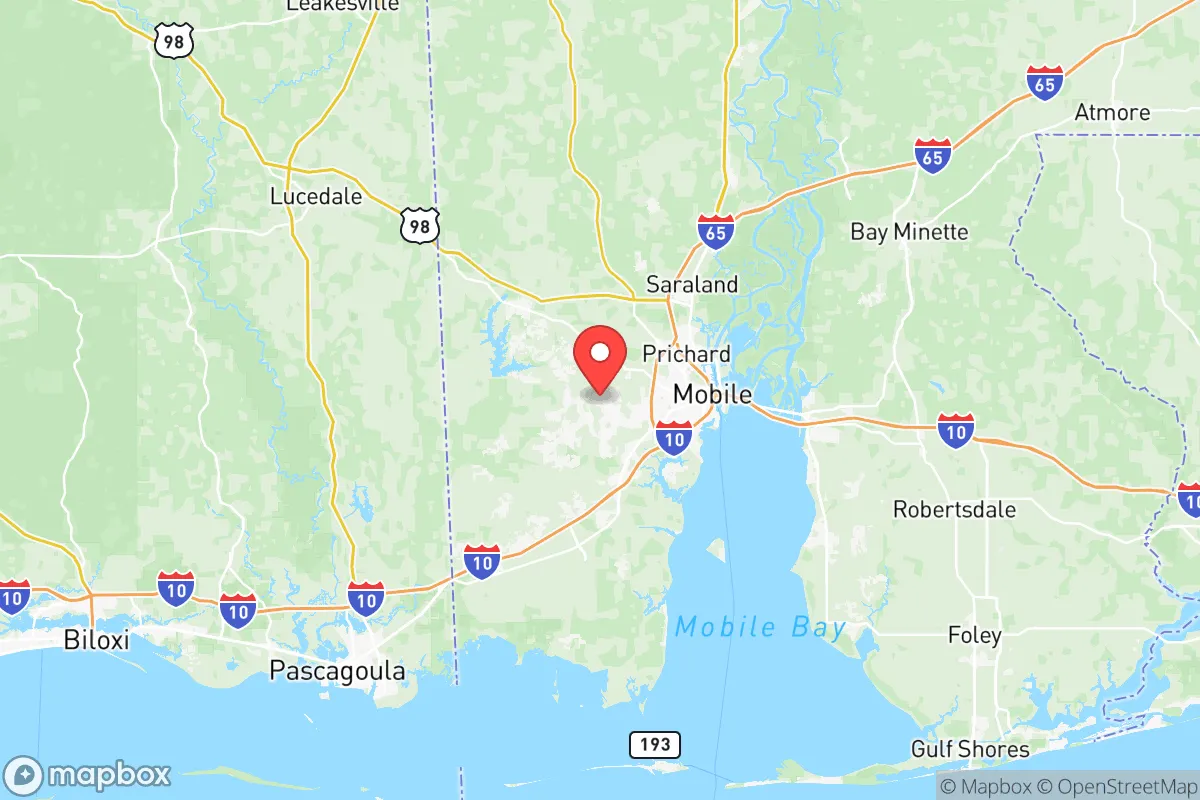
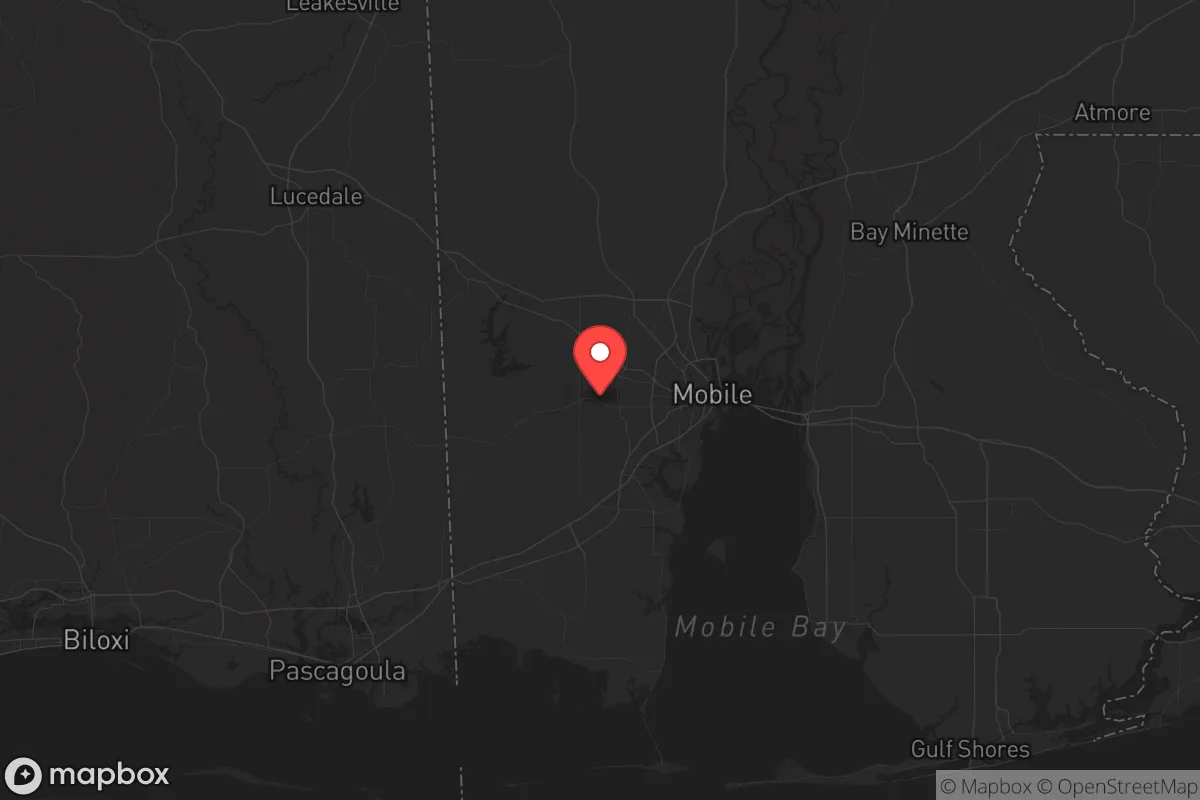
Mobile County is a fascinating political outlier in deep-red Alabama, carrying a Cook Partisan Voting Index (PVI) of D+5 while the rest of the state sits at a solid R+14. That means this is one of the few places in Alabama where a Democrat can actually win a countywide race, though the margin has been shrinking for years. The county has been trending rightward slowly but steadily, driven by population growth in the more conservative suburbs and exurbs, while the core of Mobile city remains a Democratic stronghold. If you're looking at the long arc, Mobile County is becoming more purple than blue, but it's still a long way from flipping to the kind of Republican dominance you see in places like Baldwin County just across the bay.
How it compares
The gap between Mobile County and the rest of Alabama is stark. While the state as a whole votes about 14 points more Republican than the national average, Mobile County votes about 5 points more Democratic. That's a roughly 19-point spread between the county and the state — a huge difference in practical terms. The city of Mobile itself, especially precincts in midtown and downtown like those around the University of South Alabama and the historic districts, consistently votes blue. Meanwhile, the suburban and rural parts of the county — think Semmes, Wilmer, and the western reaches near the Mississippi line — vote heavily Republican, often by margins of 60-70%. The swing precincts tend to cluster in the unincorporated areas just outside the city limits, places like Theodore and parts of west Mobile, where you'll see races decided by just a few hundred votes. Baldwin County, right next door, is one of the most Republican counties in the state, so crossing the bay feels like entering a different political universe entirely.
What this means for residents
For conservative residents, Mobile County offers a comfortable environment where Republican candidates are competitive and often win countywide offices, even if the presidential vote leans Democratic. You'll find plenty of conservative churches, gun-friendly policies, and a general cultural alignment with the rest of Alabama. For liberal residents, the county is a relative haven in a deeply red state — you can live in a city that votes blue, has a Democratic mayor (as of 2025), and where progressive candidates can win local races. But you're still living under Alabama state laws on abortion, marijuana, and voting access, which are among the most restrictive in the country. The practical reality is that most residents don't feel a huge political tension day-to-day; Mobile is a pragmatic, business-friendly place where people tend to get along across party lines, especially compared to the hyper-partisan atmosphere in some other parts of the country.
One cultural distinction worth noting: Mobile County has a strong Catholic and Creole heritage that softens some of the hard-edged evangelical conservatism you find elsewhere in Alabama. Mardi Gras is a bigger deal here than in New Orleans to many locals, and that festive, inclusive spirit carries over into a slightly more tolerant political culture. You won't see the same level of culture-war intensity that you'd find in, say, the Birmingham suburbs or the Tennessee Valley. The county also has a significant African American population — roughly 35% — which drives the Democratic lean in the city and ensures that racial equity issues remain part of the local conversation in a way they don't in whiter parts of the state. For anyone moving here, the key takeaway is that Mobile County is politically complex, but in a way that makes it one of the most interesting and livable places in Alabama.

State Political ClimatePolitical Climate in Alabama
State Political AnalysisPolitical Environment in the State
Alabama is one of the most reliably Republican states in the country, with a Cook Partisan Voting Index of R+14, meaning it votes about 14 points more Republican than the national average. The state hasn’t voted for a Democratic presidential candidate since 1976, and every statewide elected office is held by a Republican. Over the last 10-20 years, the shift has been dramatic — Democrats once held a majority of state legislative seats and the governorship as recently as the early 2000s, but the realignment of white rural voters, combined with population growth in conservative suburbs around Birmingham, Huntsville, and Mobile, has cemented a deep-red supermajority that shows no signs of loosening.
Urban vs. rural divide
The political map of Alabama breaks down along familiar lines: the state’s few urban centers lean Democratic, while the vast rural and suburban expanse is overwhelmingly Republican. Jefferson County (Birmingham) and Montgomery County are the two main Democratic strongholds, with Birmingham’s Black-majority population and union-aligned industrial base driving a reliably blue vote. Mobile County has trended right over the past decade, though the city of Mobile itself remains a competitive swing area. Huntsville, the state’s fastest-growing metro, is a fascinating exception — it’s a conservative-leaning city, but its high concentration of defense contractors, engineers, and federal employees creates a more moderate, pragmatic Republicanism than you’d find in rural areas. The rural Black Belt, stretching from the Mississippi border to the Georgia line, is heavily Democratic due to its majority-Black population, but turnout there is often lower than in the white rural counties of north and south Alabama. Places like Cullman, Baldwin County (Gulf Shores), and Shelby County (suburban Birmingham) are among the most Republican in the nation, routinely delivering 80%+ margins for GOP candidates.
Policy environment
Alabama’s policy environment is shaped by a deep commitment to limited government, low taxation, and social conservatism. The state has no state-level property tax to speak of — effective rates are among the lowest in the country — and income tax is a flat 5% on most earnings, though groceries are taxed at the full rate. There is no state-level sales tax exemption for groceries, which hits low-income households hardest. The regulatory posture is business-friendly: Alabama is a right-to-work state with weak unions, and economic development incentives are generous, particularly for large manufacturers like Mercedes-Benz, Hyundai, and Airbus. Education policy is a flashpoint: the state funds a limited school choice program through the Alabama Accountability Act, but public school funding per pupil remains near the bottom nationally. Healthcare is a perennial issue — Alabama did not expand Medicaid under the Affordable Care Act, leaving a coverage gap for roughly 200,000 low-income adults. Election laws are moderately restrictive: voter ID is required, early voting is limited to absentee ballots with an excuse, and no-excuse early voting does not exist. Absentee voting was expanded temporarily during COVID but has since reverted.
Recent policy direction
In the last few years, Alabama has moved decisively to the right on a broad set of issues. On gun rights, the state passed constitutional carry (permitless carry) in 2022, allowing any adult who can legally possess a firearm to carry it concealed without a permit. On abortion, the state passed the near-total ban in 2019 (the Human Life Protection Act), which took effect after Dobbs and makes abortion a felony with no exceptions for rape or incest — only to save the mother’s life. Parental rights in education gained traction with the 2022 “Don’t Say Gay” style law (the Alabama Vulnerable Child Compassion and Protection Act), which restricts classroom discussion of sexual orientation and gender identity in K-5. On speech and privacy, the state passed a law in 2023 banning TikTok on government devices and public university networks. Property rights remain strong: Alabama is a “stand your ground” state with castle doctrine protections, and there is no state-level estate tax. On voting, the legislature passed a law in 2021 banning curbside voting and limiting absentee ballot assistance, tightening rules that were temporarily loosened during the pandemic. The overall direction is toward fewer restrictions on firearms, more restrictions on abortion and LGBTQ+ topics in schools, and a cautious approach to election access.
Civil unrest & political movements
Alabama has not seen the kind of large-scale civil unrest seen in some other states, but there have been notable flashpoints. The 2020 racial justice protests in Birmingham and Montgomery were significant, with the Birmingham mayor and police chief taking a relatively restrained approach compared to some cities. The state’s immigration politics are less heated than in border states, but there have been periodic controversies over sanctuary city policies — in 2019, the legislature passed a law banning sanctuary policies, though no Alabama city had formally adopted one. Election integrity has been a recurring theme: the 2020 election saw no major fraud cases in Alabama, but Republican officials have continued to push for tighter rules, citing public confidence. The most visible political movement in recent years has been the growth of grassroots conservative activism around school board meetings and library content, particularly in suburban areas like Shelby County and Madison County (Huntsville). On the left, the Alabama Poor People’s Campaign and the Alabama Arise coalition have organized around Medicaid expansion and tax reform, but they have not achieved major legislative wins. A new resident would notice that political signs and bumper stickers are common, but the overall atmosphere is not one of daily confrontation — most people keep their politics to themselves in public settings.
Projection
Over the next 5-10 years, Alabama’s political trajectory is likely to remain deeply Republican, but with some interesting shifts. The Huntsville metro is the key demographic wildcard — it’s growing fast, attracting out-of-state professionals who tend to be more moderate and less culturally conservative than the native population. If Huntsville continues to grow at its current pace, it could eventually shift the state’s political center of gravity slightly toward a more pragmatic, business-oriented conservatism. Meanwhile, the Black Belt is slowly losing population, which will further reduce Democratic vote share. The rural white counties are aging and also losing population, but they vote at such high Republican margins that their influence remains outsized. In-migration from other states is modest compared to the Sun Belt boom states, but the people moving in tend to be retirees and remote workers drawn to the Gulf Coast and the low cost of living — a group that leans Republican but is not uniformly so. The most likely scenario is that Alabama stays R+14 to R+16 for the next decade, with occasional Democratic competitiveness in a few state legislative districts around Birmingham and Montgomery, but no real threat to GOP control of statewide offices. A new resident moving in now should expect to live in a state where conservative values shape public policy, but where the practical experience of daily life is not as ideologically charged as the headlines suggest — most people are focused on jobs, family, and the low cost of living.
For someone considering a move to Alabama, the bottom line is straightforward: if you align with conservative positions on taxes, gun rights, and social issues, you’ll find a state that actively enacts those priorities. If you lean liberal, you’ll find a few welcoming urban pockets — Birmingham, parts of Huntsville, and Montgomery — but you’ll be living under a state government that is consistently at odds with your views on most major policy questions. The practical trade-off is a very low cost of living, minimal traffic outside the metros, and a slower pace of life, balanced against limited public services and a political environment that is unlikely to change direction anytime soon.
* Values derived from national, state, county, city and local statistics and may differ in a specific area. Last updated: 2026-07-02T18:08:19.000Z
Narrative content on this page is AI-generated and may contain mistakes. Verify any details that matter before acting on them.
ReloMaps may earn a commission from affiliate links at no extra cost to you.

