Personal Sovereignty in Mobile County
Viable for self-reliance. Generally workable, though some barriers may limit total independence.
What does Personal Sovereignty tell us?
Personal Sovereignty measures your capacity for self-reliance and independence with minimal government friction. Higher scores mean fewer barriers between you and the way you want to live... but it assumes you have the space you need and good neighbors.
What does this tell us?
Personal Sovereignty measures your capacity for self-reliance and independence with minimal government friction. Higher scores mean fewer barriers between you and the way you want to live... but it assumes you have the space you need and good neighbors.
State Policy
Energy independence: Importer (45% of energy produced in-state)
Personal Liberty
Homesteading

Personal Liberty Analysis
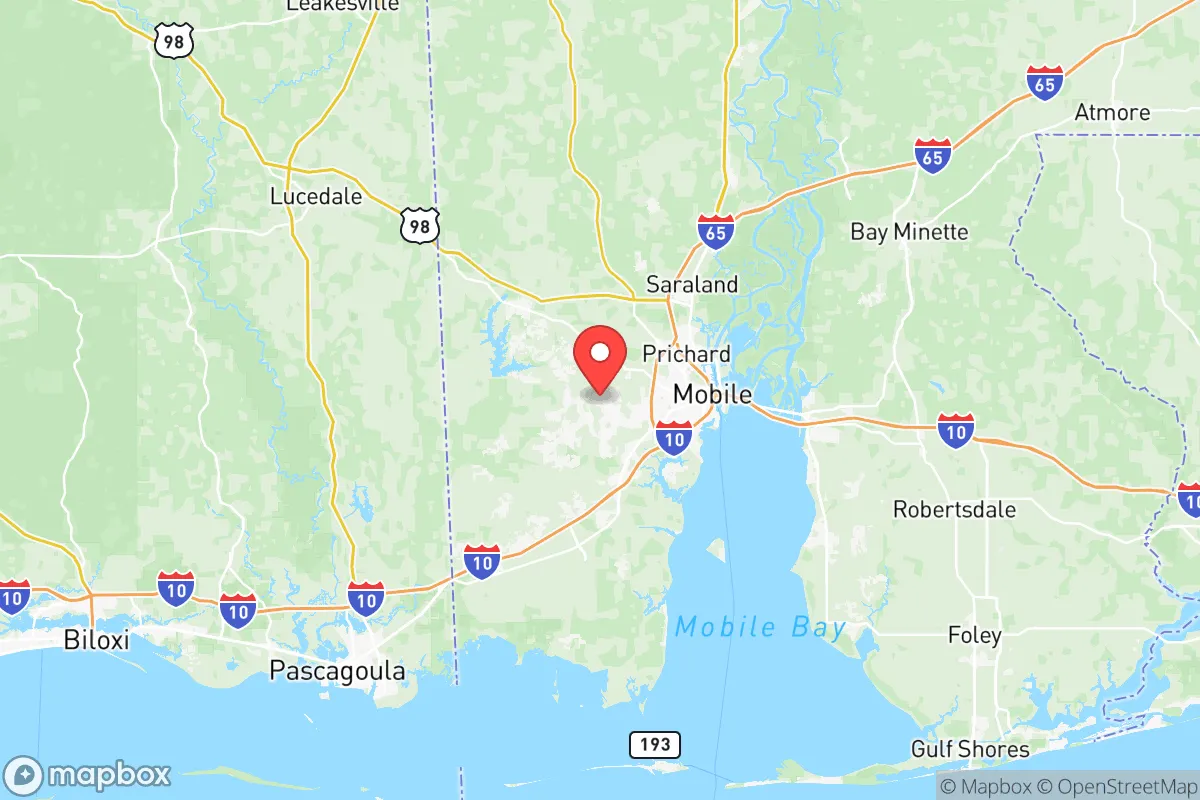
Mobile County offers a notably high degree of personal sovereignty compared to many urbanized coastal areas, driven by Alabama's strong state-level preemption laws, low tax burden, and a legal culture that prioritizes individual decision-making over regulatory oversight. The county's autonomy environment is shaped by a blend of Deep South libertarian leanings and practical self-reliance, where residents in places like Citronelle and Mount Vernon experience far less government intrusion than those in more densely regulated metros like Birmingham or Huntsville. For single individuals and families seeking to maximize personal freedom—whether in self-defense, property use, or daily life—Mobile County presents a landscape where the default answer from local government is often "yes," provided state law is not violated.
Tax burden and regulatory posture in Mobile County
Alabama's tax structure is among the most favorable in the nation for those prioritizing financial sovereignty, and Mobile County benefits directly from this framework. The state levies a flat 5% income tax on all brackets, with no progressive rates, and the county's combined sales tax rate (state + county + city) typically ranges from 8% to 10%, depending on the municipality. Property taxes are exceptionally low: the effective rate in Mobile County hovers around 0.4% of assessed value, roughly half the national average. Regulatory posture is light-touch across the county, but varies by jurisdiction. The city of Mobile itself maintains a more traditional municipal code with zoning and business licensing requirements, while unincorporated areas like Theodore and Semmes operate with minimal county-level interference. Alabama's strong preemption laws prevent cities from enacting their own wage, benefit, or rental regulations that exceed state standards, meaning a landlord in Saraland faces the same basic rules as one in rural Axis. No county-level income tax exists, and occupational license fees for small businesses are modest—typically under $100 annually for most home-based operations.
Self-defense and gun law specifics in Mobile County
Alabama is a constitutional carry state, meaning no permit is required to carry a concealed firearm for anyone legally allowed to possess one, and Mobile County fully reflects this policy. Residents 18 and older can carry openly or concealed without a permit, though a concealed carry permit (issued by the Mobile County Sheriff's Office for $20 per year) is still available for reciprocity purposes when traveling to other states. The county's sheriff, Sam Cochran, has historically been a strong supporter of Second Amendment rights, and local law enforcement does not engage in "gun confiscation" or "red flag" enforcement beyond what state law mandates—Alabama has no extreme risk protection order law. Stand-your-ground and castle doctrine statutes are fully in effect, with no duty to retreat in any place where a person has a legal right to be. Gun ranges and firearms retailers are plentiful, particularly along the Schillinger Road corridor in west Mobile and in Grand Bay. The city of Mobile itself has no additional firearm ordinances beyond state law, and open carry is common in rural areas like Chunchula and Wilmer. For families, this means self-defense training and firearm ownership are treated as normal personal responsibilities, not as activities requiring government permission or oversight.
Self-reliance and homesteading viability across Mobile County
Homesteading and off-grid living are legally viable in much of Mobile County, though feasibility varies significantly by location due to zoning and subdivision regulations. In unincorporated areas, minimum lot sizes are typically 1 to 5 acres for residential use, with no county-level restrictions on rainwater collection, composting toilets, or solar panel installation. The Citronelle and Mount Vernon areas offer the most permissive environment for self-reliant living, with large tracts of land available for under $5,000 per acre and minimal building code enforcement beyond basic septic and well requirements. Semmes, while more suburban, still allows backyard chickens and small livestock on lots as small as half an acre. The city of Mobile itself imposes stricter rules: within city limits, off-grid systems must meet municipal code, and accessory dwelling units require permits. However, the county's agricultural exemption for property tax is generous—land used for farming, timber, or livestock can be assessed at use value rather than market value, dramatically lowering tax bills for homesteaders. Water access is generally reliable via wells, and the region's long growing season (March through November) supports year-round food production. For those seeking maximum autonomy, the rural northern and western parts of the county—particularly around Axis and Calvert—offer the fewest regulatory hurdles.
Personal liberties in Mobile County: parental rights, medical autonomy, speech, and property
Alabama law provides strong protections for parental rights, medical freedom, and property use, and Mobile County's local governance generally aligns with this framework. Parental rights are explicitly protected under state law, with no local ordinances overriding a parent's authority over their child's education, healthcare, or religious upbringing. School choice is robust: Mobile County Public Schools offer magnet and charter options, and homeschooling is lightly regulated—no state approval, no standardized testing requirements, and no curriculum mandates beyond a simple notice of intent. Medical autonomy is similarly broad: Alabama has no state-level vaccine mandate for adults, and while some private employers may require vaccines, no county or city in Mobile County imposes such requirements for public access. COVID-era restrictions were minimal and short-lived compared to coastal states. Free speech is protected under the First Amendment, and the county has no local hate speech or "misinformation" ordinances that would chill political or religious expression. Property rights are strong: Alabama's "right to farm" law protects agricultural operations from nuisance lawsuits, and the county does not enforce rent control or inclusionary zoning. For families, this means decisions about medical care, education, and property use remain largely in private hands rather than subject to local government approval.
Overall, Mobile County ranks among the most sovereignty-friendly areas in the Gulf Coast region, offering a legal and regulatory environment that consistently prioritizes individual choice over collective mandates. Compared to counties in Florida, Georgia, or Texas that have seen rapid urbanization and corresponding regulatory creep, Mobile County retains a distinctly rural-to-suburban character where personal responsibility is the default expectation. The combination of constitutional carry, low property taxes, minimal zoning in unincorporated areas, and strong parental rights creates a framework where single individuals and families can exercise a high degree of control over their own lives. For those coming from high-regulation states like California, New York, or Illinois, the transition to Mobile County's autonomy environment is dramatic—and for many, it is the primary reason they choose to relocate here.

* Values derived from national, state, county, city and local statistics and may differ in a specific area. Last updated: 2026-07-02T18:08:19.000Z
Narrative content on this page is AI-generated and may contain mistakes. Verify any details that matter before acting on them.
ReloMaps may earn a commission from affiliate links at no extra cost to you.

