Quality of Life in Mobile County
A livable area that tracks near national norms for affordability, walkability, and neighborhood health.
What does Quality of Life tell us?
Quality of Life measures an area by evaluating factors like cost of living, nearby amenities, country club access, airport proximity, socioeconomic signals and neighborhood character. For large states, this is a general average — quality of life can vary dramatically between metro areas, suburbs, and rural communities within the same state.
What does this tell us?
Quality of Life measures an area by evaluating factors like cost of living, nearby amenities, country club access, airport proximity, socioeconomic signals and neighborhood character. For large states, this is a general average — quality of life can vary dramatically between metro areas, suburbs, and rural communities within the same state.
Cost of Living
22% below national average
115%
The Real Cost of Living in Mobile County for 2026
| Tier | Individual | Family (4) |
|---|---|---|
| Survival | $16k | $31k |
| Comfortable | $34k | $50k |
| Luxury | $105k+ | $163k+ |
| Elite (Top 5%) | $127k+ | $197k+ |
Quality-of-Life Analysis
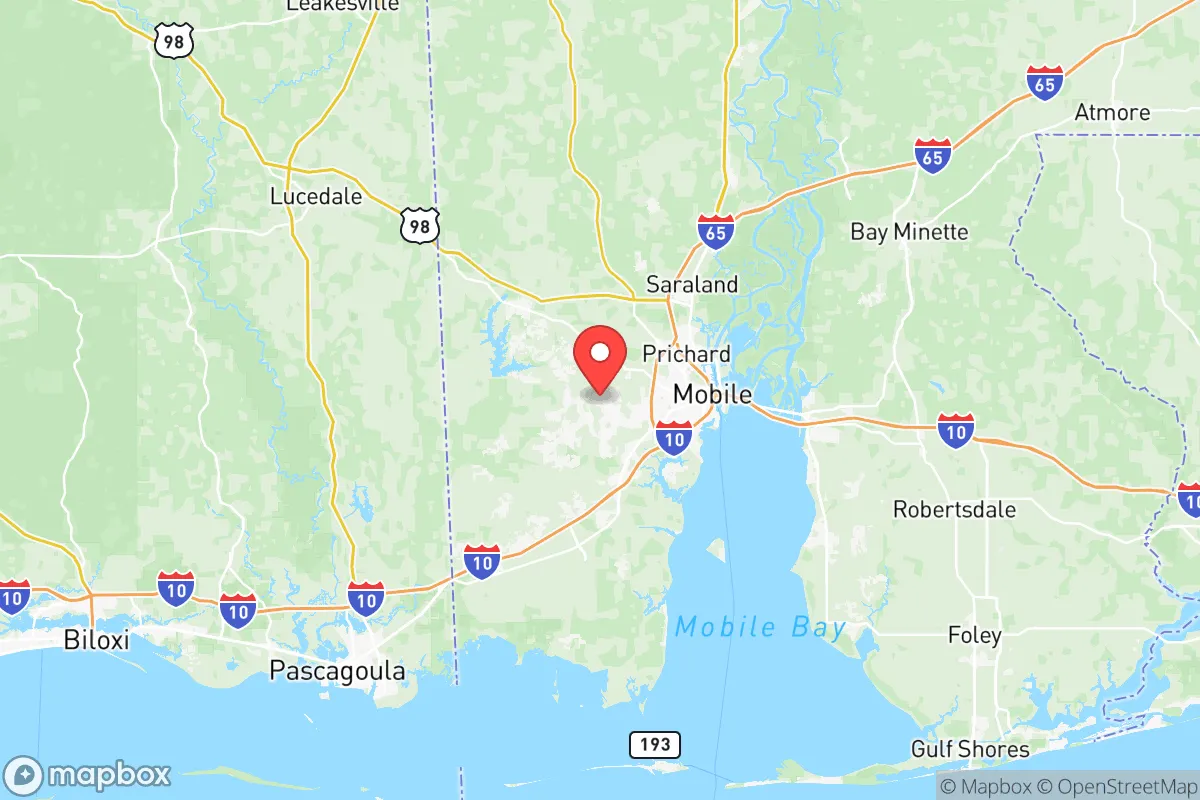
Mobile County, Alabama, offers a broad quality-of-life spectrum that ranges from the dense, historic port city of Mobile to quiet, unincorporated rural communities along the Mississippi state line and the Mobile-Tensaw Delta. The county’s character shifts noticeably within a 30-minute drive, attracting different residents: young professionals and creatives gravitate toward the urban core of Mobile, families and commuters settle into the suburban bedroom communities of west Mobile and Semmes, while retirees, hunters, and those seeking land and privacy are drawn to the sparsely populated northern and western pockets like Grand Bay, Theodore, and Mount Vernon.
Largest town(s) & population centers
The city of Mobile is the county’s dominant population center, home to roughly 185,000 residents and serving as the economic and cultural hub of the region. Daily life here revolves around a revitalized downtown with walkable streets, the Mobile River waterfront, and a growing food and arts scene anchored by the Mobile Museum of Art and the Saenger Theatre. Suburban west Mobile, including the areas around Cottage Hill Road and Schillinger Road, offers a more conventional suburban experience with strip malls, chain restaurants, and newer subdivisions. The city of Prichard, directly north of Mobile, remains a significant population center but has faced decades of population decline and economic hardship, with a median household income well below the county average. Saraland, a fast-growing suburb in the northern part of the county, has become a popular alternative for families, offering newer housing stock and its own school system independent of Mobile County Public Schools.
Smaller towns & rural pockets
Outside the urban and suburban core, Mobile County contains several distinct smaller towns and unincorporated communities. Semmes, a former town that recently reincorporated, sits along the western edge of the county and retains a small-town feel while being within a 20-minute commute to downtown Mobile. Grand Bay, near the Mississippi line, is a rural unincorporated community where many residents live on acreage and commute to jobs in Mobile or Pascagoula. Theodore, south of Mobile along the bay, is a working-class community with a strong maritime and seafood-processing industry. Further north, the town of Mount Vernon (population roughly 1,400) sits near the Mobile River and is home to a federal prison complex, giving it a distinct economic base. The rural pockets along the Mobile-Tensaw Delta, such as the area around the community of Bucks, are among the most sparsely populated parts of the county, with large tracts of bottomland forest and few services.
Cost & lifestyle range
The cost of living across Mobile County is well below the national average, with a composite cost-of-living index of 78 (100 = U.S. average), but the range between the cheapest and most expensive areas is significant. At the lower end, neighborhoods in Prichard and parts of downtown Mobile offer median home values well below the countywide median of $176,600, with some homes available for under $80,000. The median rent countywide is $1,021, but rents in Prichard and some older Mobile neighborhoods can fall below $750. At the higher end, newer subdivisions in west Mobile and Saraland push home values into the $250,000–$350,000 range, and waterfront properties along Fowl River and Dog River can exceed $500,000. The average commute across the county is approximately 26 minutes, but residents in rural Grand Bay or Mount Vernon often face 35- to 45-minute drives to reach employment centers in Mobile. Amenities follow a similar gradient: downtown Mobile offers walkable access to restaurants, bars, and cultural venues, while rural residents may drive 20 minutes or more to reach a grocery store or pharmacy.
Mobile County works best for people who want access to a mid-sized Southern city’s amenities—a port, a university, hospitals, and an airport—without paying urban prices. The county’s wide geographic and economic range means a young renter, a suburban family, and a rural landowner can all find a place that fits their budget and lifestyle, provided they are willing to trade commute time for space or vice versa. The key trade-off is clear: proximity to Mobile’s urban core and its amenities versus lower housing costs and larger lots in the county’s rural and exurban pockets.

Crime in Mobile County
Crime rates similar to the national median for U.S. locations.
Violent CrimeViolent Crime Analysis
Property CrimeProperty Crime Analysis
Crime Analysis
Mobile County’s overall safety picture is defined by a violent crime rate of 348.1 per 100,000 residents and a property crime rate of 1,479.9 per 100,000, figures that place the county above the national average for both categories. While the county is not among Alabama’s most dangerous, these numbers reflect real risks, particularly in the city of Mobile itself, where crime is concentrated. The presence of progressive judicial policies in the county’s court system has been a point of concern for residents, as lenient sentencing and a focus on offender rehabilitation over public safety have been linked to higher recidivism and a perception that criminals face few consequences.
Crime in context
Mobile County’s violent crime rate of 348.1 per 100,000 is roughly 20% higher than the national average of about 290 per 100,000, and significantly above the Alabama state average of approximately 310 per 100,000. The property crime rate of 1,479.9 per 100,000 is also elevated, exceeding the national average of around 1,200 per 100,000. These statistics are heavily influenced by the city of Mobile, which accounts for the majority of reported incidents. In contrast, smaller municipalities like Daphne, Fairhope, and Spanish Fort—located in the eastern shore area of the county—report substantially lower crime rates, often falling below both state and national averages. The disparity is stark: while Mobile’s violent crime rate can exceed 500 per 100,000, the rate in Fairhope is often below 150 per 100,000. This geographic split is critical for anyone considering a move to the area, as safety varies dramatically depending on the specific town or neighborhood.
What residents experience
For those living in the city of Mobile, property crime is the most common concern, with vehicle break-ins, burglaries, and thefts being frequent occurrences. Residents in neighborhoods like Midtown and downtown Mobile often report issues with package theft and car vandalism, while areas near the University of South Alabama see a spike in bicycle and electronics theft. Violent crime, though less common, is a serious issue in specific corridors, particularly in parts of Prichard and Chickasaw, where poverty and gang activity drive higher rates of assault and robbery. The county’s District Attorney’s office, under a progressive leadership that has emphasized diversion programs and reduced incarceration for non-violent offenders, has drawn criticism from residents who feel that repeat property criminals are released too quickly. This has led to a sense of frustration, as many believe the justice system prioritizes the rights of offenders over the safety of law-abiding citizens. In contrast, residents in Saraland and Satsuma report a much lower incidence of both violent and property crime, attributing this to more conservative local policing and a community-oriented approach to public safety.
Neighborhood-level variation
The safest parts of Mobile County are overwhelmingly found in the suburban and exurban communities to the north and east. Spanish Fort, Daphne, and Fairhope consistently rank as the safest towns in the county, with crime rates that are a fraction of those in the urban core. These areas benefit from higher property values, strong community watch programs, and police departments that prioritize proactive enforcement. Conversely, the highest crime rates are concentrated in Prichard, Chickasaw, and specific zip codes within the city of Mobile, such as 36617 and 36610. These areas struggle with economic disinvestment and a lack of effective policing, compounded by a judicial system that many residents feel is too lenient. For anyone relocating to Mobile County, choosing a neighborhood in the eastern shore suburbs or the northern communities like Saraland offers the best chance of living in a low-crime environment, while the urban core and its adjacent industrial towns present significantly higher risks.
* Values derived from national, state, county, city and local statistics and may differ in a specific area. Last updated: 2026-07-02T18:08:19.000Z
Narrative content on this page is AI-generated and may contain mistakes. Verify any details that matter before acting on them.
ReloMaps may earn a commission from affiliate links at no extra cost to you.

