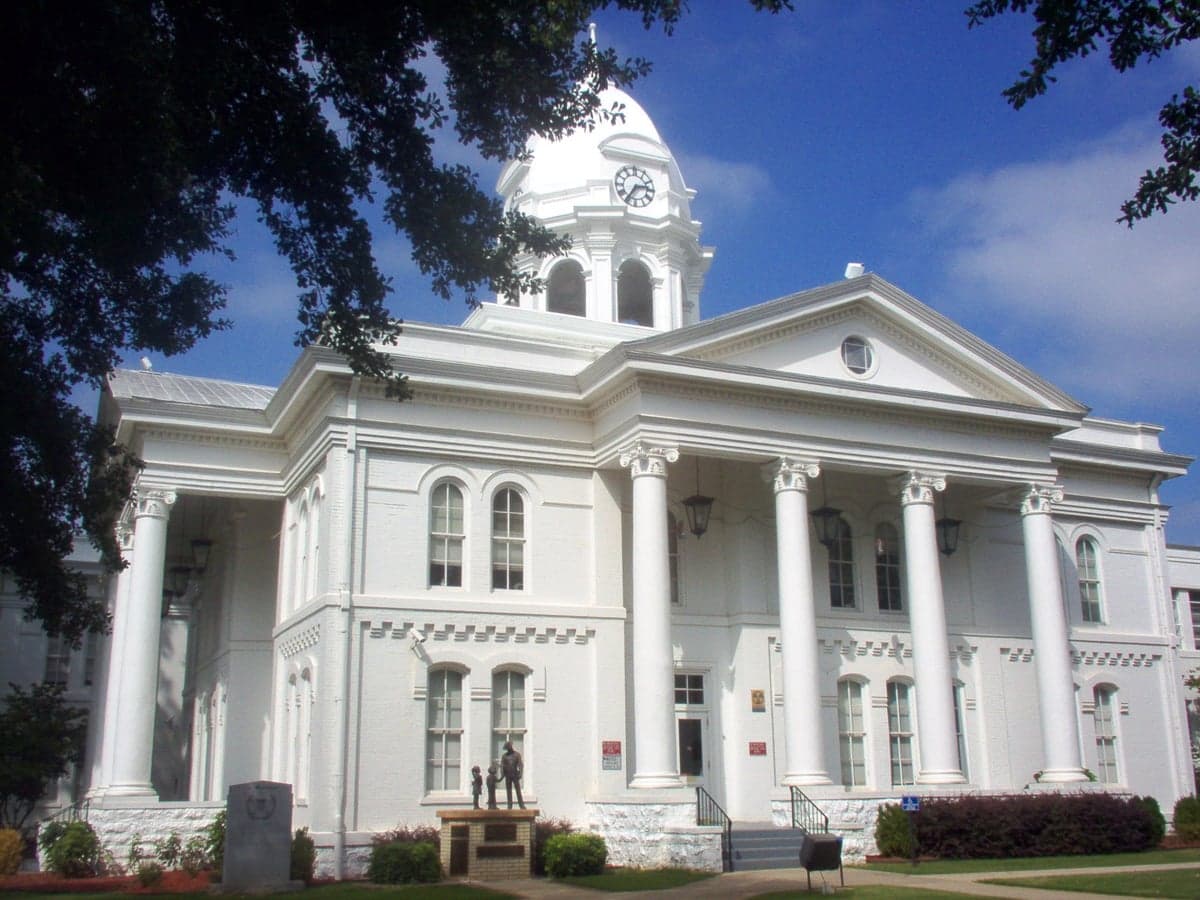
Photo: Wikipedia
Political ClimatePolitical Climate in Colbert County
Showing district-level results — no local-only data available.
Local Political AnalysisPolitical Analysis of Colbert County
Colbert County, Alabama, is one of the most reliably Republican counties in the state, with a Cook Partisan Voting Index (PVI) of R+33—meaning it votes about 33 points more Republican than the national average. That's a full 19 points redder than Alabama's statewide PVI of R+14, placing Colbert in the top tier of GOP strongholds in the state. The county has been trending steadily rightward since the 1990s, when it was still a swing area, and the shift has accelerated in the last three presidential cycles. If you're looking at the political map, Colbert County is deep crimson, but the reality on the ground has more nuance than the numbers alone suggest.
How it compares
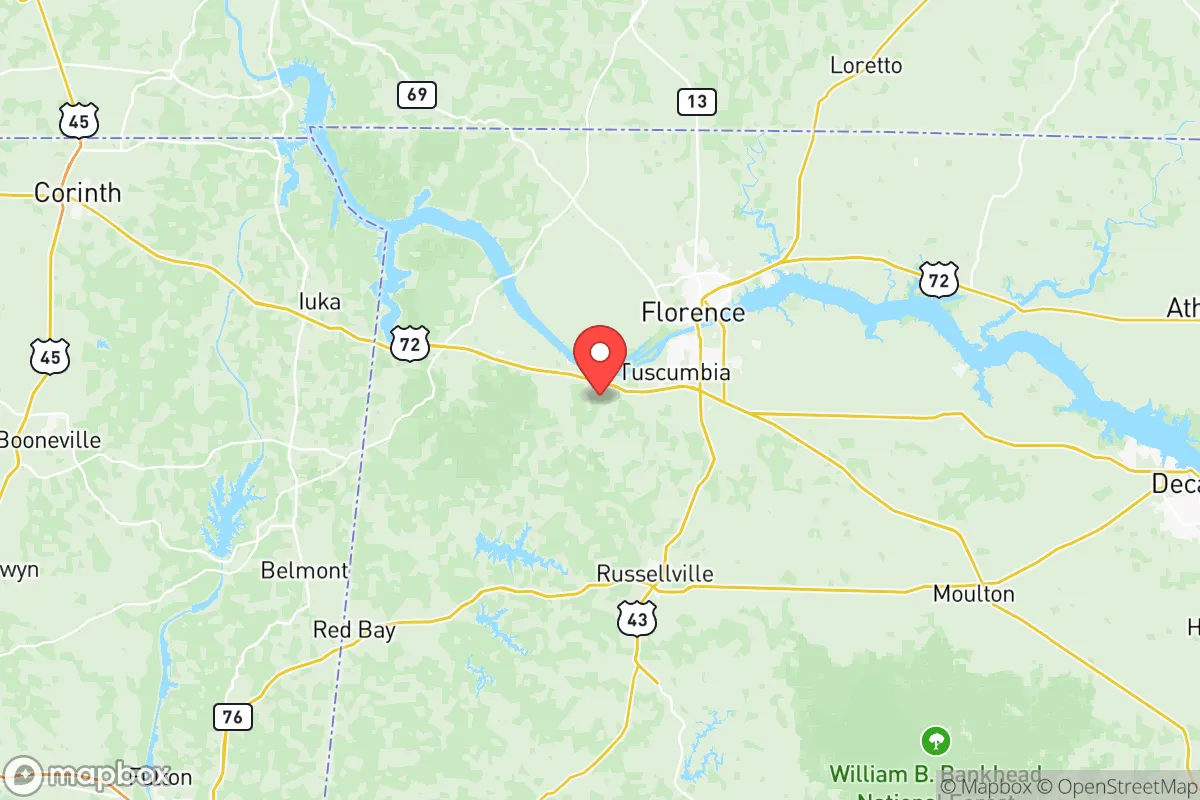
Alabama as a whole is a solidly red state, but Colbert County is in a different league. The R+33 PVI means that even in a bad year for Republicans nationally, the GOP candidate can expect to win Colbert by 25 to 30 points. For context, the statewide R+14 PVI already makes Alabama one of the most Republican states in the country—Colbert is essentially the state's Republican heartland amplified. The county's political geography isn't uniform, though. The city of Muscle Shoals tends to be the most moderate part of the county, with precincts near the Tennessee River and the downtown area occasionally voting within 5-10 points of the national average. Tuscumbia, the county seat, leans red but has a handful of precincts—particularly around the historic district and the older neighborhoods near Spring Park—that are more competitive, sometimes splitting 55-45 in favor of Republicans. In contrast, Sheffield and Leighton are reliably deep red, often voting 75-80% Republican. The rural precincts east of U.S. Highway 43, around Littleville and Cherokee, are the most conservative, regularly hitting 85% GOP. There are no true swing precincts in Colbert County anymore; the closest thing is the Muscle Shoals precinct near the river, which might go 52-48 Republican in a wave year.
What this means for residents
For conservative residents, Colbert County is a comfortable environment where their views are the clear majority. Local elected offices—from the county commission to the school board to the probate judge—are almost entirely held by Republicans, and primary elections are often the real contest. For liberal residents, the political reality is one of being a distinct minority. There's no organized progressive infrastructure to speak of, and Democratic candidates rarely campaign in the county outside of the occasional statewide race. That said, the county's political uniformity means that local governance tends to be low-drama and consensus-driven on most issues, since there's little ideological friction. Property taxes remain low, and the county has resisted adopting many of the more aggressive conservative cultural policies seen in other deep-red areas—for example, there's no local ordinance targeting drag performances or library content, and the county's approach to economic development has been pragmatic rather than ideological.
Culturally, Colbert County's politics are shaped by its history as a manufacturing and agricultural hub. The Tennessee Valley Authority (TVA) and the Wilson Dam have long been seen as bipartisan economic engines, and there's a strong local tradition of supporting federal infrastructure projects—a stance that sometimes puts the county at odds with the national GOP's small-government rhetoric. The county's religious conservatism is real but not overbearing; church attendance is high, but there's a live-and-let-live attitude in daily life. Looking ahead, the county's political trajectory seems locked in: the R+33 PVI is likely to hold or even deepen as the rural population ages and the few moderate precincts in Muscle Shoals continue to shrink relative to the rest of the county. For anyone moving here, the takeaway is simple: Colbert County is a place where conservative values dominate, but the practical consequences are a stable, low-tax, low-conflict local government that serves both sides reasonably well on the day-to-day issues that matter most.

State Political ClimatePolitical Climate in Alabama
State Political AnalysisPolitical Environment in the State
Alabama is one of the most reliably Republican states in the country, carrying a Cook Partisan Voting Index of R+14, meaning it votes about 14 points more Republican than the national average. The state hasn't voted for a Democratic presidential candidate since 1976, and that trajectory has only steepened over the past two decades as the once-powerful "Yellow Dog Democrat" tradition in rural areas has almost completely evaporated. Today, the dominant coalition is a mix of culturally conservative white voters across small towns and suburbs, with the state's growing evangelical population providing a solid base, while the Black Belt counties — stretching from the Mississippi line to the Georgia border — remain the only reliably Democratic strongholds, driven by African American voters who make up over a quarter of the state's population.
Urban vs. rural divide
The political map of Alabama is a study in stark contrasts. The state's largest metro, Birmingham (Jefferson County), is a Democratic anchor, delivering around 60% of its vote to Democratic candidates in recent cycles, driven by a diverse urban core and a strong Black professional class. Montgomery and the Black Belt counties like Lowndes and Greene are similarly Democratic, often voting 70-80% blue. But the rest of the state is deeply red. Mobile and Huntsville are interesting case studies: Mobile County has trended Republican but remains more competitive than the rest of the Gulf Coast, while Huntsville — home to the Redstone Arsenal and a booming tech sector — has seen a slight purple shift as educated newcomers arrive, though it still votes comfortably Republican. The rural counties in the northern part of the state, like DeKalb and Marshall, are among the most conservative in the nation, often voting 80%+ Republican. The divide isn't just urban vs. rural — it's also racial and economic, with the Black Belt's poverty and historical disenfranchisement creating a political reality that looks almost like a different state from the white, affluent suburbs of Auburn or Vestavia Hills.
Policy environment
Alabama's policy environment is a textbook example of a low-tax, low-regulation, culturally conservative state. There is no state income tax on Social Security benefits, and the state's income tax rate caps at 5%, with a standard deduction that phases out for higher earners. Property taxes are among the lowest in the nation — the effective rate is around 0.4% of home value — which is a major draw for relocators. The regulatory posture is business-friendly: Alabama is a "right-to-work" state, meaning union membership is not mandatory, and the state has aggressively recruited manufacturing (think Mercedes, Hyundai, and Airbus in Mobile). Education policy is a flashpoint: the state has a school choice program (the Alabama Accountability Act) that provides tax credits for private school tuition, but public school funding remains below the national average, and the state's NAEP scores consistently rank near the bottom. Healthcare is a mixed bag: Alabama did not expand Medicaid under the Affordable Care Act, leaving a coverage gap for about 200,000 low-income adults, but the state has a robust network of rural hospitals that are struggling financially. Election laws are restrictive by national standards: voter ID is required, early voting is limited (no in-person early voting except by absentee ballot), and the state has a strict felon disenfranchisement law that affects a disproportionate number of Black residents.
Recent policy direction
The last few years have seen Alabama lean hard into cultural conservatism. In 2022, the state passed a near-total abortion ban (the Human Life Protection Act), with no exceptions for rape or incest, which took effect after the Dobbs decision. Gun laws have been loosened: in 2022, Alabama became a permitless carry state, meaning anyone 21 or older can carry a concealed firearm without a permit. On education, the state passed the "Don't Say Gay" style law (the Alabama Vulnerable Child Compassion and Protection Act) in 2022, which bans classroom instruction on sexual orientation and gender identity in K-5 and allows parents to opt their children out of any lessons they find objectionable. Parental rights have been a major theme: the state also passed a law requiring schools to notify parents if a child requests accommodations related to gender identity. On the economic front, the state has continued to cut taxes — in 2023, it eliminated the state's grocery tax (4%) over several years, a populist move that benefits low-income households. Voting access has tightened: in 2024, the state passed a law banning curbside voting and limiting absentee ballot assistance, which critics say disproportionately affects elderly and disabled voters. Property rights remain strong: Alabama is a "stand your ground" state, and there is no state-level property tax on vehicles or business inventory.
Civil unrest & political movements
Alabama has a history of civil rights activism that continues to shape its political landscape. The legacy of the 1965 Selma to Montgomery marches is still felt, and the Edmund Pettus Bridge in Selma remains a pilgrimage site for voting rights activists. In recent years, the state has seen organized protests around racial justice (the 2020 George Floyd protests in Birmingham and Montgomery were large but mostly peaceful) and around abortion rights (the 2022 "Bans Off Our Bodies" rallies drew thousands in Birmingham and Huntsville). On the right, the Alabama Citizens for Life and the Alabama Policy Institute are active, and the state has a strong Tea Party legacy that has pushed the legislature further right. Immigration politics are less heated than in border states, but there have been flashpoints: in 2011, the state passed HB 56, one of the strictest anti-immigration laws in the country, which led to a boycott and legal challenges; parts of it were struck down, but the law's legacy still resonates. Election integrity has been a recurring theme: in 2022, the state's Secretary of State (a Republican) pushed for stricter voter ID rules and purged voter rolls, citing concerns about non-citizen voting, though no evidence of widespread fraud has been found. There is no serious secessionist movement, but "state sovereignty" rhetoric is common in conservative circles, particularly around federal overreach on environmental regulations and gun control.
Projection
Over the next 5-10 years, Alabama is likely to remain solidly Republican, but the margins may narrow slightly in certain metros. The Huntsville area is the key demographic wildcard: it's growing fast (the metro population increased by about 15% between 2010 and 2020), and the influx of tech workers and defense contractors from more liberal states could shift Madison County from R+20 to R+10 or even leaner. The Black Belt will continue to lose population due to outmigration and economic decline, which could reduce the Democratic vote share statewide. The state's Republican Party is likely to stay focused on cultural issues — abortion, transgender rights, and school choice — as a way to maintain turnout. On the economic side, the state will continue to court manufacturing and aerospace, but the lack of Medicaid expansion and underfunded schools could become a drag on workforce development. For a new resident, the practical takeaway is that Alabama will remain a low-tax, culturally conservative state with a strong gun rights culture and a growing tech sector in Huntsville, but with persistent challenges in education, healthcare, and racial equity that are unlikely to be addressed at the state level.
For someone moving to Alabama, the bottom line is straightforward: if you value low taxes, gun rights, and a culturally conservative environment, you'll find a lot to like. If you're liberal, you'll find your political home in Birmingham, Montgomery, or the Black Belt, but you'll be in the minority statewide and will face a policy environment that often runs counter to your values. The state's trajectory is stable — no dramatic flips are coming — but the Huntsville growth corridor offers a glimpse of a slightly more moderate future. Just know that the politics here are deeply felt, and the divide between the urban Democratic islands and the rural Republican sea is as real as it gets.
* Values derived from national, state, county, city and local statistics and may differ in a specific area. Last updated: 2026-06-15T23:06:04.000Z
Narrative content on this page is AI-generated and may contain mistakes. Verify any details that matter before acting on them.
ReloMaps may earn a commission from affiliate links at no extra cost to you.

