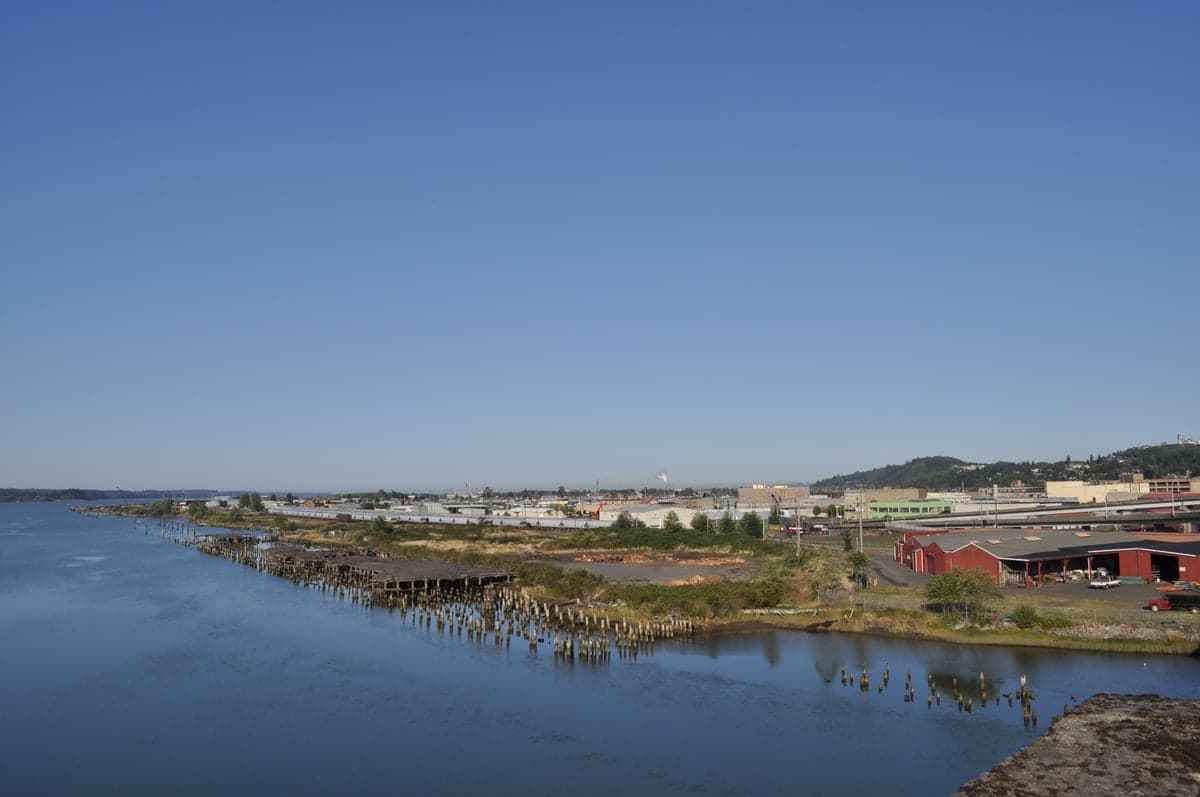
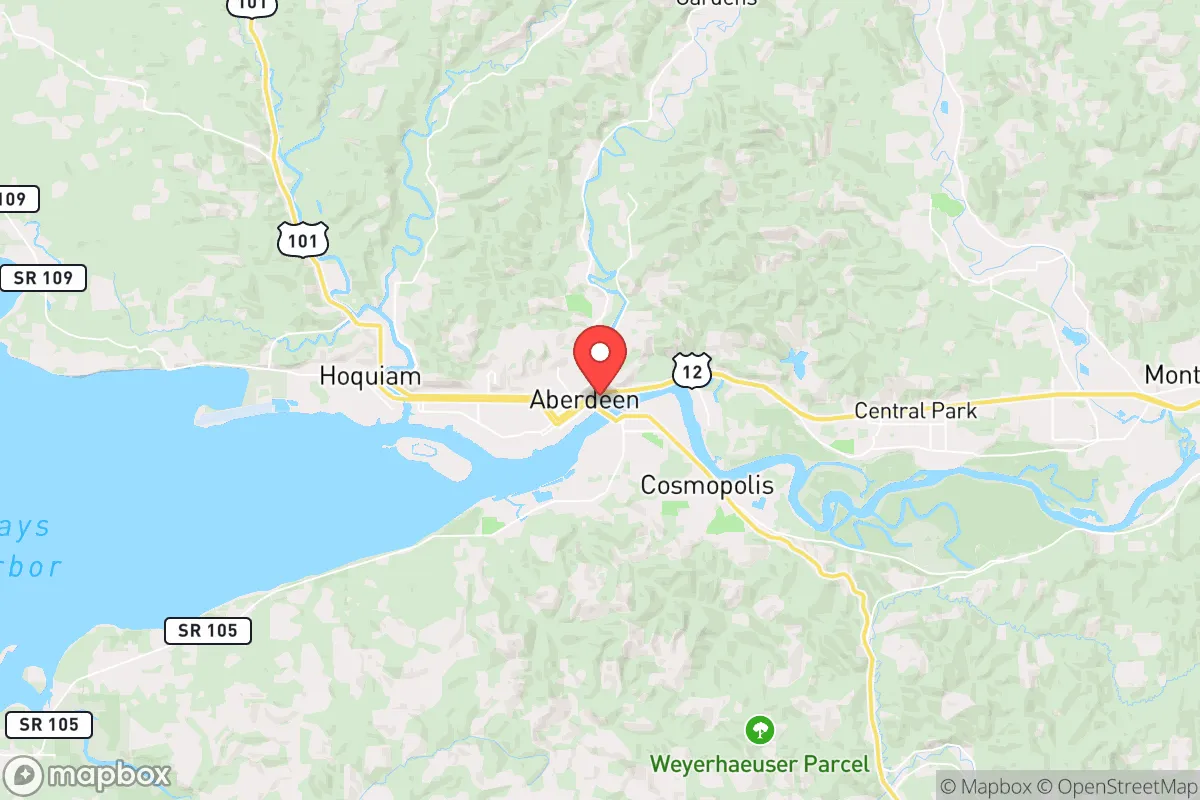
Photo: Wikipedia
Strategic Assessment of Aberdeen, WA
Meaningful friction. Expect exposure to either population pressure, blast zones, or natural disaster risk. Consider buying a retreat property.
What does the Strategic Assessment tell us?
Our Strategic Assessment grades tactical survivability of an area. Major population centers, military targets, fallout zones, natural disasters, and border exposure all drive risk — lower exposure means a more defensible position in a crisis.
This is heavily inspired by Joel Skousen's Strategic Relocation book. Highly recommended you checkout the book ($)What does this tell us?
Our Strategic Assessment grades tactical survivability of an area. Major population centers, military targets, fallout zones, natural disasters, and border exposure all drive risk — lower exposure means a more defensible position in a crisis.
This is heavily inspired by Joel Skousen's Strategic Relocation book. Highly recommended you checkout the book ($)Strategic Pillars

Key Distances
Regional Safe Places
Below is our recommended "safe zones" in Washington and the surrounding area based on our strategic heuristics. For most people, it's unrealistic to live in a “safe zone” full-time due to work, family or other personal reasons. They tend to be more rural. However, many of these areas are perfect for second homes and retreat properties that double as a vacation home or even a short-term rental.
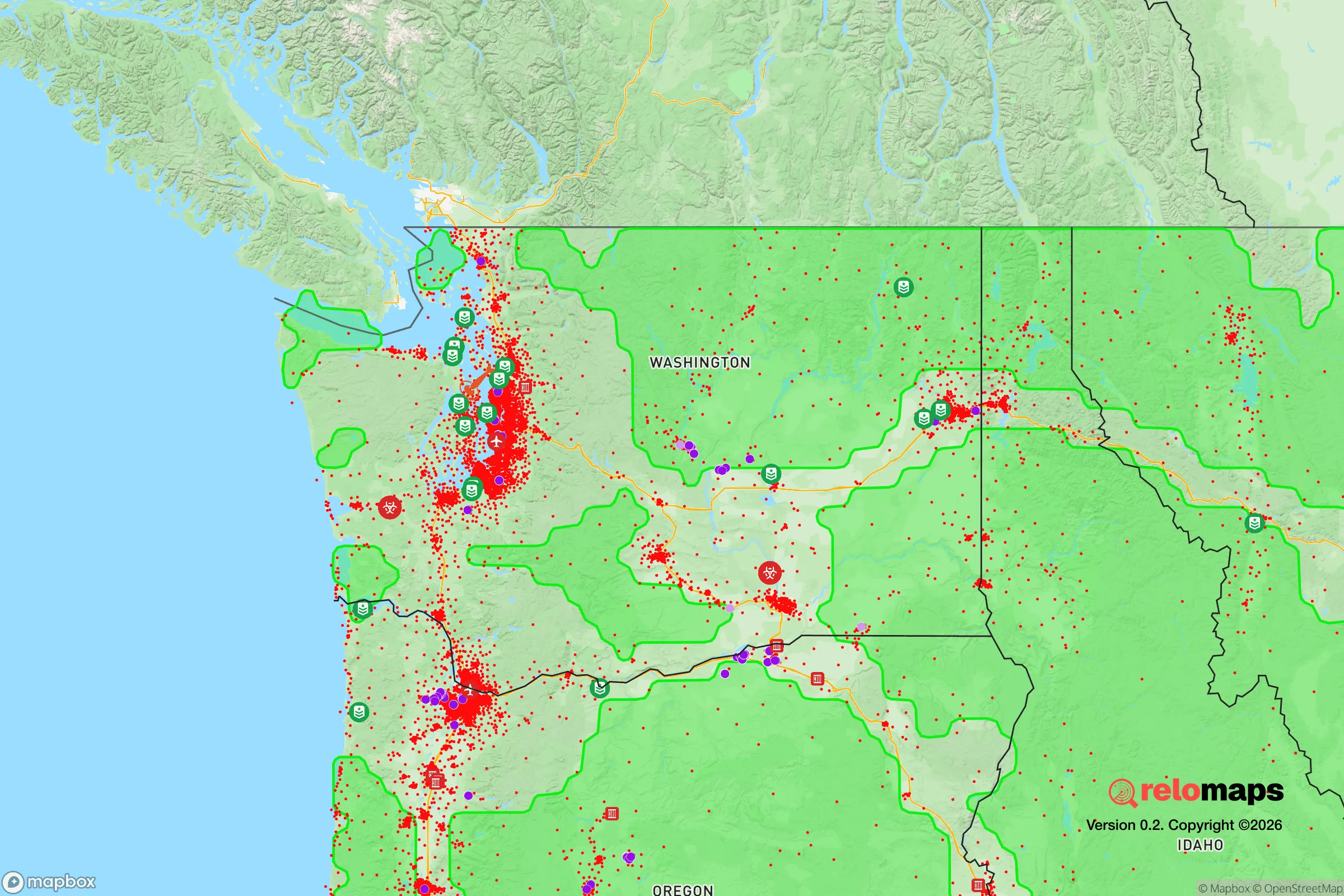
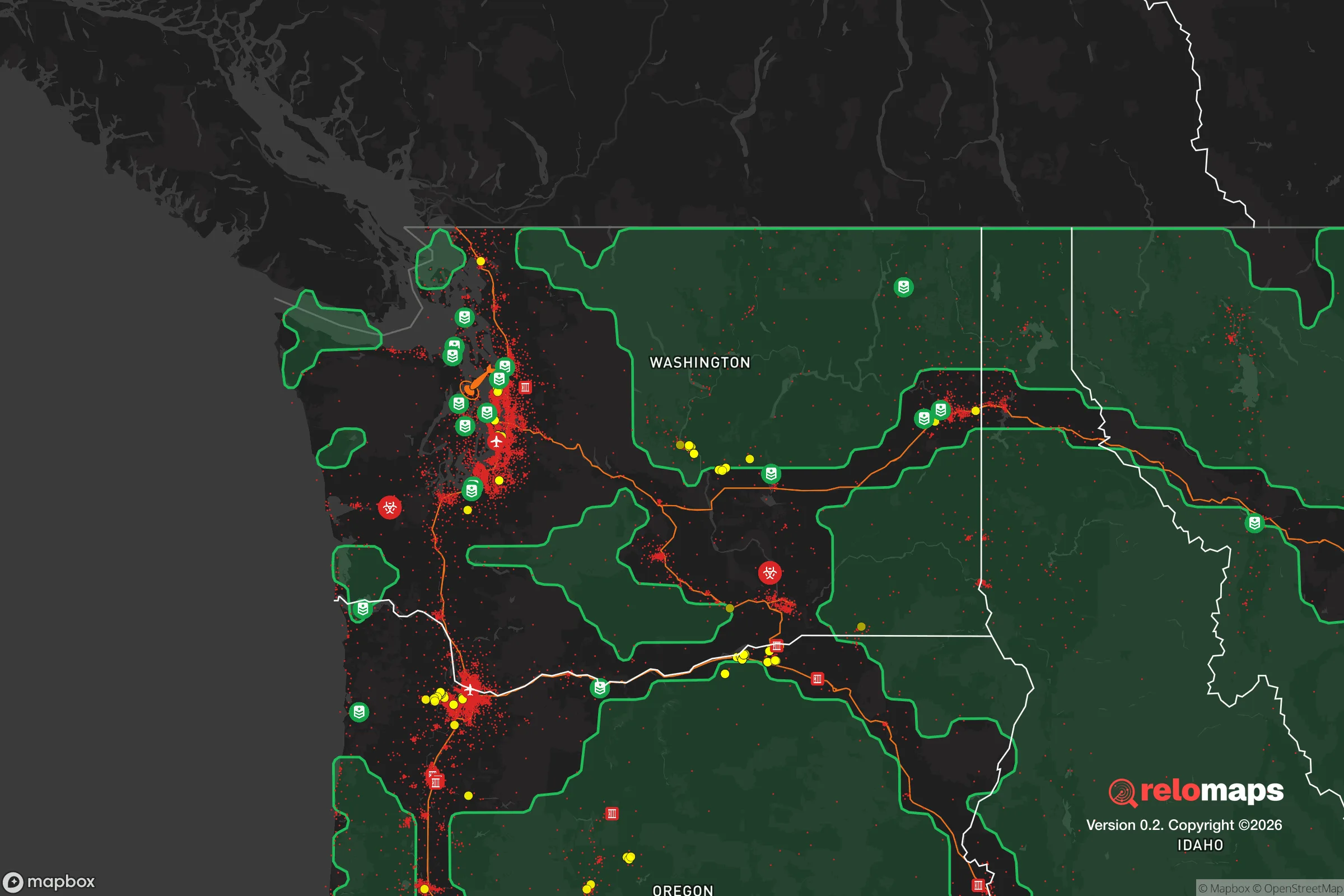


Important Note: For informational purposes only. This does not mean nothing bad ever happens in the green zones. Please use common sense. This is based on public data and modeled with AI. We tried to take a conservative approach but mistakes happen. We update this regularly as new information becomes available.
Solar Generator Recommendations
Backup power matters more here than in safer locations. We've picked three solar generators across budgets and capacity tiers — start with the budget unit if you only need a few essentials, or step up if you want to run a fridge and HVAC for days at a time.

Jackery Portable Power Station Explorer 300
Budget OptionPower on the Go: Weighing only 11 lbs, it's convenient to set up and store with book-sized foldable solar panels

BLUETTI Portable Power Station AC180
Designed for both indoor and outdoor scenarios, AC180 is highly capable as it has a robost capacity and continuous output power.

EF ECOFLOW DELTA Pro Ultra Power Station
Upgraded PickEcoFlow DELTA Pro Ultra is a whole-home energy system designed to grow with your family. Integrated with the Smart Home Panel 2, it scales to meet your evolving energy needs — keeping your home powered, intelligent, and secure through every stage of life.
We earn a commission, at no additional cost to you.
Strategic Assessment Analysis
Aberdeen, Washington, presents a complex strategic picture for the relocation-minded individual or family prioritizing disaster readiness and self-sufficiency. Its position on the Washington coast offers genuine advantages in terms of resource access and distance from major population centers, but these are counterbalanced by significant environmental exposures and a challenging economic baseline. For the serious prepper or resilience-focused relocator, Aberdeen is not a turnkey solution but a location that demands careful, active mitigation of its inherent risks.
Geographic position and natural advantages for self-sufficiency
Aberdeen's primary strategic asset is its location at the confluence of the Chehalis and Wishkah rivers, roughly 50 miles west of Olympia and 100 miles southwest of Seattle. This puts it outside the immediate blast and fallout zones of any major metropolitan target, a critical consideration for those concerned with man-made disasters. The surrounding Grays Harbor County is heavily forested and sparsely populated, offering significant buffer space and potential for low-visibility retreat. The Pacific Ocean is a 20-minute drive west, providing access to a massive, renewable protein source and a potential evacuation route by sea. The Olympic National Park and the Olympic Mountains to the north offer vast, roadless wilderness for those with the skills to use it. The region's famously high rainfall—averaging over 80 inches annually—means fresh water is rarely a scarcity, with numerous creeks, rivers, and shallow aquifers available to those who can properly filter and treat it. The maritime climate also moderates temperature extremes, reducing the heating and cooling demands that strain off-grid energy systems. For a relocator, the land itself provides the raw materials: timber for construction and fuel, abundant rainfall for water, and a long growing season for coastal gardening, albeit in acidic, sandy soils that require amendment.
Risks, exposures, and proximity to fallout-relevant landmarks
The same geography that provides buffers also introduces severe natural hazards. Aberdeen sits in a high-risk zone for Cascadia Subduction Zone earthquakes, capable of generating a magnitude 9.0+ event and a subsequent tsunami. The low-lying areas of Aberdeen, Hoquiam, and Cosmopolis—essentially the entire urban core—are within the tsunami inundation zone. A relocator must secure property on high ground, well above the 50-foot contour line, to have any chance of surviving a major seismic event. The region is also prone to frequent, prolonged flooding from the Chehalis River system, which can isolate the city for days. Winter windstorms regularly knock out power for a week or more, testing any backup system. From a man-made risk perspective, the positives of distance from major cities are partially offset by the presence of the US Navy's Naval Base Kitsap (Bangor) submarine base, roughly 80 miles northeast. While not a primary target like Seattle, it is a strategic nuclear asset. The prevailing westerly winds would carry fallout from a strike on Bangor away from Aberdeen, but a shift in wind patterns or a strike on a secondary target like Joint Base Lewis-McChord (south of Tacoma) could still deposit fallout in the region. The Port of Grays Harbor, while not a high-value target, handles significant shipping and chemical storage, presenting a localized industrial accident risk. The area's heavy reliance on a single major highway (US 12) and a single rail line for resupply makes it brittle in a crisis; both are vulnerable to landslides and flooding.
Practical resilience for a relocator: food, water, energy, and defensibility
For the individual or family, Aberdeen's practical resilience is a mixed bag. Food security is the strongest point. The coast provides Dungeness crab, salmon, halibut, and shellfish. The forest offers deer, elk, and black bear. Foraging for mushrooms, berries, and seaweed is viable for the knowledgeable. Local agriculture is limited—dairy and some hay—but the growing season is long and cool, suitable for brassicas, greens, and root vegetables. The Aberdeen Farmers Market and local U-pick operations offer some supply chain redundancy. Water security is excellent, provided you have a catchment system and a robust filtration method (the local water is soft but can carry sediment and microbial load from heavy rainfall). Energy security is the weakest link. The grid is notoriously unreliable in winter storms. Solar potential is poor due to persistent cloud cover; a resilience-minded relocator should invest in a hydroelectric micro-turbine if they have a stream on their property, or a reliable diesel or propane generator with substantial fuel storage. Wood heat is the default backup, and the area has ample supply, but requires significant labor and storage space. Defensibility is moderate. The dense forest and limited road network make it easy to control access to a remote property. However, the population of Grays Harbor County is roughly 75,000, with Aberdeen itself around 16,000. The local economy is depressed, with a poverty rate above the national average. In a prolonged crisis, the city's population could become a liability, with limited local food production and a high reliance on external supply chains. A relocator should aim for a property with good sightlines, a single access point, and a buffer of at least a few miles from the nearest neighbor. The local culture is independent and self-reliant, but also insular; building trust with neighbors before a crisis is essential for mutual defense and resource sharing.
The overall strategic picture for Aberdeen is one of high potential paired with high risk. It offers genuine advantages for the prepared relocator: abundant natural resources, distance from primary targets, and a climate that supports off-grid living. However, these are contingent on choosing the right property—on high ground, with a reliable water source, and a robust energy backup plan. The region's economic fragility and exposure to seismic and tsunami hazards mean it is not a location for passive investment. For the disciplined individual or family willing to invest in elevation, energy independence, and community integration, Aberdeen can be a viable long-term resilience hub. For those seeking a low-maintenance, turnkey retreat, the risks likely outweigh the rewards. The key takeaway: Aberdeen is a location that rewards preparation and punishes complacency.

* Values derived from national, state, county, city and local statistics and may differ in a specific area. Last updated: 2026-08-27T20:03:48.000Z
Narrative content on this page is AI-generated and may contain mistakes. Verify any details that matter before acting on them.
ReloMaps may earn a commission from affiliate links at no extra cost to you.

