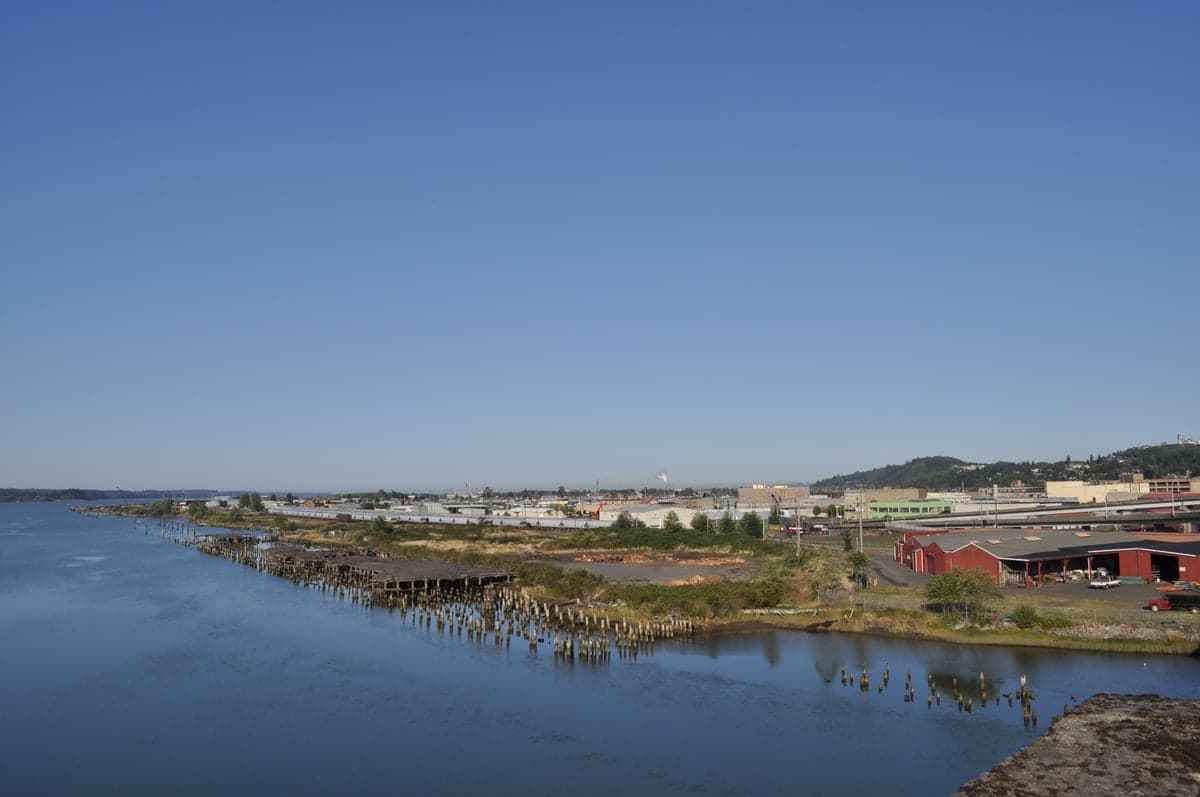
Photo: Wikipedia
Personal Sovereignty in Aberdeen, WA
Viable for self-reliance. Generally workable, though some barriers may limit total independence.
What does Personal Sovereignty tell us?
Personal Sovereignty measures your capacity for self-reliance and independence with minimal government friction. Higher scores mean fewer barriers between you and the way you want to live... but it assumes you have the space you need and good neighbors.
What does this tell us?
Personal Sovereignty measures your capacity for self-reliance and independence with minimal government friction. Higher scores mean fewer barriers between you and the way you want to live... but it assumes you have the space you need and good neighbors.
State Policy
Energy independence: Importer (55% of energy produced in-state)
Personal Liberty
Homesteading

Personal Liberty Analysis
Aberdeen, Washington, presents a mixed picture for those prioritizing personal sovereignty, where a relatively low cost of entry and a hands-off rural character are tempered by Washington State's increasingly assertive regulatory and tax framework. While the city itself has a blue-collar, independent streak, residents must navigate state-level policies that significantly impact autonomy, from firearm regulations to energy mandates. For a relocation-minded individual or family, the key question is whether Aberdeen's local culture of self-reliance can outweigh the constraints imposed from Olympia.
Tax burden and regulatory posture in Aberdeen and Grays Harbor County
Washington State's lack of a personal income tax is a major draw for sovereignty-minded individuals, allowing residents to keep more of their earnings. However, this is offset by a state sales tax rate of 6.5%, which in Aberdeen climbs to 8.7% after local additions—one of the higher combined rates in the state. Property taxes in Grays Harbor County are moderate, typically falling between 0.9% and 1.1% of assessed value, which is below the national average but higher than many parts of the South or Midwest. The regulatory posture in Aberdeen is notably lighter than in the Seattle metro area. The city's zoning code is relatively permissive for a municipality of its size, with fewer overlay districts and design review boards. However, Washington's state-level regulatory creep is significant: the Washington State Energy Code imposes strict efficiency standards on new construction and major renovations, and the Growth Management Act (GMA) forces counties like Grays Harbor to designate urban growth areas, limiting rural sprawl. For a family looking to build a shop or add a detached structure, expect permitting timelines of 4-8 weeks, but the process is generally straightforward compared to King County. The biggest regulatory friction point is environmental—the Shoreline Management Act heavily restricts development near the Chehalis River and Grays Harbor estuary, which covers a large portion of the area's buildable land.
Self-defense and gun law specifics in Washington State
Washington is a "shall-issue" state for concealed pistol licenses (CPL), meaning the Grays Harbor County Sheriff's Office must issue one to qualified applicants. There is no permit required to open carry, but the state has enacted several restrictions that directly affect daily life. The 2023 ban on the sale of "assault weapons" (defined by specific features like pistol grips and threaded barrels) effectively blocks new purchases of many popular semi-automatic rifles, including the AR-15 platform. Magazine capacity is capped at 10 rounds for rifles and 15 rounds for handguns for new sales, though pre-ban magazines are grandfathered. The state also requires a 10-day waiting period on all firearm purchases and mandates a background check for private sales. Aberdeen itself has no additional local gun ordinances beyond state law, and the local culture is generally firearm-friendly—the Grays Harbor Sportsmen's Club and several local gun shops operate openly. For self-defense in the home, a shotgun or handgun remains a practical choice, but the legal landscape is shifting: Washington's duty to retreat standard (no "stand your ground" law) means that using deadly force outside the home requires proving you could not safely retreat. This is a critical distinction for those moving from states with stronger self-defense statutes. The practical takeaway: you can own and carry firearms in Aberdeen, but the state is actively restricting new purchases and the legal environment for defensive use is less permissive than in Idaho or Montana.
Self-reliance and homesteading viability: lot sizes, zoning, and off-grid feasibility
Aberdeen and its surrounding unincorporated areas in Grays Harbor County offer genuine opportunities for self-reliance, but with important caveats. Within city limits, standard residential lots are typically 5,000 to 7,000 square feet, which is enough for a substantial garden and a few chickens but not for livestock or significant acreage. The real potential lies in the rural areas just outside town—places like Cosmopolis, Montesano, or the Wynoochee Valley—where zoning allows for minimum lot sizes of 1 to 5 acres for residential use. Agricultural zoning (designated as "Rural Resource" or "Forest Resource" lands) permits larger operations, including small-scale livestock, orchards, and timber harvesting. Off-grid feasibility is limited by state and local codes. Washington law requires new dwellings to have a permitted on-site septic system (designed by a licensed engineer) and a potable water source (well or connection). Solar power is allowed, but net metering rules require interconnection with the grid for any system over 100 kW. True off-grid living—no grid power, no septic permit—is effectively illegal for new construction in Grays Harbor County. However, the county is relatively lenient on tiny houses and RV living on rural property, provided the owner holds a building permit for a future permanent structure. The climate is a double-edged sword: the 60+ inches of annual rainfall makes rainwater catchment viable (though regulated), but the overcast winters limit solar generation from November through February. For a family serious about homesteading, the best strategy is to buy 5+ acres in an unincorporated area, install a well and septic, and use grid-tied solar as a supplement.
Personal liberties: parental rights, medical autonomy, speech, and property
Washington State's legal framework is generally more restrictive on personal liberties than many conservative-leaning areas. Parental rights are a flashpoint: the state's 2019 "Parents Bill of Rights" was significantly weakened by subsequent legislation, and schools are not required to notify parents if a child requests a name or pronoun change. Aberdeen's school district (Aberdeen School District #5) has not adopted any local opt-out policies, so parents should expect the state's default rules to apply. Medical autonomy is mixed. Washington has legalized recreational marijuana and maintains a robust medical cannabis program, but it also has strict vaccine mandates for school attendance (no personal belief exemption) and for healthcare workers. The state's physician-assisted suicide law (the Death with Dignity Act) is among the oldest in the nation, reflecting a generally pro-choice medical environment. Free speech is protected under the state constitution, which is actually broader than the First Amendment in some areas (e.g., protections for speech in shopping malls). However, the state's hate crime statute and malicious harassment laws are actively enforced, and local political expression is generally tolerated—Aberdeen has a mix of Trump and progressive signs visible during election cycles. Property rights are the most significant concern. Washington's Growth Management Act gives the county broad authority to regulate land use, and the State Environmental Policy Act (SEPA) can be used to delay or block development projects. The Grays Harbor County Shoreline Master Program imposes strict buffers (typically 100-200 feet) along all marine and river shorelines, which can severely limit building on waterfront property. For a family wanting to build a home or business, expect to navigate SEPA review for any project that triggers environmental thresholds—this is a real friction point that adds time and cost.
Overall, Aberdeen offers a moderate level of personal sovereignty relative to other areas in the Pacific Northwest. It is significantly more permissive than Seattle or Portland, where regulatory burdens and costs are higher, but it falls well short of the autonomy found in rural Idaho, Montana, or eastern Washington counties like Ferry or Stevens. The city's low property prices and tolerant local culture provide a foundation for self-reliance, but the state's tax structure (high sales tax, no income tax) and regulatory environment (gun bans, GMA, SEPA) impose real constraints. For a conservative-leaning individual or family, Aberdeen is a viable option if you are willing to work within Washington's legal framework—it is not a libertarian haven, but it is a place where you can own land, carry a firearm, and live with a degree of independence that is increasingly rare on the West Coast.

* Values derived from national, state, county, city and local statistics and may differ in a specific area. Last updated: 2026-08-27T20:03:48.000Z
Narrative content on this page is AI-generated and may contain mistakes. Verify any details that matter before acting on them.
ReloMaps may earn a commission from affiliate links at no extra cost to you.

