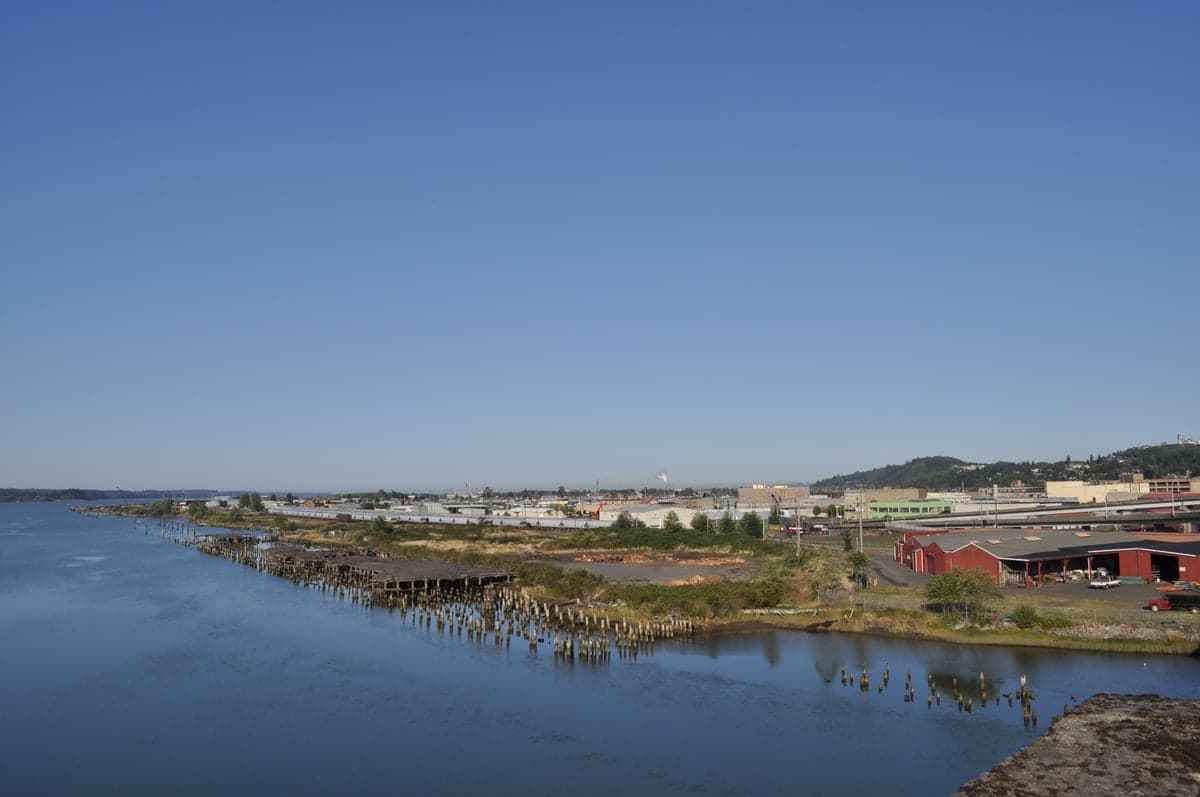
Photo: Wikipedia
Demographics of Aberdeen, WA
Affluence Level in Aberdeen, WA
A below-average socioeconomic profile. Incomes, home values, and educational attainment trail the U.S., with higher poverty and unemployment.
People of Aberdeen, WA
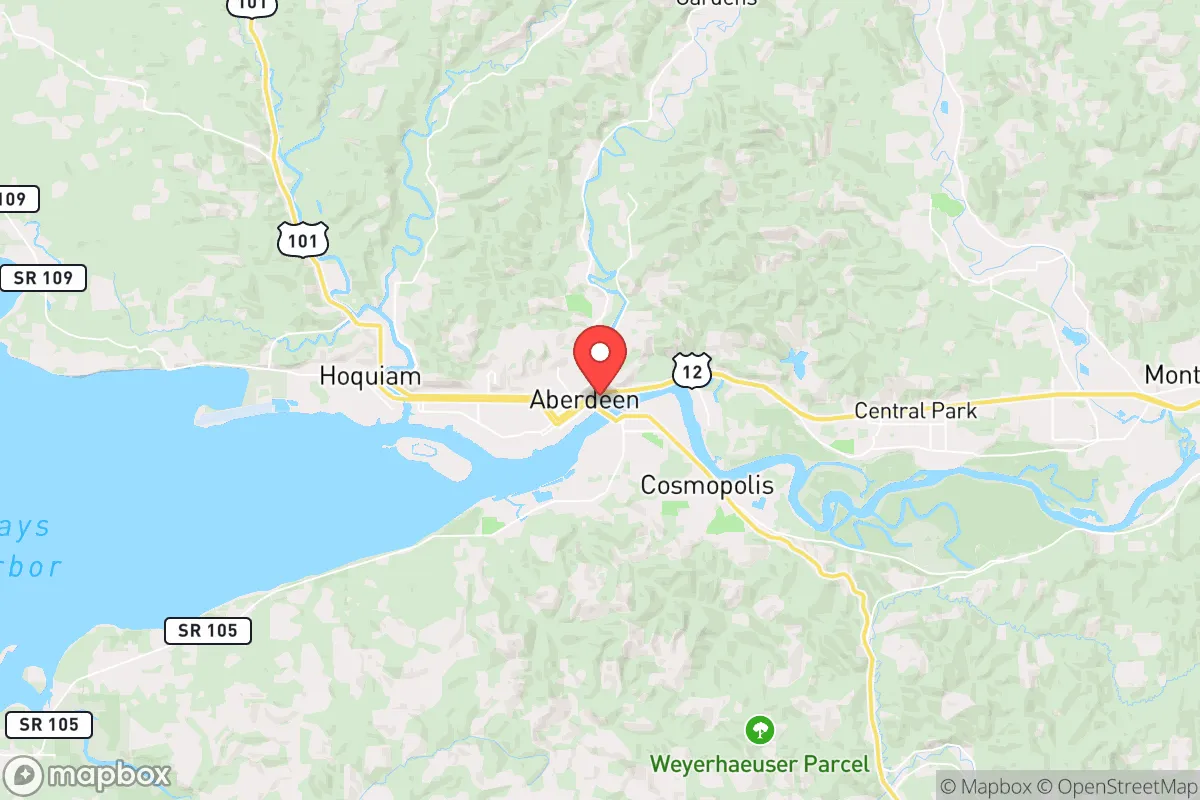
The people of Aberdeen, Washington today form a working-class community of roughly 17,040 residents, shaped by a history of boom-and-bust resource extraction and recent demographic diversification. The city is notably less diverse than the national average but has seen significant Hispanic growth, now comprising 20.7% of the population, while the white share stands at 67.3%. With only 14.7% holding a bachelor's degree or higher, Aberdeen retains a blue-collar character distinct from the tech-driven growth seen in Washington's coastal cities. The population is older than the state median, and the city's identity remains deeply tied to its Grays Harbor location and the legacy of the timber and fishing industries.
How the city was settled and grew
Aberdeen's population history begins with the Chehalis and Quinault peoples, who inhabited the Grays Harbor area for millennia before European contact. The first permanent American settlers arrived in the 1850s, drawn by the region's dense old-growth forests and the promise of a deep-water harbor. The city was officially platted in 1884 by Samuel Benn, a Scottish immigrant, and incorporated in 1890. The real population boom came with the timber industry: by 1900, Aberdeen was a rough-and-tumble logging and mill town, attracting waves of European immigrants. Scandinavian loggers and millworkers—Swedes, Norwegians, and Finns—settled heavily in the East End neighborhood, building the area's distinctive wood-frame houses and establishing the Lutheran churches that still dot the district. A smaller but notable wave of Italian and Irish immigrants arrived around the same time, concentrating in the Central Park area south of the Wishkah River, where they worked in the mills and on the docks. The city's population peaked at around 21,000 in the 1930s, supported by a booming timber economy that also drew a small number of Black workers from the South, who settled primarily in the South Aberdeen neighborhood near the mill sites. The Japanese American community, though small, was established in the early 1900s, with families operating boarding houses and small businesses along Wishkah Street; most were forcibly removed during World War II and did not return in significant numbers.
Modern era (post-1965)
The post-1965 era brought gradual demographic change to Aberdeen, though the city's population declined from its mid-century peak as the timber industry mechanized and mills closed. The 1980s and 1990s saw the first significant Hispanic in-migration, driven by labor demand in the remaining timber mills, fish processing plants, and the agricultural fields of the surrounding Chehalis River valley. Hispanic families concentrated in the Westport Highway corridor and the South Aberdeen neighborhood, areas with older, more affordable housing stock near industrial employment. The Asian population, at 1.0%, is predominantly Filipino and Vietnamese, with families drawn to the area's relatively low cost of living and service-sector jobs; they are dispersed rather than concentrated in a single neighborhood. The Indian subcontinent population (0.2%) is very small, consisting mostly of professionals working at Grays Harbor Community Hospital or the local Walmart distribution center. The Black population (2.4%) has remained stable, with families largely remaining in South Aberdeen and the F Street corridor. The white population, while still the majority, has aged in place, with many younger white residents leaving for job markets in Olympia, Seattle, or Portland. The foreign-born share of 6.6% is below the national average but has risen steadily since 2000, driven almost entirely by Hispanic immigration.
The future
Aberdeen's population is projected to remain stable or grow slowly, with the Hispanic share continuing to rise as the white population ages and declines. The city's demographic future is tied to economic diversification: the expansion of the Satsop Business Park (a former nuclear site turned industrial park) and the growth of the local healthcare sector are attracting a small number of younger, college-educated workers, but the 14.7% college attainment rate suggests this trend will be modest. The Hispanic population is expected to become the largest minority group within the next decade, potentially reaching 25-30% of the total by 2035, with continued concentration in South Aberdeen and the Westport Highway area. The East End and Central Park neighborhoods are likely to remain predominantly white and older, while the F Street corridor may see modest infill development. The city's cultural identity is slowly shifting from a purely timber-and-fishing town to a more diverse working-class community, though the pace of change is slower than in Washington's urban centers. New residents are more likely to be Hispanic families or remote workers seeking affordable housing near the coast than tech migrants from Seattle.
For someone moving in now, Aberdeen offers a low-cost, blue-collar environment with a growing Hispanic community and a stable white majority. The city is becoming more diverse but remains culturally conservative and economically modest, with limited upward mobility for those without a college degree. The population trajectory points toward a smaller, older, and more Hispanic Aberdeen over the next two decades, with the city's identity increasingly defined by its affordability and proximity to the Olympic Peninsula rather than its industrial past.

* Values derived from national, state, county, city and local statistics and may differ in a specific area. Last updated: 2026-08-27T20:03:48.000Z
Narrative content on this page is AI-generated and may contain mistakes. Verify any details that matter before acting on them.
ReloMaps may earn a commission from affiliate links at no extra cost to you.

