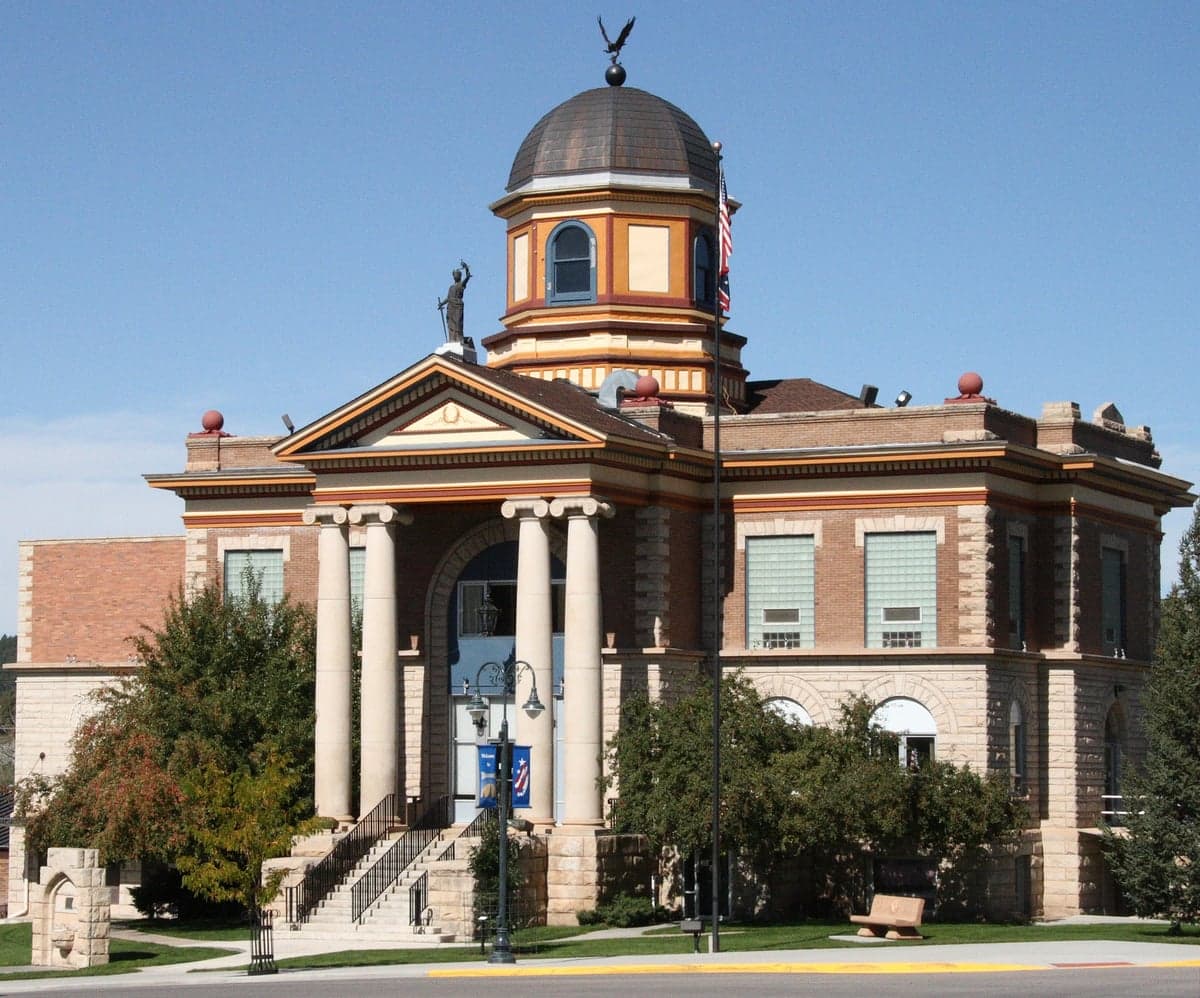
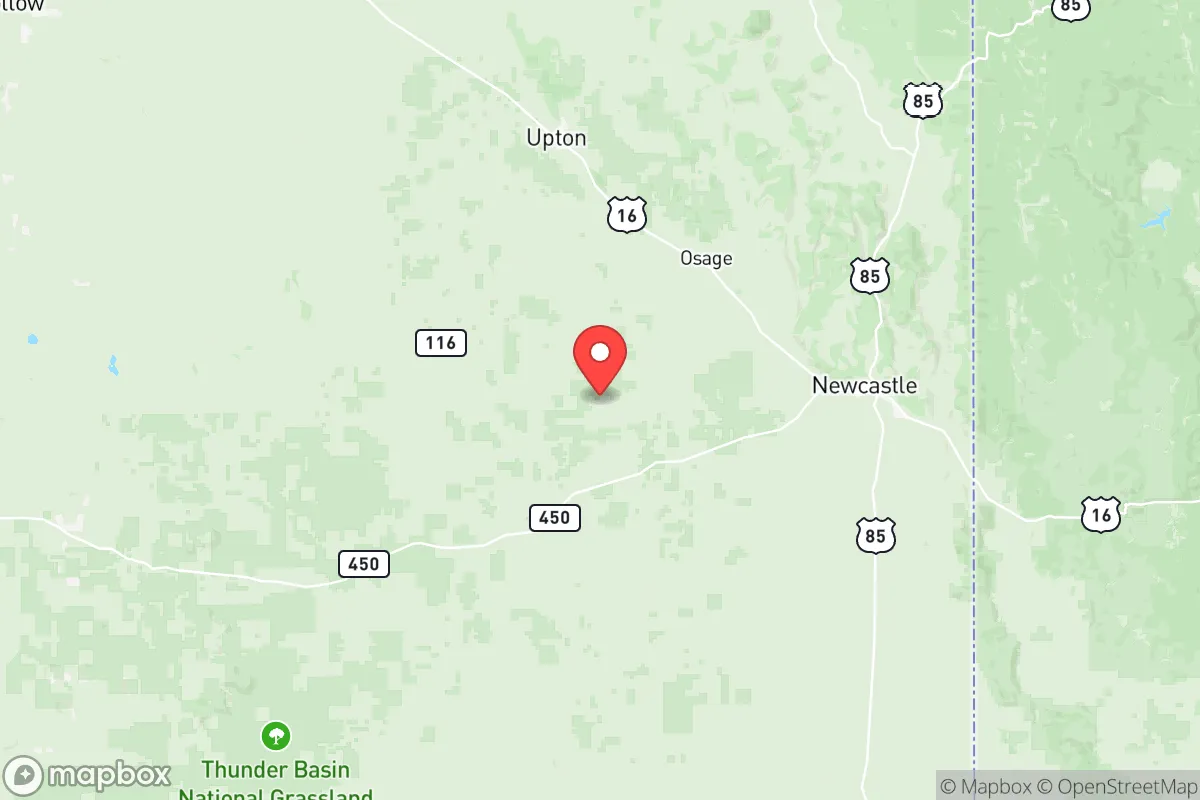
Photo: Wikipedia
Political ClimatePolitical Climate in Weston County
Showing state-level results — no local-only data available.
Local Political AnalysisPolitical Analysis of Weston County
Weston County in Wyoming has a deeply conservative political climate, matching its statewide reputation with a Cook PVI of R+23. In 2024, the county leaned even further right than the state average, with Donald Trump securing around 82% of the vote here. That said, there's a subtle but real divide within the county: the town of Newcastle, the county seat, tends to be more moderate, with some precincts going only 75-80% Republican, while outlying areas like Upton and Osage routinely hit 88-90% for GOP candidates. The only precinct that ever flirts with a Democratic vote is around the Newcastle city limits, where slightly higher government employment and a few transplants from out of state keep things from being a total blue shutout. Over the last decade, the county has grown a little redder — not because Democrats are leaving, but because new arrivals from states like California and Colorado tend to be conservative-leaning retirees and remote workers who specifically chose Weston for its low taxes and hunting access.
How it compares
Weston County is almost a carbon copy of Wyoming's overall political profile — same PVI of R+23 — but the texture is different. The state as a whole has a few notable blue dots in places like Laramie (Albany County, home to the University of Wyoming) and Jackson (Teton County, with its high-dollar tourism and second-home owners). Weston County has none of that. There's no college town, no resort economy, no significant urban anchor. The political vibe here is closer to what you'd find in Campbell County (Gillette) or Converse County (Douglas) — energy-driven, gun-friendly, and deeply skeptical of federal land management. One practical difference: Weston County sees lower voter turnout in primary elections than the statewide average, partly because the GOP nomination here is almost always a foregone conclusion, so the general election rarely feels competitive. In contrast, a primary for a county commission seat in Newcastle can draw more interest than the presidential race itself.
What this means for residents
For conservative residents, Weston County is about as comfortable as it gets politically. Local government is reliably Republican, the sheriff's office aligns with Second Amendment activism, and there's little pushback on development policies or school board decisions. The county commission has opposed state-level pushes for stricter land-use planning, leaving property owners with a lot of freedom. For liberal residents, the reality is different but not hostile. There's no institutional discrimination, but you'll be in a distinct minority. Democratic voters often find themselves more comfortable in Newcastle, where the local NAACP chapter maintains a quiet presence and there's a small but committed group of environmental advocates focused on the Black Hills National Forest and Thunder Basin National Grassland issues. Socially, political talk is common at the Newcastle Stockman café or the Upton Café, but it’s usually in good humor — folks have known each other for generations, so most people avoid hard lines.
Culturally, Weston County stands apart from Wyoming's more touristy zones in a few concrete ways. There's no sales tax on groceries, which is a big deal for families on fixed incomes. The county has a local option tax on lodging and prepared food that funds the Weston County Recreation Center and the rodeo grounds. The national forest land around Four Corners and Cambria is managed under the Mining Law of 1872, so you'll still see active hardrock mining claims alongside recreational trails. That mix — extractive industry alongside public access — defines the local political identity. The long-term trajectory is unlikely to shift much: as long as mineral prices hold and the population stays mostly native-born, Weston County will remain a reliably red enclave, with Newcastle serving as the only real pocket of moderation. If you're moving here, know that your politics will likely be known by your third visit to the grocery store, but that comes with a trade-off in genuine neighborliness you won't find in many places.

State Political ClimatePolitical Climate in Wyoming
State Political AnalysisPolitical Environment in the State
Wyoming is one of the most reliably Republican states in the union, with a Cook Partisan Voter Index of R+23, meaning it consistently votes about 23 points more Republican than the national average. The state hasn't voted for a Democratic presidential candidate since Lyndon Johnson in 1964, and it hasn't sent a Democrat to the U.S. Senate since 1970. Over the last 20 years, the GOP's grip has actually tightened as rural counties have moved further right and the state's small urban centers have held relatively steady, making the overall lean deeper than it was in the 1990s and early 2000s when a few crossover votes were still competitive.
Urban vs. rural divide
The political map of Wyoming is stark but simple: the two small metro areas of Cheyenne (Laramie County, ~100,000 people) and Casper (Natrona County, ~80,000 people) are the state's most moderate regions, but they still vote Republican — just by narrower margins. Laramie County went about 63% for Trump in 2024, while Natrona County was around 67%. Drive 30 minutes outside either city, and you hit ranching and energy communities where the GOP vote routinely hits 80-90%. The truly deep-red outliers are counties like Niobrara (no town over 1,500) and Sublette (energy hub near Pinedale), which regularly push 85-90% Republican. The only consistent Democratic base is on the University of Wyoming campus in Laramie (Albany County), which actually voted for Biden in 2020 by a slim margin, making it the single blue dot in a sea of red. The tourist corridor around Jackson Hole (Teton County) is a unique mix — wealthy second-home owners and service-industry workers — and it's reliably the state's most liberal county, voting Democratic in every presidential race since 2008. But Teton County holds roughly 20,000 people, so its influence is minimal statewide. The rural counties — especially the Powder River Basin energy counties of Campbell (Gillette), Sweetwater (Rock Springs), and Converse — anchor the state's rightward posture, with coal, oil, and gas extraction forming the economic and cultural base.
Policy environment
Wyoming's policy environment is a reflection of its political lean: low taxes, minimal regulation, and a strong emphasis on individual liberties. There is no personal or corporate income tax, and the state relies heavily on a 4% sales tax (plus local option up to 2%) and mineral severance taxes from the energy sector. Property taxes are among the lowest in the nation, with no state property tax — only county-level levies that average around 0.6% of assessed value. Education funding is heavily dependent on mineral revenues, which has created a boom-bust cycle: when energy prices are high, schools are flush; when they drop, districts scramble. The state has a conservative school board and has passed laws requiring public schools to post curriculum online for parental review, and it prohibits the teaching of critical race theory in K-12 classrooms. Healthcare policy is hands-off: no state-level individual mandate, no Medicaid expansion under the ACA (though a 2024 bill did finally extend Medicaid to some low-income adults), and a relatively high uninsured rate of around 14%. Election laws are straightforward: voter ID is required at the polls, no-excuse absentee voting is available, and the state has automatic voter registration through the DMV. Wyoming's constitution also includes a strong "right to bear arms" provision that the state supreme court has interpreted broadly, and there is no permit requirement for concealed carry.
Recent policy direction
Over the last few years, Wyoming has leaned into the most active frontier of conservative governance — preemption and protection of individual rights. In 2023, Governor Mark Gordon signed a bill explicitly prohibiting any enforcement of federal firearm laws that the state deems unconstitutional, effectively creating a state-level nullification stance on gun control. The same year, the legislature passed a near-total ban on abortion (no exceptions for rape or incest, only maternal life and limited health emergencies), triggering a lawsuit that is working its way through state courts. On the education front, the state enacted a "Parents' Bill of Rights" (HB 0106 in 2023) that requires schools to notify parents of any changes to a student's mental, emotional, or physical health and bars schools from withholding information about a child's well-being from parents — effectively overriding transgender student privacy policies. Medical freedom is also a hot topic: Wyoming was one of the first states to ban COVID-19 vaccine mandates (both public and private sector) and to prohibit businesses from requiring proof of vaccination as a condition of service. On the privacy front, the state passed a biometric data privacy law in 2024 that restricts private companies from collecting facial recognition or fingerprint data without explicit consent. Property rights are strongly protected: there is no state-level eminent domain for private economic development, and the state has a robust "right to farm" law that shields agricultural operations from nuisance lawsuits. Election integrity remains a live issue — the 2024 session saw a bill requiring all ballots to be hand-counted in smaller precincts, though it stalled in committee. The overall trajectory is: maximal individual liberty on guns, health choices, and parental rights, balanced against a general wariness of federal authority and privacy protections for biometric data.
Civil unrest & political movements
Wyoming is not known for street protests or violent unrest, but there have been notable political flashpoints. The most visible in recent years was the 2021 "Freedom Rally" at the state capitol in Cheyenne, which drew thousands protesting mask mandates and COVID restrictions — a largely peaceful demonstration that nonetheless highlighted the state's deep skepticism of public health orders. The Yellowstone County Republican Party and other local groups have periodically pushed for "county sovereignty" resolutions, though none have resulted in actual secession. The state's immigration politics are generally low-key: there are no sanctuary cities, and Laramie County Sheriff's Department cooperates with ICE detainer requests, but the issue rarely rises to public controversy given Wyoming's small immigrant population (about 4.5% foreign-born). Election fraud debates have been muted compared to Arizona or Georgia, in part because Wyoming's vote-by-mail system is relatively small and its rural nature makes in-person voting straightforward. There was a brief controversy in 2022 when the Secretary of State's office identified 120 non-citizens registered to vote (out of roughly 280,000 registered voters), which was framed by conservative media as evidence of systemic vulnerability, though the state's own audit found no evidence of fraudulent ballots. The Wyoming Liberty Group (a free-market think tank) and the Wyoming Family Alliance (a social conservative group) are the major organized political forces, both pushing for lower taxes and traditional values respectively. A newer arrival is the Wyoming chapter of Moms for Liberty, which has been active in school board races in Cheyenne and Casper, particularly over library book content and transgender athlete policies.
Projection
Demographic trends suggest Wyoming's political lean is likely to hold steady or deepen slightly over the next decade. The state has the lowest population density in the Lower 48 and one of the slowest growth rates — about 1% per year — meaning the political culture is resistant to rapid change. The influx of remote workers and retirees to Jackson, Laramie, and Sheridan is tilting those areas slightly more liberal culturally, but those towns are small relative to the state's total. The more significant demographic shift is the ongoing aging of the population — Wyoming has a median age of 40, one of the highest in the nation — which historically favors conservative voting patterns. The energy transition away from coal is a wild card: if the Powder River Basin coal mines continue to decline, the economy could weaken, potentially driving out younger workers and leaving an even older, whiter, more conservative electorate. A 2024 report from the Wyoming Economic Analysis Division projected that coal production could fall 40% by 2035, which would hit Campbell County particularly hard. That could either deepen the state's grievance politics or force a pragmatic pivot toward tax reform (like adopting a sales tax on services or a small income tax), but both scenarios are still likely to occur within a Republican-dominated framework. The biggest unknown is the U.S. Supreme Court's pending decisions on abortion and federal preemption of gun laws — if the Court limits state nullification efforts, Wyoming's most distinctive policy innovations could be stripped, potentially fueling even stronger states' rights rhetoric. Bottom line: a person moving to Wyoming in 2026 should expect to find a state that remains profoundly conservative, with a government that privileges individual freedom over collective solutions, and a political culture that is suspicious of federal authority but generally stable and low-drama. For a conservative family, it's as close to a culturally comfortable environment as exists in the Mountain West. For a liberal resident, it means accepting that your views will be marginal and that state policy will often be actively opposed to your priorities — but the small communities are tolerant enough that you won't face harassment or hostility in daily life, just consensus on the ballot.
* Values derived from national, state, county, city and local statistics and may differ in a specific area. Last updated: 2026-06-30T00:19:01.000Z
Narrative content on this page is AI-generated and may contain mistakes. Verify any details that matter before acting on them.
ReloMaps may earn a commission from affiliate links at no extra cost to you.

