Photo: Wikipedia
Demographics of Weston County
Affluence Level in Weston County
An upper-middle-class area. Household wealth, education levels, and homeownership run ahead of national benchmarks.
People of Weston County
The people who call Weston County, Wyoming home today are 6,835 residents spread across a rural, resource-driven landscape. The county’s population is heavily White (85.3%), with a small Hispanic community (3.5%) and a foreign-born share of just 1.4%, reflecting its long history as a place of domestic rather than international migration. Its character is defined by energy extraction, ranching, and a quiet, self-reliant pioneer ethos — a place where family roots often stretch back several generations and where the pace of change has been deliberately slow.
Settlement & growth (pre-1960)
Long before European settlers arrived, the area that is now Weston County was part of the seasonal hunting and travel corridor for the Lakota, Cheyenne, and Arapaho nations. The Black Hills to the east and the Powder River Basin to the west provided bison, shelter, and spiritual resources. Permanent Native villages were rare; this was a landscape of movement and wide horizons, traversed by groups following game and seasonal cycles.
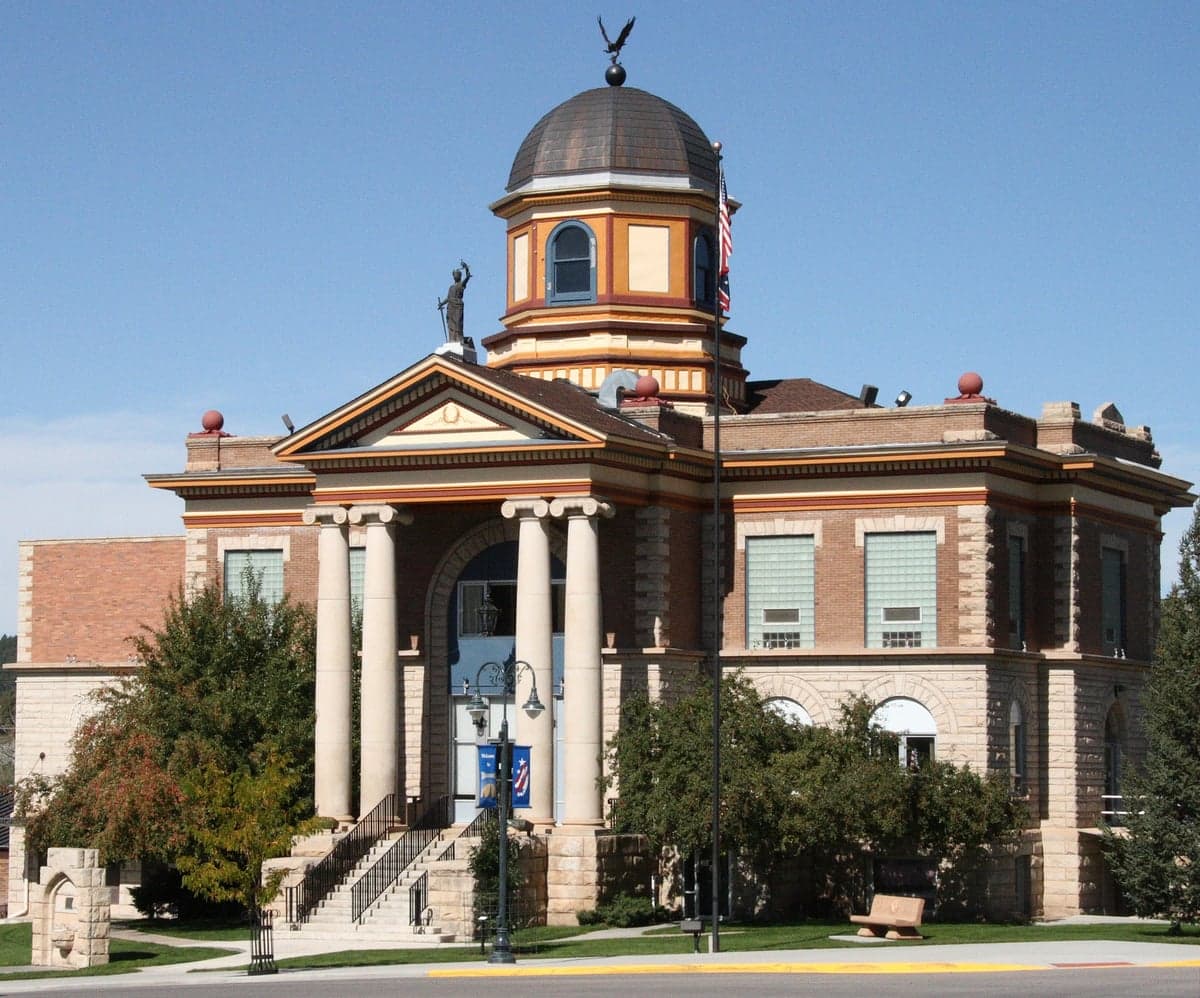
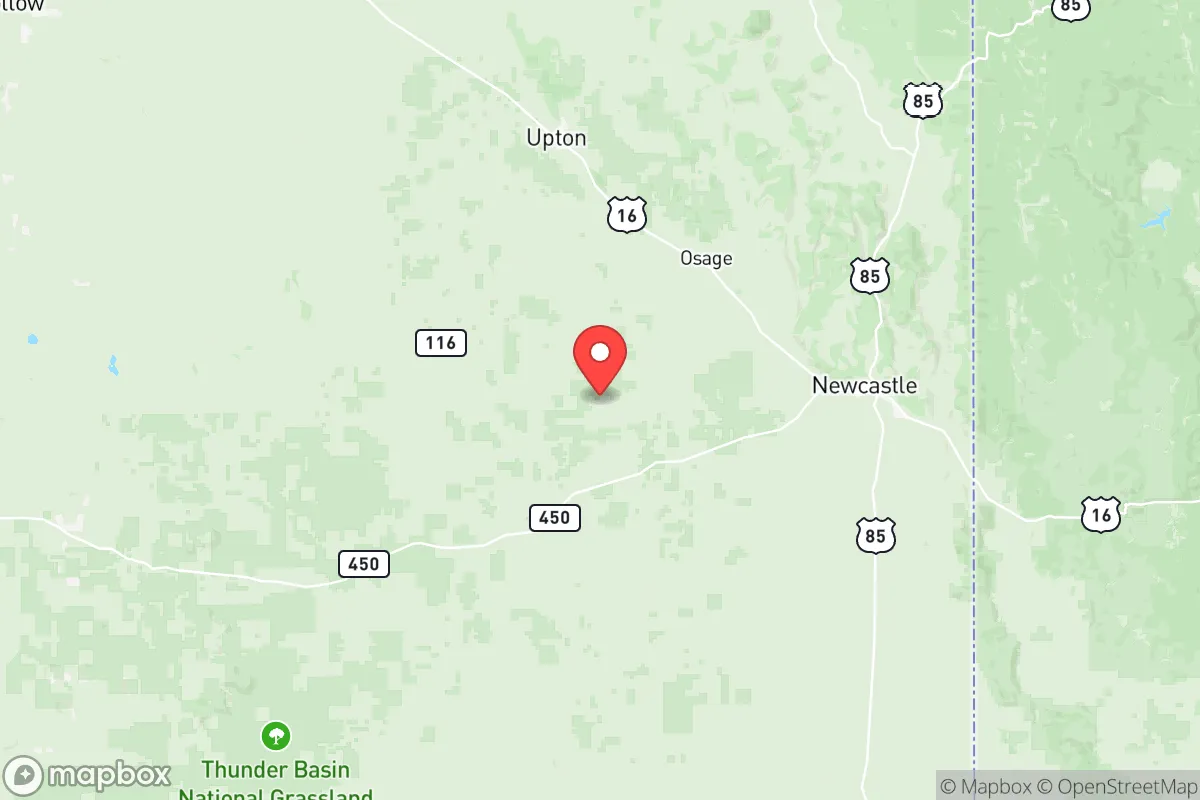
American settlement began in earnest after the 1868 Fort Laramie Treaty, which ceded the Black Hills and surrounding territories to the U.S., and the subsequent discovery of gold in the Black Hills in 1874. By the mid-1880s, cattle ranchers from Texas and the Midwest had driven herds onto the shortgrass prairie, founding the earliest permanent communities. Newcastle, established in 1889 along the Burlington and Missouri River Railroad, became the county seat and a rail hub for shipping cattle and later coal. The railroad brought not only Anglo-American ranchers but also a smaller number of Irish and German immigrants who worked as section hands, teamsters, and in the region’s first coal mines.
The Homestead Act of 1862 and its later amendments, including the 1909 Enlarged Homestead Act, drew dryland farmers into the county between 1900 and 1920. Upton, founded in 1909, emerged as a farming community specializing in wheat and hay. Four Corners and Osage grew around railroad stops and coal camps. The Dust Bowl of the 1930s hit the western plains hard, but Weston County’s cattle-and-coal economy proved more resilient than pure cropland counties farther south. Many homesteaders who arrived in the 1910s and 1920s either shifted to ranching or left; those who stayed became the core of the county’s multi-generational ranching families. No significant wave of immigration from outside the U.S. occurred during this period — the population remained overwhelmingly native-born White, drawn by land and resource extraction rather than factory or urban jobs.
Modern era (post-1965)
The post-1965 period, which reshaped much of the U.S. through Hart-Cellar immigration reform, had little direct effect on Weston County. The foreign-born share remains minuscule at 1.4%, and the county did not experience the large-scale immigrant settlement seen in urban or agricultural regions of the West. Instead, the most significant demographic change since the 1960s has been domestic: a slow, steady out-migration of young adults seeking education and employment in Wyoming’s larger towns (Casper, Gillette) or out of state, and a modest in-migration of retirees and telecommuters drawn by low taxes and open space.
The energy boom of the 1970s and 2000s — particularly coal mining and later coal-bed methane extraction — brought short-term population spikes to Newcastle and Upton. During these booms, the county saw an influx of workers from other parts of the Rocky Mountain region and the Rust Belt, many of whom were White, blue-collar, and conservative. These workers typically did not stay permanently; population numbers since the 1980s have fluctuated with energy prices but have not fundamentally altered the county’s racial or ethnic composition. The Hispanic share, at 3.5%, is present largely in seasonal and service roles — in construction, restaurants, and some ranch work — but no formal Hispanic enclave exists; the community is dispersed throughout Newcastle and, to a lesser degree, Upton.
The county has experienced a moderate shift toward suburban-style living within Newcastle. Newer subdivisions on the town’s outskirts, such as those along the eastern edge near the Shoshone River, have attracted retirees and remote workers from Colorado and the East Coast. However, this growth has been modest — Weston County’s population peaked at roughly 8,000 in the 1980s and has since declined to 6,835, a drop driven by the consolidation of ranching, mine closures, and the lack of family-wage jobs beyond energy and government. Osage, once a lively coal camp, is now a near-ghost town, and Four Corners is a scattering of homes and a post office.
The future
Weston County’s population is projected to remain stable or decline slightly over the next 10–20 years, barring a major new energy or mineral discovery. The county’s age structure is older than the national median, and the 18.0% college-educated share is well below the Wyoming state average of about 28%, limiting the draw for knowledge-economy employers. The dominant trend is aging in place: the population is becoming less diverse, not more, as younger people leave and few new immigrants arrive. The small Hispanic community may grow slightly, but from a very low base, and it is unlikely to reach double digits without a sustained economic draw.
In terms of where people concentrate, Newcastle will continue to hold roughly 60% of the county’s population, as the only incorporated town with a hospital, schools, and retail. Upton will see continued slow decline, while unincorporated areas — ranchlands, the Black Hills foothills near Moose Creek, and the Bear Lodge Mountains — will attract a small number of affluent retirees and remote workers seeking privacy and land. No new immigrant enclaves are forming, and the county’s cultural identity will remain firmly rooted in Western ranching and energy traditions.
For someone moving in now, Weston County offers a place where the population is stable, homogeneous, and deeply connected to the land. The county is not becoming more diverse or urbanized; it is quietly solidifying its character as a rural, conservative, White-majority community with a pace of life set by seasons and commodity prices. New residents will find a welcoming but insular social fabric — one where the key to belonging is participation in local churches, volunteer fire departments, and school sports, and where the history of who came, when, and why remains visible in the faded storefronts of Upton and the coal-laced bluffs outside Newcastle.

* Values derived from national, state, county, city and local statistics and may differ in a specific area. Last updated: 2026-06-30T00:19:01.000Z
Narrative content on this page is AI-generated and may contain mistakes. Verify any details that matter before acting on them.
ReloMaps may earn a commission from affiliate links at no extra cost to you.

