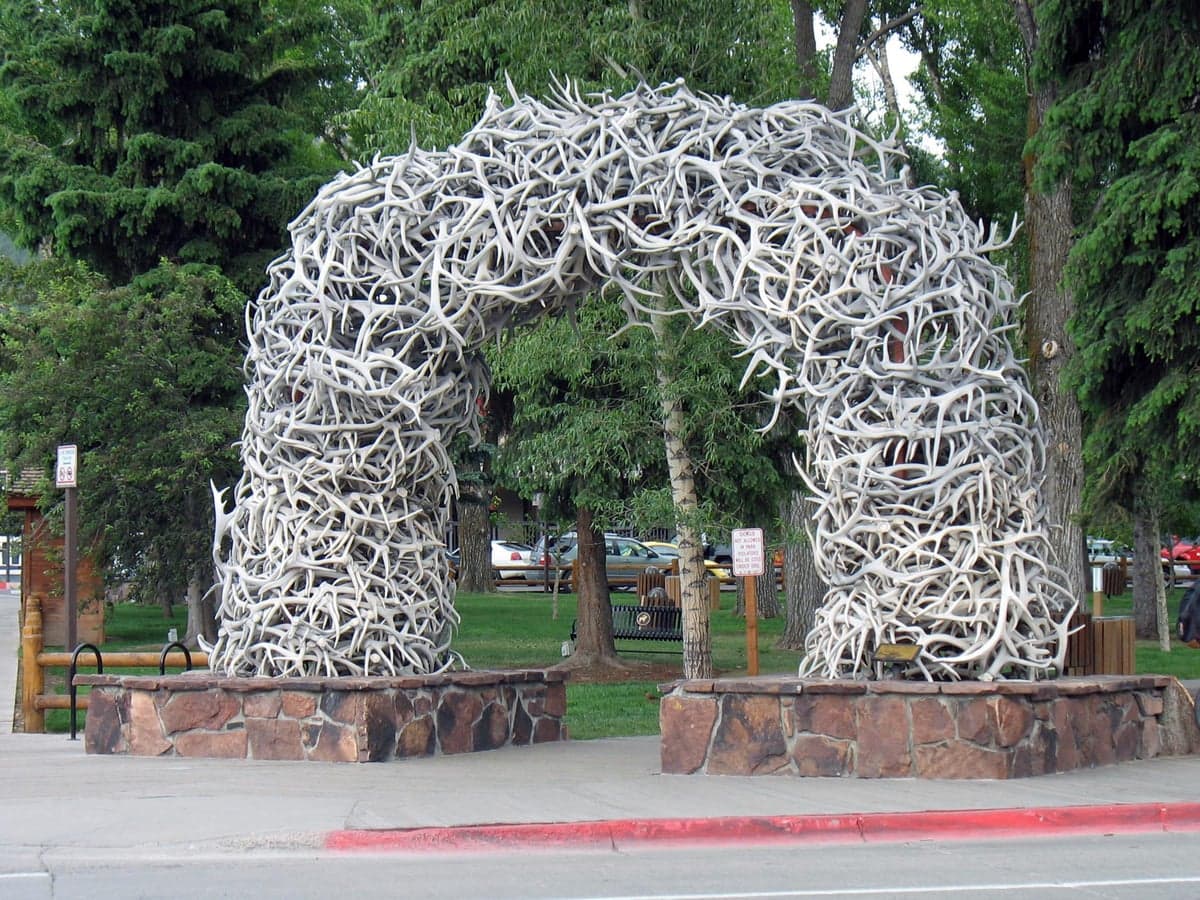
Photo: Wikipedia
Quality of Life in Teton County
A livable area that tracks near national norms for affordability, walkability, and neighborhood health.
What does Quality of Life tell us?
Quality of Life measures an area by evaluating factors like cost of living, nearby amenities, country club access, airport proximity, socioeconomic signals and neighborhood character. For large states, this is a general average — quality of life can vary dramatically between metro areas, suburbs, and rural communities within the same state.
What does this tell us?
Quality of Life measures an area by evaluating factors like cost of living, nearby amenities, country club access, airport proximity, socioeconomic signals and neighborhood character. For large states, this is a general average — quality of life can vary dramatically between metro areas, suburbs, and rural communities within the same state.
Cost of Living
185% above national average
39%
The Real Cost of Living in Teton County for 2026
| Tier | Individual | Family (4) |
|---|---|---|
| Survival | $28k | $53k |
| Comfortable | $196k | $288k |
| Luxury | $204k+ | $316k+ |
| Elite (Top 5%) | $338k+ | $524k+ |
Quality-of-Life Analysis
Teton County, Wyoming, offers one of the most dramatic quality-of-life spectrums in the American West, ranging from the resort-driven, high-density hub of Jackson to remote, off-grid homesteads in the Gros Ventre and Hoback River valleys. The county’s character is defined by its extreme geography—flanked by the Teton and Gros Ventre mountain ranges and bisected by the Snake River—which creates a clear divide between the amenity-rich, tourist-oriented lifestyle of its main town and the quiet, self-sufficient existence found in its smaller communities and rural pockets. People are drawn to different parts of the county based on their tolerance for crowds, their need for employment in the service or tourism economy, and their ability to afford the nation’s highest cost of living.
Largest town(s) & population centers
Jackson is the county seat and the only incorporated municipality, housing roughly 10,000 of the county’s 23,000 residents. Daily life here is defined by a walkable town square, a constant flow of tourists, and a service economy that supports world-class ski resorts (Jackson Hole Mountain Resort, Snow King) and Yellowstone/Grand Teton access. The town offers the county’s densest concentration of grocery stores, medical facilities (St. John’s Health), and cultural amenities like the National Museum of Wildlife Art. Commute times average just under 16 minutes, but traffic congestion on Highway 22 (Teton Pass) and Highway 89 is a daily reality for workers commuting from outlying areas. The unincorporated community of Wilson, located 4 miles west of Jackson, functions as a bedroom community with a small commercial core (the Wilson Mercantile) and direct access to Teton Pass skiing. Teton Village, 12 miles northwest of Jackson, is a resort-centric enclave with year-round recreation but virtually no permanent residential infrastructure beyond condos and employee housing.
Smaller towns & rural pockets
Beyond Jackson, the county’s smaller communities offer a quieter, more land-based lifestyle. Kelly, located 12 miles northeast of Jackson in the Gros Ventre River valley, is a tiny unincorporated hamlet with fewer than 100 year-round residents, no commercial services, and direct access to the National Elk Refuge and Bridger-Teton National Forest. Moose, situated at the southern entrance to Grand Teton National Park, is a cluster of homes and the Craig Thomas Discovery and Visitor Center, with no grocery store or gas station. Alta, a census-designated place 25 miles northwest of Jackson near the Idaho border, sits at the base of the Tetons’ west slope and offers a remote, agricultural feel with a handful of working ranches and no paved roads in some subdivisions. The Hoback River corridor (south of Jackson along Highway 89) contains scattered homes and cabins on large lots, with residents relying on Jackson for all services. These areas lack public water and sewer systems, requiring private wells and septic, and many roads are unpaved and unplowed in winter.
Cost & lifestyle range
The county’s overall cost-of-living index of 285 (nearly three times the U.S. average) masks extreme internal variation. At the high end, Teton Village and the East Gros Ventre Butte area feature median home values exceeding $3 million, with properties often serving as second homes or investment rentals. Jackson’s core neighborhoods (e.g., East Jackson, West Jackson) have a median home value of $1.37 million, with median rent at $1,758—but rental availability is extremely tight, with vacancy rates below 1% for most of the year. At the lower end, Alta and Kelly offer the county’s most affordable land (still $400,000–$600,000 for a small lot with a manufactured home), but residents trade off proximity to services and endure longer commutes (30–45 minutes to Jackson). The Hoback River area provides a middle ground: older cabins and fixer-uppers in the $700,000–$900,000 range, with a 20-minute commute to Jackson. Utility costs are higher in rural areas due to propane heating and private well maintenance, and internet access is limited to satellite or fixed wireless in most unincorporated zones.
The spectrum of quality-of-life options in Teton County ultimately rewards those who can align their lifestyle priorities with the county’s extreme trade-offs. Full-time workers in the service industry often live in employee housing or commute from Teton Valley, Idaho (over Teton Pass) to afford the area. Retirees and remote workers with high incomes gravitate to Jackson’s walkable core or Wilson’s community feel. Off-grid enthusiasts and seasonal workers find viability in Kelly, Alta, and the Hoback corridor, accepting isolation and limited infrastructure in exchange for direct wilderness access. No single area suits everyone, but the county’s distinct zones—from resort village to ranch valley—offer a clear choice between convenience and solitude, at a cost that remains among the highest in the nation.

Crime in Teton County
Generally safer than 71% of comparable U.S. locations.
Violent CrimeViolent Crime Analysis
Property CrimeProperty Crime Analysis
Crime Analysis
Teton County, Wyoming, encompassing the town of Jackson and the unincorporated communities of Wilson, Kelly, and Moose, is generally considered a safe area for both residents and the millions of tourists who visit Grand Teton National Park and Jackson Hole Mountain Resort each year. However, the county's crime statistics reveal a nuanced picture: while violent crime rates are notably low, property crime rates are significantly higher than both state and national averages, driven largely by theft and vehicle break-ins in high-traffic tourist zones.
Crime in context
According to the most recent data, Teton County reports a violent crime rate of 171.9 incidents per 100,000 residents, which is substantially lower than the national average of roughly 380 per 100,000. This places the county among the safer jurisdictions in Wyoming for violent offenses such as homicide, assault, and robbery. However, the property crime rate stands at 1,012.8 per 100,000, well above the national average of approximately 1,950 per 100,000 — but still lower than many urban centers. The disparity is largely attributable to the transient tourist population; the town of Jackson, the county seat and primary commercial hub, sees a disproportionate share of larceny and vehicle burglaries compared to more remote areas like Kelly or Moose. The Teton County Sheriff's Office and the Jackson Police Department have both noted that property crime spikes during peak ski and summer seasons, when the county's population can more than triple.
What residents experience
For full-time residents, the lived experience of crime in Teton County is heavily shaped by location and lifestyle. Violent crime is rare and typically involves individuals known to one another, rather than random acts against the public. The most common safety complaints from locals involve theft from unlocked vehicles, particularly in the town of Jackson and at trailhead parking lots near Wilson and the Teton Pass area. Residents in gated communities or subdivisions farther from the town core — such as those in the Snake River Ranch area or near the Hoback Junction — report fewer property crime incidents. The Teton County District Attorney's office has historically taken a pragmatic approach to prosecution, but concerns have been raised in recent years about progressive sentencing philosophies that some argue prioritize rehabilitation over deterrence. Critics point to repeat property offenders cycling through the system as a sign that the justice system's leniency may be undermining public safety, particularly in a county where property crime directly impacts both tourism-dependent businesses and the quality of life for working families.
Neighborhood-level variation is notable. The town of Jackson, especially the downtown core and areas near the Town Square, experiences the highest concentration of property crime, including shoplifting and bicycle theft. The unincorporated community of Wilson, located west of Jackson, sees moderate property crime but very low violent crime. In contrast, the sparsely populated areas of Kelly and Moose, which lie closer to Grand Teton National Park, report almost no violent crime and only occasional theft from vehicles. The disparity between Jackson and its outlying communities underscores the importance of location when evaluating safety in Teton County. Residents in higher-risk areas are advised to secure vehicles and homes vigilantly, while those in more remote parts of the county enjoy a level of safety comparable to the safest rural areas in the Rocky Mountain region.
* Values derived from national, state, county, city and local statistics and may differ in a specific area. Last updated: 2026-07-03T22:49:25.000Z
Narrative content on this page is AI-generated and may contain mistakes. Verify any details that matter before acting on them.
ReloMaps may earn a commission from affiliate links at no extra cost to you.

