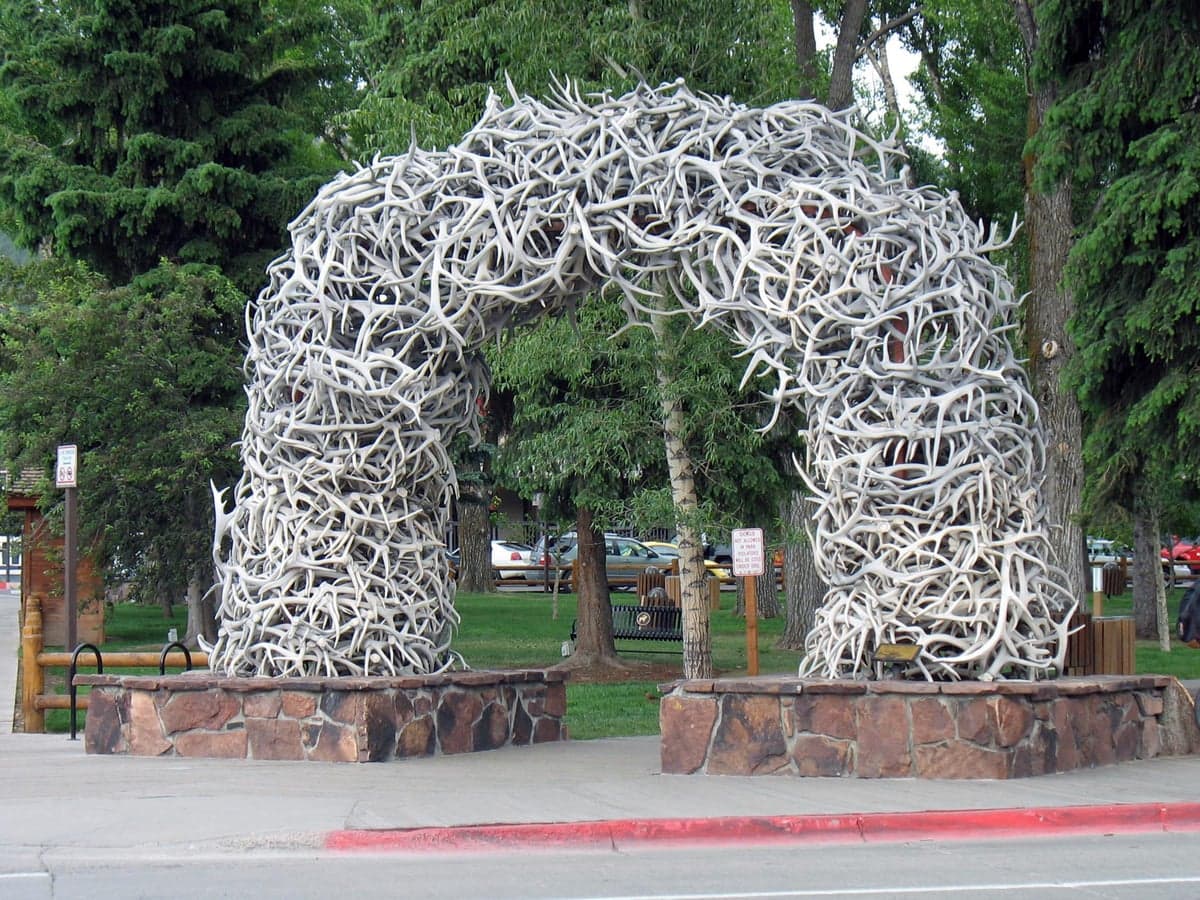
Photo: Wikipedia
Personal Sovereignty in Teton County
Viable for self-reliance. Generally workable, though some barriers may limit total independence.
What does Personal Sovereignty tell us?
Personal Sovereignty measures your capacity for self-reliance and independence with minimal government friction. Higher scores mean fewer barriers between you and the way you want to live... but it assumes you have the space you need and good neighbors.
What does this tell us?
Personal Sovereignty measures your capacity for self-reliance and independence with minimal government friction. Higher scores mean fewer barriers between you and the way you want to live... but it assumes you have the space you need and good neighbors.
State Policy
Energy independence: Net exporter (800% of energy produced in-state)
Personal Liberty
Homesteading

Personal Liberty Analysis
Teton County, Wyoming, presents a unique paradox for those prioritizing personal sovereignty: the county itself operates under some of the most restrictive land-use and development regulations in the Rocky Mountain West, while the state of Wyoming provides a robust legal framework for self-defense, low taxation, and minimal interference in personal lifestyle choices. For the relocation-minded individual or family, the practical reality of autonomy in Teton County is heavily shaped by where you live within the county — the difference between the town of Jackson and the unincorporated areas near Wilson or Kelly is night and day in terms of regulatory burden and day-to-day freedom. The county’s stunning natural environment comes with trade-offs that a freedom-oriented resident must weigh carefully against the state’s otherwise libertarian-leaning legal climate.
Tax burden and regulatory posture in Teton County vs. the rest of Wyoming
Wyoming is one of the most tax-friendly states in the nation, with no state income tax, no corporate income tax, and a relatively low statewide sales tax of 4% (plus local options). Teton County adds its own 2% local sales tax, bringing the total to 6% in most of the county, including the town of Jackson. Property taxes are assessed at a low effective rate — roughly 0.6% of market value — but because Teton County has the highest property values in the state, the actual dollar amount paid by homeowners here is significantly higher than in places like Lander or Rock Springs. The regulatory posture, however, is where Teton County diverges sharply from the rest of Wyoming. The county’s comprehensive plan and zoning regulations are among the most stringent in the state, particularly regarding density, building height, and lot coverage. In the town of Jackson, the regulatory environment is even tighter, with design review boards and strict historic preservation rules. By contrast, the unincorporated areas of the county — such as the communities of Wilson, Kelly, and Moose — still face county-level development restrictions but offer slightly more latitude for property owners. For a reader accustomed to the near-total lack of zoning found in much of rural Wyoming, Teton County’s regulatory posture will feel like a significant constraint on personal autonomy.
Self-defense and gun law specifics in Teton County and Wyoming
Wyoming is a constitutional carry state, meaning no permit is required to carry a concealed firearm for anyone legally allowed to possess one. This applies uniformly across Teton County, including within the town of Jackson. The state also has strong Stand Your Ground and Castle Doctrine laws, with no duty to retreat in any place where a person is lawfully present. Teton County’s sheriff’s office is generally supportive of Second Amendment rights, and there are no county-level firearm ordinances that exceed state law — a notable contrast to places like neighboring Teton County, Idaho, or many Colorado counties. However, firearms are prohibited in certain federal facilities, including the Bridger-Teton National Forest administrative offices and the Jackson Hole Airport, which sits partially on federal land. For practical purposes, a gun owner moving to Teton County will find the legal environment permissive, but the social climate in Jackson itself is more mixed than in the rest of the state. In the smaller communities like Alta and Kelly, gun culture is more pronounced and openly practiced. The county’s remote nature also means that law enforcement response times in the backcountry or outlying subdivisions can be 30 minutes or longer, making personal firearm ownership a practical self-reliance consideration for many residents.
Self-reliance and homesteading viability: lot sizes, zoning, and off-grid feasibility
Homesteading and off-grid living in Teton County face significant headwinds due to land-use regulations and property costs. Minimum lot sizes in the county’s rural zones are typically 35 acres, which preserves large tracts but makes affordable land acquisition difficult — the median price per acre in Teton County exceeds $100,000, compared to under $2,000 per acre in Sublette County just to the south. Off-grid systems are technically allowed, but the county requires permits for any structure, and the building code enforcement is active, particularly in the Jackson Hole valley. Composting toilets and solar power are permitted, but connecting to the grid is often required if utility lines are within a certain distance of the property line. The communities of Bondurant and Hoback Junction, located in the southern part of the county, offer slightly more flexibility due to their more remote status and less intensive enforcement presence. For a serious homesteader, the regulatory environment in Teton County is more restrictive than in most of Wyoming; the nearby towns of Pinedale (Sublette County) or Afton (Lincoln County) offer far greater latitude for self-sufficient living at a fraction of the land cost. That said, for those who can afford the premium, the ability to own large parcels with direct access to national forest and wilderness areas provides a level of physical autonomy that is hard to match elsewhere.
Personal liberties: parental rights, medical autonomy, speech, and property
Wyoming’s legal framework is broadly protective of personal liberties. The state has strong parental rights statutes, including the Parental Rights in Education Act, which affirms parents’ authority over their children’s education and medical decisions. Medical autonomy is generally respected, with no state-level vaccine mandates and a legal environment that does not compel medical treatment against an individual’s wishes. Free speech is protected under the Wyoming Constitution, which contains robust free expression clauses, and there are no county-level ordinances in Teton County that restrict speech beyond standard time-place-manner regulations. Property rights are a more complex picture. While Wyoming’s state laws favor private property owners, Teton County’s planning department exercises considerable authority over land use, and the county has been aggressive in enforcing conservation easements and development moratoriums. The Jackson Hole Land Trust holds easements on a significant portion of private land in the valley, which can permanently restrict what owners can do with their property. For a freedom-oriented buyer, it is essential to check whether a property is encumbered by a conservation easement before purchasing. In the unincorporated areas of the county, particularly around the town of Wilson, property rights are somewhat stronger than within Jackson’s town limits, but still subject to county-level oversight that is far more intrusive than in most Wyoming counties.
Overall, Teton County offers a mixed sovereignty environment that requires careful navigation. The state of Wyoming provides a strong foundation of low taxes, constitutional carry, and respect for parental and medical autonomy. But the county’s land-use regulations, high property costs, and active enforcement of building and zoning codes create real constraints on personal freedom that are absent in most of the rest of the state. For the relocation-minded individual or family who values both natural beauty and personal autonomy, the trade-off is clear: Teton County offers unmatched access to public lands and a stunning physical environment, but at the cost of a regulatory posture that is far heavier than what you would find in Sublette County, Lincoln County, or even Fremont County. The key is to go in with eyes open — understanding that the freedom you gain in Wyoming’s state laws is partially offset by the restrictions imposed by Teton County’s local governance.

* Values derived from national, state, county, city and local statistics and may differ in a specific area. Last updated: 2026-07-03T22:49:25.000Z
Narrative content on this page is AI-generated and may contain mistakes. Verify any details that matter before acting on them.
ReloMaps may earn a commission from affiliate links at no extra cost to you.

