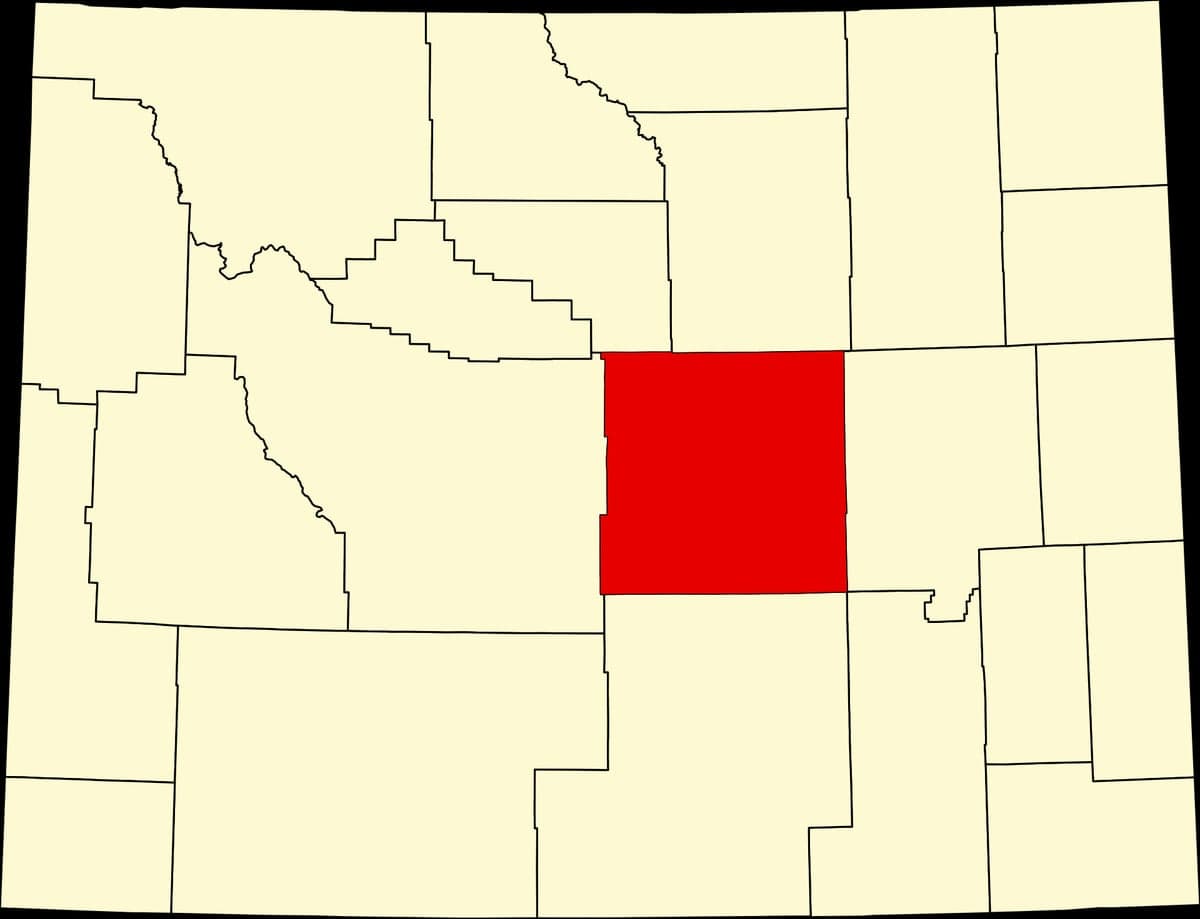
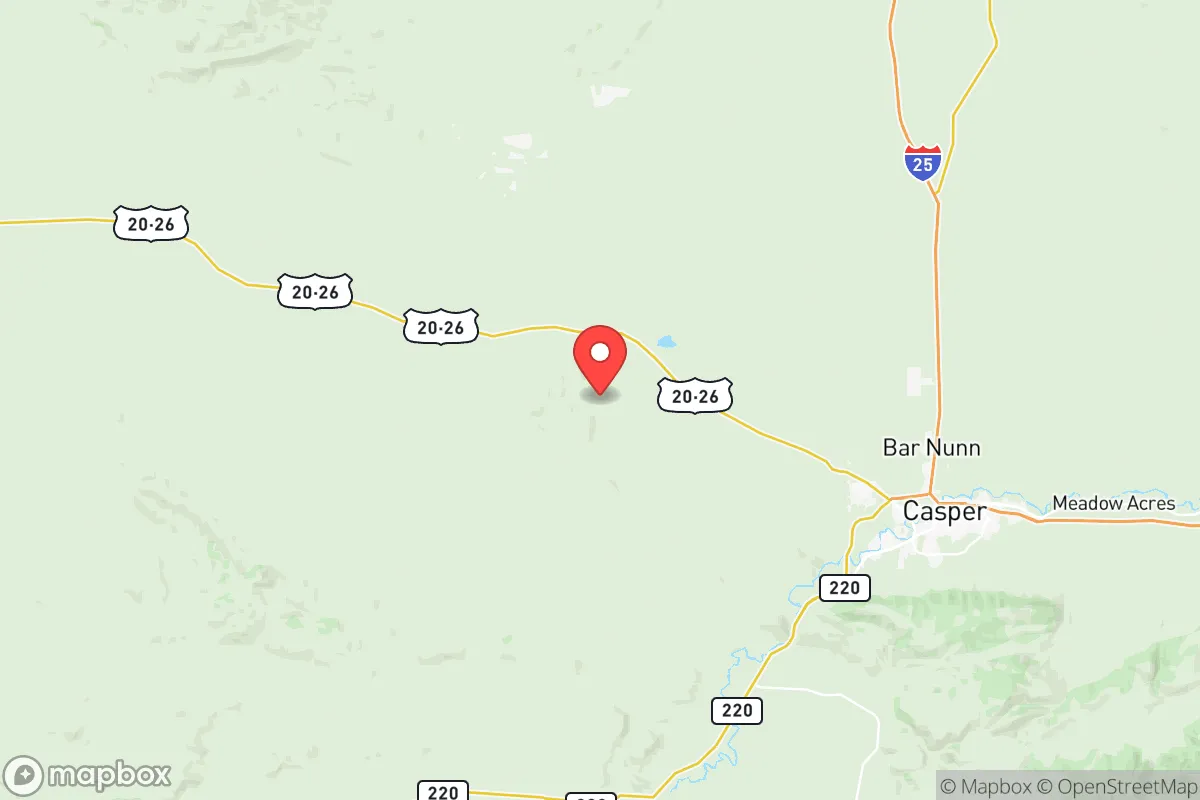
Photo: Wikipedia
Personal Sovereignty in Natrona County
Viable for self-reliance. Generally workable, though some barriers may limit total independence.
What does Personal Sovereignty tell us?
Personal Sovereignty measures your capacity for self-reliance and independence with minimal government friction. Higher scores mean fewer barriers between you and the way you want to live... but it assumes you have the space you need and good neighbors.
What does this tell us?
Personal Sovereignty measures your capacity for self-reliance and independence with minimal government friction. Higher scores mean fewer barriers between you and the way you want to live... but it assumes you have the space you need and good neighbors.
State Policy
Energy independence: Net exporter (800% of energy produced in-state)
Personal Liberty
Personal Liberty Analysis
Natrona County delivers one of the strongest personal sovereignty environments in the Mountain West, combining Wyoming’s no-income-tax structure, permissive self-defense laws, and limited land-use regulation with the practical infrastructure of Casper—the state’s second-largest city. For the freedom-oriented individual or family, this isn’t an abstract constitutional promise; it’s a daily reality backed by county policies that treat personal autonomy as the default, not the exception. Whether you’re running a firearms business in Evansville, building an off-grid homestead near Alcova, or homeschooling in Mills, the regulatory friction is notably lower than in Colorado, Montana’s growing tourist zones, or any of the coastal states.
Tax burden and regulatory posture in Natrona County
Wyoming’s tax structure is the backbone of personal financial sovereignty here. There is no state income tax on wages, capital gains, or retirement distributions—period. Natrona County levies a 6 percent sales tax (4% state, 1% county, 1% optional general purpose), which applies to most goods but not groceries or prescription drugs. Property taxes are among the lowest in the nation, with the county’s effective rate averaging roughly 0.55 percent of assessed value, and agricultural land is taxed on productivity value—not market value—which directly benefits anyone homesteading on 20+ acres. The regulatory posture is consistently light: no state-level business licensing requirement, no corporate income tax, and no franchise tax. Casper’s municipal code is more detailed than the county’s, but even inside city limits, zoning is largely permissive for home-based businesses and light manufacturing. In Bar Nunn and Evansville, the regulatory burden drops further—no separate business license from the town in most cases, and no use-permit delays for standard residential workshops or small livestock operations.
Self-defense laws and gun rights specifics for Natrona County
Wyoming is a constitutional carry state since 2011, meaning any law-abiding adult 21 or older can carry a concealed firearm without a permit. Natrona County’s sheriff operates a shall-issue permitting system for those who want reciprocity with other states—typically processed within 30 days. The county is home to Casper College’s shooting sports program and the Central Wyoming Gun Club, one of the oldest continuously operating shooting ranges in the West. There is no waiting period on firearm purchases, no state registry, and no firearm-specific storage laws. Stand-your-ground law is in effect; no duty to retreat exists anywhere you are lawfully present. Use of deadly force is presumed reasonable if an intruder has unlawfully entered your home, vehicle, or workplace—broadly consistent with the Castle Doctrine. One practical nuance: while Casper city limits have no additional firearm restrictions, discharging a firearm within city limits is limited to ranges and legal self-defense situations. In Midwest and Edgerton—small towns north of Casper—town ordinances are generally silent, and open carry is routine in commercial areas.
Self-reliance and homesteading viability across Natrona County
The off-grid and homesteading potential in Natrona County is high, driven by zoning codes that default to agricultural use. Outside the Casper city limits—which covers roughly 27 square miles—the county’s zoning is minimal: on land zoned Agricultural-1 (the default for most unincorporated parcels), you can keep livestock, build a primary residence without a county building permit (though a septic permit from the Department of Environmental Quality is required), and install solar panels or wind turbines with no county-level permitting. Minimum lot size for a single-family home in unincorporated areas is effectively one acre for a septic system, but many sellers offer 5- to 40-acre parcels near Alcova (southeast of Casper, along the North Platte River) and Gooseberry Creek (northwest, near the Fremont County line). Water rights are the primary constraint: while the Platte River alluvium provides reliable groundwater in the Alcova area, parcels in the arid northern half of the county—around Kaycee—often require hauled water or deep wells exceeding 300 feet. Rainwater collection is legal without restriction, and off-grid power systems are common. The county does not enforce the International Energy Conservation Code on residential structures outside city limits, meaning owner-built homes with earth-bermed walls, straw-bale construction, or salvaged materials face no code obstruction—only the septic and electrical permit requirements.
Personal liberties: parental rights, medical autonomy, speech, and property
Parental rights in Wyoming benefit from strong state-level protections. Wyoming Statute 14-2-402 gives parents the explicit right to direct the upbringing, education, and health care of their minor children. Homeschooling is regulated as a “home-based educational program” with no standardized testing requirement and no curriculum approval needed—Natrona County’s school district simply requires a one-time notification form. Medical autonomy is less codified but practically respected: no state vaccine mandate for adults, no prescription monitoring program for Schedule II controlled substances (though federal rules apply), and a 2022 law prohibits enforcement of federal public health orders that would restrict in-person worship or firearms purchases. Free speech protections are baseline First Amendment, but Wyoming has no anti-SLAPP law, which means defamation lawsuits can chill speech more than in states with such protections. Property rights are unusually strong: county assessors can only increase assessed value by 5 percent per year (plus improvements)—a cap that insulates long-term owners from tax spikes. The county also allows private property owners to post “No Trespassing” signs without specific dimensions or color requirements, and enforcement for unauthorized hunting or recreation on posted land is a criminal trespass charge, not a civil matter.
For the reader weighing personal sovereignty against practical convenience, Natrona County occupies a rare sweet spot: it combines the autonomy of a low-regulation rural county with the infrastructure of a small city—Casper has a regional airport, multiple grocery stores, a level II trauma center, and fiber-optic internet in many neighborhoods—without the cost-of-living premiums seen in Jackson Hole or Bozeman. The trade-offs are real: long winters, limited cultural amenities, and a 1.5-hour drive to the nearest major metro (Cheyenne) for federal courts or specialty medical care. But for those who prioritize the freedom to build, carry, homeschool, and evade tax-hungry governments, the county’s mix of permissive land use, constitutional carry, and zero income tax places it among the top decile of US counties for personal sovereignty.

* Values derived from national, state, county, city and local statistics and may differ in a specific area. Last updated: 2026-07-03T04:26:35.000Z
Narrative content on this page is AI-generated and may contain mistakes. Verify any details that matter before acting on them.
ReloMaps may earn a commission from affiliate links at no extra cost to you.

