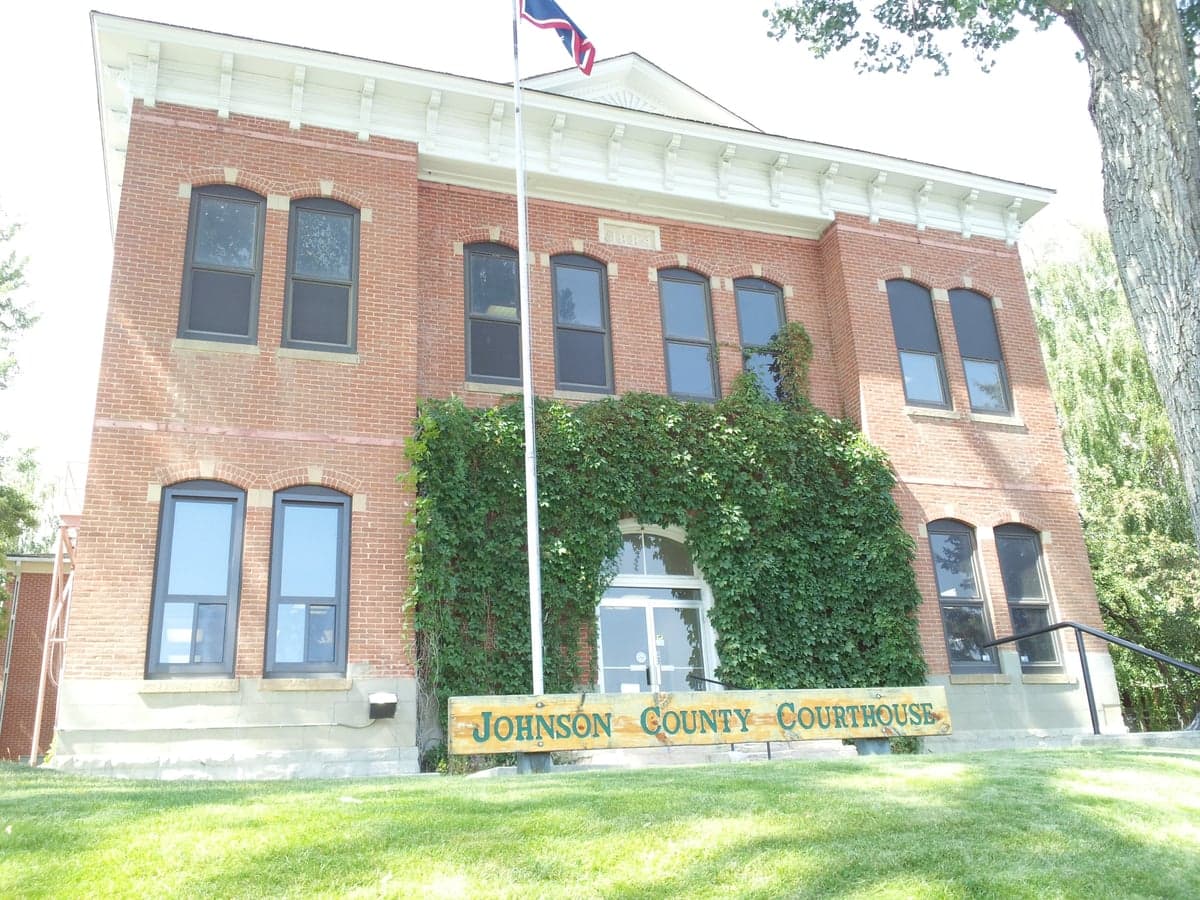
Photo: Wikipedia
Personal Sovereignty in Johnson County
Viable for self-reliance. Generally workable, though some barriers may limit total independence.
What does Personal Sovereignty tell us?
Personal Sovereignty measures your capacity for self-reliance and independence with minimal government friction. Higher scores mean fewer barriers between you and the way you want to live... but it assumes you have the space you need and good neighbors.
What does this tell us?
Personal Sovereignty measures your capacity for self-reliance and independence with minimal government friction. Higher scores mean fewer barriers between you and the way you want to live... but it assumes you have the space you need and good neighbors.
State Policy
Energy independence: Net exporter (800% of energy produced in-state)
Personal Liberty
Homesteading

Personal Liberty Analysis
Johnson County, Wyoming, offers one of the most robust personal sovereignty environments in the lower 48, with a state-level legal framework that consistently prioritizes individual autonomy over government intervention. The county’s regulatory posture, tax structure, and cultural norms create a landscape where self-reliance is not just tolerated but expected, particularly in its unincorporated areas and smaller communities like Buffalo, Kaycee, and the rural stretches along the Powder River. For a relocation audience seeking maximum personal freedom, Johnson County presents a compelling case, though the degree of autonomy varies between the county seat of Buffalo and the more remote, less populated zones.
Tax burden and regulatory posture: How light is the government footprint?
Wyoming’s absence of a state income tax is the headline, but the real sovereignty story in Johnson County lies in its low property tax rates and minimal regulatory overhead. The state’s property tax is among the lowest in the nation, with Johnson County’s effective rate hovering around 0.55% of assessed value—roughly half the national average. There is no state sales tax on groceries or prescription drugs, and the county’s 4% sales tax (state plus local) is applied to most other goods. Regulatory burdens are notably light: no state-level building codes apply outside of Buffalo’s town limits, and the county’s planning and zoning department is minimal, with most unincorporated land—such as the areas around Kaycee and Sussex—subject to no zoning restrictions whatsoever. This means a landowner can build a dwelling, erect a fence, or start a small business without county permits, provided they meet basic state health and safety requirements for septic systems and well water. The county’s approach is hands-off, reflecting a deep-seated cultural preference for local control and minimal interference.
Self-defense and gun law specifics: What are the legal protections?
Johnson County is a stronghold for Second Amendment rights, with Wyoming’s constitutional carry law—effective since 2011—allowing any adult legally able to possess a firearm to carry openly or concealed without a permit. The county sheriff’s office in Buffalo is known for a pro-2A stance, and there are no local ordinances restricting magazine capacity, firearm types, or storage requirements. Stand-your-ground and castle doctrine laws are fully in effect, with no duty to retreat in any place where a person is lawfully present. The practical reality in towns like Buffalo and Kaycee is that firearms are a routine part of daily life—visible in vehicles, at local businesses, and on public lands. For those concerned about self-defense, the legal environment is as permissive as any in the nation, with the only notable restriction being federal prohibitions on felons and domestic violence misdemeanants. The county’s gun culture is not just tolerated but actively supported, with multiple local gun shops, shooting ranges, and a strong tradition of hunting and sport shooting.
Self-reliance and homesteading viability: Lot sizes, zoning, and off-grid feasibility
Johnson County’s geography and zoning policies make it one of the most viable areas in the region for off-grid living and homesteading. Unincorporated land—particularly in the Powder River Basin and the Bighorn Mountain foothills—is available in parcels ranging from 5 to 160 acres, with no minimum lot size requirements for building in most areas. County zoning is virtually nonexistent outside Buffalo’s town limits, meaning no permits are needed for alternative energy systems like solar panels, wind turbines, or micro-hydro setups. Water rights are a critical consideration: landowners must secure a permit from the Wyoming State Engineer’s Office for any new well, but the process is straightforward and typically approved within 60 days. Septic systems require a county health department permit, but the standards are basic and cost around $500 for the application. The county’s climate—semi-arid with cold winters—means off-grid solar systems require battery storage and backup generators, but the abundant sunshine (over 200 sunny days per year) makes it feasible. The town of Buffalo itself has more restrictive building codes and requires connection to municipal water and sewer, but the surrounding areas—like Story and Ucross—offer a true homesteading environment with minimal regulatory friction.
Personal liberties: Parental rights, medical autonomy, speech, and property
Wyoming’s legal framework strongly supports parental rights, with state law explicitly affirming that parents have the fundamental right to direct the upbringing, education, and healthcare of their children. Johnson County’s school district—Johnson County School District #1, serving Buffalo, Kaycee, and the surrounding areas—has a conservative school board that has resisted federal overreach in curriculum and health mandates. Medical autonomy is similarly protected: Wyoming has no state-level vaccine mandate for adults or children, and the state’s 2023 law prohibits discrimination based on vaccination status. The county’s healthcare system, centered on the Johnson County Healthcare Center in Buffalo, is small but functional, with most residents traveling to Sheridan or Casper for specialized care. Speech and property rights are robust: there are no local noise ordinances in unincorporated areas, no restrictions on political signage, and no county-level hate speech laws. Property rights are further protected by Wyoming’s strong eminent domain laws, which require full compensation and a demonstrated public necessity. The county’s culture of personal responsibility means that disputes are often resolved informally, with neighbors and local mediators rather than courts, reinforcing the sovereignty of individual decision-making.
Compared to other areas in the Rocky Mountain West, Johnson County stands out for its combination of low taxes, minimal regulation, and a deeply ingrained culture of self-reliance. While it lacks the extreme libertarian legal structures of some New Hampshire counties or the complete absence of zoning found in parts of Alaska, it offers a balanced, practical sovereignty that is accessible to both families and single individuals. The county’s remote character—its population density is just 2.5 people per square mile—means that personal freedom comes with the trade-off of limited services and long distances to major amenities. For those who value autonomy over convenience, Johnson County provides one of the most permissive environments in the contiguous United States, where the government’s primary role is to protect individual rights rather than manage daily life.

* Values derived from national, state, county, city and local statistics and may differ in a specific area. Last updated: 2026-07-12T21:35:52.000Z
Narrative content on this page is AI-generated and may contain mistakes. Verify any details that matter before acting on them.
ReloMaps may earn a commission from affiliate links at no extra cost to you.

