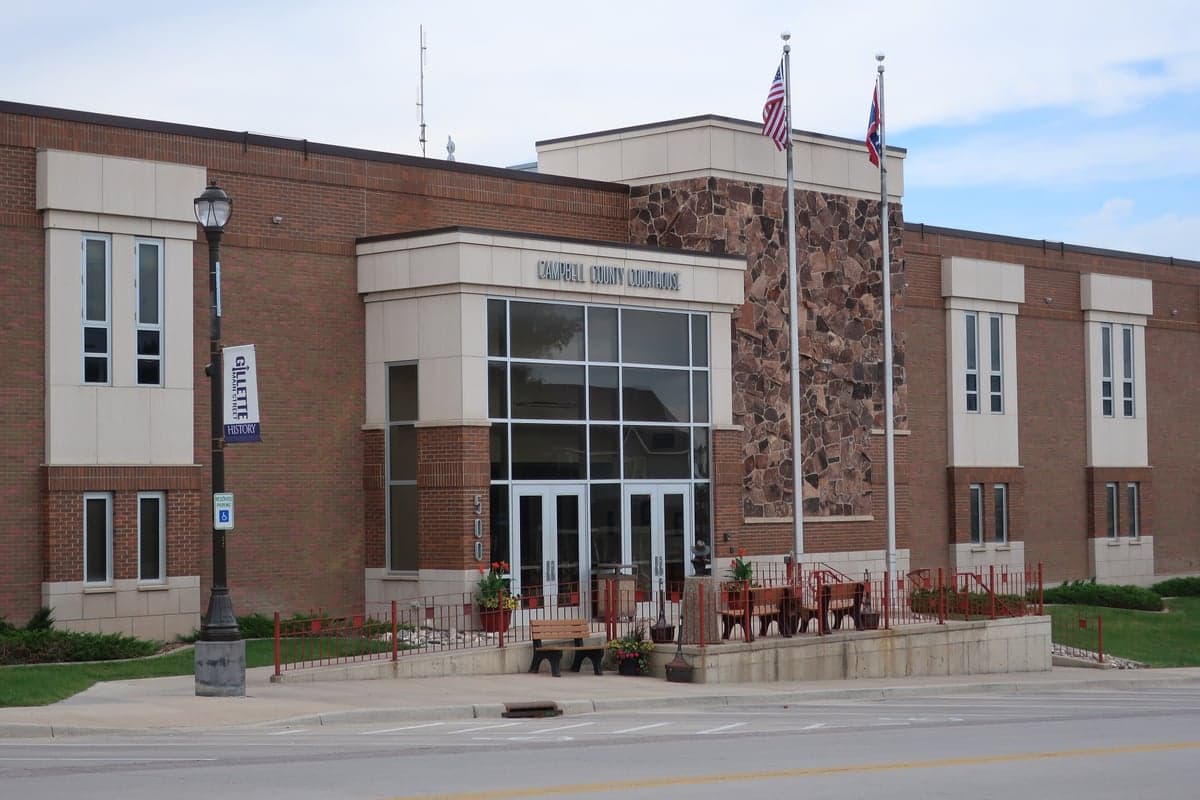
Photo: Wikipedia
Demographics of Campbell County
Affluence Level in Campbell County
A middle-class area roughly in line with national averages across income, home values, education, and employment.
People of Campbell County
Campbell County, Wyoming, is home to roughly 47,000 people, making it the third-most-populous county in the state, yet it retains a distinctly rural, resource-driven character. The population is overwhelmingly white (85.2%) with a growing Hispanic minority (9.4%), a very small foreign-born share (2.0%), and a below-average college attainment rate (22.2%). The county’s identity is shaped by the boom-and-bust cycles of the energy industry, particularly coal and oil, which have drawn successive waves of domestic migrants seeking high-wage blue-collar work, creating a community that values self-reliance, economic opportunity, and a low-tax, low-regulation environment.
Settlement & growth (pre-1960)
Before European-American settlement, the area that is now Campbell County was part of the traditional territory of the Crow, Cheyenne, and Lakota Sioux nations. These nomadic tribes followed the vast herds of bison across the high plains, with the Powder River Basin serving as a critical hunting and travel corridor. The first recorded non-Native presence came in the early 1800s with French-Canadian and American fur trappers, but permanent settlement did not begin until the 1870s, following the Fort Laramie Treaty of 1868 and the forced removal of Native peoples onto reservations.
The first permanent settlers were predominantly Anglo-American cattle ranchers from the Midwest and the eastern United States, drawn by the open range and the promise of cheap land under the Homestead Act. Towns like Gillette, founded in 1891 as a railroad stop on the Burlington and Missouri River Railroad, and Moorcroft, established in 1906, became early hubs for ranching families. A smaller wave of Scandinavian immigrants—Norwegians, Swedes, and Danes—arrived in the 1900s and 1910s, taking up homesteads in the county’s eastern and northern reaches, particularly around Wright and Rozet. These settlers brought a strong Lutheran tradition and a work ethic that still echoes in the county’s culture.
The Dust Bowl of the 1930s hit Campbell County hard, causing many homesteaders to abandon their farms. The population actually declined during this period, as drought and economic hardship pushed families out. Recovery was slow, and by 1950 the county’s population stood at just 4,839. The economy remained almost entirely agricultural—cattle and sheep ranching, with some dryland wheat farming—until the discovery of vast coal and oil reserves in the Powder River Basin in the late 1950s and early 1960s.
Modern era (post-1965)
The 1965 Hart-Cellar Act had minimal direct impact on Campbell County, as the region never attracted significant international immigration. Instead, the county’s modern demographic story is one of domestic migration driven by the energy boom. The opening of the Belle Ayr Mine in 1972 and the Eagle Butte Mine in 1978, both near Gillette, triggered a massive influx of workers from the Rust Belt, the Rocky Mountain states, and the oil fields of Texas and Oklahoma. These were overwhelmingly white, blue-collar families seeking high wages in coal mining, oil and gas extraction, and related support industries.
Gillette’s population exploded from 3,700 in 1960 to over 17,000 by 1980, and the city became the county’s undisputed economic and social center. Smaller communities like Wright, incorporated in 1985, were built from scratch to house mine workers and their families. The boom brought a distinct culture: conservative, patriotic, and heavily reliant on the energy sector. The bust of the 1980s, when oil prices collapsed, caused a sharp population decline, but the county rebounded with the coal-bed methane boom of the 2000s, which drew another wave of workers from the same domestic labor pools.
The Hispanic population, now 9.4% of the total, began growing in the 1990s and 2000s, largely through domestic migration from Texas, New Mexico, and Colorado. These families moved for construction, service, and energy-related jobs, settling primarily in Gillette and Wright. Unlike many parts of the West, Campbell County has not seen significant growth from East/Southeast Asian, Indian, or Black communities—each remains below 0.5% of the population. The foreign-born share (2.0%) is among the lowest in Wyoming, reflecting the county’s reliance on domestic labor rather than international immigration.
The future
Campbell County’s population is projected to remain stable or grow slowly, heavily dependent on the trajectory of the coal and oil industries. The long-term decline of coal-fired power generation nationally poses a structural challenge, but the county’s oil and gas sector, particularly in the Powder River Basin, continues to attract workers. The Hispanic share is expected to continue rising gradually, driven by natural increase and continued domestic migration, but the county will remain overwhelmingly white for the foreseeable future.
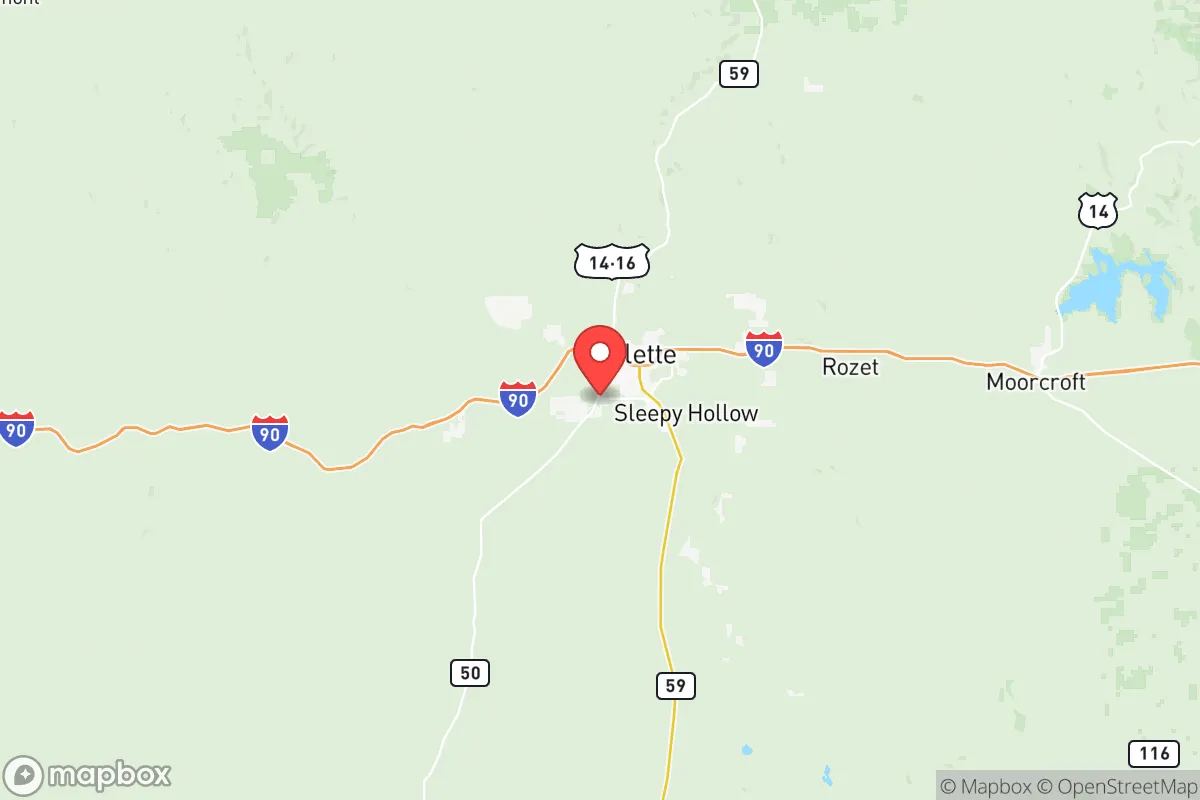
New residential development is concentrated in Gillette’s southern and western edges, with some spillover into Wright and the unincorporated areas around Sleepy Hollow and Antelope Valley. The county is not becoming more diverse in the way that urban or coastal regions are; instead, it is experiencing a slow, incremental shift in its ethnic composition while retaining a strong Anglo-American cultural core. The college attainment rate (22.2%) is well below the national average, reflecting the dominance of trades and industrial employment, and this is unlikely to change dramatically unless the energy sector diversifies into technology or renewable energy.
For someone moving in now, Campbell County offers a place where the economy still rewards physical labor and technical skill, where community ties are strong, and where the pace of life is slower than in metropolitan areas. The population is stable, conservative, and rooted in the energy industry, with a growing but still small Hispanic community adding some cultural texture. The county is not a destination for international migrants or for those seeking a highly educated, cosmopolitan environment—it is a working-class, resource-extraction community that has weathered booms and busts and will continue to do so.

* Values derived from national, state, county, city and local statistics and may differ in a specific area. Last updated: 2026-06-28T11:44:25.000Z
Narrative content on this page is AI-generated and may contain mistakes. Verify any details that matter before acting on them.
ReloMaps may earn a commission from affiliate links at no extra cost to you.

