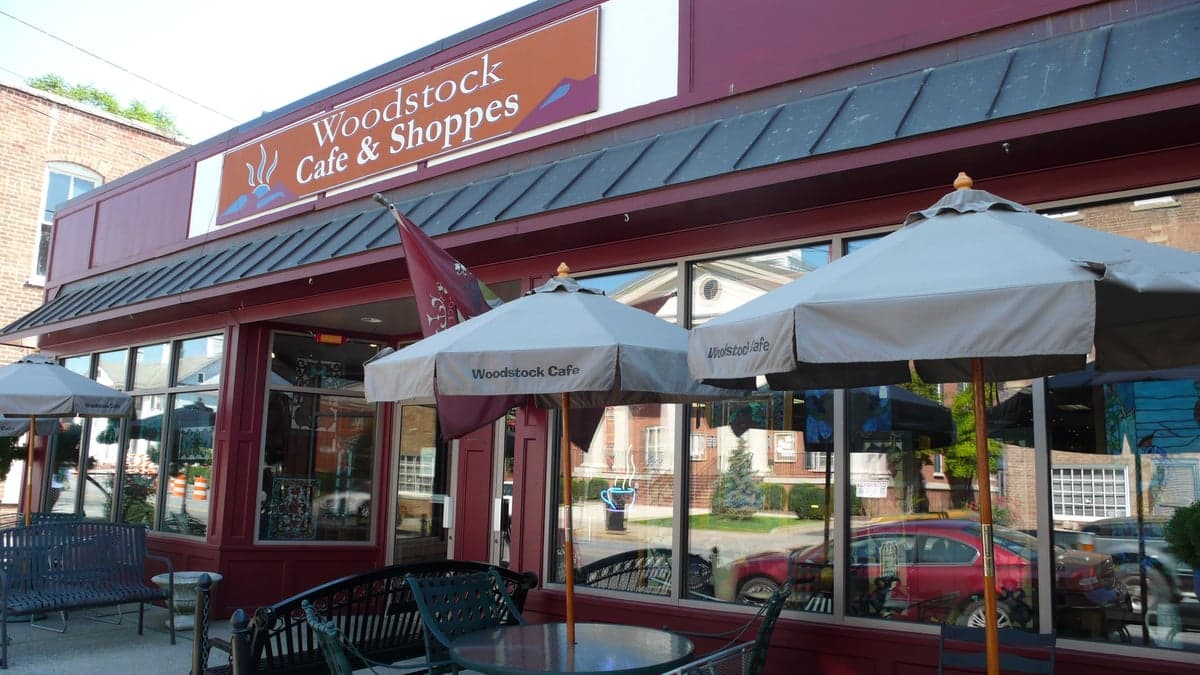
Photo: Wikipedia
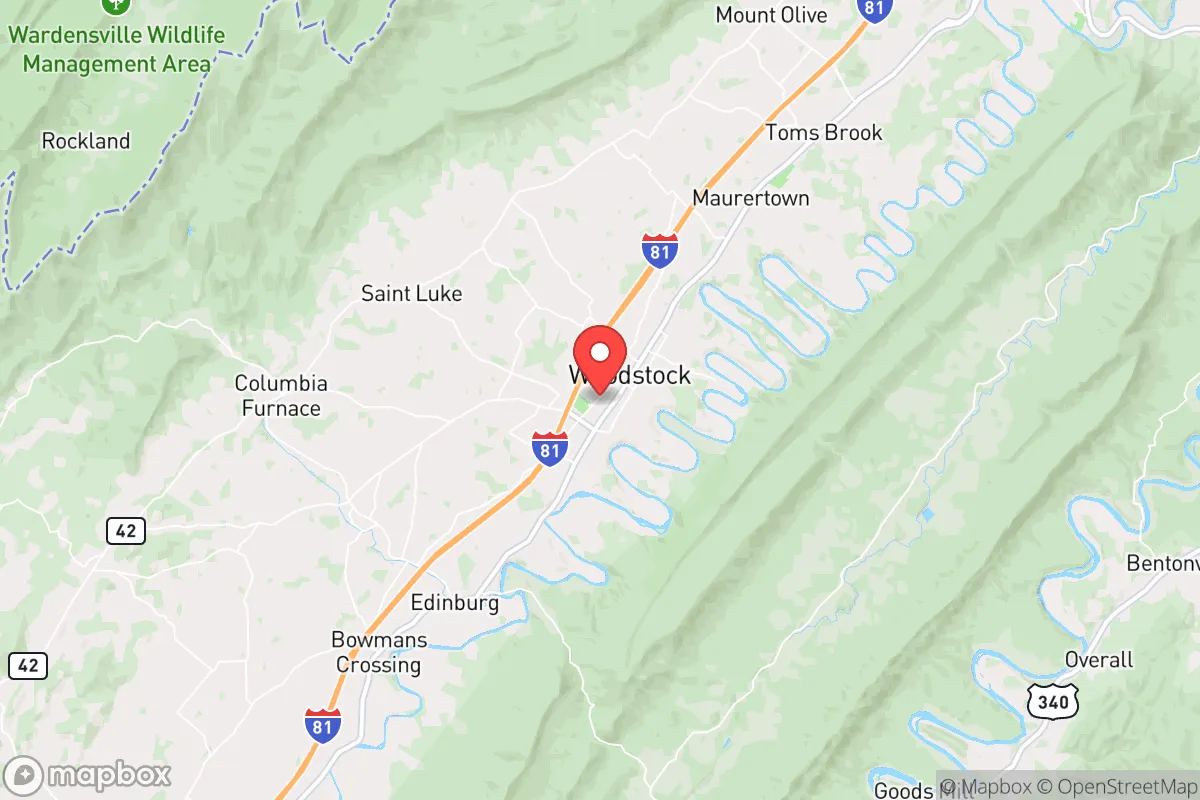
Personal Sovereignty in Woodstock, VA
Viable for self-reliance. Generally workable, though some barriers may limit total independence.
What does Personal Sovereignty tell us?
Personal Sovereignty measures your capacity for self-reliance and independence with minimal government friction. Higher scores mean fewer barriers between you and the way you want to live... but it assumes you have the space you need and good neighbors.
What does this tell us?
Personal Sovereignty measures your capacity for self-reliance and independence with minimal government friction. Higher scores mean fewer barriers between you and the way you want to live... but it assumes you have the space you need and good neighbors.
State Policy
Energy independence: Importer (20% of energy produced in-state)
Personal Liberty
Homesteading

Personal Liberty Analysis
Woodstock, Virginia, offers a notably high degree of personal sovereignty relative to many Northern Virginia and Mid-Atlantic locales, anchored by Virginia’s status as a Dillon Rule state with a strong conservative local culture in Shenandoah County. While the state government in Richmond imposes certain uniform regulations, the town’s rural character and local governance create an environment where individual autonomy—from tax burden to self-defense to homesteading—is generally respected and lightly constrained. For a relocation-minded individual or family prioritizing personal freedom, Woodstock represents a middle ground: not as unregulated as parts of the Deep South or rural West, but significantly freer than the heavily regulated urban corridors of the East Coast.
Tax burden and regulatory posture in Shenandoah County
Virginia’s overall tax burden is moderate by national standards, ranking roughly in the middle third of states, but Woodstock benefits from Shenandoah County’s relatively low local levies. The county’s real property tax rate hovers around $0.54 per $100 of assessed value, which is well below the state average and dramatically lower than Northern Virginia’s rates (often exceeding $1.00). Personal property tax on vehicles and boats is a notable state-level imposition—Virginia is one of the few states that taxes personal property annually—but the rate in Shenandoah County is among the lowest in the commonwealth, at roughly $2.50 per $100 of assessed value. There is no local income tax, and the state income tax is a flat 5.75% on most income, which is moderate. The regulatory posture in Woodstock is light-touch for a Virginia town: zoning is present but not onerous, business licensing is straightforward, and the county’s comprehensive plan explicitly supports agricultural and rural uses. Building permits are required for new construction and major renovations, but inspections are generally reasonable and not used as a tool for overreach. The town’s small size (population around 5,000) means that local officials are accessible, and the permitting process is typically quicker than in larger jurisdictions. For a reader accustomed to the heavy regulatory environments of Fairfax or Loudoun counties, Woodstock will feel like a breath of fresh air—less paperwork, fewer fees, and a general presumption that property owners can manage their own affairs.
Self-defense and gun law specifics in Woodstock
Virginia is a shall-issue state for concealed handgun permits, meaning that if you meet the statutory requirements—including a background check and completion of a firearms safety course—the issuing authority (the circuit court in Shenandoah County) must issue the permit. There is no discretionary denial based on local whim. Woodstock itself has no additional firearm ordinances beyond state law; the town does not ban open carry, and there are no local restrictions on magazine capacity or firearm types. Virginia law preempts local governments from enacting their own gun control measures, so Woodstock cannot impose a local assault weapons ban or waiting period. The state does require a background check for all firearm purchases from licensed dealers (including at gun shows), but private sales between individuals do not require a background check or a waiting period. Stand-your-ground laws are not explicitly codified in Virginia, but the state’s self-defense doctrine is based on the “reasonable belief” standard, and there is no duty to retreat in one’s own home or place of business. In practice, Shenandoah County’s sheriff’s office is supportive of Second Amendment rights, and the local gun culture is strong—there are multiple gun shops and ranges within a short drive. For a reader prioritizing self-defense autonomy, Woodstock offers a legal environment that respects the right to keep and bear arms without the friction found in more restrictive states like New York or California.
Self-reliance and homesteading viability: lot sizes, zoning, off-grid feasibility
Woodstock’s zoning code and the surrounding county’s land-use policies are generally favorable to self-reliance and homesteading. Within the town limits, residential lots are typically smaller—quarter-acre to half-acre—but the town’s zoning allows for accessory structures, gardens, and small livestock (chickens are permitted with a permit, though roosters are restricted). The real opportunity for homesteading lies in the unincorporated areas of Shenandoah County surrounding Woodstock, where agricultural zoning (A-1) allows lots as small as 2 acres for farming operations, and larger parcels of 5 to 20 acres are common and affordable. The county’s comprehensive plan explicitly supports “rural character” and “agricultural preservation,” meaning that raising livestock, keeping bees, and growing substantial gardens are not only permitted but encouraged. Off-grid feasibility is moderate: Virginia’s building code requires connection to the electrical grid for new construction in most cases, but solar panels are allowed and net metering is available through the local electric cooperative (Shenandoah Valley Electric Cooperative). Rainwater collection is legal for outdoor use, but potable water must come from a well or municipal supply. Composting toilets are permitted under the Virginia Alternative Onsite Sewage System regulations, but they require a permit and periodic inspection. Wood heat is common and unrestricted. The county’s health department is reasonable about well and septic permits, though they do enforce setback requirements. For a reader seeking to live more independently—growing food, generating power, and reducing reliance on municipal systems—Woodstock’s regulatory environment is permissive enough to make it viable without being a free-for-all.
Personal liberties: parental rights, medical autonomy, speech, and property
Virginia’s legal framework provides a solid baseline for personal liberties, and Woodstock’s local culture reinforces them. Parental rights are strong: Virginia law recognizes parents’ fundamental right to direct the upbringing, education, and care of their children. Homeschooling is straightforward—parents must file a notice of intent with the local school division and provide evidence of a curriculum, but there is no requirement for standardized testing or state-approved materials. Shenandoah County Public Schools is accommodating to homeschoolers, allowing part-time enrollment in elective classes and extracurricular activities. Medical autonomy is more mixed: Virginia mandates certain vaccinations for school attendance (with medical and religious exemptions available), and the state has not enacted broad medical freedom legislation like some Western states. However, the local medical community in Woodstock is small and generally respects patient choice; there are no local mandates beyond state law. Free speech is protected under the First Amendment, and Woodstock has no local ordinances restricting speech or assembly. Property rights are well-protected: Virginia is a “property rights” state, and Shenandoah County has not engaged in aggressive eminent domain or overreaching land-use restrictions. The county does enforce a nuisance ordinance, but it is aimed at genuinely problematic behavior (e.g., abandoned vehicles, excessive noise) rather than minor aesthetic preferences. For a reader who values the ability to live according to their own values—whether that means homeschooling, declining certain medical interventions, or using their property as they see fit—Woodstock offers a legal and cultural environment that is respectful of individual choice.
Overall, Woodstock’s personal sovereignty environment is strong for the Mid-Atlantic region, offering a balance of low taxes, light regulation, and respect for individual liberties that is increasingly rare in the corridor between Washington, D.C., and Richmond. It is not a libertarian paradise—Virginia’s state-level taxes and some mandates (like personal property tax and vehicle inspections) remain—but for a relocation-minded individual or family seeking a place where autonomy is the default rather than the exception, Woodstock ranks favorably. Compared to the heavily regulated environments of Northern Virginia or Maryland, or the high-tax regimes of New York or New Jersey, Woodstock provides a tangible upgrade in personal freedom. Compared to the most unregulated states in the South or West, it is a step back, but the trade-off is access to the Shenandoah Valley’s natural beauty, a low cost of living, and a community that generally minds its own business. For the reader who wants to live free without moving to the frontier, Woodstock is a solid choice.

* Values derived from national, state, county, city and local statistics and may differ in a specific area. Last updated: 2026-10-26T03:41:00.000Z
Narrative content on this page is AI-generated and may contain mistakes. Verify any details that matter before acting on them.
ReloMaps may earn a commission from affiliate links at no extra cost to you.

