Photo: Wikipedia
Political ClimatePolitical Climate in Woodstock, IL
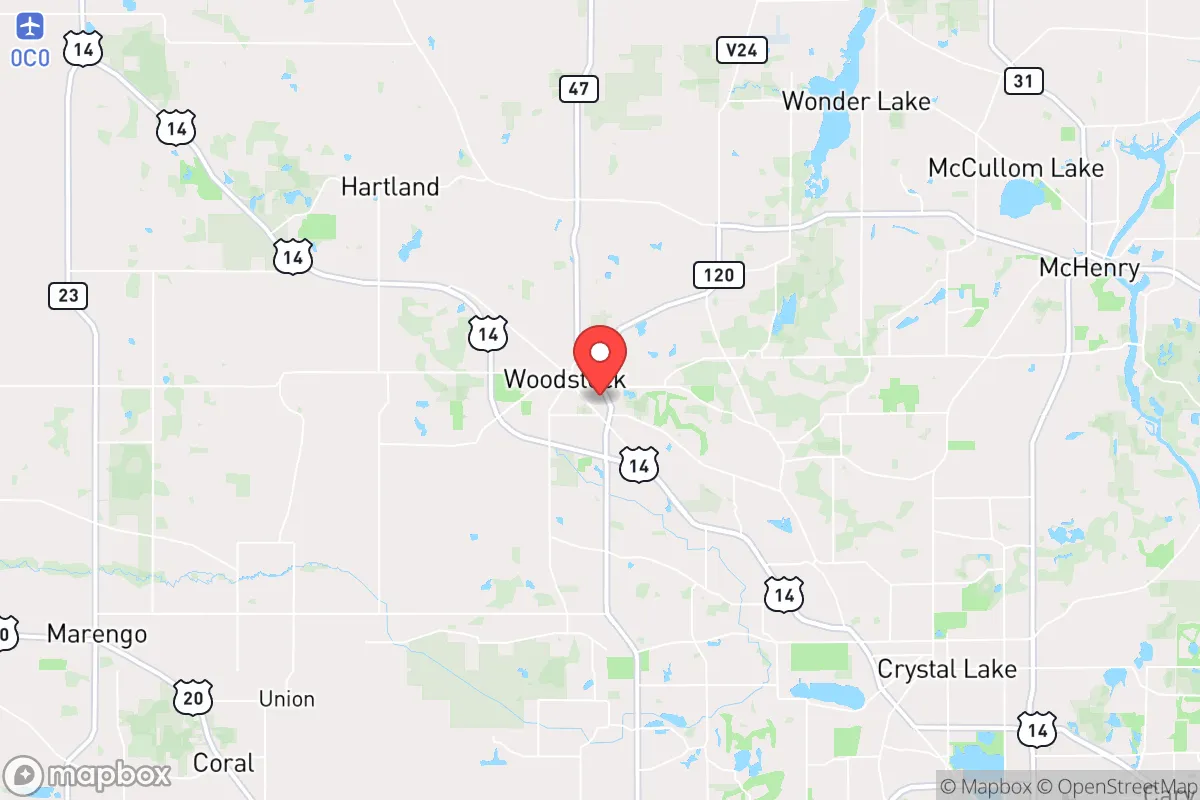
District shown is the primary district for this city’s centroid. Cities may span multiple districts.
Local Political AnalysisPolitical Analysis of Woodstock, IL
Woodstock’s political climate has shifted noticeably over the past decade, but it’s still a place where you’ll find a genuine mix of opinions. The city sits in McHenry County, which has a Cook Partisan Voting Index (PVI) of D+6, meaning it leans about six points more Democratic than the national average. That’s a real change from the early 2000s, when this area was reliably red—you could count on Republican wins in local races without much thought. Now, the Democratic lean is driven largely by growth in the more suburban, commuter-friendly parts of town, especially as folks from the Chicago metro area have moved in seeking more space. The surrounding county still has conservative pockets, but Woodstock itself has become a bit of a purple island in a region that’s slowly trending left.
How it compares
Compared to Illinois as a whole, which has a Cook PVI of D+7, Woodstock is just a hair less Democratic—a difference of one point. That’s a tighter gap than you might expect, given that McHenry County as a whole is often seen as more conservative than the state average. For context, nearby Crystal Lake and Algonquin have similar D+ leans, while towns like Harvard and Marengo to the west still vote more Republican, often by double digits in local races. So Woodstock sits right in the middle: not as blue as Chicago’s Cook County (D+28), but definitely not as red as rural parts of the state like Williamson County (R+30). The practical effect is that you’ll see Democratic candidates win Woodstock precincts by moderate margins—think 55-45—while the county board and sheriff’s races often stay competitive or lean Republican. It’s a place where neither party can take the vote for granted.
What this means for residents
For liberal residents, Woodstock feels increasingly comfortable. You’ll find progressive groups active on issues like environmental policy and local school funding, and the city council has passed measures like a Welcoming City ordinance that aligns with Democratic values. Conservative residents aren’t shut out, though—they still hold seats on the county board and in local township offices, and the area’s gun rights and tax policies tend to be more moderate than in Chicago proper. The real tension shows up in school board elections and zoning debates, where growth and development often split along political lines. Longtime locals sometimes grumble about the changing character of the town, but the shift has been gradual enough that most people just get along day-to-day. You won’t see the kind of heated polarization you’d find in a big city or a deep-red rural county.
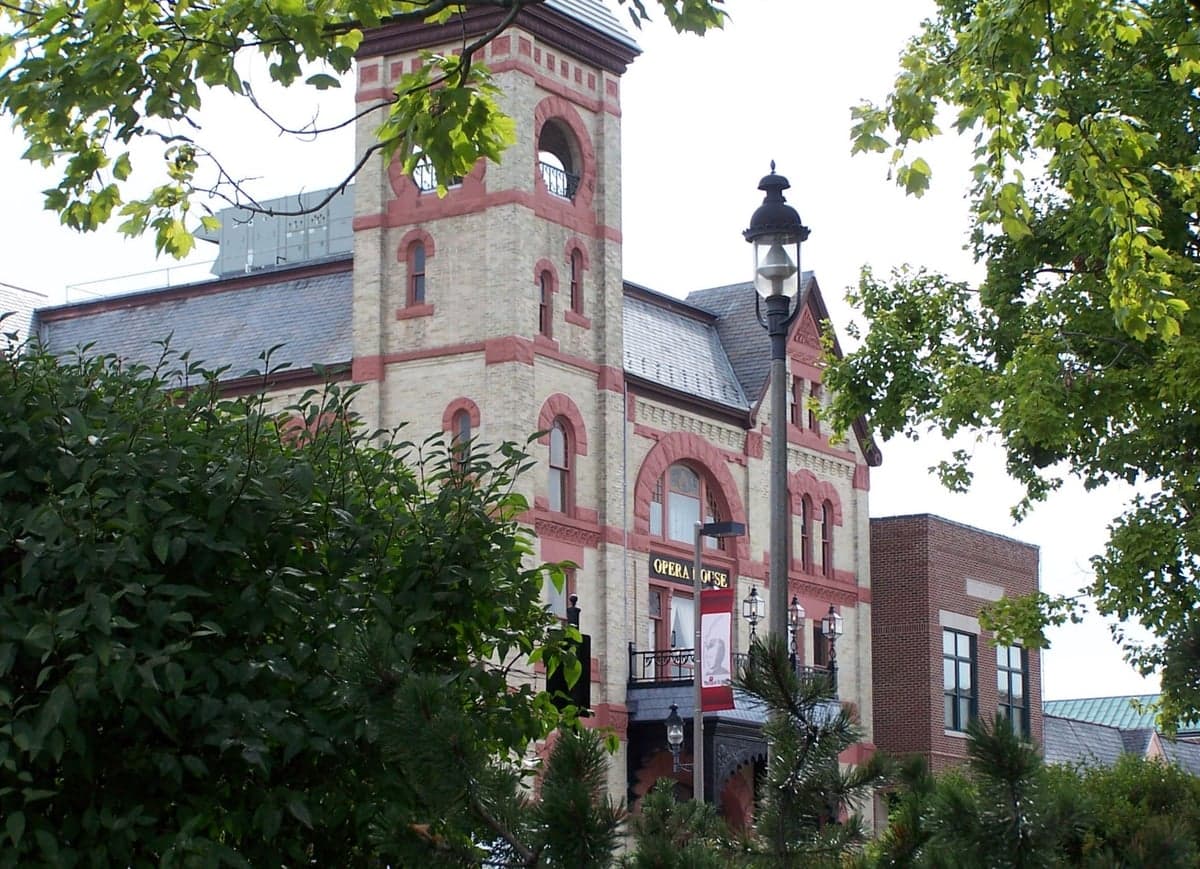
Culturally, Woodstock stands out for its historic square and strong arts scene, which tend to attract a more progressive crowd, but the annual Woodstock Folk Festival and the county fair still draw a broad cross-section. Policy-wise, the city has kept property taxes relatively low compared to nearby Lake County, which appeals to both conservatives and liberals who are cost-conscious. Looking ahead, the trajectory seems likely to continue its slow leftward drift as more commuters and remote workers settle in, but the pace will depend on how the county handles growth and infrastructure. For now, it’s a place where you can have a neighbor with a Trump sign and another with a Harris sign, and both will wave hello at the mailbox. That balance is what makes Woodstock feel less like a political battleground and more like a real community.

State Political ClimatePolitical Climate in Illinois
State Political AnalysisPolitical Environment in the State
Illinois is a solidly Democratic state in presidential elections, with a Cook PVI of D+7, but that top-line number masks one of the most politically divided landscapes in the Midwest. Over the last 20 years, the state has shifted leftward at the statewide level, driven overwhelmingly by the Chicago metro area, while downstate counties have swung hard in the opposite direction, creating a deep urban-rural chasm that defines nearly every policy debate. For a conservative relocator, the reality is that Illinois offers a mix of blue-state governance in Chicago and its suburbs, and a more red-leaning, culturally conservative environment in the rest of the state — but the state government in Springfield consistently leans left.
Urban vs. rural divide
The political map of Illinois is essentially a story of Chicago versus everywhere else. Cook County, home to Chicago, casts about 40% of the state’s vote and reliably delivers margins of 60-70% for Democrats. The collar counties — DuPage, Lake, Kane, McHenry, and Will — have been trending blue over the past decade, with DuPage County flipping from reliably red to competitive, and Lake County now solidly Democratic. Meanwhile, downstate regions like the Metro East (St. Louis suburbs), Peoria, Rockford, and Champaign-Urbana are more mixed, with the latter two leaning blue due to university populations. The rest of the state — vast stretches of central and southern Illinois, including places like Effingham, Mount Vernon, and Carbondale — votes heavily Republican. In 2024, Donald Trump won 92 of Illinois’ 102 counties, but lost the state by 11 points because Cook County alone gave Joe Biden a margin of over 1.2 million votes. The divide is so stark that some downstate counties, like Williamson County in the south, vote 75% Republican, while Chicago precincts hit 85% Democratic.
Policy environment
Illinois’ policy environment is shaped by its Democratic trifecta — the governor, state House, and state Senate have all been under Democratic control since 2019. The state has a progressive income tax structure (flat rate of 4.95% as of 2025, after a failed 2020 attempt to switch to a graduated tax), and property taxes are among the highest in the nation, averaging about 2.1% of home value. Sales tax rates vary by locality but typically land around 8-10%. The regulatory posture is generally business-friendly in name but heavy in practice, with strict environmental rules, a high minimum wage ($15/hour as of 2025), and strong union protections. Education policy is centralized: Chicago Public Schools is under mayoral control, and the state funds schools through a formula that favors poorer districts. Healthcare is broadly accessible, with Medicaid expansion under the Affordable Care Act and a state-run health insurance marketplace. Election laws are among the most liberal in the country: no-excuse mail-in voting, automatic voter registration, and same-day registration are all in place. For conservatives, the policy environment can feel restrictive, particularly on taxes and regulation, but downstate areas often have more local control over zoning and law enforcement.
Recent policy direction
Recent legislation in Illinois has moved decisively leftward on several fronts. In 2023, the state banned assault weapons and high-capacity magazines (the Protect Illinois Communities Act), a law that is currently being challenged in court but remains in effect. Gun rights advocates see this as a major infringement, while supporters cite Chicago’s gun violence rates. On education, Illinois passed a law in 2021 requiring that all public schools teach LGBTQ+ history, and in 2023 expanded parental notification requirements for school library materials — a compromise that pleased neither side fully. On privacy and surveillance, the state has a strong biometric privacy law (BIPA) that has led to large class-action settlements, but no comprehensive data privacy law for consumers. Medical and bodily autonomy: Illinois has codified abortion rights into state law (the Reproductive Health Act of 2019) and has become a regional haven for out-of-state patients, with no waiting periods or mandatory counseling. Property rights are generally respected, but the state’s high property taxes and a 2023 law allowing localities to create “community benefits agreements” for large developments have raised concerns among developers. On voting, Illinois expanded mail-in voting permanently after 2020 and now allows 16- and 17-year-olds to preregister. The overall direction is toward more state-level regulation and social liberalism, with the notable exception of the gun ban, which is a flashpoint.
Civil unrest & political movements
Illinois has a history of organized political activism on both sides. The 2020 George Floyd protests in Chicago were among the largest in the country, with some looting and property damage that led to a lasting debate over public safety. The state is a sanctuary state for undocumented immigrants, with the TRUST Act (2017) and the Illinois Way Forward Act (2021) limiting local law enforcement cooperation with federal immigration authorities. This has created tension in downstate communities like Effingham and Mount Vernon, where local officials have passed resolutions opposing sanctuary policies. On the right, the Illinois State Rifle Association and the Illinois Family Institute are active, and there have been periodic “secession” movements in downstate counties — most notably a 2020 proposal to form a new state called “New Illinois” from 46 mostly rural counties, though it has no legislative path. Election integrity controversies have been muted compared to other states, but some downstate counties have refused to use state-run automatic voter registration systems. Visible flashpoints include the annual Chicago Pride Parade, which draws large crowds and counter-protests, and the ongoing debate over the assault weapons ban, which has led to lawsuits and local “sanctuary” resolutions in some downstate counties.
Projection
Over the next 5-10 years, Illinois is likely to remain a Democratic stronghold at the statewide level, but the urban-rural divide will deepen. Chicago’s population has been declining slowly (down about 2% since 2020), but the suburbs are growing, and the collar counties are becoming more Democratic as younger, more diverse residents move in. Downstate, population loss is accelerating in many rural counties, which will reduce their political clout. In-migration from other states is net negative — Illinois loses about 30,000 residents per year to other states, mostly to Florida, Texas, and Indiana — but the people moving in tend to be younger and more diverse, often settling in the Chicago metro. For a conservative relocator, the practical implication is that the state government will likely stay left of center, with continued tax increases and regulatory expansion. However, downstate areas will remain culturally conservative, and local elections in those regions will continue to be dominated by Republicans. The gun ban is likely to remain in place, but may be narrowed by courts. Property taxes are unlikely to decrease, given pension obligations. A new resident moving to, say, Naperville or Springfield will find a different political reality than someone moving to Effingham or Mount Vernon.
For a conservative relocator, the bottom line is that Illinois offers a mixed bag: you can find a community that aligns with your values in many downstate areas, but you will be living under a state government that is consistently Democratic and increasingly progressive on social and economic policy. Property taxes are a major burden, and the gun ban is a dealbreaker for some. On the plus side, the state has strong infrastructure, world-class universities, and a diverse economy. If you’re willing to accept the trade-offs — and you choose your county carefully — Illinois can work, but it’s not a state where conservatives will feel the political winds at their back.
* Values derived from national, state, county, city and local statistics and may differ in a specific area. Last updated: 2026-09-03T21:01:44.000Z
Narrative content on this page is AI-generated and may contain mistakes. Verify any details that matter before acting on them.
ReloMaps may earn a commission from affiliate links at no extra cost to you.

