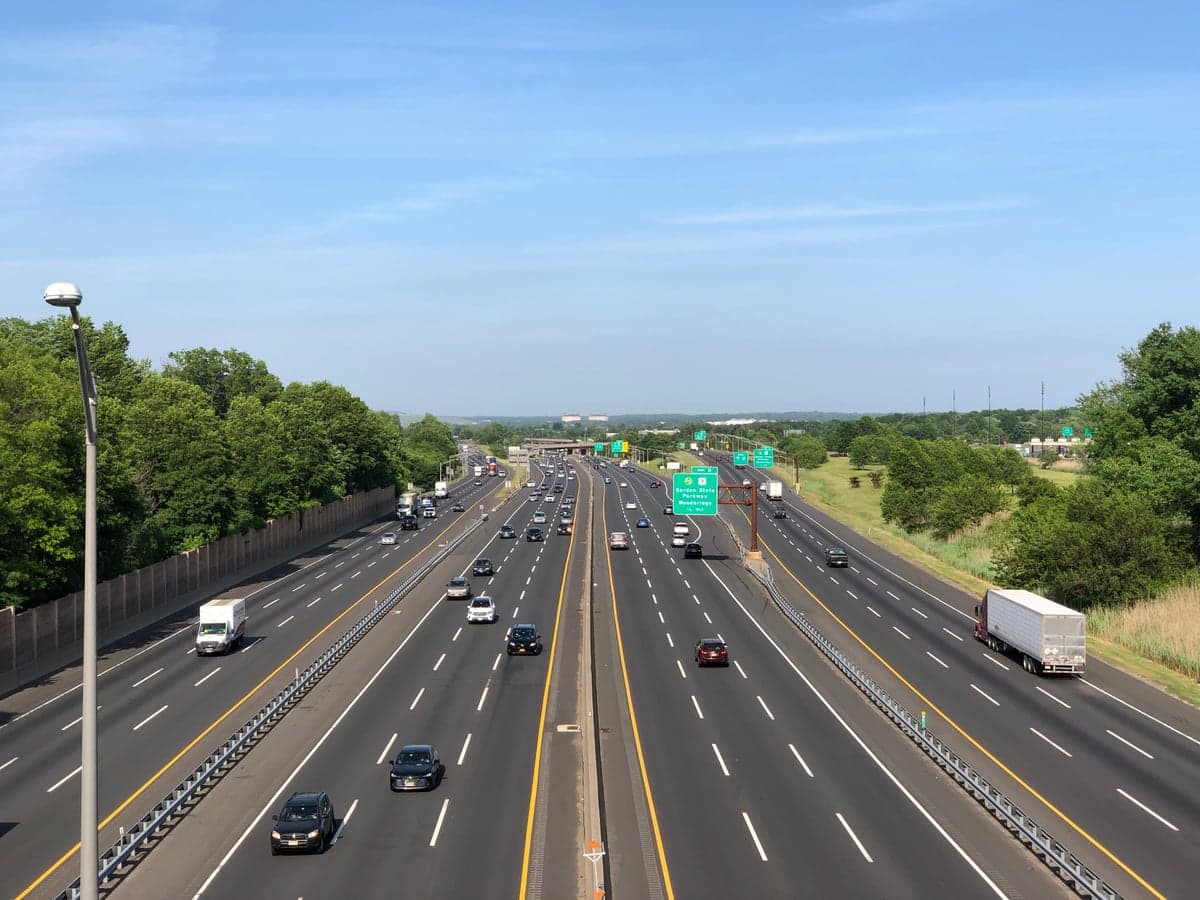
Photo: Wikipedia
Political ClimatePolitical Climate in Woodbridge Township, NJ
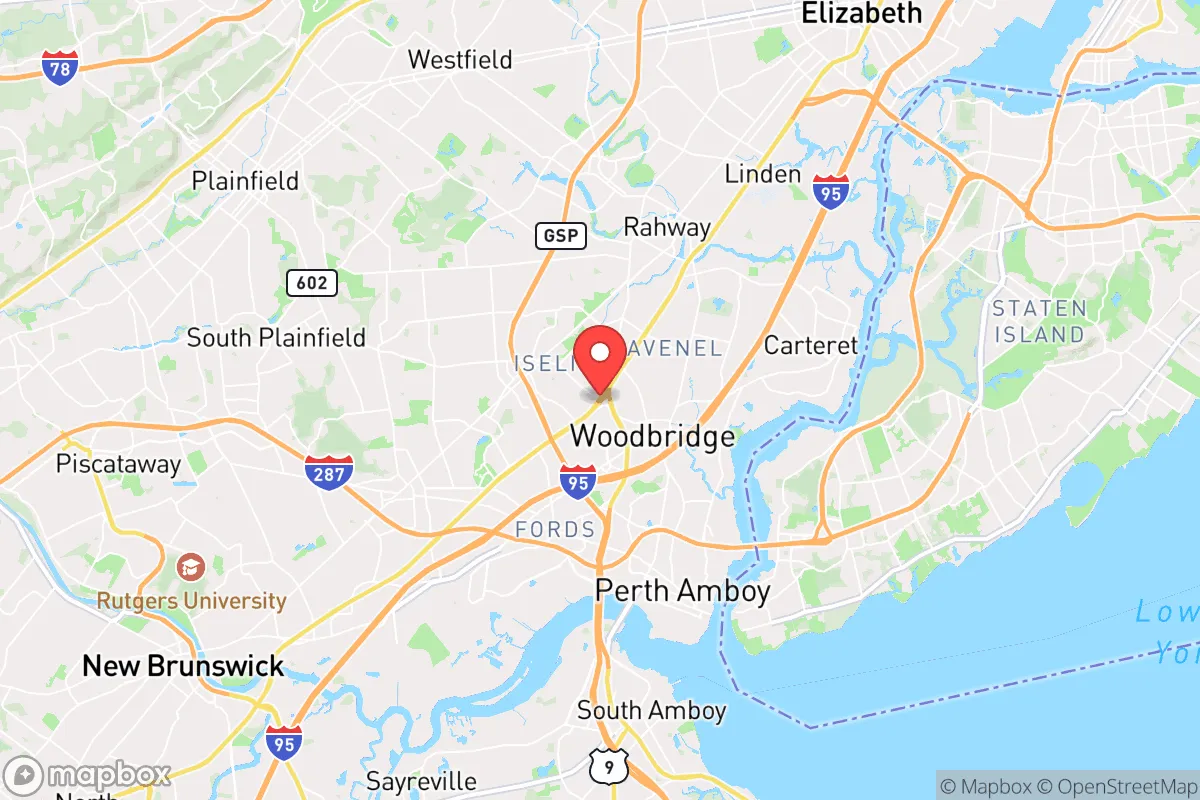
District shown is the primary district for this city’s centroid. Cities may span multiple districts.
Local Political AnalysisPolitical Analysis of Woodbridge Township, NJ
Woodbridge Township has been a reliably Democratic stronghold for decades, and that hasn't changed much. The area's Cook Partisan Voting Index (PVI) of D+5 means it leans about five points more Democratic than the national average, which is exactly the same lean as the state of New Jersey as a whole. In practice, that means Democrats win most local and federal races here by comfortable margins, but it's not a deep-blue lock like Newark or Jersey City. The township's politics are shaped by a mix of union households, public sector workers, and a growing population of commuters who work in New York or Philadelphia, which keeps the Democratic base solid but not radical.
How it compares
Woodbridge's D+5 PVI is identical to New Jersey's statewide D+5, so the township is a perfect mirror of the state's overall political center of gravity. But that doesn't mean it feels the same as everywhere else in New Jersey. Drive 15 minutes west to Edison or Piscataway, and you'll find a similar Democratic lean, but with a heavier influence from Asian-American and Indian-American voters who often prioritize different local issues like school funding and small business regulations. Head south to Old Bridge or east to Staten Island, and the politics shift noticeably more conservative. Woodbridge sits in a kind of political sweet spot: it's Democratic enough to feel safe for liberal residents, but not so far left that conservatives feel completely out of place. The township's local elections are often decided in Democratic primaries, which means the real political action happens in the spring, not the fall. Republicans do run candidates, but they rarely win township-wide races, though they can pick up a seat or two on the council in low-turnout years.
What this means for residents
For liberal residents, Woodbridge is a comfortable place to live politically. You'll find Democratic Party events at the local VFW hall, and your neighbors are likely to share your views on national issues like healthcare and climate policy. The township's Democratic machine is well-organized, so if you want to get involved in local politics, there's a clear path through the county committee or the local Democratic club. For conservative residents, it's a different story. You won't be ostracized, but you'll be in the minority. The local Republican club is small but active, and conservative voters often find their voice on specific issues like property taxes (which are high here, as in most of New Jersey) and school board decisions. The key is that Woodbridge's politics are pragmatic, not ideological. The Democratic majority tends to focus on bread-and-butter issues like road repairs, garbage collection, and keeping the township's finances stable, rather than pushing a progressive agenda that would alienate the sizable moderate and conservative minority.
One cultural distinction that sets Woodbridge apart from some of its neighbors is the strong influence of the Italian-American and Irish-American communities, which have historically been more socially conservative than the national Democratic Party. That means you'll see a mix of "Blue Lives Matter" flags and Biden-Harris signs in the same neighborhood. The township also has a growing Hispanic population, which is shifting the political conversation toward housing affordability and immigrant services. Looking ahead, Woodbridge's political trajectory is likely to stay steady—D+5 isn't going anywhere fast. The township's demographics are stable, and the local economy is anchored by the Woodbridge Center mall, the nearby port, and commuter access to the Northeast Corridor. If anything, the area might drift slightly left as younger, more diverse families move in, but don't expect a dramatic shift. For both liberals and conservatives, Woodbridge offers a political climate that's predictable, moderate, and focused on local quality-of-life issues rather than national culture wars.

State Political ClimatePolitical Climate in New Jersey
State Political AnalysisPolitical Environment in the State
New Jersey has a solid Democratic lean, with a Cook PVI of D+5, but that number doesn't capture the full picture. The state has been reliably blue in presidential elections since 1992, but the margin has tightened in recent cycles — from a 14-point Biden win in 2020 to a roughly 6-point margin for Harris in 2024. What makes New Jersey politically unique is its deeply entrenched suburban moderate-to-liberal consensus, combined with a surprisingly resilient conservative streak in its rural and shore communities. For a conservative-leaning relocator, the state offers a mixed bag: high taxes and progressive policies in the core, but pockets of genuine red territory and a political culture that values pragmatism over ideology.
Urban vs. rural divide
The political map of New Jersey is a textbook case of the urban-rural split, but with a twist. The Democratic stronghold is the northeastern corridor — Newark, Jersey City, Paterson, and Elizabeth — where dense, diverse, and heavily unionized populations deliver massive margins. These cities, along with the inner-ring suburbs of Montclair and Maplewood, are the engine of the state's blue lean. In contrast, the rural northwest and southern interior — places like Sussex County, Hunterdon County, and Salem County — vote reliably Republican, often by 20-30 points. The shore counties are the battleground: Ocean County is a GOP stronghold (Trump won it by 18 points in 2024), while Monmouth and Burlington are classic swing suburbs that have trended blue but still elect moderate Republicans locally. The real story is the suburban shift: towns like Morristown and Red Bank that were once purple are now solidly blue, driven by college-educated professionals moving in from New York City.
Policy environment
New Jersey's policy environment is defined by its aggressive tax-and-spend posture. The state has the highest property taxes in the nation (averaging over $9,500 annually), a progressive income tax with a top rate of 10.75%, and a sales tax of 6.625%. Regulatory burdens are heavy — the state has its own environmental standards that often exceed federal ones, and its gun laws are among the strictest in the country, including a permit-to-purchase requirement, a ban on "assault weapons," and a 10-round magazine limit. Education policy is centralized and well-funded: per-pupil spending is the highest in the nation, but school choice is limited, with only a small charter school sector and no voucher program. Healthcare is heavily regulated, with a state-based insurance exchange and Medicaid expansion. Election laws are liberal: no-excuse mail-in voting, automatic voter registration, and same-day registration are all in place. For a conservative, the policy environment feels like a wall of mandates and costs, though the state's infrastructure and services are correspondingly robust.
Recent policy direction
The last five years have seen New Jersey accelerate its progressive agenda. In 2022, the state passed a law requiring all public schools to teach LGBTQ+ history, and in 2023 it expanded paid family leave to 12 weeks. On gun control, the 2022 "Gun Safety Package" tightened licensing and storage requirements, and a 2024 law banned carrying firearms in "sensitive places" like parks and libraries — a law currently being challenged in court. Property rights have been constrained by the state's aggressive affordable housing mandates, which force towns to zone for multi-family units. Medical and bodily autonomy is protected: abortion is legal up to viability, and a 2022 law shields providers from out-of-state lawsuits. On privacy, the state passed a comprehensive data privacy law in 2023, but surveillance is expanding — the state police use automated license plate readers and facial recognition. Voting access has been liberalized further: the 2020 election saw universal mail-in ballots, and a 2024 law made it permanent. For a conservative, the direction is clear: more regulation, higher costs, and less local control.
Civil unrest & political movements
New Jersey is not a hotbed of civil unrest, but it has its flashpoints. The 2020 Black Lives Matter protests were large and mostly peaceful in Newark and Jersey City, with some property damage in Trenton. The state's sanctuary policy — a 2018 executive order limiting cooperation with ICE — has been a persistent source of tension, especially in suburban towns like Freehold and Jackson where immigration enforcement is a local issue. On the right, the "New Jersey 2nd Amendment Society" has been active in organizing protests against gun laws, and the state's chapter of Moms for Liberty has gained traction in school board races in Ocean County and Morris County. Election integrity controversies have been muted compared to swing states, but the 2020 and 2024 cycles saw Republican complaints about mail-in ballot processing in Democratic strongholds like Essex County. The most visible political movement is the "Tax Revolt" — a loose coalition of property owners and small businesses pushing for a state spending cap, which has gained some traction in local elections but little at the state level.
Projection
Over the next 5-10 years, New Jersey's political trajectory is likely to remain blue, but with a narrowing margin. The key demographic shift is out-migration: the state lost population in 2020-2023 for the first time in decades, with many departing for Florida, Texas, and the Carolinas — a trend that disproportionately affects conservative-leaning families. The remaining population is aging, more diverse, and more urban, which favors Democrats. However, the state's high cost of living is creating a backlash: property tax increases are becoming a dominant issue in local elections, and there is growing bipartisan support for a state spending cap. The wild card is the suburbs: if the trend of college-educated voters moving in from New York continues, the state will get bluer; if remote work collapses and those workers leave, it could swing back toward purple. For a conservative moving in now, expect a decade of continued progressive governance, but with a growing tax revolt that could produce some moderation on fiscal issues.
For a new resident, the bottom line is this: New Jersey is a high-cost, high-regulation state where your vote in a presidential election will be largely symbolic, but your vote in local races — especially for county commissioner or school board — can have real impact. Conservatives will find like-minded communities in the rural northwest and shore counties, and the state's strong economy and excellent schools are genuine draws. But the tax burden and policy direction are unlikely to change significantly in the near term. If you value low taxes, gun rights, and local control, New Jersey will be a constant frustration. If you can afford the cost and prioritize good schools, infrastructure, and proximity to New York or Philadelphia, it remains a functional, if expensive, place to live.
* Values derived from national, state, county, city and local statistics and may differ in a specific area. Last updated: 2026-09-20T22:03:36.000Z
Narrative content on this page is AI-generated and may contain mistakes. Verify any details that matter before acting on them.
ReloMaps may earn a commission from affiliate links at no extra cost to you.

