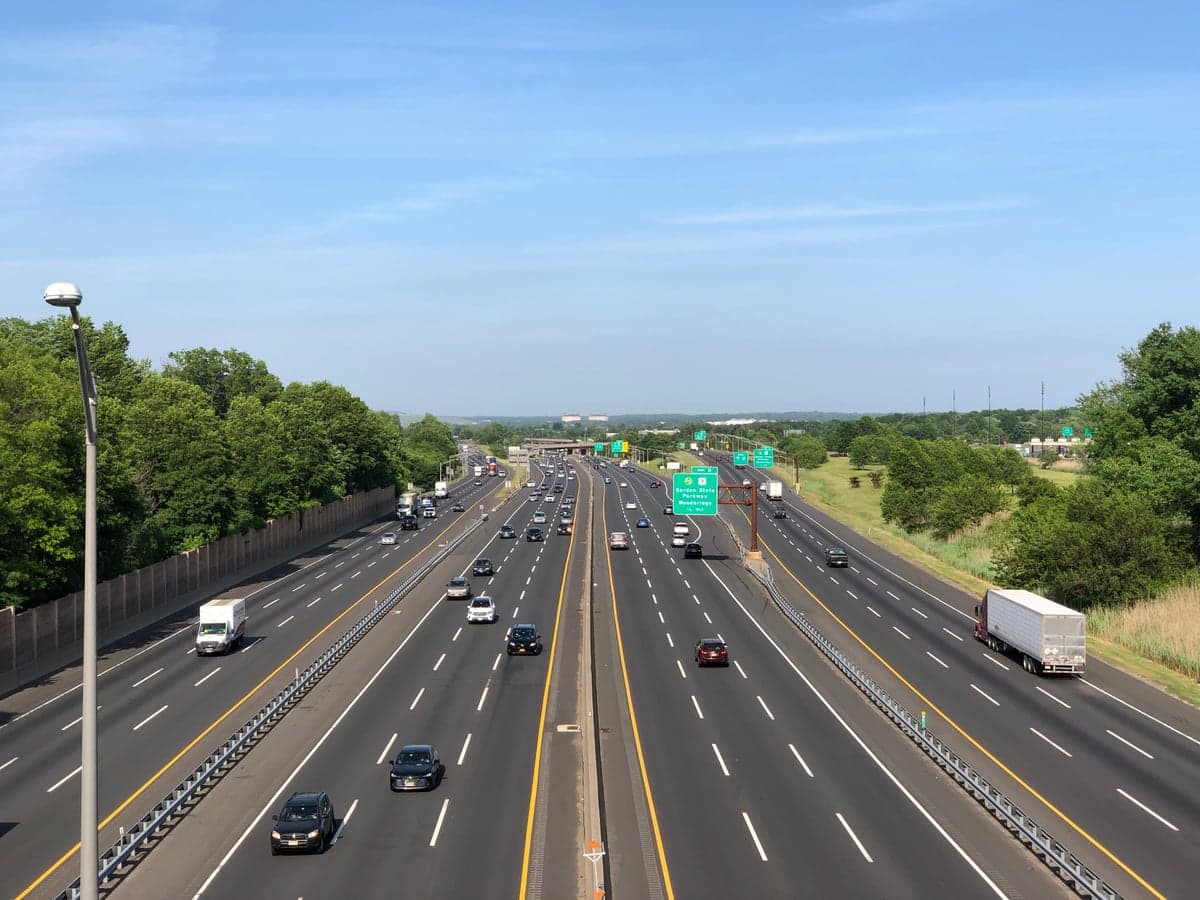
Photo: Wikipedia
Personal Sovereignty in Woodbridge Township, NJ
Viable for self-reliance. Generally workable, though some barriers may limit total independence.
What does Personal Sovereignty tell us?
Personal Sovereignty measures your capacity for self-reliance and independence with minimal government friction. Higher scores mean fewer barriers between you and the way you want to live... but it assumes you have the space you need and good neighbors.
What does this tell us?
Personal Sovereignty measures your capacity for self-reliance and independence with minimal government friction. Higher scores mean fewer barriers between you and the way you want to live... but it assumes you have the space you need and good neighbors.
State Policy
Energy independence: Importer (8% of energy produced in-state)
Personal Liberty
Homesteading

Personal Liberty Analysis
Woodbridge Township, New Jersey, presents a challenging environment for those prioritizing personal sovereignty, as the state's dense regulatory framework, high tax burden, and restrictive gun laws significantly limit individual autonomy compared to much of the United States. While the township offers the convenience of proximity to New York City and a diverse suburban setting, residents face one of the nation's highest combined state and local tax loads, a complex web of state-level mandates on property use, and some of the strictest self-defense laws in the country. For a single individual or family weighing relocation, Woodbridge represents a trade-off: access to dense economic and cultural hubs in exchange for a heavily managed personal and financial life. This analysis breaks down the specific constraints on tax burden, self-defense, homesteading, and personal liberties that define the sovereignty landscape here.
Tax burden and regulatory posture: What you pay and what you can do
Woodbridge Township sits in Middlesex County, where the effective property tax rate hovers around 2.3% of assessed home value, among the highest in the nation. On a median home value of roughly $400,000, that translates to an annual property tax bill near $9,200. This is compounded by New Jersey's progressive income tax, which tops out at 10.75% for high earners, and a state sales tax of 6.625%. The regulatory posture is equally heavy: the state's Municipal Land Use Law gives towns broad authority over zoning, building permits, and environmental reviews, meaning any home renovation, fence installation, or new construction requires multiple layers of approval. Woodbridge's own zoning code is detailed, with strict setback requirements, lot coverage limits, and a lengthy permit process for even minor alterations. For a homeowner wanting to add a workshop, install solar panels, or run a home-based business, the bureaucratic friction is real and time-consuming. The state's COAH (Council on Affordable Housing) mandates also pressure towns to approve higher-density developments, which can conflict with a property owner's desire for low-density, self-sufficient living. In short, the tax and regulatory environment here is designed for a managed, high-service community, not for maximum individual financial or operational freedom.
Self-defense and gun law specifics: What the Second Amendment looks like here
New Jersey is a "may-issue" state for concealed carry, and even after the 2022 Supreme Court decision in Bruen, the state has enacted some of the most restrictive carry laws in the country. Woodbridge residents face a mandatory 10-day waiting period for handgun purchases, a requirement to obtain a Firearms Purchaser Identification Card (FPID) for long guns, and a separate permit for each handgun purchase (limited to one per 30 days). The state's "sensitive places" law bans carry in a vast array of locations, including parks, public transit, restaurants that serve alcohol, and private property without explicit owner permission. For home defense, the legal landscape is more permissive: a firearm kept in the home does not require a carry permit, but storage laws mandate that firearms be secured with a trigger lock or in a locked container, and ammunition stored separately. Use-of-force laws in New Jersey do not include a "stand your ground" provision; instead, a duty to retreat applies outside the home. This means that in a confrontation on your own property (outside the home), you are legally required to retreat if safe to do so before using deadly force. For a self-defense-minded individual, Woodbridge and New Jersey as a whole impose significant legal hurdles and potential criminal liability for defensive gun use, making it one of the least accommodating states for armed self-reliance.
Self-reliance and homesteading viability: Lot sizes, zoning, and off-grid feasibility
Woodbridge is a densely developed suburban township with a median lot size of roughly 0.15 to 0.25 acres in most residential zones. Zoning codes prohibit keeping livestock, poultry, or bees on standard residential lots, and any agricultural activity is limited to properties zoned for farming, which are rare and expensive. The township's code also restricts the use of outbuildings, sheds, and accessory structures to specific sizes and setbacks, making a serious homesteading operation impractical. Off-grid living is effectively illegal: the township requires connection to municipal water and sewer systems in nearly all residential areas, and solar panel installations must be grid-tied with utility approval. Rainwater harvesting is permitted only for non-potable uses and is subject to state Department of Environmental Protection regulations. Backup generators are allowed but must comply with noise ordinances that limit operation hours and decibel levels. For someone seeking to grow a substantial portion of their own food, keep animals, or disconnect from utilities, Woodbridge is a poor fit. The environment is designed for a conventional suburban lifestyle where residents rely on municipal services, not self-sufficiency.
Personal liberties: Parental rights, medical autonomy, speech, and property
New Jersey's legal framework generally prioritizes state authority over individual or parental decision-making. In education, the state mandates comprehensive sex education and LGBTQ-inclusive curriculum standards, and parents do not have a blanket right to opt their children out of specific lessons—only from instruction on "human reproduction and family life" with a written request. Medical autonomy is similarly constrained: the state has broad vaccine mandates for school attendance, and during public health emergencies, the governor holds significant power to issue executive orders that can override individual medical choices. On speech, New Jersey's anti-bullying and hate-crime laws are among the nation's most expansive, and while the First Amendment applies, the state's legal environment can chill certain types of expression, particularly on social media or in public forums. Property rights are heavily circumscribed by the state's environmental regulations, including the Freshwater Wetlands Protection Act and the Coastal Area Facility Review Act (CAFRA), which can restrict development and land use even on private property. Eminent domain is used regularly for redevelopment projects, and Woodbridge has a history of using its redevelopment powers to acquire private property for commercial or mixed-use projects. For a reader who values maximum personal discretion in education, health, speech, and property use, New Jersey's posture is decidedly interventionist.
Overall, Woodbridge Township offers a low level of personal sovereignty relative to most of the United States. The combination of a heavy tax burden, restrictive gun laws, prohibitive zoning for self-reliance, and a legal culture that prioritizes state authority over individual autonomy places it near the bottom among U.S. suburbs for those seeking independence. For a family or individual who values personal freedom above all else, states like Texas, Florida, or New Hampshire would provide a far more permissive environment. However, for someone who is willing to trade significant autonomy for the economic opportunities and cultural amenities of the New York metropolitan area, Woodbridge is a functional, if tightly managed, place to live. The key is understanding that every major life decision here—from buying a firearm to building a shed to educating your children—will involve navigating a dense, state-imposed regulatory system.

* Values derived from national, state, county, city and local statistics and may differ in a specific area. Last updated: 2026-09-20T22:03:36.000Z
Narrative content on this page is AI-generated and may contain mistakes. Verify any details that matter before acting on them.
ReloMaps may earn a commission from affiliate links at no extra cost to you.

