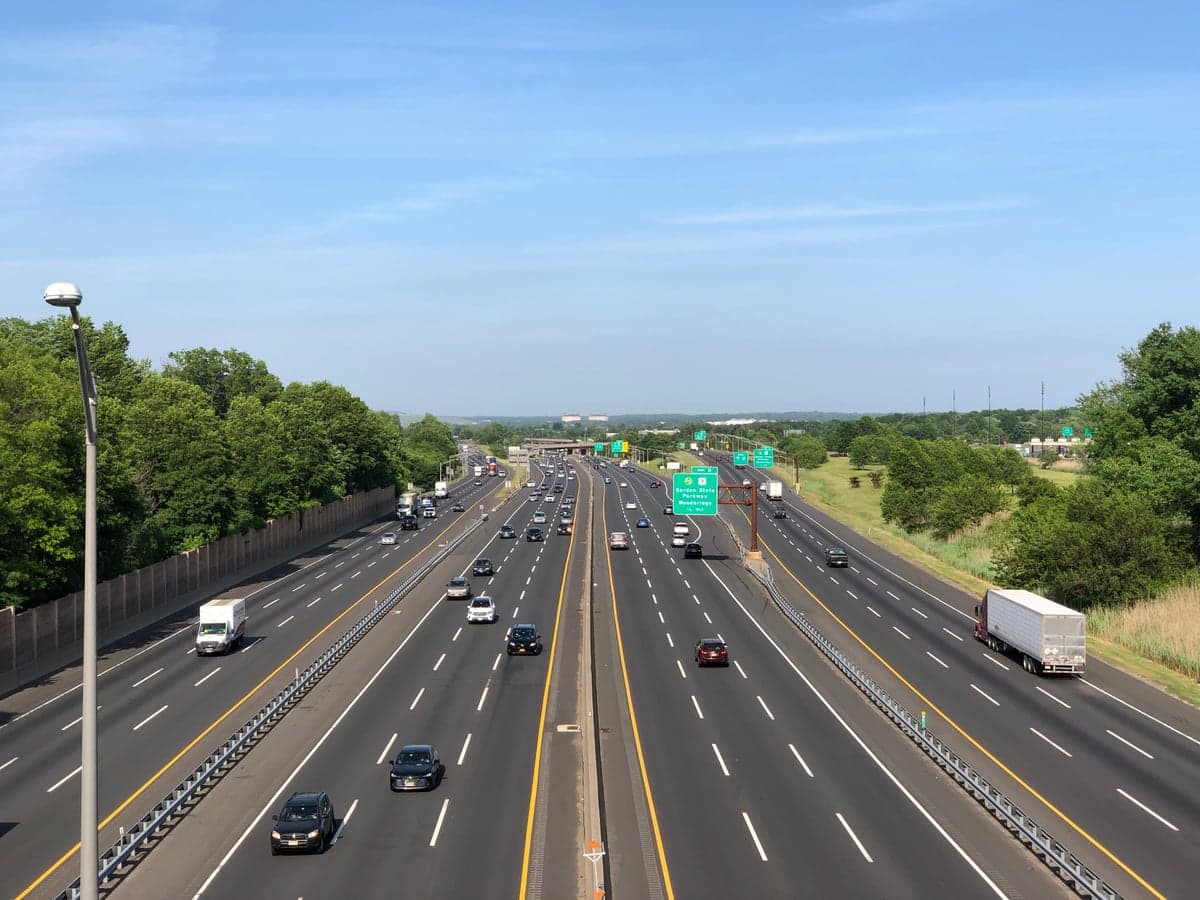
Photo: Wikipedia
Demographics of Woodbridge Township, NJ
Affluence Level in Woodbridge Township, NJ
A middle-class area roughly in line with national averages across income, home values, education, and employment.
People of Woodbridge Township, NJ
Woodbridge Township, New Jersey, is a densely populated, racially and economically diverse suburban community of just under 30,000 residents, where no single ethnic group holds a majority. The city is characterized by a strong sense of local identity rooted in its historic villages, a significant Black and Hispanic population that together form a majority, and a growing Indian and East/Southeast Asian presence. Its residents are a mix of long-standing working-class families, recent immigrants, and professionals commuting to New York City and Newark, giving Woodbridge a distinctly blue-collar, multicultural character that sets it apart from more homogeneous neighboring suburbs.
How the city was settled and grew
Woodbridge’s population history begins with its founding in 1669 as part of the Elizabethtown Tract, one of the earliest English settlements in New Jersey. The original settlers were primarily English and Dutch farmers, drawn by the fertile land along the Arthur Kill and the Raritan River. The township’s historic villages—Woodbridge Proper, Avenel, and Iselin—were established as distinct hamlets, each centered around a church, a mill, or a tavern. The arrival of the railroad in the 1830s transformed Woodbridge from an agricultural outpost into a commuter suburb, attracting Irish and German immigrants who worked on the rails and in local brickyards. By the early 20th century, Italian and Polish families began settling in Fords and Colonia, drawn by jobs in the township’s growing clay, brick, and chemical industries. These groups built the dense, walkable neighborhoods of single-family homes and corner stores that still define much of the township’s character. The post-World War II boom accelerated suburbanization, with returning veterans and their families moving into new developments in Sewaren and Port Reading, cementing Woodbridge’s reputation as a stable, middle-class, largely white community through the 1960s.
Modern era (post-1965)
The 1965 Hart-Cellar Immigration Act, combined with the decline of local manufacturing, reshaped Woodbridge’s population dramatically. The white population, which had been over 90% as late as 1970, began a steady decline as families moved to outer-ring suburbs. In their place, Black families—many from nearby Newark and Elizabeth—moved into Woodbridge Proper and Avenel, drawn by affordable housing and proximity to the Garden State Parkway. By the 1990s, Hispanic immigration—primarily from Puerto Rico, the Dominican Republic, and Central America—accelerated, with Iselin and Fords becoming key entry points. Today, the township’s population is 28.0% White, 30.7% Black, and 28.2% Hispanic, making it one of the most evenly tri-ethnic communities in Middlesex County. More recently, Indian immigrants (3.9% of the population) and East/Southeast Asian communities (2.9%) have concentrated in Iselin and Colonia, drawn by the area’s strong school system and proximity to the Edison–Iselin Indian commercial corridor. The foreign-born share stands at 7.6%, reflecting a steady but moderate immigration flow compared to neighboring Edison or Jersey City.
The future
Woodbridge’s population is trending toward greater diversity, with the white share projected to continue declining as the Hispanic and Black populations grow modestly. The Indian and East/Southeast Asian shares, while still small, are increasing as families seek more affordable alternatives to Edison and Piscataway. New multifamily developments near the Woodbridge Center Mall and the Metropark train station are attracting younger professionals and empty-nesters, dispersing new residents across the township rather than concentrating them in a single enclave. The cultural identity is evolving from a historically white, blue-collar suburb into a multiethnic, middle-class community where no group dominates. For someone moving in now, Woodbridge offers a genuinely integrated environment with strong public schools, convenient transit, and a cost of living that remains lower than many neighboring towns—but also faces the challenges of aging infrastructure and the need to maintain social cohesion across its diverse neighborhoods.

* Values derived from national, state, county, city and local statistics and may differ in a specific area. Last updated: 2026-09-20T22:03:36.000Z
Narrative content on this page is AI-generated and may contain mistakes. Verify any details that matter before acting on them.
ReloMaps may earn a commission from affiliate links at no extra cost to you.

