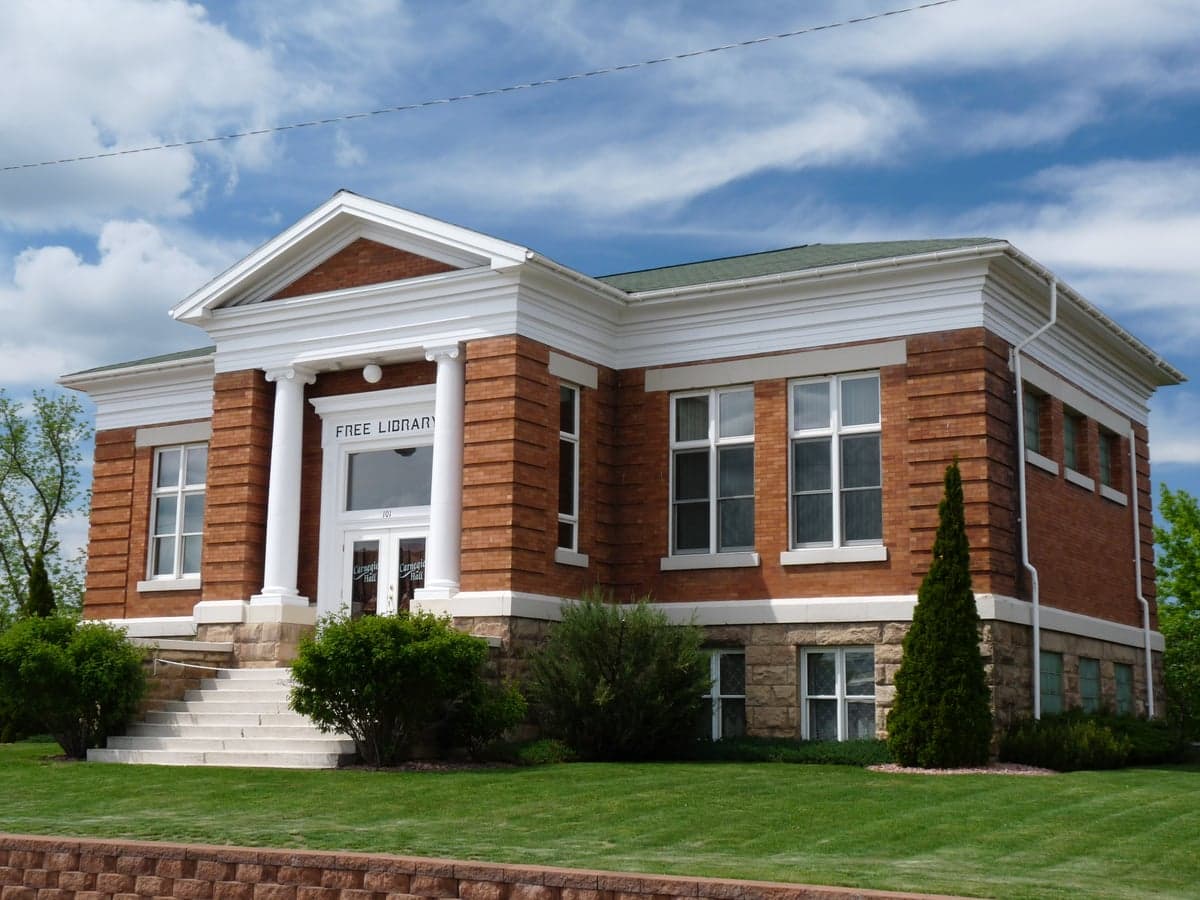
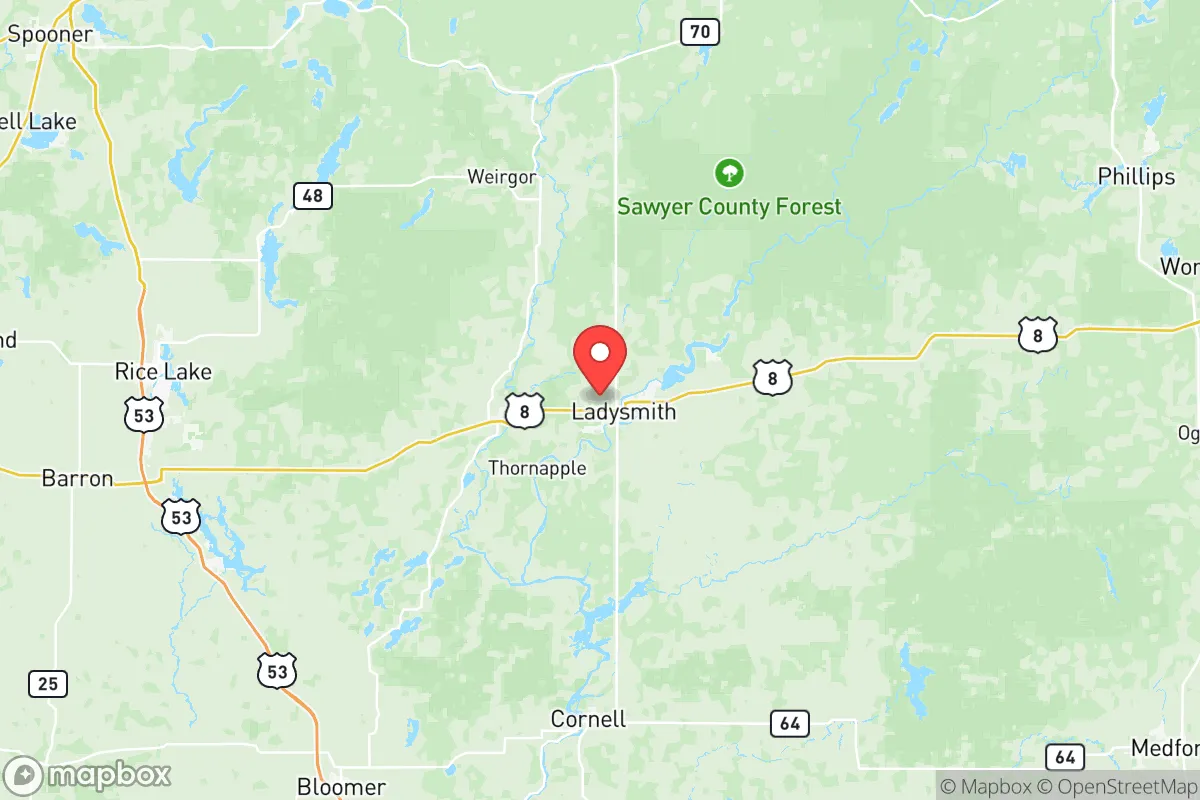
Photo: Wikipedia
Personal Sovereignty in Rusk County
Moderate friction. Expect trade-offs in some aspect of personal liberty and independence.
What does Personal Sovereignty tell us?
Personal Sovereignty measures your capacity for self-reliance and independence with minimal government friction. Higher scores mean fewer barriers between you and the way you want to live... but it assumes you have the space you need and good neighbors.
What does this tell us?
Personal Sovereignty measures your capacity for self-reliance and independence with minimal government friction. Higher scores mean fewer barriers between you and the way you want to live... but it assumes you have the space you need and good neighbors.
State Policy
Energy independence: Importer (15% of energy produced in-state)
Personal Liberty
Homesteading

Personal Liberty Analysis
Rusk County, Wisconsin, offers a notably high degree of personal sovereignty, grounded in a low-tax, low-regulation environment that appeals to those prioritizing self-reliance and minimal government interference. Located in the rural northwestern part of the state, the county’s ethos is shaped by its small-town character, with communities like Ladysmith, Hawkins, and Bruce fostering a culture where individual autonomy is the default. For a relocation audience with a slightly conservative leaning, the area’s combination of light regulatory touch, strong Second Amendment protections, and viable off-grid living options positions it as a standout in Wisconsin for those seeking to maximize personal freedom.
Tax burden and regulatory posture in Rusk County
Rusk County’s tax burden is among the lighter in Wisconsin, a state already known for relatively moderate property taxes compared to neighbors like Minnesota. The county’s property tax rate hovers around $18.50 per $1,000 of assessed value, which is below the state average of roughly $22.00, according to 2025 Wisconsin Department of Revenue data. This is particularly favorable in towns like Ladysmith, the county seat, where mill rates are kept low due to minimal municipal spending. The regulatory posture is equally restrained: the county has no zoning overlay in unincorporated areas, meaning that in townships such as Hawkins and Tony, residents can build, fence, or operate small businesses without county-level permits for most uses. The state’s income tax is a flat 4.4% for all brackets, and sales tax is 5% (plus a 0.5% county tax), keeping the overall tax bite manageable. For a family or individual, this means more disposable income and fewer bureaucratic hurdles for property improvements or small-scale enterprises.
Self-defense and gun law specifics in Rusk County
Wisconsin is a shall-issue state for concealed carry, and Rusk County’s sheriff’s office processes permits efficiently, typically within 30 days. The county is home to a robust gun culture, with multiple shooting ranges near Bruce and Ladysmith, and no county-level restrictions on firearm types or magazine capacities beyond state law. State law preempts local firearm ordinances, so municipalities like Glen Flora and Weyerhaeuser cannot impose their own bans or waiting periods. Stand-your-ground laws are in effect, with no duty to retreat in any place where a person is lawfully present. Open carry is legal without a permit, and the county’s rural nature means that many residents carry for personal protection and hunting. The sheriff’s office publicly supports Second Amendment rights, and there is no history of aggressive enforcement of state red-flag laws in the county, though the state’s 2014 extreme risk protection order statute exists on paper. For a self-defense-minded individual, Rusk County offers a permissive legal environment with minimal local friction.
Self-reliance and homesteading viability in Rusk County
Rusk County is a prime location for homesteading and off-grid living, thanks to its abundant land and lenient zoning. Minimum lot sizes in unincorporated townships like Hawkins and Tony are typically 5 acres, but many parcels available for sale are 20 to 40 acres, with prices averaging $2,500 to $4,000 per acre as of 2026—significantly cheaper than in central or southern Wisconsin. Off-grid feasibility is high: the county has no building code enforcement outside incorporated villages, meaning structures like cabins, sheds, or tiny homes can be erected without permits in most rural areas. Wells and septic systems require state-level permits (roughly $500–$1,000 combined), but there are no county-level restrictions on rainwater collection or solar panel installation. In Ladysmith, the largest town, zoning is more structured, but even there, backyard chickens and small gardens are allowed without special permits. For those seeking true self-reliance, the area’s low population density (about 14 people per square mile) and abundant timber and water resources make it viable for hunting, foraging, and small-scale agriculture.
Personal liberties in Rusk County: parental rights, medical autonomy, and property
Personal liberties in Rusk County are broadly protected by state law and local culture. Parental rights are strong: Wisconsin’s 2023 Act 1, which expanded parental oversight of school curricula and medical decisions, is widely supported in the county. School districts like Ladysmith-Hawkins and Bruce have not implemented mask or vaccine mandates since 2021, and parents can opt children out of sex education or health surveys without pushback. Medical autonomy is similarly respected; the county has no local vaccine mandates, and the nearest major hospital, Marshfield Medical Center in Ladysmith, does not enforce COVID-19 vaccine requirements for patients. Speech and property rights are robust: there are no county-level noise ordinances in rural areas, and residents can display political signs or flags without restriction. Property rights are protected by state law limiting eminent domain to public utilities and roads, and the county’s tax deed sales are rare, with a low foreclosure rate of under 1% annually. For a family or individual, this means a high degree of control over personal health, education, and land use decisions.
Overall, Rusk County ranks among the most sovereignty-friendly areas in Wisconsin, comparable to neighboring counties like Sawyer and Price but with lower property taxes and less tourism-driven regulation. The combination of light taxation, permissive gun laws, viable off-grid living, and strong personal liberties creates an environment where self-reliance is not just possible but encouraged. For a conservative-leaning individual or family seeking to escape the regulatory density of urban centers like Madison or Milwaukee, Rusk County offers a tangible, affordable alternative where personal freedom is the baseline expectation.

* Values derived from national, state, county, city and local statistics and may differ in a specific area. Last updated: 2026-09-15T00:10:32.000Z
Narrative content on this page is AI-generated and may contain mistakes. Verify any details that matter before acting on them.
ReloMaps may earn a commission from affiliate links at no extra cost to you.

