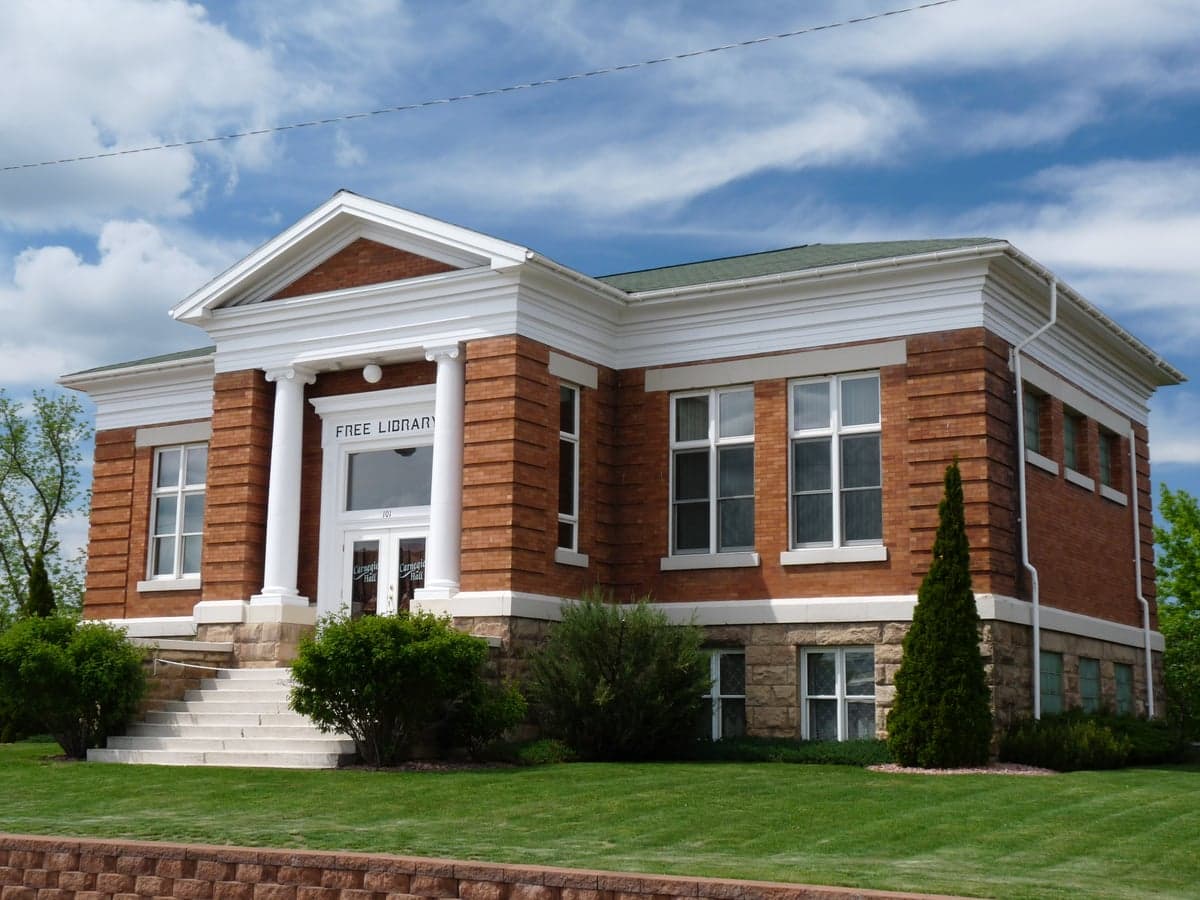
Photo: Wikipedia
Demographics of Rusk County
Affluence Level in Rusk County
A below-average socioeconomic profile. Incomes, home values, and educational attainment trail the U.S., with higher poverty and unemployment.
People of Rusk County
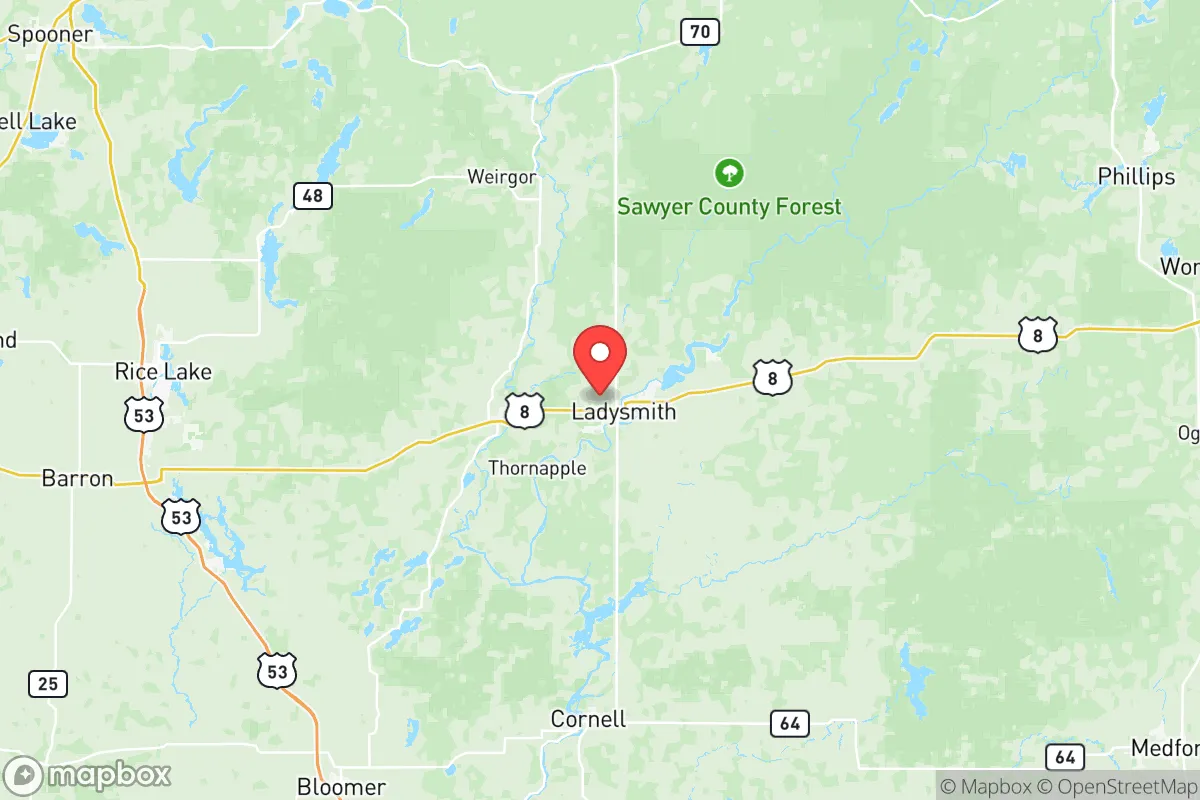
Rusk County, Wisconsin, is home to 14,146 residents, making it one of the state’s more sparsely populated rural counties, with a population density of just 12 people per square mile. The county’s identity is overwhelmingly rooted in its European settler heritage, with 93.7% of the population identifying as white alone, and a foreign-born share of only 0.3% — one of the lowest in the nation. Distinctive markers include a strong tradition of logging and dairy farming, a deeply ingrained sense of local self-reliance, and a population that is older and less formally educated than the state average, with just 16.3% holding a college degree. The county seat of Ladysmith serves as the primary commercial and social hub, while smaller communities like Bruce, Hawkins, and Tony retain the character of 19th-century lumber and railroad towns.
Settlement & growth (pre-1960)
Before European settlement, the area now known as Rusk County was part of the traditional territory of the Ojibwe (Chippewa) people, who used the dense forests and waterways for hunting, fishing, and wild rice harvesting. The region remained largely untouched by European-Americans until the mid-19th century, when the 1837 and 1842 treaties with the Ojibwe opened the land to logging and eventual homesteading. Unlike many parts of Wisconsin settled by Yankees from New England, Rusk County’s first permanent white settlers were primarily German, Polish, and Norwegian immigrants who arrived in the 1870s and 1880s, drawn by the promise of cheap land under the federal Homestead Act and the booming timber industry.
The arrival of the Wisconsin Central Railroad in the 1880s transformed the county. The railroad established depots at what became Ladysmith, Bruce, and Hawkins, turning these stops into bustling sawmill towns. The county itself was originally part of Chippewa County but was split off and named Rusk County in 1901, after a former Wisconsin governor. The peak of the logging era saw thousands of men — many of them single Scandinavian and German immigrants — working in the camps and mills. When the white pine was largely exhausted by 1910, many loggers moved on, but the farmers stayed. Polish immigrants, in particular, established tight-knit rural farming communities around Tony and Glen Flora, where their descendants still live today. A smaller wave of Italian immigrants arrived in the 1910s to work on railroad construction and in the remaining mills, settling primarily in Ladysmith.
By 1920, the county’s population had peaked at around 16,000, driven by the lumber boom. The subsequent decades saw a slow decline as the timber industry contracted and young people left for urban jobs. The Great Depression hit hard, but the county’s agricultural base — dairy farming, hay, and potatoes — provided a buffer. The post-World War II era brought little new growth; the county’s population hovered around 14,000 through the 1950s and 1960s, as the remaining farms consolidated and the small towns held steady. No significant new immigrant groups arrived during this period, and the county’s ethnic makeup remained almost entirely Northern and Eastern European.
Modern era (post-1965)
The 1965 Hart-Cellar Act, which dramatically reshaped U.S. immigration, had virtually no effect on Rusk County. The county’s foreign-born population today is just 0.3%, meaning that the post-1965 waves of immigrants from Latin America, Asia, and Africa that transformed urban and suburban America largely bypassed this rural corner of Wisconsin entirely. The county’s Hispanic population stands at 2.0%, and its Black population at 0.9%, both figures far below state and national averages. East and Southeast Asian residents make up 0.3% of the population, and there are no recorded residents of Indian subcontinent ancestry.
The dominant demographic story of the modern era in Rusk County is not immigration but domestic out-migration and aging. Since 1970, the county has lost roughly 10% of its population, as young adults have left for college and jobs in the Twin Cities, Eau Claire, and the Milwaukee metro area. The population that remains is older than the state median age, and the county has seen a modest but steady influx of retirees and second-home buyers from the Minneapolis-St. Paul area, drawn by the low cost of land and the recreational opportunities of the Flambeau River and the Chequamegon-Nicolet National Forest. These newcomers tend to settle around the lakes and riverfront properties near Ladysmith and Bruce, but they are not numerous enough to reverse the overall population decline. The county’s racial and ethnic composition has remained virtually static since 1965, with the white share actually increasing slightly as non-white residents have been more likely to leave for urban areas.
The future
Rusk County’s population is projected to continue its slow decline over the next 10-20 years, as the existing population ages and out-migration of young adults persists. The county is not becoming more diverse; the small Hispanic and Black populations are expected to remain stable or grow only marginally, as there are no major employers or immigration networks to attract new arrivals. The county’s cultural identity will likely remain rooted in its Scandinavian and Polish heritage, with local festivals like the Ladysmith Rusk County Fair and the Bruce Logging Days reinforcing that character. The most significant demographic change may be the continued arrival of out-of-state retirees and remote workers seeking rural quiet, which could slowly shift the political and cultural lean of the county toward a more moderate, conservation-minded outlook, though the area remains solidly conservative in its voting patterns.
For someone moving in now, Rusk County offers a stable, homogeneous, and deeply traditional community where the pace of life is slow, the cost of living is low, and the population is welcoming but not growing. The county is not becoming a more diverse or dynamic place; it is becoming a quieter, older, and more settled version of itself. New residents should expect to integrate into a community where family roots often go back five or six generations, and where the dominant values of self-sufficiency, outdoor recreation, and neighborly familiarity remain unchanged from the 1950s.

* Values derived from national, state, county, city and local statistics and may differ in a specific area. Last updated: 2026-09-15T00:10:32.000Z
Narrative content on this page is AI-generated and may contain mistakes. Verify any details that matter before acting on them.
ReloMaps may earn a commission from affiliate links at no extra cost to you.

