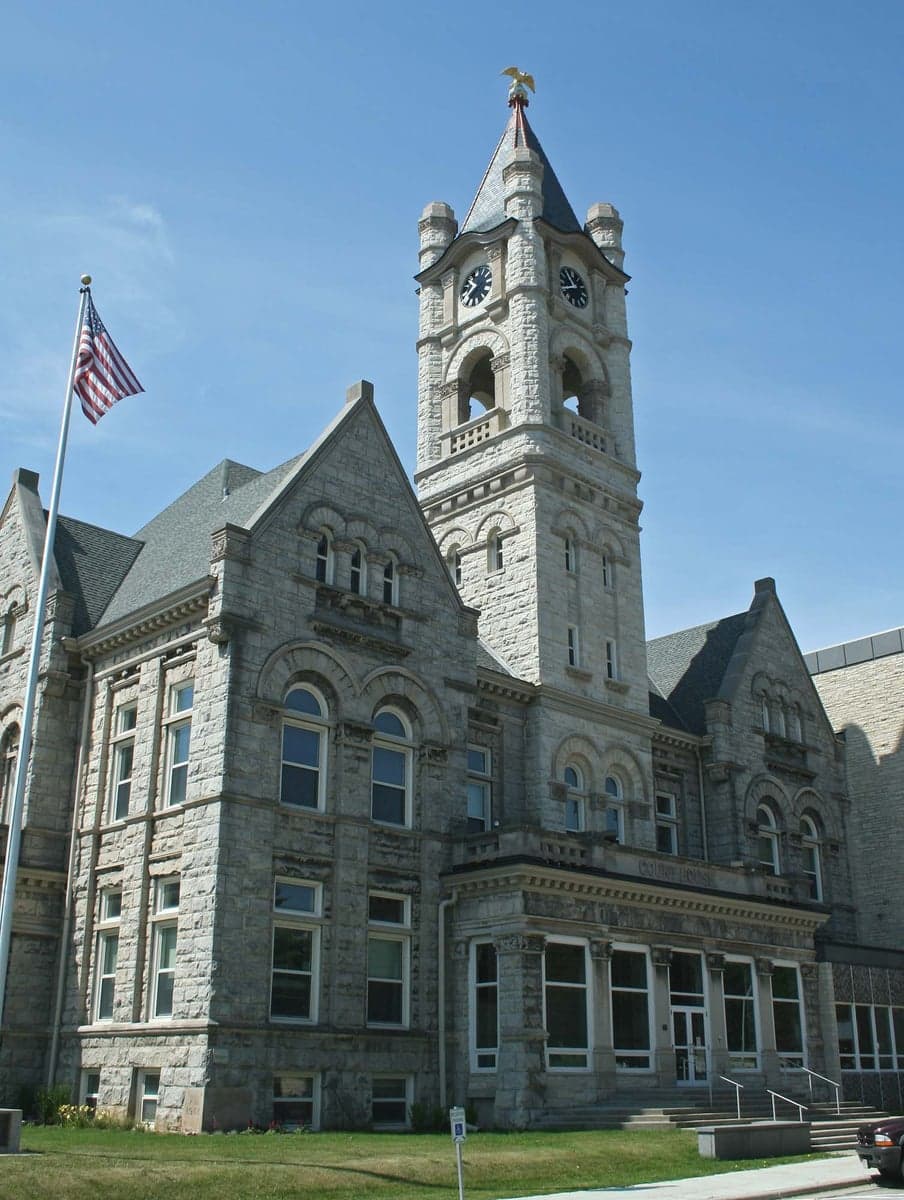
Photo: Wikipedia
Personal Sovereignty in Ozaukee County
Viable for self-reliance. Generally workable, though some barriers may limit total independence.
What does Personal Sovereignty tell us?
Personal Sovereignty measures your capacity for self-reliance and independence with minimal government friction. Higher scores mean fewer barriers between you and the way you want to live... but it assumes you have the space you need and good neighbors.
What does this tell us?
Personal Sovereignty measures your capacity for self-reliance and independence with minimal government friction. Higher scores mean fewer barriers between you and the way you want to live... but it assumes you have the space you need and good neighbors.
State Policy
Energy independence: Importer (15% of energy produced in-state)
Personal Liberty
Homesteading

Personal Liberty Analysis
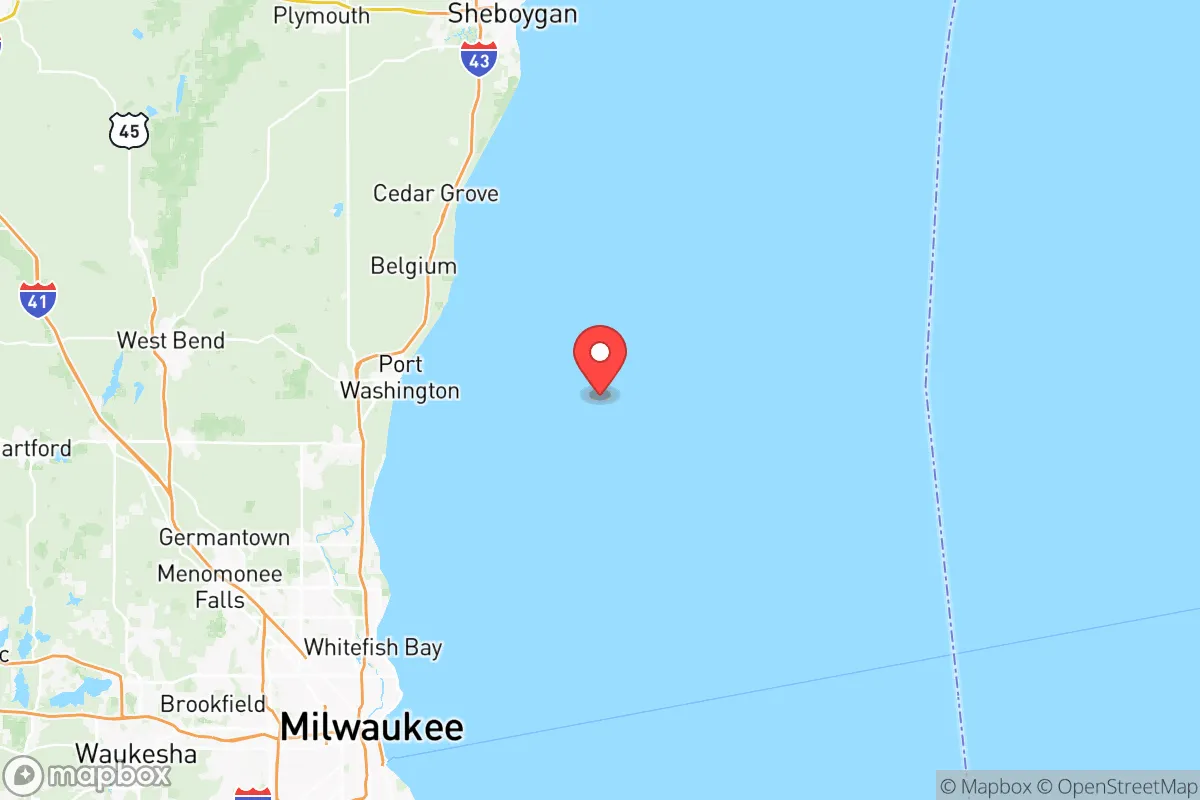
Ozaukee County offers a notably high degree of personal sovereignty relative to urban centers like Milwaukee or Madison, with a local governance culture that generally respects individual decision-making in areas of taxation, self-defense, and property use. The county’s regulatory posture is lighter than in neighboring Milwaukee County, but it is not a libertarian free-for-all; zoning and building codes are enforced, particularly in the more densely populated lakefront communities. For a relocation reader prioritizing autonomy, the key distinction lies between the county’s eastern villages—Cedarburg, Port Washington, and Mequon—which lean toward managed growth and stricter ordinances, and the western townships—Fredonia, Belgium, and Saukville—where larger lots and more permissive rural zoning create greater room for self-reliant living.
Tax burden and regulatory posture in Ozaukee County
Ozaukee County’s tax burden is moderate by Wisconsin standards, with a 2024 effective property tax rate averaging roughly 1.8% of assessed home value—slightly above the state median but well below Milwaukee County’s 2.3% rate. The county levies no local sales tax beyond the state’s 5% rate, and Wisconsin’s flat 4.4% individual income tax applies uniformly. Regulatory posture varies by municipality: Mequon enforces a minimum lot size of 2.5 acres in its rural residential zones, a deliberate policy to preserve open space that also limits high-density development and associated regulatory creep. Cedarburg and Port Washington have more traditional suburban codes, including sidewalk requirements and design review boards for exterior modifications. In contrast, Fredonia and Belgium operate with lighter touch—Fredonia’s town board, for example, has no formal planning department, and building permits are processed through the county. The county’s overall regulatory posture is best described as “pragmatic conservative”: enforcement exists but is not aggressive, and variances for things like accessory dwelling units or home-based businesses are routinely granted in the western townships.
Self-defense and gun law specifics in Ozaukee County
Wisconsin is a shall-issue state for concealed carry, and Ozaukee County’s sheriff’s office processes permits efficiently—typically within 30 days. The county is home to several active gun clubs, including the Ozaukee County Rifle and Pistol Club near Port Washington, and the Mequon Sportsmen’s Club, which hosts regular competitions and training. Open carry is legal without a permit, and no local ordinances in any Ozaukee municipality restrict the possession or transport of firearms beyond state law. The county’s culture is strongly pro-self-defense: Port Washington and Saukville both have city councils that have passed resolutions affirming Second Amendment rights. Stand-your-ground law applies statewide, and Wisconsin does not require registration of firearms or ammunition. For a reader concerned about local gun control creep, the key fact is that no Ozaukee municipality has enacted any ordinance restricting magazine capacity, assault weapon features, or storage requirements—a contrast to Milwaukee’s now-preempted city-level restrictions. The sheriff’s office also offers voluntary concealed carry classes, and the county’s rural areas provide ample safe shooting space on private land, particularly in the Town of Belgium and Town of Fredonia.
Self-reliance and homesteading viability across Ozaukee County
Homesteading and off-grid living are viable in Ozaukee County’s western and northern townships but face significant constraints in the eastern villages. Fredonia and Belgium allow agricultural uses by right on parcels as small as 5 acres, and both towns permit keeping chickens, goats, and up to two cows without a conditional use permit. Saukville is more restrictive—livestock requires a minimum of 3 acres and a permit—but still allows substantial self-reliance. Off-grid systems face state-level hurdles: Wisconsin requires connection to the electrical grid for new construction in most townships, though solar panels with net metering are permitted. Rainwater collection is legal for non-potable uses, and composting toilets are allowed with a state-approved system. The Town of Grafton has a more suburban code that prohibits front-yard vegetable gardens and limits the height of fences to 6 feet, while Town of Cedarburg requires a minimum lot size of 35 acres for agricultural zoning—effectively pricing out small-scale homesteaders. For a family seeking true self-reliance, the best bet is a parcel in Town of Belgium or Town of Fredonia, where well and septic systems are standard, and the county’s building inspector is known for reasonable interpretation of codes. The county’s soil quality is excellent for gardening, and the Lake Michigan microclimate extends the growing season by 2-3 weeks compared to inland Wisconsin.
Personal liberties: parental rights, medical autonomy, speech, and property
Ozaukee County’s school boards—particularly in Mequon (Thiensville-Mequon School District) and Cedarburg—have been active in parental rights debates, with both districts adopting policies requiring parental notification for any changes to a student’s mental health or gender-related services. Wisconsin law grants parents broad authority over their children’s medical decisions, and the county’s health department does not mandate vaccines for school attendance beyond state requirements. Medical autonomy is generally respected: the county has no local mask or vaccine mandates on the books, and the Ozaukee County Board of Health has a history of deferring to individual choice rather than issuing blanket orders. Free speech protections are robust—the county’s public comment periods at board meetings are open and uncensored, and no municipality has enacted a “disorderly conduct” ordinance targeting specific viewpoints. Property rights are strong, with Wisconsin’s private property rights law (Wis. Stat. 32.03) requiring just compensation for any regulatory taking. However, the Village of Grafton has a historic preservation ordinance that can restrict exterior modifications on properties built before 1940, and Port Washington enforces a strict sign ordinance limiting political and commercial signage to 4 square feet in residential zones. Overall, the county’s legal environment supports personal liberty in most domains, with the notable exception of off-grid energy independence, where state utility regulations create a barrier.
Compared to southeastern Wisconsin’s other counties, Ozaukee offers a balanced sovereignty profile: lighter than Milwaukee’s regulatory-heavy environment, but more structured than the truly rural counties like Washington or Sheboygan. For a reader who values personal freedom but also wants functional schools, low crime, and access to Lake Michigan recreation, Ozaukee County provides a workable middle ground. The key trade-off is between the eastern villages’ managed growth and the western townships’ greater latitude for self-reliant living. A family choosing Fredonia over Mequon gains more room to homestead and fewer zoning restrictions, but loses some proximity to Milwaukee’s job market and cultural amenities. For the single individual or family prioritizing personal sovereignty above all else, the western townships of Ozaukee County represent one of the better options in the Milwaukee metro area—without the political friction found in more urbanized counties.

* Values derived from national, state, county, city and local statistics and may differ in a specific area. Last updated: 2026-07-10T08:30:06.000Z
Narrative content on this page is AI-generated and may contain mistakes. Verify any details that matter before acting on them.
ReloMaps may earn a commission from affiliate links at no extra cost to you.

