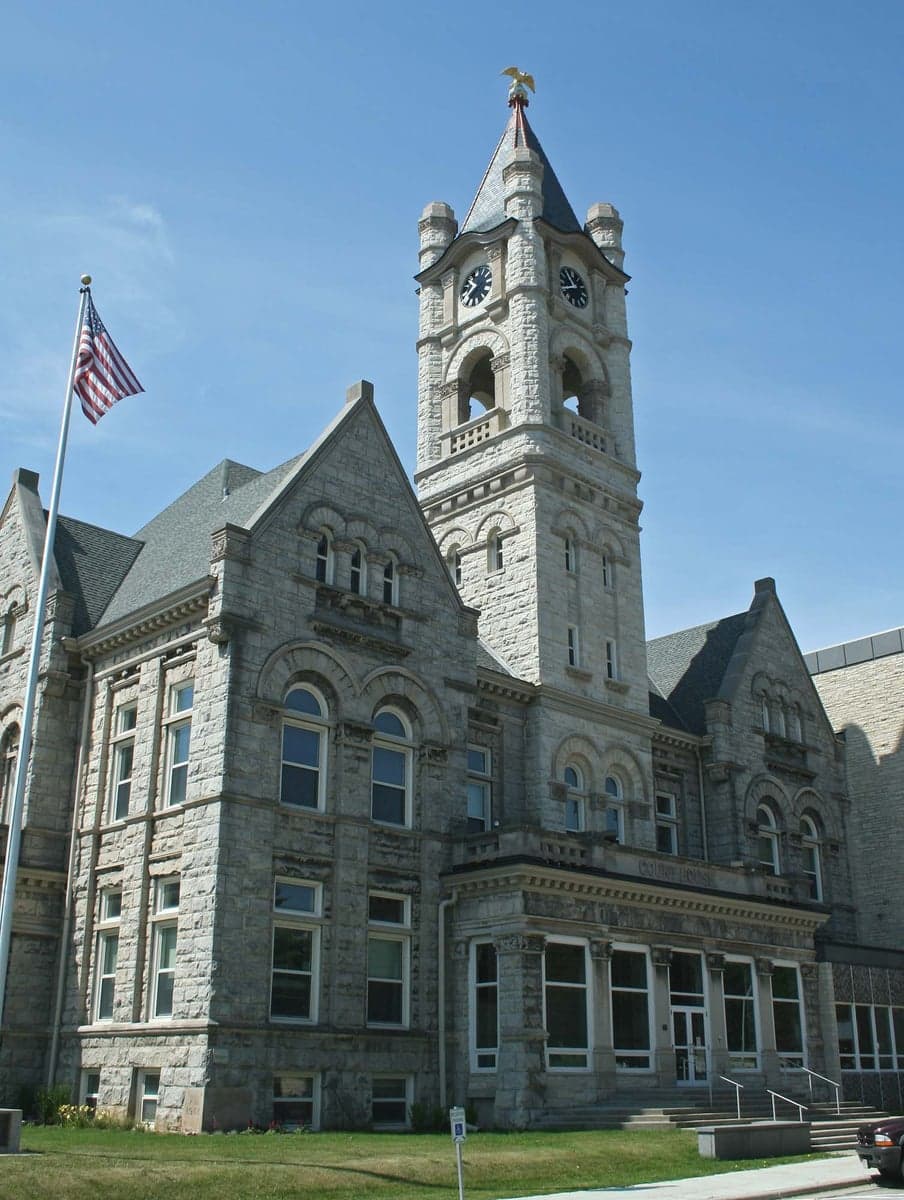
Photo: Wikipedia
Demographics of Ozaukee County
Affluence Level in Ozaukee County
An upper-middle-class area. Household wealth, education levels, and homeownership run ahead of national benchmarks.
People of Ozaukee County
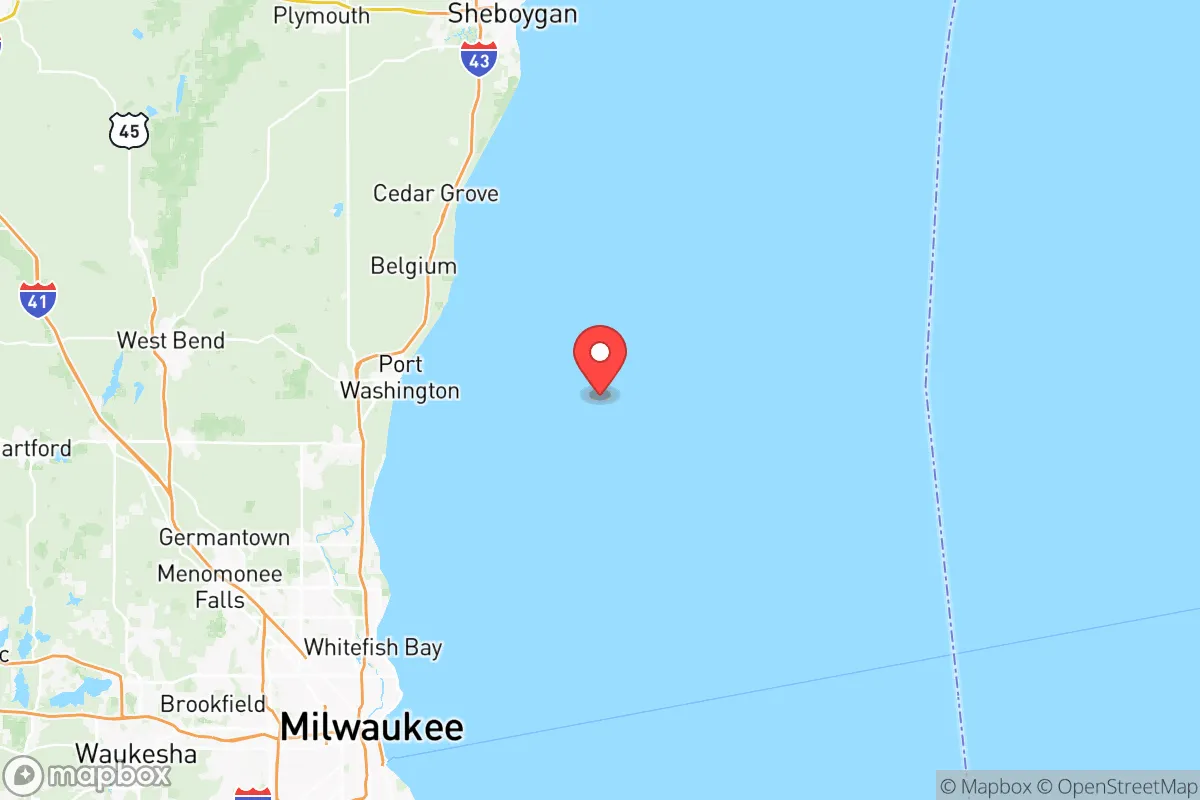
Ozaukee County, Wisconsin, is home to roughly 92,345 residents, making it one of the state's smaller but more affluent counties, with a median household income well above the national average and a college attainment rate of 50.4%. The population is predominantly white (89.8%), with a very low foreign-born share of just 1.7%, reflecting a deeply rooted, multi-generational community shaped by 19th-century European settlement and subsequent suburban stability. The county's identity is a blend of historic Lake Michigan port towns, rural farmlands, and upscale Milwaukee exurbs, where a strong sense of local tradition and conservative-leaning values remain prominent.
Settlement & growth (pre-1960)
Before European settlement, the area now known as Ozaukee County was inhabited by the Potawatomi and Menominee nations, who used the Lake Michigan shoreline and the Milwaukee River for fishing, trade, and seasonal camps. The first American settlers arrived in the 1830s and 1840s, following the forced removal of Native tribes under federal treaties. These early pioneers were primarily Yankees from New England and New York, drawn by the promise of fertile farmland and access to the Great Lakes. They founded the county's first permanent settlements, including Port Washington (1835), which became the county seat and a bustling Lake Michigan port for shipping grain and lumber, and Cedarburg (1844), which grew around a mill on Cedar Creek.
The defining demographic wave began in the 1840s and accelerated through the 1880s: mass immigration from the German states. German farmers and craftsmen, fleeing economic hardship and political unrest, poured into Ozaukee County, establishing a dense network of rural homesteads and villages. They founded Fredonia (1846), Saukville (1848), and Grafton (1850), each centered around a church, a school, and a general store. By 1870, German-born residents and their children made up over 70% of the county's population, a concentration that persisted for generations. The German influence is still visible in the region's Lutheran and Catholic church steeples, the annual Cedarburg Oktoberfest, and the prevalence of German surnames among long-time residents. A smaller wave of Irish immigrants arrived in the 1850s, many settling in Port Washington to work on the docks and railroads, but they never rivaled the German majority.
Throughout the late 19th and early 20th centuries, the county remained overwhelmingly rural and German-American, with agriculture (dairy, wheat, and livestock) and limestone quarrying as the economic backbone. The population grew slowly but steadily, reaching about 30,000 by 1950. The post-World War II era brought the first significant domestic migration: returning veterans and Milwaukee workers seeking suburban homes. Towns like Mequon and Thiensville began transitioning from farming hamlets into bedroom communities, a process that accelerated with the construction of Interstate 43 in the 1960s, which cut travel time to downtown Milwaukee to under 30 minutes.
Modern era (post-1965)
The 1965 Hart-Cellar Act had minimal direct impact on Ozaukee County. Unlike Milwaukee or Chicago, the county did not attract significant post-1965 immigration from Asia, Latin America, or Africa. The foreign-born population remains very low at 1.7%, and the county's racial composition has shifted only modestly. The Hispanic share grew from negligible levels in 1990 to 3.6% today, with most families settling in Port Washington and Grafton, often working in manufacturing, construction, or the service industry. The East/Southeast Asian population (1.4%) and Indian-subcontinent population (0.8%) are small but visible, concentrated in Mequon and Cedarburg, where professional jobs in healthcare, engineering, and finance have drawn a handful of families. The Black population remains very low at 1.5%, with no significant enclave forming.
The dominant demographic force of the modern era has been domestic suburbanization. From the 1970s onward, Ozaukee County became a prime destination for white, middle-class and upper-middle-class families leaving Milwaukee and other Rust Belt cities. Mequon in particular transformed into one of Wisconsin's wealthiest suburbs, with large lakefront homes, top-rated schools, and a reputation for low crime and high property values. This migration was overwhelmingly white and native-born, reinforcing the county's existing ethnic character. The population grew from 54,000 in 1970 to 92,345 today, driven almost entirely by this domestic inflow. The county also saw a modest influx of retirees from the Midwest, drawn to the Lake Michigan shoreline and the slower pace of life in towns like Port Washington and Belgium.
The future
Ozaukee County is projected to experience slow, steady growth over the next 10-20 years, likely reaching 100,000-105,000 residents by 2040. The population is aging, with a median age of 44, and natural increase (births minus deaths) is near zero. Future growth will depend on continued domestic migration from Milwaukee and other parts of the Midwest, as well as potential spillover from the broader Milwaukee metro area. The county is becoming slightly more diverse, but at a very gradual pace. The Hispanic share is expected to rise to 5-6% by 2040, and the Asian and Indian populations may double from current levels, but the county will remain overwhelmingly white and native-born for the foreseeable future. New residential development is concentrated in Mequon, Grafton, and along the I-43 corridor, while the northern towns like Fredonia and Belgium retain a more rural, agricultural character. The cultural identity is likely to remain conservative, family-oriented, and rooted in the German-American traditions that have defined the county for over 150 years.
For someone moving in now, Ozaukee County offers a stable, low-crime, high-amenity environment with excellent schools and strong property values, but little racial or ethnic diversity. It is a place where the past is still very present, and where newcomers are expected to fit into an established, homogeneous community rather than reshape it. The county is not becoming a melting pot; it is becoming a well-maintained, slightly more varied version of what it has always been.

* Values derived from national, state, county, city and local statistics and may differ in a specific area. Last updated: 2026-07-10T08:30:06.000Z
Narrative content on this page is AI-generated and may contain mistakes. Verify any details that matter before acting on them.
ReloMaps may earn a commission from affiliate links at no extra cost to you.

