
Photo: Wikipedia
Strategic Assessment of Manitowoc County
Workable tactical position. Some exposure to population density or targets, but generally defensible in a crisis.
What does the Strategic Assessment tell us?
Our Strategic Assessment grades tactical survivability of an area. Major population centers, military targets, fallout zones, natural disasters, and border exposure all drive risk — lower exposure means a more defensible position in a crisis.
This is heavily inspired by Joel Skousen's Strategic Relocation book. Highly recommended you checkout the book ($)What does this tell us?
Our Strategic Assessment grades tactical survivability of an area. Major population centers, military targets, fallout zones, natural disasters, and border exposure all drive risk — lower exposure means a more defensible position in a crisis.
This is heavily inspired by Joel Skousen's Strategic Relocation book. Highly recommended you checkout the book ($)Strategic Pillars

Key Distances
Strategic Assessment Analysis
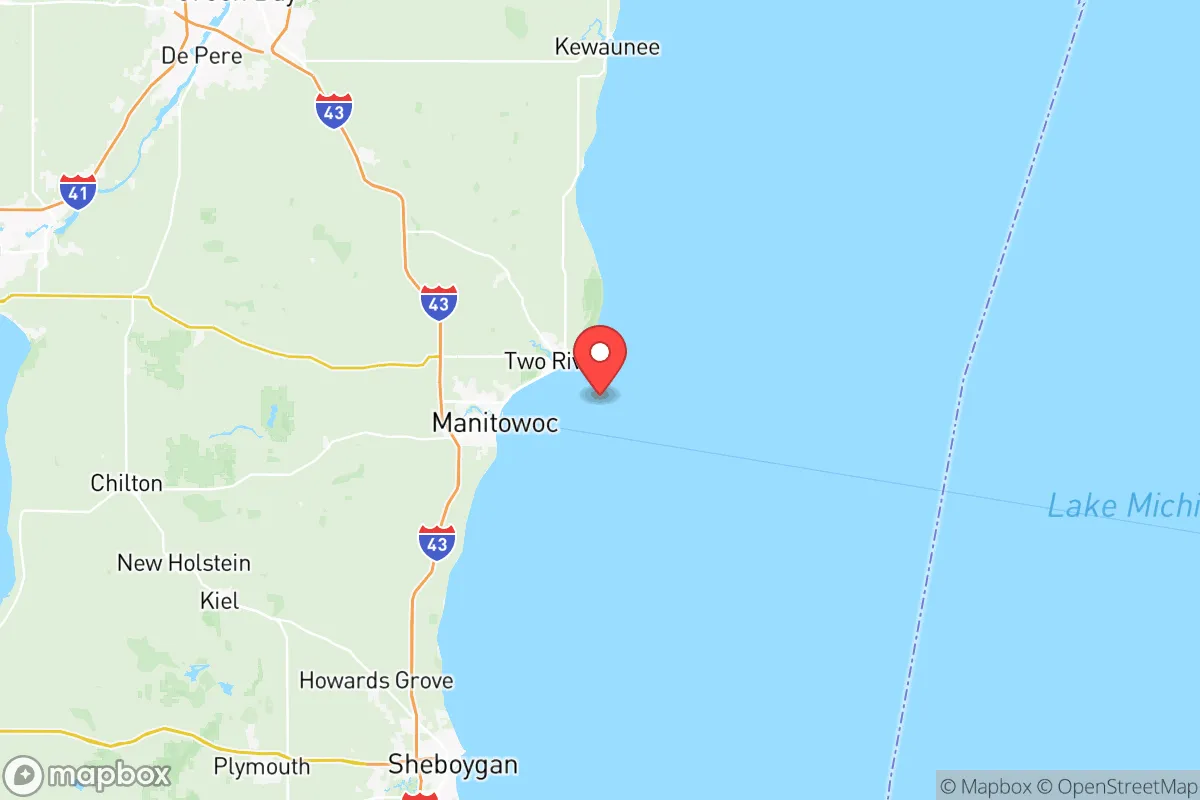
Manitowoc County, Wisconsin, presents a compelling strategic profile for relocation-minded readers who prioritize resilience and self-sufficiency, balancing a strong agricultural and industrial base with a location that sits outside the immediate blast and fallout zones of major metropolitan targets. Situated along the western shore of Lake Michigan, roughly 40 miles southeast of Green Bay and 80 miles north of Milwaukee, the county offers a blend of rural and small-city living centered on the city of Manitowoc and the neighboring city of Two Rivers. Its position provides a meaningful buffer from the highest-risk urban corridors while retaining access to critical infrastructure, making it a serious contender for those weighing long-term preparedness against practical daily life.
Geographic position and natural advantages for long-term stability
Manitowoc County’s primary strategic asset is its access to Lake Michigan, the largest freshwater system in the United States, which provides an essentially unlimited and renewable water source. The county’s 40-plus miles of Lake Michigan shoreline, including the harbors at Manitowoc and Two Rivers, offer not only water but also a moderating effect on climate, reducing extreme temperature swings compared to inland areas. The terrain is predominantly flat to gently rolling, underlain by glacial till and limestone bedrock, which supports productive farmland and offers decent drainage for septic systems and private wells. The county is part of the larger Niagara Escarpment region, which provides some natural topographic variation and defensible positions in the more rural townships like Gibson and Kossuth. This geography, combined with a relatively low population density of about 90 people per square mile outside the main cities, means that a relocator can find acreage with privacy and a buffer from neighbors, a key factor for both self-sufficiency and personal security.
Risk exposure: natural hazards and proximity to fallout-relevant landmarks
While Manitowoc County avoids the highest-risk categories for man-made disasters, it is not without exposure. The most significant natural risk is severe winter weather, including lake-effect snow that can dump two to three feet of snow in a single storm, particularly in the eastern half of the county near the lake. Power outages lasting several days are a recurring reality, and road closures can isolate rural properties for 24-48 hours. Tornado risk is moderate, with the county averaging one or two warnings per year, but the flat terrain means storms can develop quickly with little warning. Flooding is localized to the Manitowoc River and its tributaries, with the city of Manitowoc’s downtown and the village of Valders seeing periodic inundation during spring thaws or heavy rains.
From a man-made risk perspective, the county’s location is a double-edged sword. It is far enough from Chicago (about 150 miles north) and Milwaukee (80 miles south) to avoid the primary blast and thermal effects of a nuclear detonation in those cities. However, prevailing winds from the west and southwest mean that fallout from a strike on the Chicago or Milwaukee metro areas could reach Manitowoc County within 6-12 hours, depending on weather. The county also sits within 100 miles of the Point Beach Nuclear Plant (located just north in Kewaunee County), which, while currently operating, represents a potential radiological release point. Additionally, the Manitowoc harbor and the county’s industrial base—including shipbuilding (Fincantieri Marinette Marine, though the main yard is in Marinette County, Manitowoc has a significant manufacturing presence) and food processing—could make it a secondary target for disruption, though not a primary one. The presence of the U.S. Coast Guard station in Two Rivers is a minor military asset but not a high-value target. Overall, the risk profile is moderate, with winter weather being the most frequent and predictable hazard.
Practical resilience for a relocator: food, water, energy, and defensibility
For a relocator focused on self-sufficiency, Manitowoc County offers strong fundamentals. Food security is excellent: the county is a major agricultural producer, with over 1,200 farms covering more than 200,000 acres, primarily in dairy, corn, soybeans, and vegetables. The local food system is robust, with farmers’ markets in Manitowoc and Two Rivers operating from May through October, and numerous u-pick operations and farm stands in towns like Reedsville and St. Nazianz. Hunting and fishing are viable, with deer, turkey, and waterfowl in the interior, and Lake Michigan offering trout, salmon, and perch. The county’s agricultural extension office and local seed libraries provide resources for home gardening and small-scale livestock.
Water security is a standout advantage. Lake Michigan provides an inexhaustible surface water source, though access is limited to public beaches and boat launches. For private properties, the county’s glacial aquifers are generally high-yield and of good quality, with most rural wells producing 10-20 gallons per minute at depths of 100-200 feet. The city of Manitowoc’s water treatment plant draws from the lake and serves about 35,000 people, but a relocator on a private well is largely independent of municipal systems. Energy resilience is more mixed. The grid is reliable by Midwest standards, but winter storms cause frequent outages. Solar potential is moderate, with about 4.5 peak sun hours per day in summer, dropping to under 2 in December. Wood heating is common and practical, with ample hardwood forests in the county’s western townships. Propane is widely available for backup generation. The county has no natural gas production, but the Manitowoc Refinery (a small asphalt refinery) and the nearby Kewaunee County oil terminal provide some local fuel storage, though these are themselves potential targets.
Defensibility is a mixed picture. The open farmland offers long sightlines but limited cover, while the wooded areas in the western part of the county (around Collins and Mishicot) provide better concealment and natural barriers. The county’s road network is sparse enough that a determined group could control access to rural areas, but the flat terrain makes it difficult to defend against a mobile threat. The local law enforcement presence is modest—the Manitowoc County Sheriff’s Office has about 40 deputies for the entire county—so residents would need to rely on themselves and their neighbors. The strong hunting culture means firearms ownership is common, and the county has a number of shooting ranges and sportsmen’s clubs that foster a community of prepared individuals.
In the final strategic picture, Manitowoc County offers a balanced option for the resilience-minded relocator: it provides excellent water and food security, a moderate risk profile from man-made disasters, and a community that is generally self-reliant and familiar with rural living. The trade-offs are real—harsh winters, moderate energy independence, and a location that, while not a primary target, is within fallout range of major cities. For a single individual or family willing to invest in winter preparedness, a backup power system, and a private well, the county represents a defensible and sustainable base of operations. It is not a remote bunker, but a functioning, livable community where resilience is a practical reality rather than a theoretical exercise. The key is to choose a property in the western or central townships, away from the lake-effect snow belt and the industrial corridors of Manitowoc and Two Rivers, and to build redundancy into water, heat, and food storage from day one.

* Values derived from national, state, county, city and local statistics and may differ in a specific area. Last updated: 2026-06-28T22:58:46.000Z
Narrative content on this page is AI-generated and may contain mistakes. Verify any details that matter before acting on them.
ReloMaps may earn a commission from affiliate links at no extra cost to you.

