Photo: Wikipedia
Demographics of Wilmette, IL
Affluence Level in Wilmette, IL
A wealthy area with high-earning, well-educated households. Incomes, home values, and educational attainment meaningfully outpace national averages.
People of Wilmette, IL
The people of Wilmette, Illinois, today form a highly educated, predominantly white community of 27,550 residents, characterized by strong family-oriented values and a distinctive blend of historic affluence and quiet suburban stability. With 84.6% of adults holding a college degree and a foreign-born population of just 3.8%, the village ranks among the most educated and least ethnically diverse suburbs on Chicago’s North Shore. Its identity is shaped by deep-rooted Catholic and Protestant traditions, a legacy of European settlement, and a recent, measured influx of East/Southeast Asian and Indian-subcontinent professionals drawn to the area’s top-ranked public schools and lakefront setting.
How the city was settled and grew
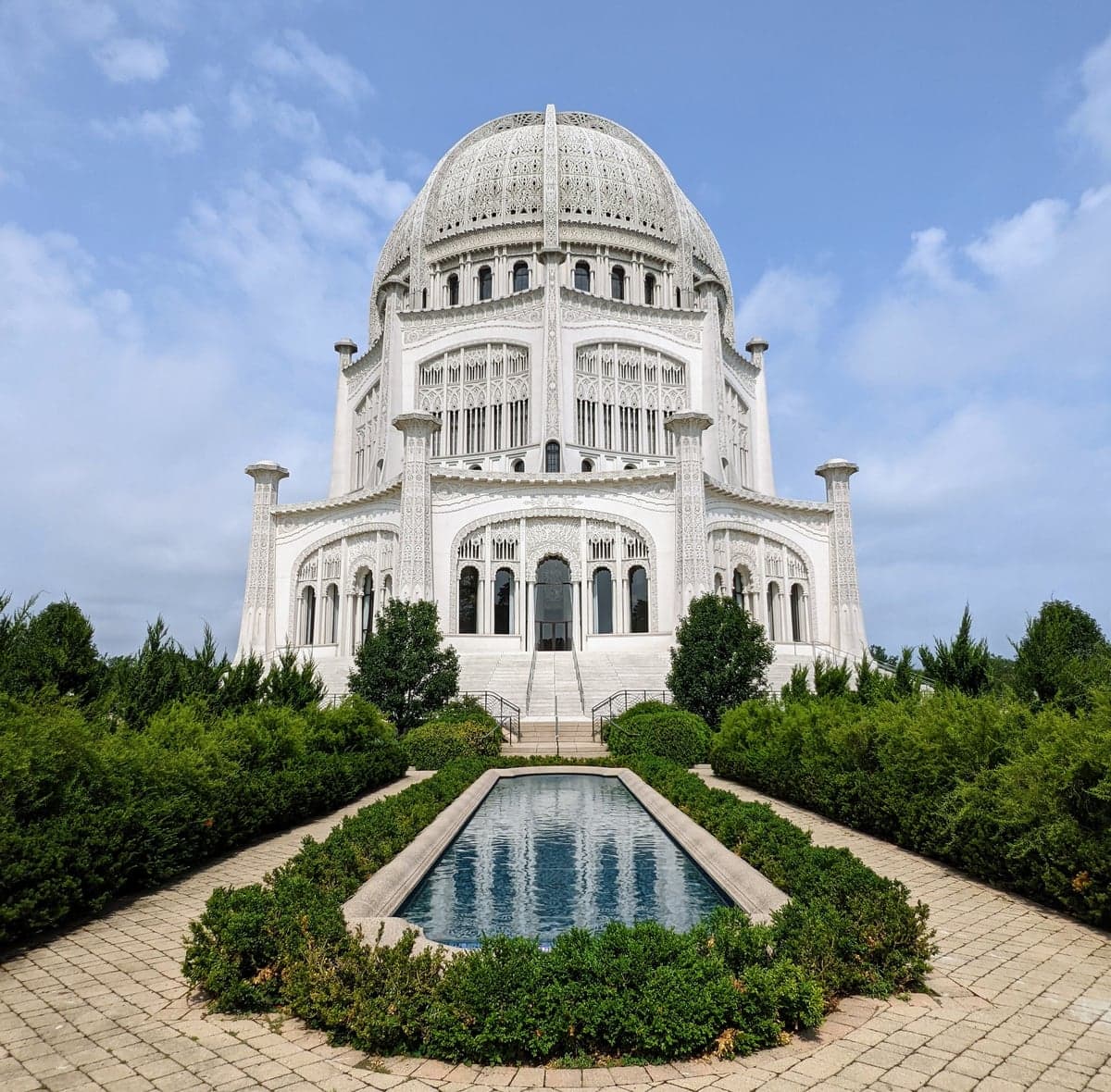
Wilmette’s original population was a mix of French-Canadian Catholic farmers and Protestant Yankee settlers who arrived in the 1830s and 1840s, drawn by the fertile land along Lake Michigan and the promise of the newly opened Illinois & Michigan Canal corridor. The village was formally platted in 1857 and named after Antoine Ouilmette, a French-Canadian fur trader who had married a Potawatomi woman and received a land grant from the U.S. government. The arrival of the Chicago & North Western Railway in the 1850s transformed Wilmette from a farming hamlet into a commuter suburb for Chicago’s growing merchant and professional class. The Historic East Side, centered around Lake Avenue and the lakefront, became the enclave of wealthy Protestant families who built large Victorian and Colonial Revival homes. Meanwhile, West Wilmette, west of the Chicago & North Western tracks, was settled by German, Irish, and later Polish and Italian Catholic immigrants who worked as tradesmen, railroad laborers, and domestic servants. The construction of the Baháʼí House of Worship, completed in 1953, drew a small but notable wave of international Baháʼí families to the Baháʼí Temple neighborhood near Sheridan Road, adding a unique religious and cultural thread to the village’s fabric. By 1960, Wilmette was overwhelmingly white (over 99%), with a population of roughly 28,000 that was heavily Catholic and Republican-leaning, a character that persists in many of the village’s older neighborhoods today.
Modern era (post-1965)
The 1965 Hart-Cellar Immigration Act opened the door for new immigration patterns, but Wilmette’s restrictive zoning, high property values, and established social networks meant that demographic change came slowly and selectively. The most notable post-1965 shift has been the growth of East/Southeast Asian and Indian-subcontinent communities, who now make up 8.9% and 2.9% of the population, respectively. These families—many of them professionals in medicine, engineering, and finance—were drawn to Wilmette’s nationally ranked public schools, particularly New Trier High School, and the village’s reputation for safety and stability. They have concentrated in the Indian Hill Estates area (a post-war subdivision of mid-century ranch and split-level homes near the Skokie border) and the Lakeshore Corridor along Sheridan Road, where newer, larger homes have attracted affluent immigrant families. The Hispanic population (5.0%) is smaller and more dispersed, with many families living in the West Wilmette neighborhoods near the Edens Expressway, where older, more affordable housing stock exists. The Black population remains negligible at 0.3%, a figure that has barely budged since the 1970s, reflecting the broader North Shore’s history of exclusionary housing practices and ongoing economic barriers. The village’s overall population has remained remarkably stable—hovering around 27,000 since 1970—as the housing stock is built out and zoning laws limit new construction, meaning demographic change occurs primarily through turnover of existing homes rather than new development.
The future
Wilmette’s population is slowly becoming more diverse, but the pace is glacial compared to nearby suburbs like Skokie or Evanston. The East/Southeast Asian and Indian-subcontinent shares are expected to continue rising gradually, driven by the same school-quality and safety factors that attracted earlier waves, with new families likely to settle in the Lakeshore Corridor and Indian Hill Estates areas where similar households already exist. The white population, while still dominant at 78.3%, is aging in place, and younger white families are increasingly priced out by median home values exceeding $700,000, leading to a slight decline in that demographic. The Hispanic share may grow modestly as service-sector workers seek affordable rentals in West Wilmette, but the village’s lack of multifamily housing and high property taxes will limit significant expansion. The foreign-born percentage (3.8%) is likely to remain low, as Wilmette attracts primarily domestic movers from other affluent suburbs and Chicago’s North Side. Over the next 10–20 years, the village will become slightly more Asian and Indian, slightly less white, and remain overwhelmingly college-educated and high-income, with cultural identity anchored by its schools, churches, and lakefront parks rather than by ethnic enclaves.
For someone moving in now, Wilmette is a stable, high-cost, low-diversity community where the dominant culture remains rooted in its European-American, Catholic-Protestant heritage, but where East/Southeast Asian and Indian-subcontinent families are a quietly growing presence in specific neighborhoods. It is not a place of rapid demographic transformation, but of gradual, selective diversification driven by school quality and professional opportunity. The village offers a predictable, safe, and academically intense environment for families who value tradition and stability over urban energy or ethnic variety.

* Values derived from national, state, county, city and local statistics and may differ in a specific area. Last updated: 2026-10-08T15:03:45.000Z
Narrative content on this page is AI-generated and may contain mistakes. Verify any details that matter before acting on them.
ReloMaps may earn a commission from affiliate links at no extra cost to you.

