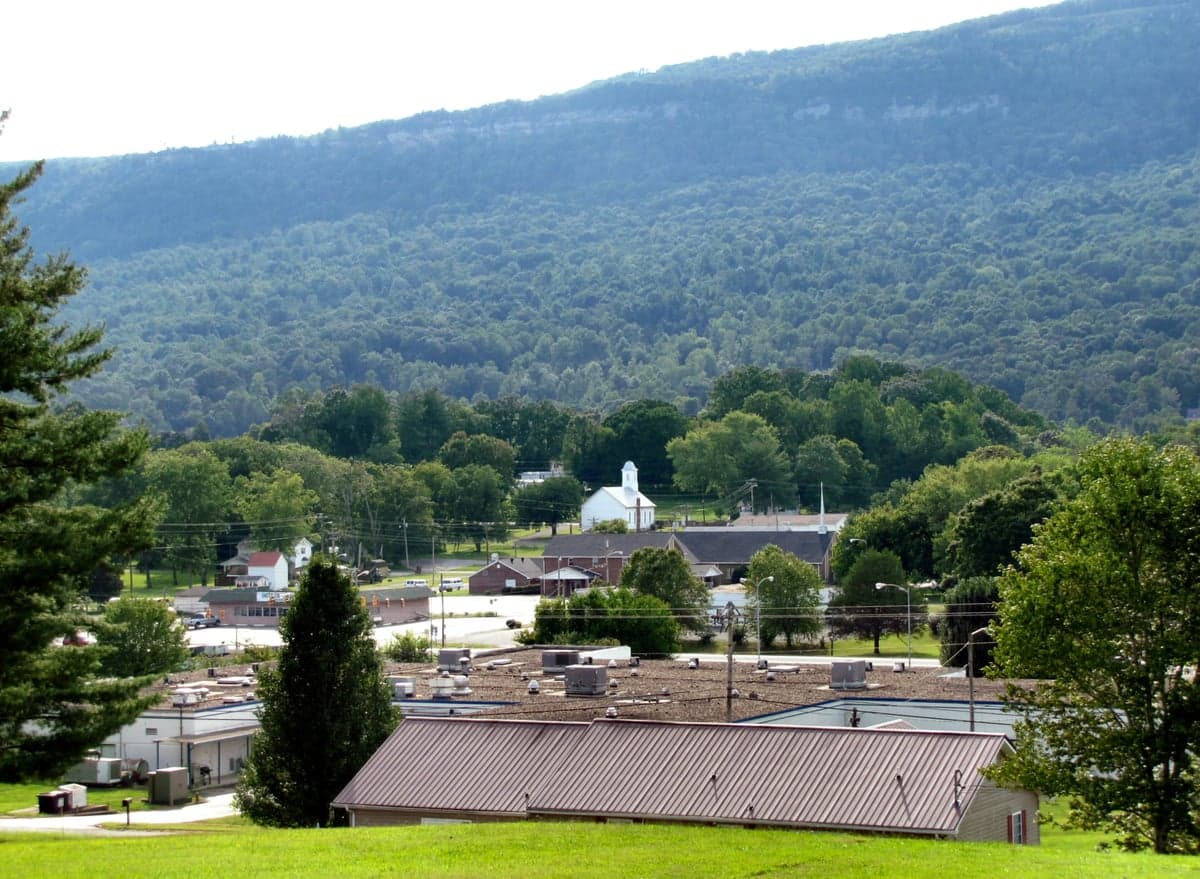
Photo: Wikipedia
Strategic Assessment of Whitwell, TN
Workable tactical position. Some exposure to population density or targets, but generally defensible in a crisis.
What does the Strategic Assessment tell us?
Our Strategic Assessment grades tactical survivability of an area. Major population centers, military targets, fallout zones, natural disasters, and border exposure all drive risk — lower exposure means a more defensible position in a crisis.
This is heavily inspired by Joel Skousen's Strategic Relocation book. Highly recommended you checkout the book ($)What does this tell us?
Our Strategic Assessment grades tactical survivability of an area. Major population centers, military targets, fallout zones, natural disasters, and border exposure all drive risk — lower exposure means a more defensible position in a crisis.
This is heavily inspired by Joel Skousen's Strategic Relocation book. Highly recommended you checkout the book ($)Strategic Pillars
Key Distances
Regional Safe Places
Below is our recommended "safe zones" in Tennessee and the surrounding area based on our strategic heuristics. For most people, it's unrealistic to live in a “safe zone” full-time due to work, family or other personal reasons. They tend to be more rural. However, many of these areas are perfect for second homes and retreat properties that double as a vacation home or even a short-term rental.
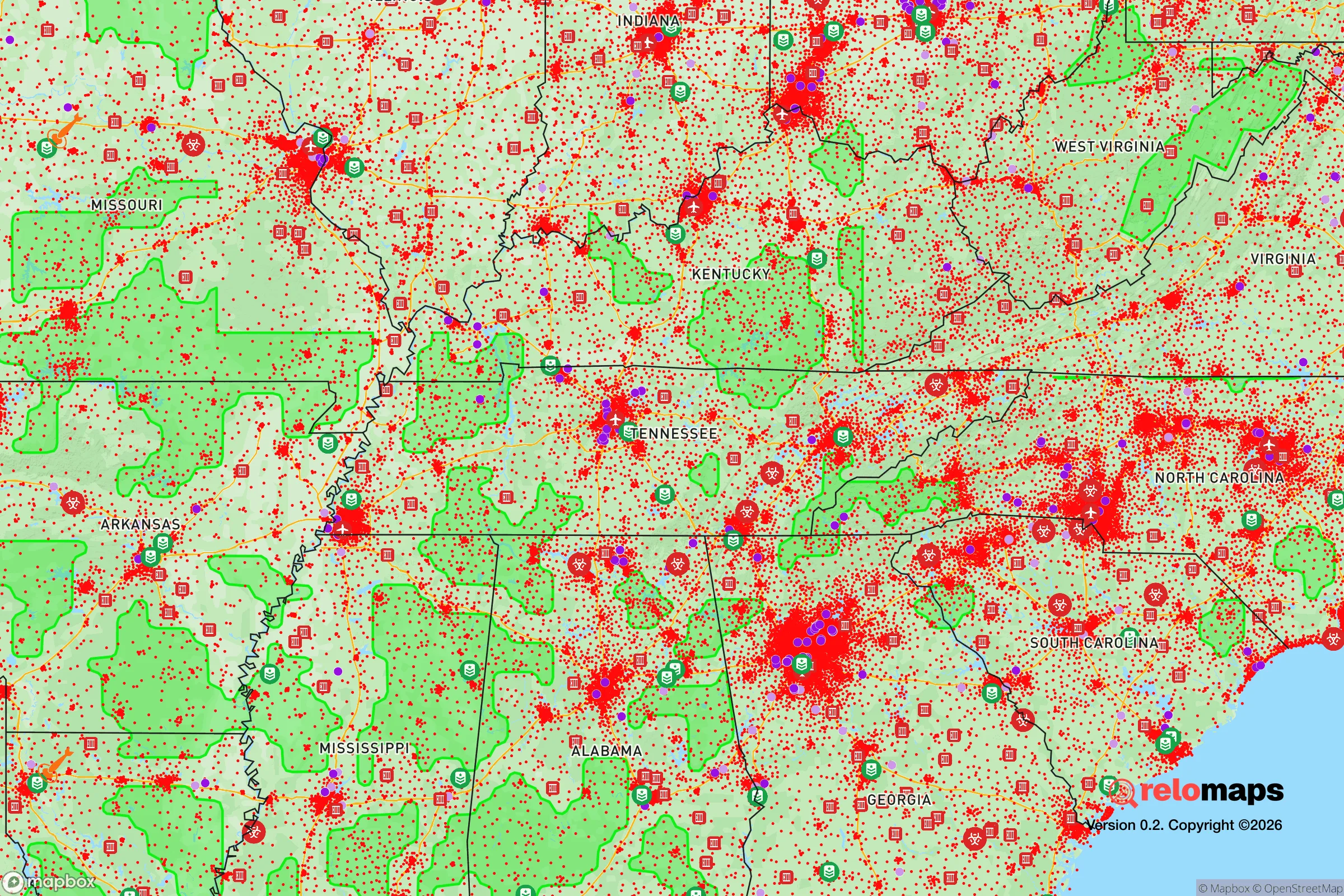
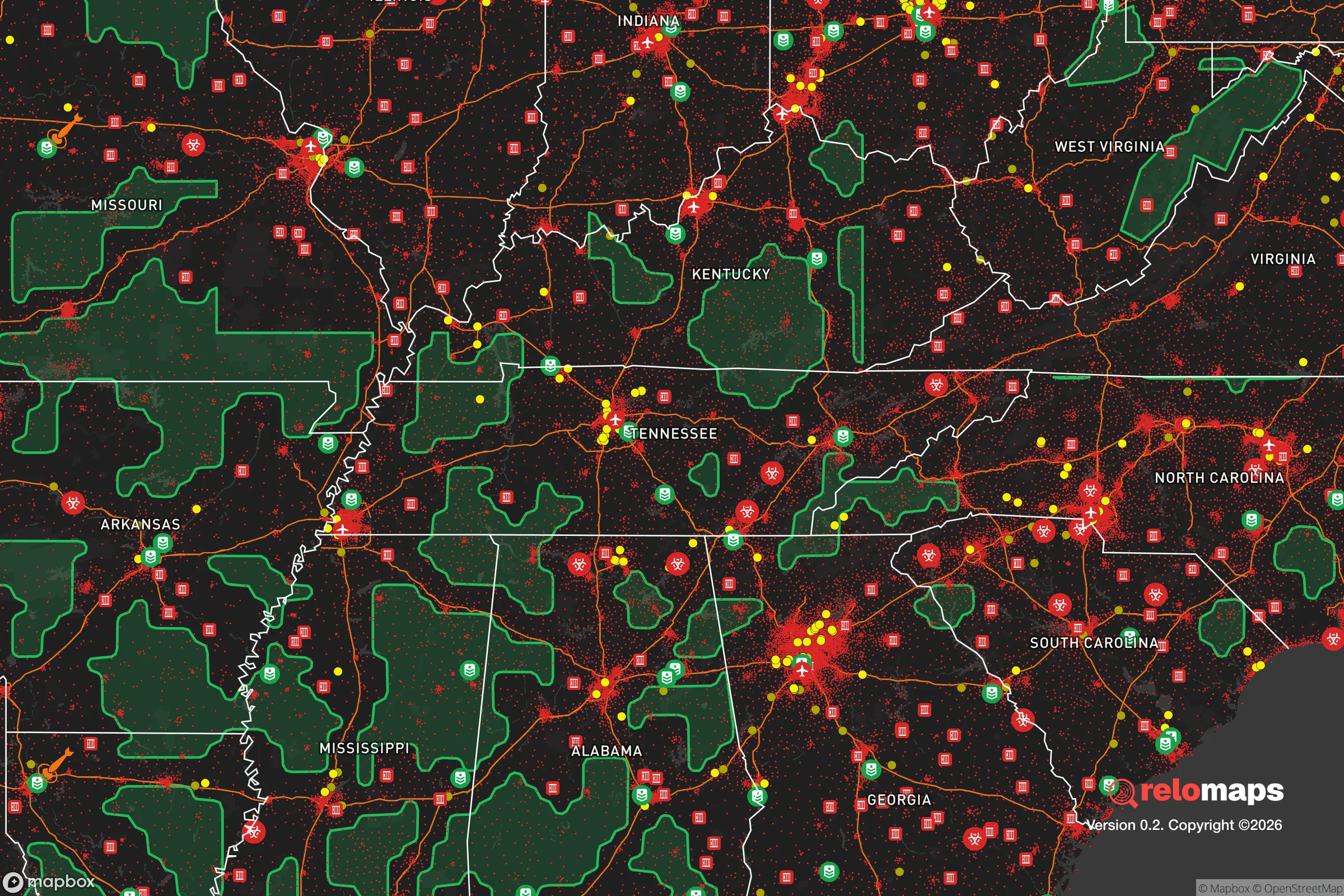


Important Note: For informational purposes only. This does not mean nothing bad ever happens in the green zones. Please use common sense. This is based on public data and modeled with AI. We tried to take a conservative approach but mistakes happen. We update this regularly as new information becomes available.
Solar Generator Recommendations
Backup power matters more here than in safer locations. We've picked three solar generators across budgets and capacity tiers — start with the budget unit if you only need a few essentials, or step up if you want to run a fridge and HVAC for days at a time.
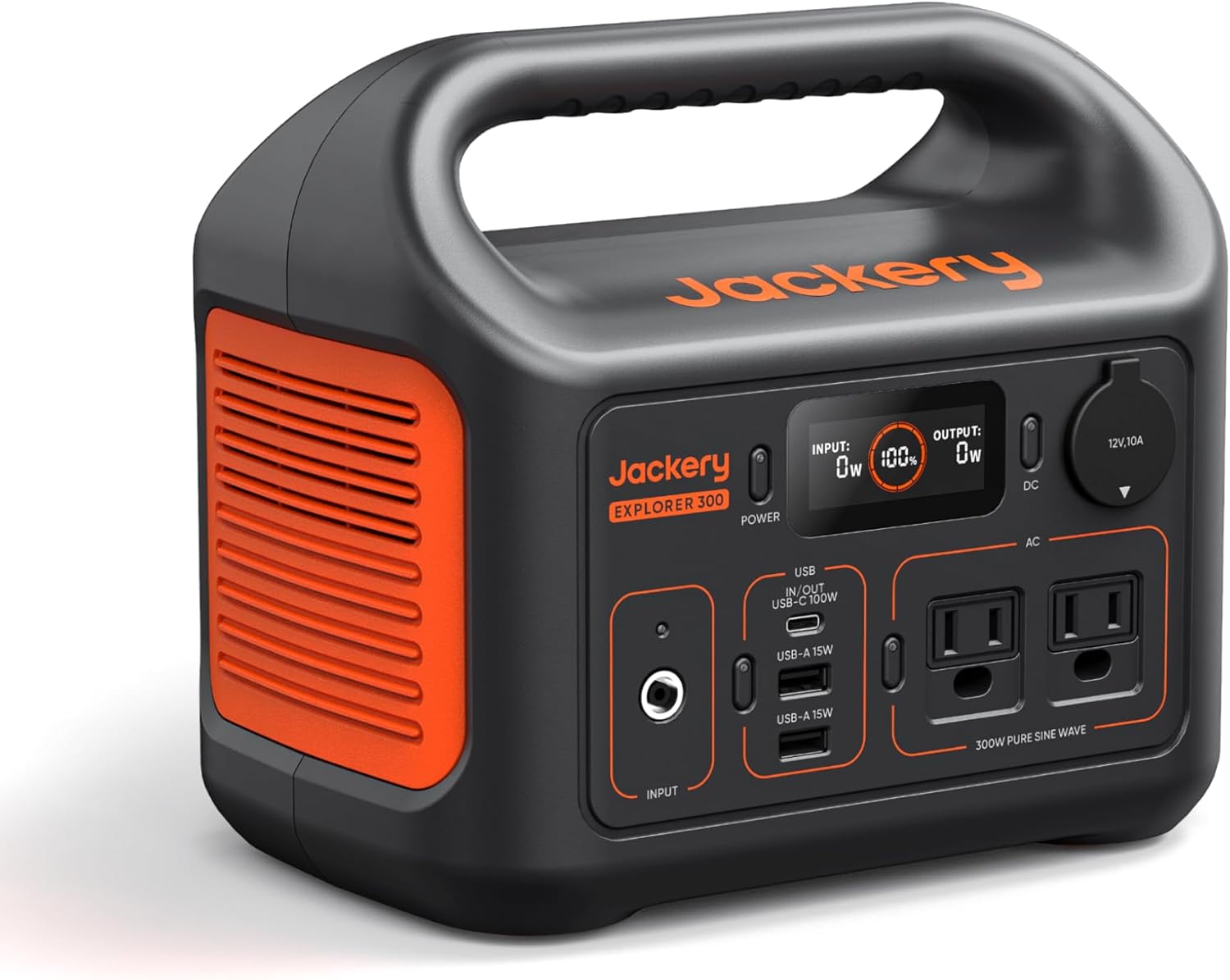
Jackery Portable Power Station Explorer 300
Budget OptionPower on the Go: Weighing only 11 lbs, it's convenient to set up and store with book-sized foldable solar panels

BLUETTI Portable Power Station AC180
Designed for both indoor and outdoor scenarios, AC180 is highly capable as it has a robost capacity and continuous output power.

EF ECOFLOW DELTA Pro Ultra Power Station
Upgraded PickEcoFlow DELTA Pro Ultra is a whole-home energy system designed to grow with your family. Integrated with the Smart Home Panel 2, it scales to meet your evolving energy needs — keeping your home powered, intelligent, and secure through every stage of life.
We earn a commission, at no additional cost to you.
Strategic Assessment Analysis
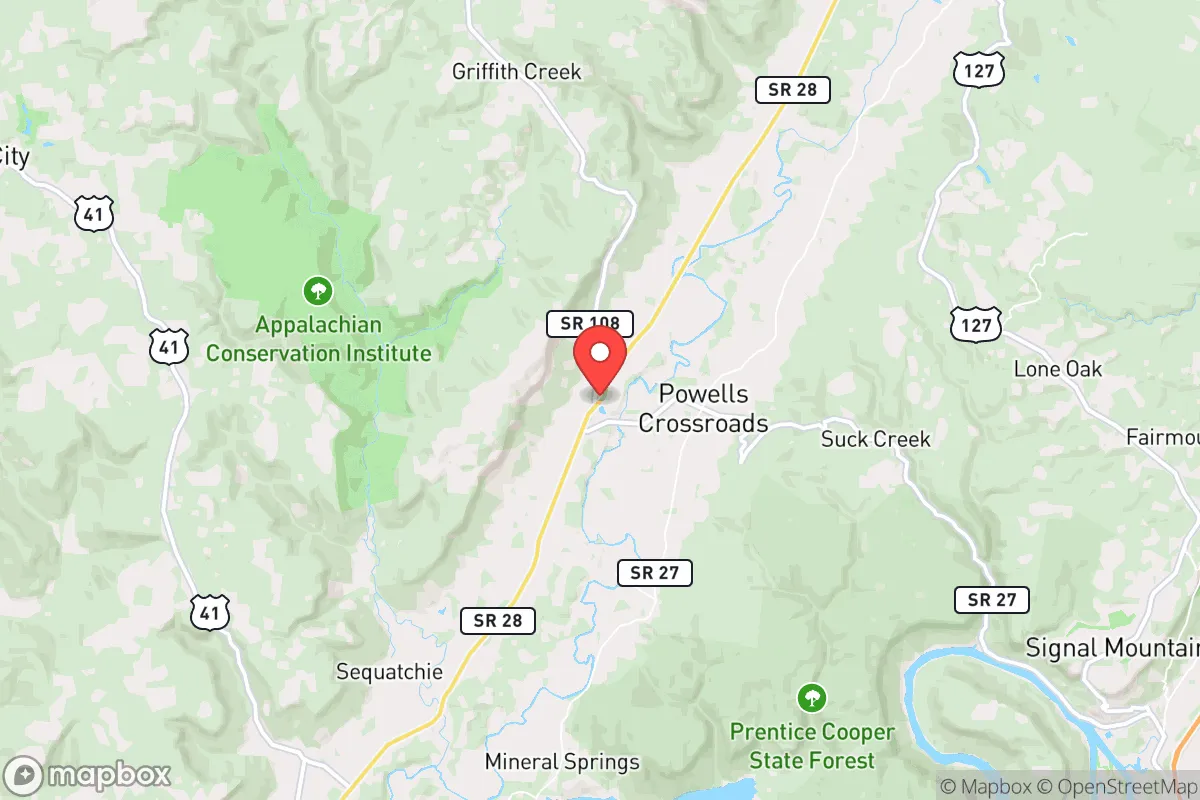
Whitwell, Tennessee, sits in a pocket of the Sequatchie Valley that offers a meaningful blend of remoteness and accessibility for someone weighing relocation with disaster readiness in mind. The town’s position—roughly 30 miles northwest of Chattanooga and 20 miles southwest of Dunlap—places it far enough from major urban centers to avoid the worst of a metropolitan collapse scenario, yet close enough to reach supplies or medical care in normal times. For a conservative-leaning reader thinking seriously about self-sufficiency, Whitwell’s geography, low population density, and relative obscurity make it a defensible base, though not without specific vulnerabilities that require honest assessment.
Geographic position and natural advantages for long-term stability
Whitwell’s primary strategic asset is its location within the Sequatchie Valley, a long, narrow valley flanked by the Cumberland Plateau to the west and Walden Ridge to the east. This topography provides natural barriers that slow movement and limit sightlines—useful for both privacy and basic defensibility. The valley floor is fertile, with deep soils that support small-scale agriculture, and the surrounding plateau offers hardwood forests for timber, fuel, and game. Annual rainfall averages around 54 inches, which is above the national average and supports reliable water tables and spring-fed creeks. The area sits at roughly 1,000 feet elevation in the valley, with the plateau rising to 2,000 feet, meaning flood risk is confined to low-lying creek bottoms rather than the town proper. Whitwell is also outside the known earthquake hazard zones of the New Madrid Seismic Zone to the west and the Eastern Tennessee Seismic Zone to the east, though minor tremors are possible. For a relocator, the combination of defensible terrain, arable land, and consistent water supply forms a solid foundation for long-term stability.
Risks, exposures, and proximity to fallout-relevant landmarks
The most significant risk for Whitwell is its proximity to Chattanooga and the Tennessee Valley corridor, which includes critical infrastructure that could become a liability in a major crisis. Chattanooga is home to the Tennessee Valley Authority’s Sequoyah Nuclear Plant (about 25 miles southeast of Whitwell), a two-unit pressurized water reactor that, while well-regulated, represents a potential fallout source in a severe accident or targeted event. The prevailing winds in the region are from the southwest, which would carry any airborne contamination toward the northeast—meaning Whitwell is downwind of Sequoyah in a typical weather pattern. Additionally, Interstate 24 runs roughly 15 miles south of town, and the Norfolk Southern rail line through the valley carries hazardous materials. In a grid-down or societal disruption scenario, these corridors could become vectors for displaced populations or looters moving away from Chattanooga. Whitwell’s small size (population around 1,700) and lack of major employers mean it is not a primary target, but its position along Highway 28, a secondary route connecting the valley to I-24, makes it a potential chokepoint for traffic. The town itself has no significant industrial or military targets, which is a net positive, but the broader region’s infrastructure—dams, chemical plants, and power substations—creates a moderate risk profile that a serious relocator should map and plan around.
Practical resilience for a relocator: food, water, energy, and defensibility
For someone aiming to build a self-sufficient homestead, Whitwell offers several practical advantages. The valley’s growing season runs roughly April through October, with USDA hardiness zone 7a allowing for a wide range of crops—tomatoes, corn, beans, squash, and even some stone fruits. Local soil tests from the University of Tennessee Extension office in nearby Jasper show good pH and organic matter content, though heavy clay in some areas requires raised beds or amendments. Water is the stronger asset: the Sequatchie River runs through the valley, and numerous springs and wells provide reliable off-grid sources. The Marion County Health Department reports typical well depths of 100–200 feet with yields of 5–15 gallons per minute, which is sufficient for a household and small livestock. Rainwater catchment is also viable given the annual precipitation. For energy, the surrounding plateau offers consistent wind exposure at higher elevations, though valley-floor sites are more sheltered. Solar potential is moderate—the region averages 4.5 peak sun hours per day, slightly below the Southwest but workable with a properly sized array. Wood heating is the most practical backup, with abundant hardwood on public and private timberland within a 10-mile radius. Defensibility is mixed: the valley’s narrow shape means a single roadblock on Highway 28 could control access, but it also means limited escape routes. The plateau to the east and west offers high ground for observation and retreat, but gaining access requires steep, unmaintained roads or hiking. A relocator should prioritize a property with a secondary egress—a trail, a four-wheel-drive track, or a neighbor agreement—to avoid being bottled in. Local gun culture is strong, with several shooting ranges and a sheriff’s office that is generally supportive of Second Amendment rights, which aligns with the defensive mindset of the target audience.
The overall strategic picture for Whitwell is one of moderate resilience with clear trade-offs. It is not a remote bunker location like far western Montana or the Upper Peninsula, but it offers a realistic balance of self-sufficiency potential and access to modern amenities for those who want to be prepared without going off-grid entirely. The town’s small size, conservative community values, and agricultural base provide a social fabric that can hold together under stress better than a suburban subdivision. The biggest weaknesses are the proximity to Chattanooga’s infrastructure risks and the limited road network, which could become liabilities in a fast-moving crisis. For a relocator who is willing to invest in well water, solar or wood heat, and a defensible property with multiple exits, Whitwell represents a solid choice in the Southeast—a place where you can grow food, keep livestock, and know your neighbors, while still being able to drive to a hardware store in 20 minutes. It is not a perfect sanctuary, but for someone thinking seriously about disaster readiness, it is a location that rewards preparation and punishes complacency.

* Values derived from national, state, county, city and local statistics and may differ in a specific area. Last updated: 2026-10-13T20:16:22.000Z
Narrative content on this page is AI-generated and may contain mistakes. Verify any details that matter before acting on them.
ReloMaps may earn a commission from affiliate links at no extra cost to you.

