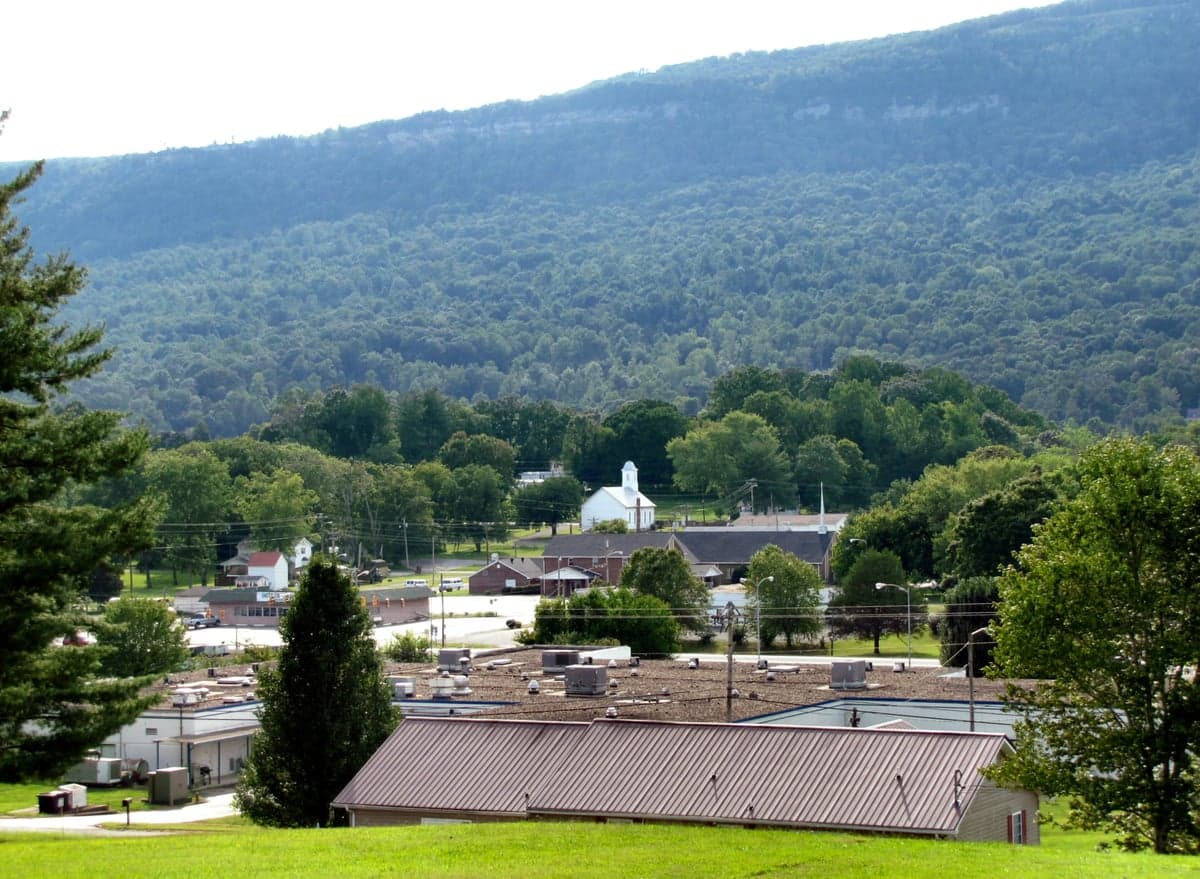
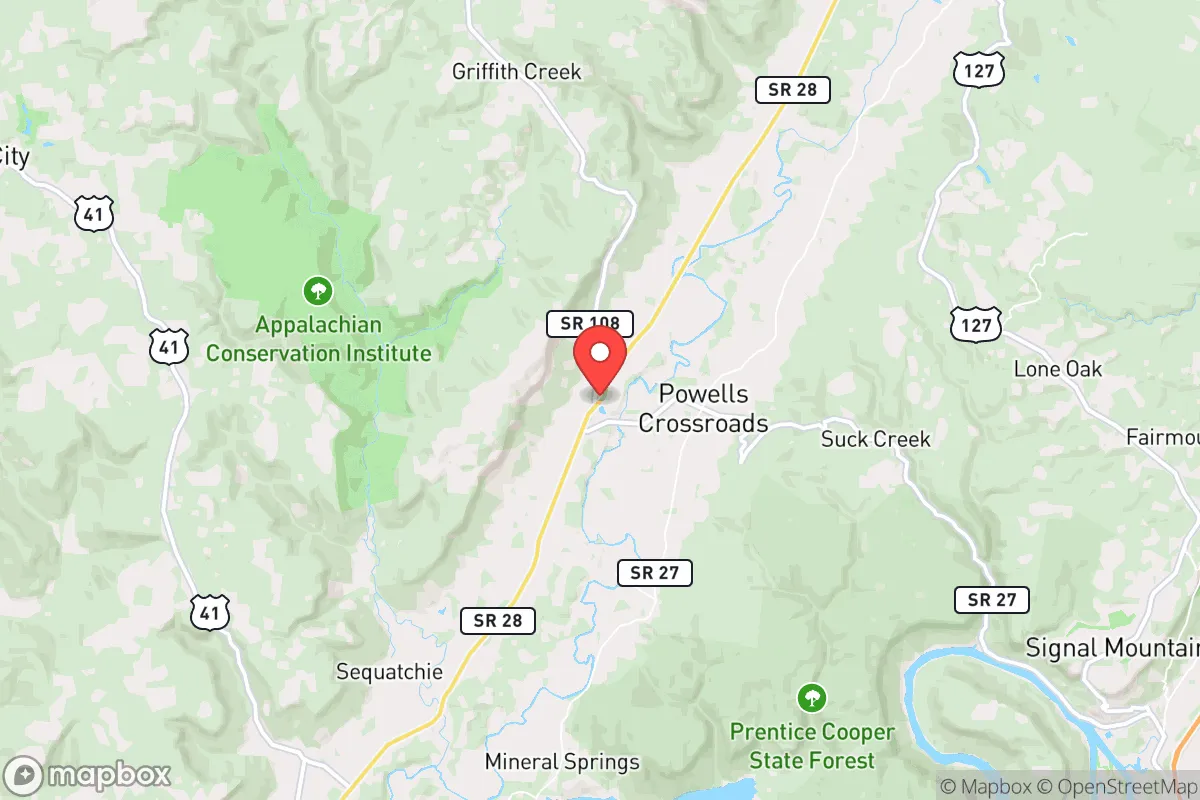
Photo: Wikipedia
Demographics of Whitwell, TN
Affluence Level in Whitwell, TN
A below-average socioeconomic profile. Incomes, home values, and educational attainment trail the U.S., with higher poverty and unemployment.
People of Whitwell, TN
The people of Whitwell, Tennessee, today number 1,863, forming a tightly knit, predominantly white community with a distinctly rural, family-oriented character. With 91.4% of residents identifying as white and a Hispanic population of 6.1%, the city remains far less diverse than the national average, and its 1.9% foreign-born share is a fraction of the U.S. figure. A notably low college attainment rate of 7.2% reflects a workforce rooted in local industry and trades, giving Whitwell a blue-collar, self-reliant identity that appeals to those seeking a slower, more affordable pace of life in the Sequatchie Valley.
How the city was settled and grew
Whitwell’s human history begins with its geography: the Sequatchie Valley, a long, fertile corridor between the Cumberland Plateau and Walden Ridge, drew early European-American settlers in the 1830s and 1840s. These were primarily Scots-Irish and English farmers from East Tennessee and North Carolina, who claimed land for subsistence agriculture and small-scale livestock. The town itself was formally platted in the 1880s after the arrival of the railroad, which transformed the valley’s economy. The Old Town District, centered around the original depot on Main Street, became the heart of the community, where merchants, blacksmiths, and railroad workers built homes and storefronts. A second wave arrived in the early 1900s, drawn by the region’s coal mining boom. Miners and their families settled in the Coal Hill neighborhood, a cluster of modest company-built houses on the town’s western edge, where many descendants of those mining families still live today. By the mid-20th century, Whitwell’s population had stabilized around 1,500, with the economy shifting from coal to manufacturing, particularly at the nearby Marion County industrial plants.
Modern era (post-1965)
After the 1965 Hart-Cellar Act, Whitwell saw virtually no immigration-driven diversification. The foreign-born share remained below 2%, and the city’s Black population registered at 0.0% in the most recent data. Instead, the modern era has been defined by domestic in-migration from other parts of Tennessee and the broader South. Beginning in the 1990s, families seeking affordable housing and a rural lifestyle began moving into newer subdivisions on the town’s periphery. The Valley View Estates subdivision, developed in the late 1990s on the eastern edge of town, attracted younger families and some retirees from Chattanooga (about 30 miles north). Meanwhile, the Sequatchie Ridge area, a collection of homes along the plateau’s western slope, became a destination for those wanting acreage and privacy. The Hispanic population, now 6.1%, is the only notable minority group, concentrated primarily in the Riverbend Mobile Home Park and a few rental properties near the industrial zone on Highway 28. These residents are largely employed in local manufacturing, construction, and agricultural labor, but the community remains overwhelmingly white and English-speaking.
The future
Whitwell’s population is projected to grow slowly, likely reaching 2,000–2,200 by 2040, driven by spillover from Chattanooga’s expanding exurbs. The city is becoming slightly more diverse, with the Hispanic share expected to rise to 8–10% as families move into the New Hope Road corridor, where newer, affordable single-family homes are being built. However, the Black and Asian populations are likely to remain negligible, as the area lacks the job diversity and urban amenities that attract those groups. The cultural identity is evolving cautiously: long-time residents in Coal Hill and Old Town maintain a traditional, church-centered lifestyle, while newcomers in Valley View Estates and Sequatchie Ridge are more likely to commute to Chattanooga for work, bringing slightly more diverse perspectives. The low college attainment rate (7.2%) suggests that Whitwell will continue to be a working-class community, with the local economy anchored by manufacturing, logistics, and the nearby Tennessee Valley Authority operations.
For someone moving in now, Whitwell offers a stable, affordable, and culturally homogeneous environment where family ties and local churches remain central. It is not a place of rapid change or demographic upheaval, but rather a slow-growing valley town where the biggest shifts are the gradual arrival of commuters and a modest increase in Hispanic residents. Newcomers who value quiet, low taxes, and a strong sense of community will find Whitwell welcoming, while those seeking racial or ethnic diversity, a highly educated workforce, or urban energy will need to look elsewhere.

* Values derived from national, state, county, city and local statistics and may differ in a specific area. Last updated: 2026-10-13T20:16:22.000Z
Narrative content on this page is AI-generated and may contain mistakes. Verify any details that matter before acting on them.
ReloMaps may earn a commission from affiliate links at no extra cost to you.

