Political ClimatePolitical Climate in Whiterock, TX
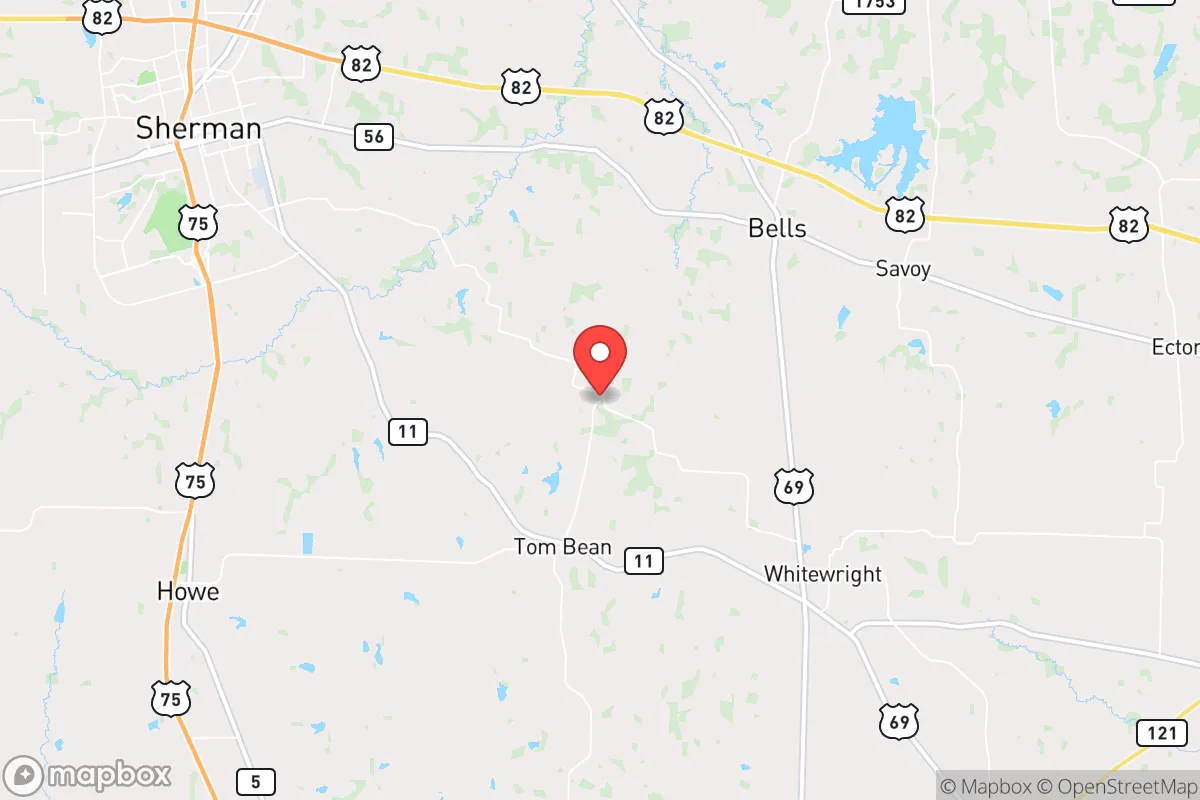
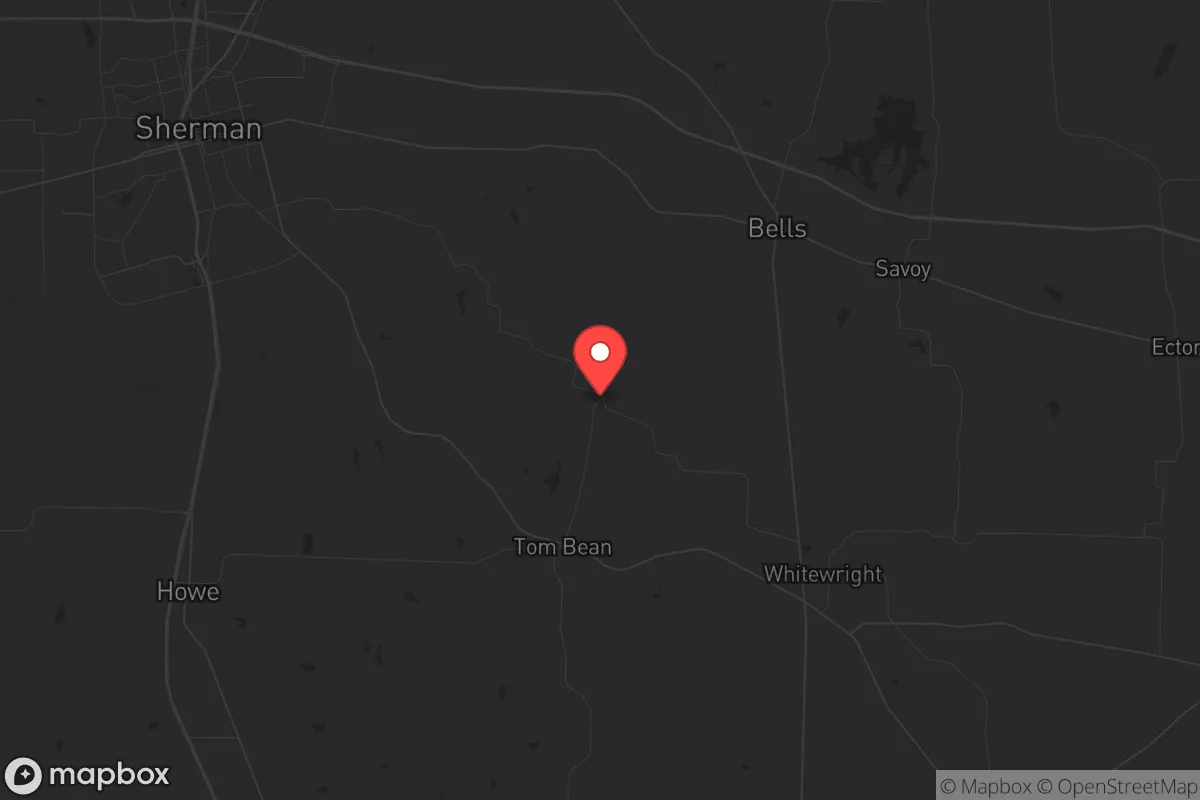
District shown is the primary district for this city’s centroid. Cities may span multiple districts.
Local Political AnalysisPolitical Analysis of Whiterock, TX
Whiterock, Texas, is about as reliably Republican as a place can get in this state, and it’s been that way for a long time. The Cook Partisan Voting Index (PVI) here sits at R+16, meaning the area votes about 16 points more Republican than the national average. That’s a full 12 points redder than the state of Texas as a whole, which has a PVI of R+4. If you’ve been around Whiterock for a while, you know the political conversation isn’t really about whether the county will go red—it’s about how deep that red will be, and what that means for the people who live here.
How it compares
To put Whiterock’s R+16 in perspective, the statewide Texas PVI of R+4 already makes the state a solidly Republican stronghold. But Whiterock is in a different league entirely. Drive 30 minutes east to a place like McKinney or Frisco, and you’ll find a more purple mix—those areas have been trending bluer as new transplants arrive from out of state. Head west toward Abilene or south toward Waco, and you’ll see similar deep-red territory, but Whiterock’s numbers are still notably higher. The contrast is sharpest when you compare Whiterock to the more competitive suburbs around Dallas-Fort Worth, where races can be genuinely close. Here, local primaries are often the real contest, and general elections are usually a foregone conclusion.
What this means for residents
For conservative residents, Whiterock’s political climate means their values are broadly reflected in local policy, from school board decisions to county commission votes. Taxes tend to stay lower, gun rights are strongly protected, and the local government is generally skeptical of state or federal overreach. For liberal residents, the reality is more about finding community in a minority position. There are progressive groups and individuals here, but they’re not a loud or dominant force. Most political conversations in daily life—at the grocery store, at the football game, at church—skew heavily conservative. That doesn’t mean liberals can’t live comfortably here; many do. But they’ll likely be in the habit of picking their battles and knowing when to nod along.
Culturally, Whiterock leans into its small-town, self-reliant identity. You’ll see more “Don’t Tread on Me” flags than rainbow banners, and the local chamber of commerce is more likely to host a candidate meet-and-greet for a Republican primary than a town hall on climate policy. The trajectory seems stable: as Texas as a whole inches toward a more competitive R+2 or R+3 in future cycles, Whiterock is likely to stay R+14 or R+16, buffered by its rural character and slower growth. New arrivals tend to be families looking for space and lower costs, not urbanites seeking progressive change. If you’re thinking of moving here, the political climate is straightforward: it’s deeply conservative, consistently so, and that’s unlikely to shift much in the next decade.

State Political ClimatePolitical Climate in Texas
State Political AnalysisPolitical Environment in the State
Texas has been a Republican stronghold for decades, with a Cook PVI of R+4 reflecting a solid but not overwhelming conservative lean. The state hasn't voted for a Democratic presidential candidate since Jimmy Carter in 1976, but the margin has narrowed from 16 points in 2012 to 9 points in 2016 and just under 6 points in 2020. The dominant coalition is a mix of rural conservatives, suburban moderates, and a growing number of Hispanic voters who have shifted rightward, while Democrats rely on the explosive growth of the urban crescent from Dallas-Fort Worth down through Houston, Austin, and San Antonio, plus the reliably blue border cities of El Paso and Brownsville.
Urban vs. rural divide
The political map of Texas is a study in contrasts. The major metros—Harris County (Houston), Dallas County, Bexar County (San Antonio), and Travis County (Austin)—are solidly Democratic, with Travis County voting for Biden by 51 points in 2020. The fast-growing suburbs of Collin County (north of Dallas) and Fort Bend County (southwest of Houston) have flipped from red to purple, with Collin County going from +17 R in 2012 to +2 R in 2020. Meanwhile, rural West Texas, the Panhandle, and East Texas remain deeply Republican: Lubbock County voted +37 R, and rural counties like Hemphill and Roberts in the Panhandle routinely hit +80 R. The Rio Grande Valley, once a Democratic stronghold, has shifted dramatically—Starr County, which voted for Hillary Clinton by 60 points in 2016, went for Biden by only 5 points in 2020, signaling a major realignment among Hispanic voters.
Policy environment
Texas operates under a low-tax, low-regulation model that appeals to conservatives. There is no state income tax, relying instead on property taxes and a 6.25% state sales tax (local options can push it to 8.25%). The regulatory posture is business-friendly, with no state-level minimum wage above the federal $7.25 and right-to-work laws that limit union power. Education policy is a flashpoint: the state funds public schools through a complex Robin Hood system that redistributes property tax revenue from wealthy districts to poor ones, and the 2023 school voucher bill (SB 8) passed, allowing families to use public funds for private school tuition. Healthcare is a perennial issue—Texas has the highest uninsured rate in the nation at 16.6%, having refused Medicaid expansion under the ACA. Election laws were tightened with SB 1 in 2021, restricting mail-in voting, adding ID requirements, and banning drive-through and 24-hour voting. Abortion is effectively banned after the 2021 trigger law (HB 1280) and the 2023 heartbeat bill (SB 8), with no exceptions for rape or incest.
Recent policy direction
The last five years have seen a sharp rightward shift in state policy. On gun rights, Texas became a permitless carry state with HB 1927 in 2021, allowing anyone over 21 who can legally own a firearm to carry it without a license. Parental rights in education were strengthened with HB 3979 (the "Critical Race Theory" law) and HB 900 (the "READER Act"), which restrict how race and gender are taught and require age-appropriate content ratings for school library books. Speech and privacy saw the passage of HB 20 in 2023, which prohibits social media platforms from moderating content based on viewpoint—a law currently tied up in court. Medical and bodily autonomy is heavily restricted: abortion is banned, and gender-affirming care for minors was outlawed with SB 14 in 2023. Property rights were bolstered by the 2023 passage of SB 2039, which limits the ability of homeowners' associations to restrict solar panels and water conservation features. Taxation remains a priority: the 2023 session cut property taxes by $18 billion through a combination of higher homestead exemptions and a compression of school district tax rates. Voting access was tightened with SB 1, which also made it a crime for election officials to proactively mail out absentee ballot applications.
Civil unrest & political movements
Texas has seen its share of political flashpoints. The 2020 Black Lives Matter protests in Austin, Houston, and Dallas were large and occasionally violent, leading to the Austin City Council cutting its police budget by $150 million (later partially restored). The 2021 winter storm and subsequent power grid failure (ERCOT) sparked bipartisan outrage, but the political fallout was muted. Immigration politics are a constant: Governor Abbott's Operation Lone Star, launched in 2021, deployed state troopers and National Guard to the border, bused migrants to Democratic-led cities like New York and Chicago, and installed razor wire and buoys in the Rio Grande—a policy that has drawn lawsuits from the Biden administration. Sanctuary city policies are banned statewide (SB 4, 2017), but some cities like Austin and San Antonio have declared themselves "welcoming cities" with limited cooperation with ICE. Secession rhetoric flares up periodically—the Texas Nationalist Movement has some grassroots support, but it's a fringe position. Election integrity remains a hot topic: the 2020 election saw no evidence of widespread fraud, but the 2021 voting law was passed in response to unsubstantiated claims, and the 2022 primaries saw a purge of over 1 million voter registrations for inactivity.
Projection
Over the next 5-10 years, Texas is likely to become more competitive at the statewide level, but not necessarily more liberal. The in-migration of roughly 1,000 people per day—many from California and other blue states—is changing the electorate, but these newcomers are often moderate conservatives or libertarians drawn by the low taxes and business climate, not progressive activists. The Hispanic shift rightward, particularly in the Rio Grande Valley and along the border, could offset Democratic gains in the suburbs. The state's growing diversity and urbanization will continue to pressure the GOP to moderate on issues like immigration and healthcare, but the party's base in rural and exurban areas is deeply conservative and will resist. Expect the state to remain under Republican control for the near term, but with narrower margins—the 2022 gubernatorial race saw Abbott win by 11 points, down from 13 in 2018. The 2026 and 2028 elections will be the real test: if Democrats can turn out the urban vote and hold the Hispanic shift, Texas could become a true swing state. If the GOP consolidates its gains among Hispanic voters and rural turnout stays high, the state will remain red but with a more diverse coalition.
For a new resident, the practical takeaway is that Texas offers a low-tax, business-friendly environment with a strong conservative tilt on social issues, but the political landscape is shifting. If you're a conservative, you'll find a state government that largely reflects your values, with a growing Hispanic conservative movement and a strong gun culture. If you're a liberal, you'll find vibrant blue cities like Austin, Houston, and Dallas where your views are the majority, but you'll be living under state laws that may conflict with your values on abortion, voting, and education. The key is to choose your location carefully—the political reality of a suburban Collin County home is very different from a downtown Austin apartment, and both are a world away from a ranch in the Panhandle. Texas is big enough to accommodate a wide range of political preferences, but the state-level policies are unmistakably conservative, and that's not changing anytime soon.
* Values derived from national, state, county, city and local statistics and may differ in a specific area. Last updated: 2026-07-24T16:17:11.000Z
Narrative content on this page is AI-generated and may contain mistakes. Verify any details that matter before acting on them.
ReloMaps may earn a commission from affiliate links at no extra cost to you.

