 Popular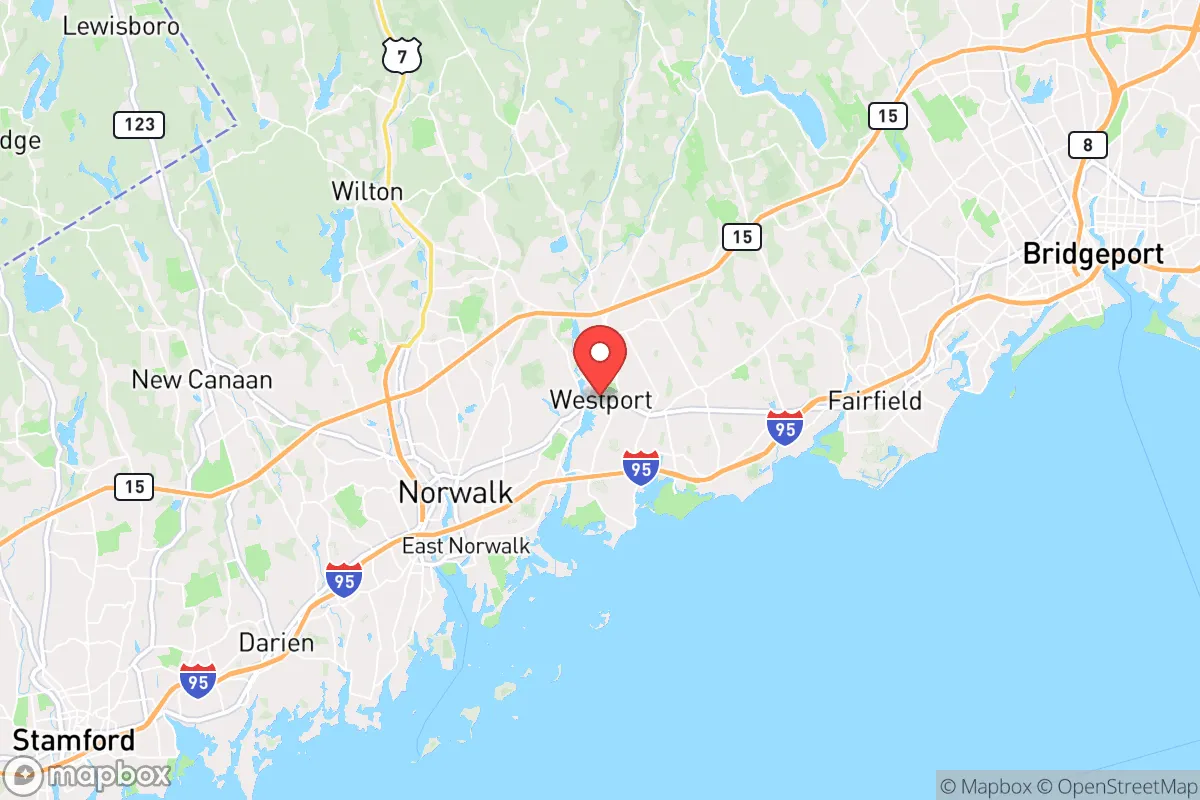
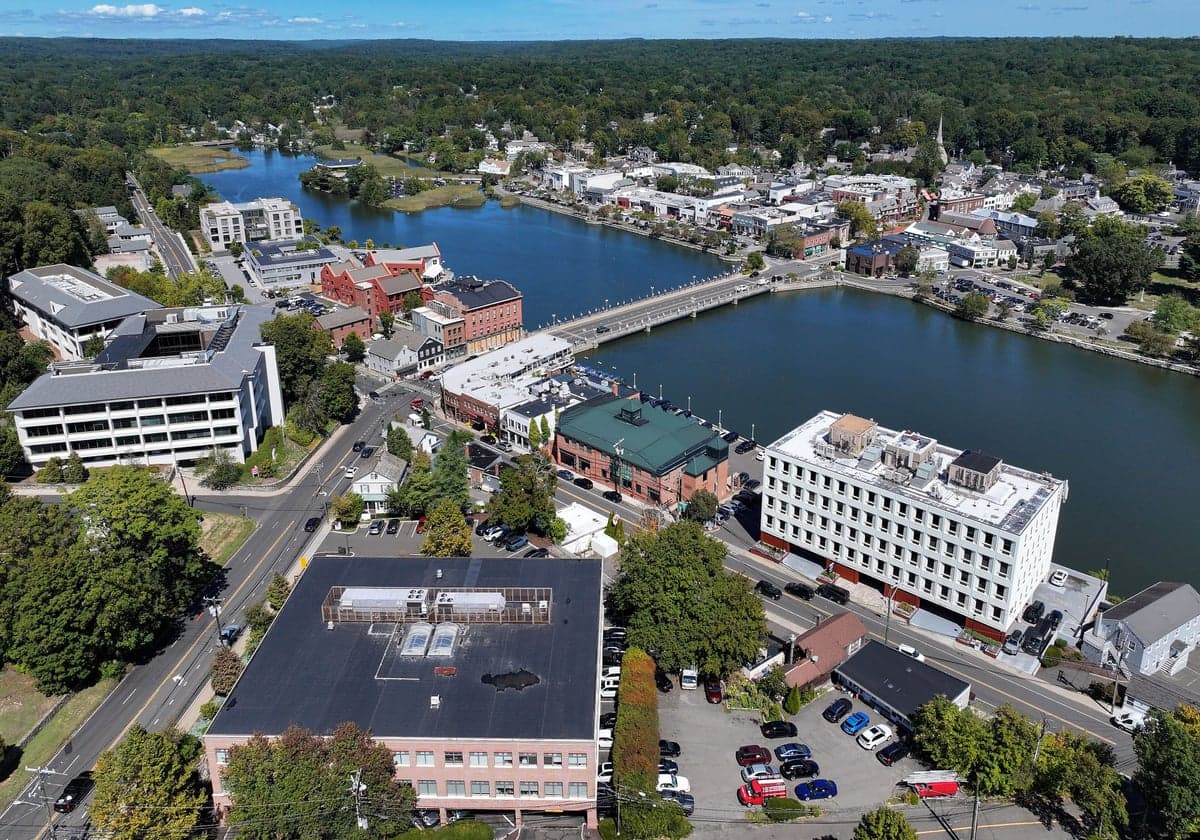
Photo: Wikipedia
Political ClimatePolitical Climate in Westport, CT
District shown is the primary district for this city’s centroid. Cities may span multiple districts.
Local Political AnalysisPolitical Analysis of Westport, CT
Westport is one of the most reliably Democratic towns in Connecticut, and it has only gotten bluer over the last decade. With a Cook PVI of D+13, the town sits a solid five points to the left of the state as a whole (D+8), and in recent presidential cycles, Democratic candidates have routinely carried Westport by margins of 30 to 40 points. This wasn’t always the case—Westport was a genuine swing town as recently as the 1980s, when it backed Reagan—but the shift toward the left has been steady and shows no sign of reversing.
How it compares
To understand Westport’s politics, you have to look at the immediate neighbors. Just a few miles up the Post Road, Fairfield is a classic swing town—it went for Biden in 2020 but has elected Republicans to local office and leans much closer to the state’s D+8 average. Head further east into Trumbull or Monroe, and you’re in reliably Republican territory that votes like the rest of Fairfield County’s inland suburbs. Westport, by contrast, behaves more like its coastal neighbors to the south: Norwalk has a strong Democratic base, and Stamford is similarly left-leaning, but Westport is the most uniformly Democratic of the bunch. The town’s D+13 PVI puts it in the same company as New Haven and Hartford, though Westport reaches that number through affluent, college-educated professionals rather than urban voters. The trajectory matters too—Westport’s Republican vote share has fallen in every presidential election since 2004, and the town’s GOP committee now struggles to field candidates for even local offices.
What this means for residents
For liberal residents, Westport is about as comfortable as it gets in Connecticut. The town’s Democratic Town Committee is well-organized, turnout is consistently above 80% in presidential years, and local boards and commissions are dominated by Democrats. You’ll find active chapters of progressive groups, and the school board and RTM (Representative Town Meeting) rarely see serious ideological fights—the debates are more about budgets and building projects than culture-war issues. For conservative residents, the reality is that you’re in a clear minority, but not an isolated one. There’s a small but vocal Republican Town Committee, and in local elections, a handful of GOP candidates do win seats on the RTM and Board of Finance, usually by running on fiscal restraint rather than national issues. The practical effect is that Westport’s politics are less about partisan combat and more about managing a high-cost, high-services town—the real arguments are over taxes, school spending, and affordable housing mandates from the state.
Culturally, Westport’s political identity is tied to its role as a creative and financial hub. The town has long attracted media, advertising, and finance professionals who commute to New York, and that demographic skews socially liberal and fiscally moderate. You’ll see strong support for environmental initiatives, public schools, and gun safety measures, but also a pragmatic streak when it comes to property taxes and business development. The state’s D+8 lean means Westport’s representatives in Hartford are almost always Democrats, and the town’s influence in state politics is outsized for its size. Looking ahead, the only real question is whether Westport gets even bluer—and given the demographic trends, most locals expect it will.

State Political ClimatePolitical Climate in Connecticut
State Political AnalysisPolitical Environment in the State
Connecticut has a solid Democratic lean, with a Cook PVI of D+8, but calling it a deep-blue state misses the nuance. The Democratic dominance is driven almost entirely by the affluent, densely populated corridor along the Long Island Sound, while the rest of the state — especially the eastern and northwestern corners — votes reliably Republican. Over the past 20 years, the state has shifted leftward at the presidential level (Obama won by 17 points in 2012, Biden by 20 in 2020), but down-ballot races have tightened, and the state legislature has remained under Democratic control since 2011. For a conservative relocator, the reality is that you’ll live in a state where state-level policy is set by a progressive majority, but your day-to-day life in many towns will feel politically neutral or even conservative.
Urban vs. rural divide
The political map is a classic coastal-versus-inland story. The Democratic stronghold is the I-95 corridor from Greenwich to New Haven, anchored by Stamford, Bridgeport, and New Haven. These cities, along with Hartford, produce massive Democratic margins — Bridgeport gave Biden 80% of the vote in 2020. The suburbs of Fairfield County, like Greenwich and Westport, are reliably blue but with a moderate, fiscally conservative streak. The real Republican base is in the rural and exurban towns of Litchfield County (think Litchfield and Kent) and the Quiet Corner of eastern Connecticut, including Killingly and Pomfret. In 2020, Trump won Litchfield County by 4 points, while the eastern counties of Windham and Tolland were competitive. The state’s Second Congressional District, which covers most of the eastern half, is the only one that regularly flips between parties — it’s held by Democrat Joe Courtney since 2007, but it’s a perennial GOP target. The divide isn’t just urban vs. rural; it’s also coastal vs. inland, with the shoreline towns like Old Saybrook and Madison trending purple, often splitting tickets between a Democratic governor and Republican state legislators.
Policy environment
Connecticut’s policy environment is defined by high taxes and a strong regulatory hand. The state has a progressive income tax (top rate 6.99% on income over $500k), one of the highest property tax burdens in the nation (average effective rate around 2.1%), and a 6.35% sales tax. There is no right-to-work law, and union influence is significant, especially in public-sector bargaining. Education policy is centralized: the state funds schools through a complex formula, and local control is real but constrained by state mandates. Healthcare is heavily regulated, with the state running its own exchange (Access Health CT) and expanding Medicaid under the Affordable Care Act. Election laws are among the most liberal in the country: no-excuse absentee voting, early voting (passed in 2023), automatic voter registration, and same-day registration. For a conservative, the tax burden is the biggest practical concern, but the regulatory environment also affects housing — zoning laws in many towns are famously restrictive, driving up home prices and limiting new construction.
Recent policy direction
The last five years have seen Connecticut move decisively left on several fronts. In 2023, the legislature passed a broad gun control package (HB 6667) that banned open carry, raised the minimum purchase age to 21, and expanded the state’s assault weapons ban — making it one of the strictest states in the nation for gun owners. On education, the state passed a law in 2022 requiring all public schools to offer free menstrual products, and in 2021 it became one of the first states to mandate that public schools teach LGBTQ+ inclusive curriculum. Parental rights have been a flashpoint: a 2023 bill that would have required schools to notify parents if a child changed their gender identity failed, but the debate is ongoing. On medical and bodily autonomy, Connecticut is a safe haven state for abortion, with a 2022 law protecting providers and patients from out-of-state lawsuits. Property rights are constrained by strict zoning and a statewide “fair share” housing law (passed 2023) that requires towns to plan for more affordable housing. Privacy and surveillance: the state passed a data privacy law in 2022 (CTDPA) giving residents control over their personal data, but it’s weaker than California’s. On voting, the 2023 early voting law was a major expansion. For a conservative, the direction is clear: the state is tightening gun laws, expanding LGBTQ+ protections, and centralizing housing policy, while maintaining high taxes.
Civil unrest & political movements
Connecticut is not a hotbed of civil unrest, but there have been visible flashpoints. The 2020 Black Lives Matter protests in Hartford, New Haven, and Stamford were large but largely peaceful. The state’s sanctuary policy — a 2013 law (Trust Act) limiting local police cooperation with federal immigration enforcement — has been a persistent source of tension, especially in towns like Danbury and Norwalk where immigration enforcement debates have flared. In 2023, a proposal to repeal the Trust Act failed in the legislature. On the right, the “Second Amendment sanctuary” movement gained traction in several towns — Lebanon and Easton passed resolutions opposing state gun laws, though they have no legal force. Election integrity controversies have been muted compared to swing states, but in 2020, a few Republican town committees raised concerns about absentee ballot processing, and the state’s election security was debated in the 2022 gubernatorial race. A new resident would notice the political activism mostly in the form of yard signs and local town hall meetings — the state’s small-town character means local politics can be surprisingly intense, especially around zoning and school budgets.
Projection
Over the next 5-10 years, Connecticut’s Democratic lean is likely to hold, but the margin could narrow. The state is losing population — it’s one of the few states that shrank in the 2020 Census — and the out-migration is disproportionately from the more conservative, lower-tax inland areas. Meanwhile, in-migration from New York City is filling Fairfield County with affluent, left-leaning professionals, reinforcing the coastal blue vote. The state’s fiscal challenges — a massive unfunded pension liability (over $40 billion) — will force tough choices, likely leading to either tax increases or service cuts, which could accelerate out-migration. For a conservative moving in now, the expectation should be that the state will remain under Democratic control, with continued expansion of gun control, housing mandates, and progressive social policy. However, the state’s small size and tradition of moderate Republicanism (think former Governor M. Jodi Rell) mean that a pragmatic conservative can still find a comfortable life in towns like Simsbury or Glastonbury, where local politics are often more about property taxes and school quality than national culture wars.
For a new resident, the bottom line is this: Connecticut offers a high quality of life — excellent schools, low crime, beautiful coastline — but it comes with a high price tag and a policy environment that will feel restrictive if you value gun rights, low taxes, or local control over housing. If you’re a conservative who can afford the taxes and doesn’t mind living in a blue state where your vote for governor or state legislature is unlikely to flip the state, you’ll find plenty of like-minded neighbors in the inland towns and a state government that, while progressive, is generally competent and stable. If you’re a liberal, you’ll find a state that aligns with your values on most issues, with the added bonus of being a short train ride from New York City. Either way, the key is picking the right town — Connecticut’s political diversity is in its 169 towns, not in its statewide results.
* Values derived from national, state, county, city and local statistics and may differ in a specific area. Last updated: 2026-09-07T05:38:19.000Z
Narrative content on this page is AI-generated and may contain mistakes. Verify any details that matter before acting on them.
ReloMaps may earn a commission from affiliate links at no extra cost to you.

