 Popular
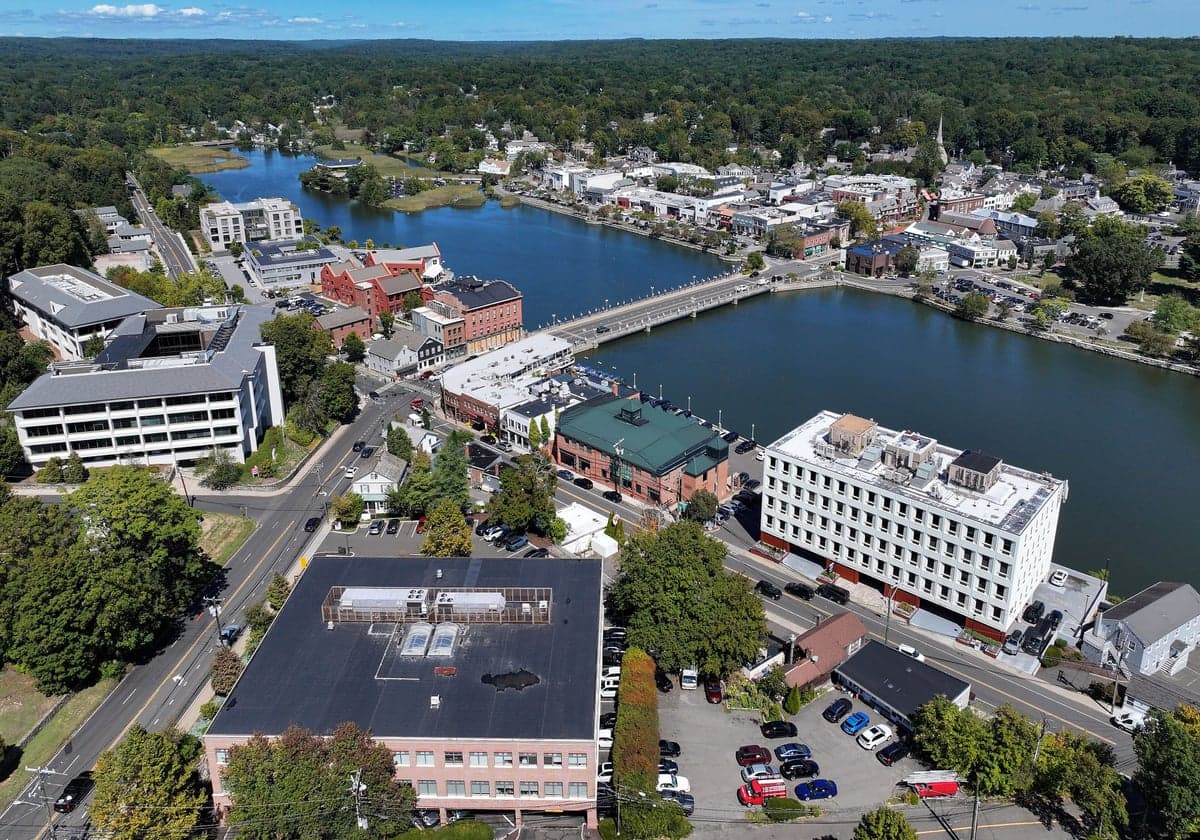
Photo: Wikipedia
Personal Sovereignty in Westport, CT
Viable for self-reliance. Generally workable, though some barriers may limit total independence.
What does Personal Sovereignty tell us?
Personal Sovereignty measures your capacity for self-reliance and independence with minimal government friction. Higher scores mean fewer barriers between you and the way you want to live... but it assumes you have the space you need and good neighbors.
What does this tell us?
Personal Sovereignty measures your capacity for self-reliance and independence with minimal government friction. Higher scores mean fewer barriers between you and the way you want to live... but it assumes you have the space you need and good neighbors.
State Policy
Energy independence: Importer (5% of energy produced in-state)
Personal Liberty
Homesteading

Personal Liberty Analysis
Westport, Connecticut presents a complex personal sovereignty environment where high individual wealth and education levels coexist with some of the Northeast's most assertive state-level regulatory and tax structures. For a relocation-minded individual or family prioritizing autonomy, the town offers substantial personal liberty in lifestyle and expression but operates within a state framework that significantly constrains fiscal independence, self-defense choices, and property rights compared to lower-regulation states in the South or Mountain West. The key trade-off is access to elite public services and a highly educated, like-minded community in exchange for a heavier hand from Hartford in daily economic and personal decisions.
Tax burden and regulatory posture in Fairfield County
Connecticut's tax burden is among the highest in the nation, and Westport residents feel this acutely. The state levies a progressive income tax with rates reaching 6.99% on high earners, and there is no standard deduction — meaning every dollar of income is taxed from the first dollar. Property taxes in Westport are substantial, with mill rates around 16.5 to 17.5 per $1,000 of assessed value, and given the town's high property values, annual tax bills frequently exceed $15,000 to $25,000 for a typical single-family home. There is no local sales tax beyond the state's 6.35% rate, but the overall effective tax rate on a high-income household can approach 12-14% when combining income, property, and sales taxes. The regulatory environment is dense: Connecticut has strict environmental regulations, a complex business permitting process, and some of the nation's most aggressive climate mandates, including a ban on new gas-powered vehicle sales by 2035. For a self-reliant individual, this means less flexibility to modify property, start a home business, or make independent energy choices without navigating multiple layers of town and state approval. However, the trade-off is high-quality public schools, well-maintained infrastructure, and a town government that is generally responsive to residents — though that responsiveness often leans toward preserving the status quo rather than enabling rapid personal or commercial innovation.
Self-defense rights and Connecticut gun law specifics
Connecticut's gun laws are among the most restrictive in the United States, and Westport residents must comply with a comprehensive regulatory framework that significantly limits self-defense options. The state requires a permit to purchase any firearm, a background check for all sales (including private transfers), and a separate permit to carry a handgun concealed in public. The "may-issue" permitting system for concealed carry was effectively converted to "shall-issue" by court rulings, but local authorities still retain discretion in practice, and the process involves a mandatory safety course, fingerprinting, and a 60-90 day wait. Magazine capacity is capped at 10 rounds, and the state maintains an assault weapons ban that covers many popular semi-automatic rifles. Stand-your-ground laws do not exist in Connecticut; instead, the state follows a "duty to retreat" doctrine in public spaces, meaning a person must attempt to avoid a confrontation before using deadly force unless they are in their own home. For a family prioritizing self-defense sovereignty, this environment requires significant advance planning, legal compliance costs, and acceptance that the legal system heavily favors prosecution over presumption of justified use of force. Open carry is effectively prohibited in practice due to permitting restrictions, and transporting firearms across state lines requires careful attention to neighboring states' laws, as New York and Massachusetts have even stricter regimes.
Self-reliance and homesteading viability: lot sizes, zoning, and off-grid feasibility
Westport's zoning and land-use regulations make traditional homesteading or off-grid living largely impractical for most residents. Minimum lot sizes in residential zones typically range from one to two acres, but the town's dense suburban character and strict building codes limit agricultural use. Keeping chickens or small livestock is permitted on lots of one acre or more with a permit, but larger animals like goats or pigs are generally prohibited, and beekeeping requires registration with the state. Off-grid energy systems face significant hurdles: Connecticut's net metering policies allow solar panel installation, but the state's building code requires grid connection for new construction, and battery storage systems must meet stringent fire safety standards. Rainwater collection is legal but limited to non-potable uses, and composting toilets require a special permit from the local health department. The town's tree preservation ordinances and wetland regulations further restrict property modification, meaning a resident cannot simply clear land or build structures without extensive environmental review. For a family seeking genuine self-reliance — growing a substantial portion of food, generating independent power, or living with minimal municipal services — Westport is a poor fit. The regulatory environment is designed for affluent suburban living with high service expectations, not for independent homesteading. Neighboring towns like Weston or Redding offer slightly larger lots and more rural character, but the same state-level constraints apply.
Personal liberties: parental rights, medical autonomy, speech, and property
On social and cultural liberties, Westport offers a high degree of personal freedom in expression, lifestyle, and association, but state law imposes notable constraints on parental rights and medical autonomy. Connecticut mandates comprehensive sex education in public schools, and parents cannot opt their children out of specific lessons — only from the entire program. The state also has a robust vaccine mandate for school attendance, with only medical exemptions allowed; philosophical or religious exemptions are not recognized. Medical autonomy for adults is relatively strong: the state permits medical marijuana use with a doctor's recommendation, and assisted suicide is legal under the 2023 "Aid in Dying" law, though with strict procedural requirements. Property rights are significantly curtailed by Connecticut's strict liability laws for dog bites, a statewide ban on short-term rentals in many residential zones (Westport has its own regulations limiting Airbnb-style rentals), and the state's "right to farm" law, which provides limited protection for agricultural activities but is often preempted by local zoning. Free speech is protected under the First Amendment, but the state has enacted laws restricting "hate speech" in public schools and on college campuses, which some residents view as chilling legitimate political discourse. For a conservative-leaning family, the most significant liberty concern is likely the erosion of parental authority in education and healthcare decisions, combined with the inability to easily modify property or engage in alternative medical practices without state oversight.
Overall, personal sovereignty in Westport is best understood as a trade-off: high autonomy in lifestyle and cultural expression, but low autonomy in fiscal, self-defense, and property decisions. Compared to areas like rural New Hampshire, Texas, or Florida, Westport offers less independence in the traditional conservative sense — lower tax freedom, tighter gun laws, and more regulatory oversight of daily life. However, for a family that values elite public education, low crime, and a politically engaged community, the constraints may be acceptable. The town's real appeal is not to the homesteader or the libertarian, but to the professional who wants a safe, well-run community with excellent schools and is willing to accept a heavier regulatory hand in exchange for those benefits. For those prioritizing maximum personal sovereignty, Westport is a compromise; for those seeking a high-quality suburban life within a blue-state framework, it is a top-tier choice.

* Values derived from national, state, county, city and local statistics and may differ in a specific area. Last updated: 2026-09-07T05:38:19.000Z
Narrative content on this page is AI-generated and may contain mistakes. Verify any details that matter before acting on them.
ReloMaps may earn a commission from affiliate links at no extra cost to you.

