 Popular
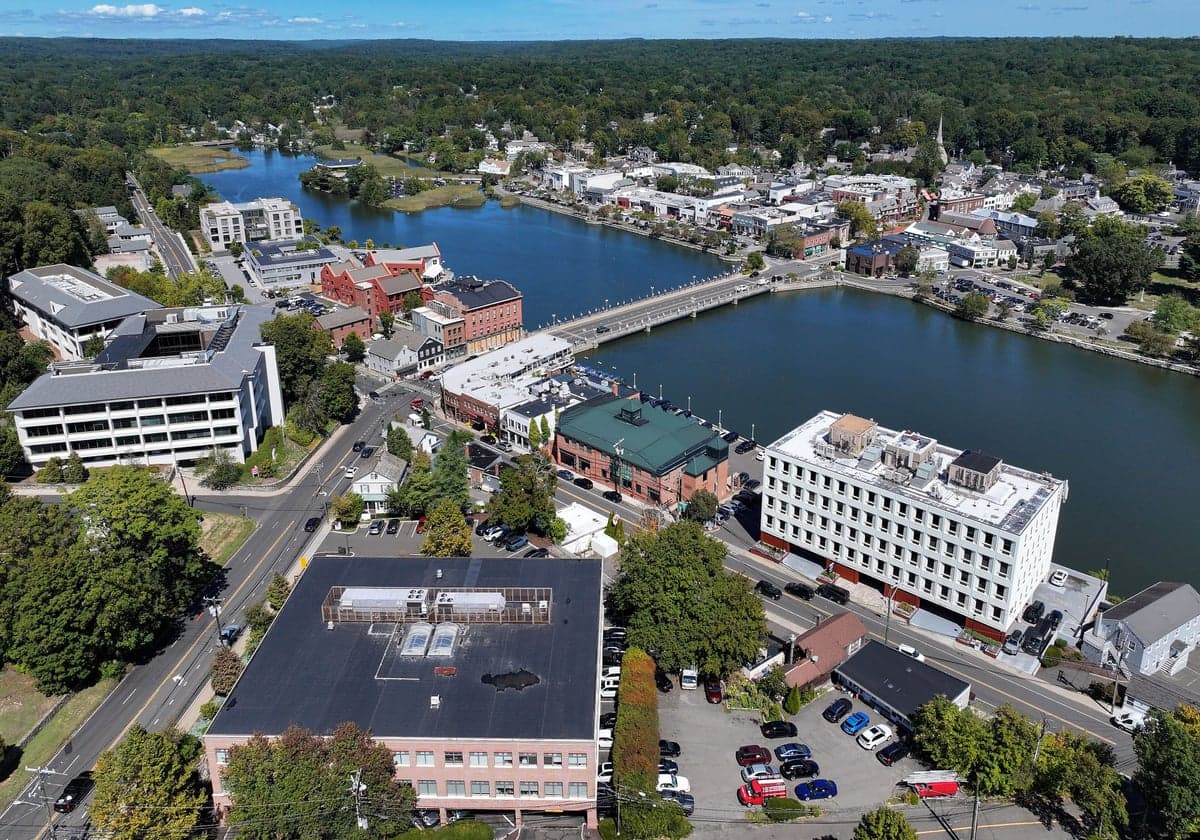
Photo: Wikipedia
Demographics of Westport, CT
Historical data isn't available for Westport, CT. Trends shown are for Connecticut.
Affluence Level in Westport, CT
A wealthy area with high-earning, well-educated households. Incomes, home values, and educational attainment meaningfully outpace national averages.
People of Westport, CT
Westport, Connecticut, is a small, affluent coastal town of 2,863 residents, distinguished by an exceptionally high college-educated rate of 81.7% and a population that is 81.1% white. The town’s character is defined by its historic New England charm, a strong sense of local governance, and a demographic profile that is both highly educated and predominantly white, with a notable East/Southeast Asian community of 8.1% and a Hispanic population of 6.1%. The people of Westport today are a blend of long-standing Yankee families, professionals commuting to New York City, and creative-industry workers, creating a community that values both tradition and progressive-minded living.
How the city was settled and grew
Westport’s original population was drawn by its natural harbor and fertile land. The area was settled in the mid-17th century by English colonists, who established farming and maritime trade. The town was officially incorporated in 1835, separating from Norwalk and Weston. The early economy centered on shipping, onion farming, and later, the manufacturing of hats and textiles. The historic Compo Beach and Compo Hill neighborhoods were among the first settled areas, with their deep-water access supporting a thriving coastal trade. The Green’s Farms section, one of the oldest neighborhoods, was originally a farming community and remains a prestigious residential area. The arrival of the railroad in the mid-19th century transformed Westport, attracting wealthy New Yorkers who built summer estates along the waterfront, particularly in the Old Hill and Coleytown areas. This wave of affluent seasonal residents laid the groundwork for Westport’s modern identity as a commuter suburb.
Modern era (post-1965)
The post-1965 era saw Westport solidify its reputation as an exclusive, highly educated suburb. The Immigration and Nationality Act of 1965 had a limited direct impact on Westport’s demographics compared to larger cities. The town’s high property values and zoning laws, which favor large single-family homes, have historically restricted significant in-migration of lower-income or immigrant populations. The most notable demographic shift has been the growth of East/Southeast Asian communities, now at 8.1% of the population. These families, often professionals in finance, technology, and medicine, have concentrated in newer subdivisions and the more affordable Saugatuck neighborhood, which offers a mix of older homes and newer condominiums. The Hispanic population (6.1%) is largely employed in service, landscaping, and construction, with many living in the Saugatuck area and the more modest homes near the Post Road. The Black population remains very small at 0.5%, and the Indian-subcontinent population is similarly minimal at 0.5%. The town’s foreign-born population is just 5.4%, reflecting its status as a destination for domestic, rather than international, migration. The dominant domestic in-migration has been of highly educated professionals from New York City and other parts of Fairfield County, drawn by the award-winning school system and the town’s cultural amenities.
The future
Westport’s population is projected to remain stable in size, with a gradual increase in diversity driven primarily by the continued growth of East/Southeast Asian and Hispanic communities. The town’s high cost of housing and stringent zoning will likely prevent rapid demographic change. The East/Southeast Asian population is expected to continue dispersing across the town, moving beyond the Saugatuck area into neighborhoods like Long Lots and North Avenue as families seek larger homes. The Hispanic population may grow modestly, but is constrained by housing affordability. The white, non-Hispanic population, while still the overwhelming majority, will likely continue a slow decline as younger families are priced out and older residents age in place. The town’s cultural identity is evolving from a purely old-money Yankee enclave to a more diverse, cosmopolitan suburb, though it remains one of the most homogeneous and affluent communities in Connecticut. For a new resident, Westport offers a stable, safe, and highly educated environment, but one where the cost of entry is high and the pace of demographic change is slow.
Westport is becoming a slightly more diverse, but still overwhelmingly white and affluent, commuter haven. For someone moving in now, it means joining a community that prizes education, local engagement, and a high quality of life, but where the demographic character is changing at a measured, incremental pace rather than through rapid transformation.

* Values derived from national, state, county, city and local statistics and may differ in a specific area. Last updated: 2026-09-07T05:38:19.000Z
Narrative content on this page is AI-generated and may contain mistakes. Verify any details that matter before acting on them.
ReloMaps may earn a commission from affiliate links at no extra cost to you.

